
TL;DR

Get business pricing on monitors, keyboards and dev gear
- Business-only prices and quantity discounts
- Tax-exempt purchasing
- Multiple users, one account, clear invoices
MindStudio reports that native Linux on an MSI Prestige RTX Spark laptop ran GPT-OSS-120B inference at 13.9 tokens per second, compared with 65.4 on Windows and 65.1 in WSL. The report links the slowdown to the GPU running at about 780 MHz on plugged-in Linux, while the Windows software stack can access power-management firmware that Linux cannot currently read.
Native Linux ran GPT-OSS-120B at 13.9 tokens per second on an MSI Prestige RTX Spark laptop, compared with 65.4 tokens per second on Windows, according to a benchmark published by MindStudio. The report attributes the gap to the GPU running at about 780 MHz on plugged-in Linux, while Windows boosts it to roughly 2.2 GHz; it says the laptop’s power-management firmware is not accessible to Linux in the same way.
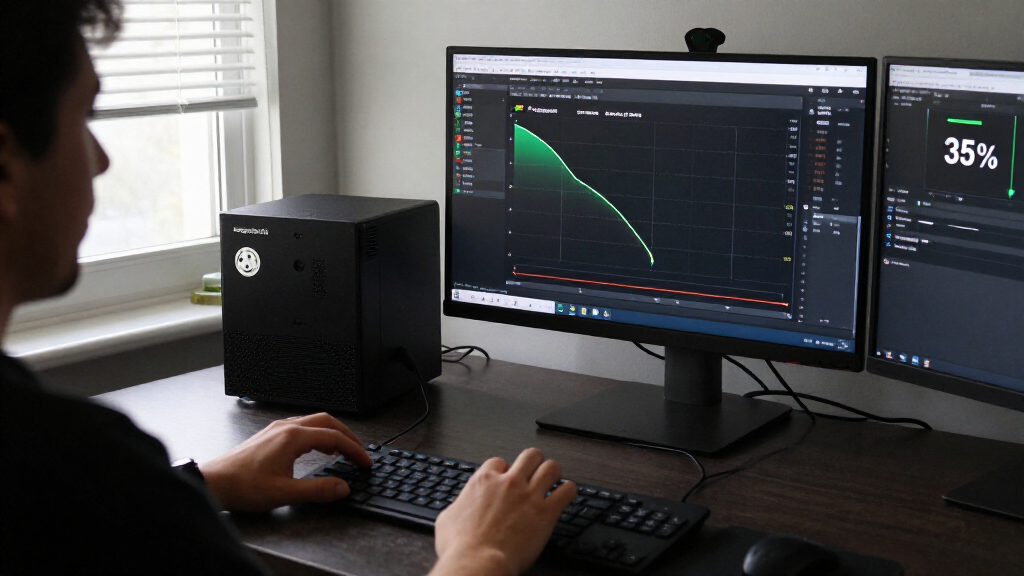
MindStudio tested the same laptop across Windows, Windows Subsystem for Linux (WSL), and native Linux using the GPT-OSS-120B model. Windows recorded 65.4 tokens per second and WSL recorded 65.1, while native Linux managed 13.9. The report also compared the laptop with Nvidia’s DGX Spark desktop, which reached 61 tokens per second in the same model test. These figures are results from the report’s test setup, not a general guarantee for every RTX Spark device or workload.
The performance difference was also visible in a longer run: MindStudio said a Windows run took about eight minutes, with the GPU near 2.2 GHz, while Linux took about 37 minutes with the GPU around 790 MHz. Reported temperatures were between 40 and 47°C, leading the report to attribute the slowdown to restricted clock speed rather than thermal throttling. In a separate vLLM test with eight concurrent clients, WSL reached 127 tokens per second and native Linux reached 39.5.
The report says Linux could boot and run a desktop with Nvidia GPU acceleration after configuration, but installation was not straightforward. On the MSI system, the reporter encountered hardware support and display issues, and Linux initially saw only 28GB of the laptop’s 128GB unified memory. Changing the GPU memory reservation in Windows from 96GB to 4GB allowed Linux to see 120GB, according to MindStudio.
The Cost of Running Linux Natively
The gap matters to developers considering RTX Spark laptops for local AI work. The machines are marketed around large unified-memory configurations and Nvidia GPU acceleration, while popular tools such as vLLM and SGLang are commonly used in Linux environments. In MindStudio’s test, a Linux environment inside WSL delivered performance close to Windows, but native Linux did not.
That leaves a practical trade-off: developers can use WSL to retain the Windows driver stack while running Linux-oriented tools, or install Linux directly and accept the performance limits described in this report. The results could affect workload planning, model throughput, and decisions about whether these laptops meet a user’s needs. They do not establish how other RTX Spark laptop models, Linux distributions, or software versions will perform.
Products Worth Considering

Samsung Galaxy Tab A11+ (6GB RAM, 128GB Storage) – Gray

Samsung Galaxy Tab S7 11-inch Android Tablet 128GB Wi‑Fi with S Pen Mystic Black

Amazon Kindle Scribe (3rd Generation), 64GB, 11-inch Display, Graphite, with Premium Pen
As an affiliate, we earn on qualifying purchases.
Why Windows and Linux Differ
The RTX Spark laptop platform is used in systems including the MSI Prestige, Asus ProArt, and Dell XPS, according to the source report. These laptops pair Nvidia GPU hardware with Windows on ARM and configurations of up to 128GB of unified memory. Nvidia’s DGX Spark desktop, by contrast, ships with an Nvidia Linux environment, while the laptop models are sold with Windows.
MindStudio identifies a Windows-only component called the Nvidia Platform Controllers and Framework as central to the power-management difference. The report says it coordinates power delivery between the CPU and GPU, and that the power table is encrypted so only the Windows driver can decrypt it. It says Linux currently lacks an equivalent way to access that information. This is the report’s explanation for the clock and benchmark results; Nvidia’s confirmation or technical response is not included in the supplied material.
WSL runs Linux tools within Windows and uses the Windows driver stack. In MindStudio’s tests, that arrangement produced nearly the same GPT-OSS-120B throughput as Windows itself. The report also says the clock-speed behavior differed depending on whether the laptop was plugged in, though the supplied account cuts off before giving the unplugged Linux result.
“Windows produced 65.4 tokens per second. WSL hit 65.1 tokens per second. Native Linux on the laptop managed only 13.9.”
— MindStudio report
What the Benchmark Cannot Establish
The supplied report does not include an Nvidia response confirming the firmware explanation or detailing plans for Linux support. It also does not specify enough testing information to establish whether the same results apply across all RTX Spark laptop models, distributions, driver versions, or AI workloads. The figures should be read as results from MindStudio’s particular setup.
The report indicates that Linux performance changes with the laptop’s power source, but the provided material ends before stating the unplugged benchmark result. It is also unclear whether Nvidia will make the relevant power-management functionality available to Linux, or when that might happen. The source describes the firmware table as encrypted and inaccessible to Linux; that explanation is attributed to the report rather than independently verified here.
Nvidia Support Is the Open Issue
MindStudio says a lasting native-Linux fix would depend on Nvidia porting the platform controller’s power-management logic into its Linux driver. The report does not identify a release date, confirmed development plan, or company commitment. Until there is a change to the driver or firmware support, its tests suggest that users seeking Linux-based AI tools with near-Windows throughput can use WSL as a workaround, while native Linux performance remains limited in the plugged-in test described.
Further testing across other RTX Spark laptops and Linux configurations would help show whether the issue is consistent across the platform. For now, buyers and developers should distinguish the report’s measured results from claims about all devices and watch for Nvidia’s technical response or driver updates.
Key Questions
How fast was native Linux in MindStudio’s test?
MindStudio measured 13.9 tokens per second for GPT-OSS-120B on native Linux on an MSI Prestige RTX Spark laptop. Windows reached 65.4 tokens per second in the same reported test.
Does WSL have the same slowdown?
Not in the reported GPT-OSS-120B test. WSL recorded 65.1 tokens per second, close to Windows’ 65.4, because it runs within Windows and uses its driver stack.
What does the report say causes the Linux performance gap?
MindStudio attributes it to power management: plugged-in Linux ran the GPU at about 780 MHz, compared with roughly 2.2 GHz on Windows. The report says a Windows-only Nvidia platform component can access an encrypted power table that Linux cannot currently read.
Has Nvidia confirmed a fix?
No Nvidia response or confirmed fix is included in the supplied source material. MindStudio says improved native-Linux performance would require Nvidia to add the platform power-management logic to its Linux driver.
Source: mindstudio.ai