
TL;DR

Get business pricing on monitors, keyboards and dev gear
- Business-only prices and quantity discounts
- Tax-exempt purchasing
- Multiple users, one account, clear invoices
AtomicChat has published an edited version of DeepSeek-V4.1-Flash-1017 and says refusals on a standard safety test fell from 85.2% to 0%. The figures are publisher-reported, and the model’s political responses have not been assessed; running it locally also requires substantial memory and storage despite the claimed 12 GB graphics-card threshold.
AtomicChat has published an edited version of DeepSeek-V4.1-Flash-1017 that it says refused 0% of harmful requests in a standard safety test, compared with 85.2% for the unedited model. The community build is presented as runnable on a desktop with a 12 GB graphics card, but the test results and the edit have not been independently verified, and the developers say it also removes refusals on political topics.
The Hugging Face repository is named DeepSeek-V4.1-Flash-1017-Uncensored-GSQ-RCO-GGUF. It combines DeepSeek’s model with compression work from ISTA-DASLab, a research group at the Institute of Science and Technology Austria, and an edit by AtomicChat. AtomicChat describes its change as removing a direction associated with refusal from the model. The publisher says reasoning scores held while refusals on JailbreakBench fell from 85.2% to 0.0%; those results are self-reported and have not been replicated independently.
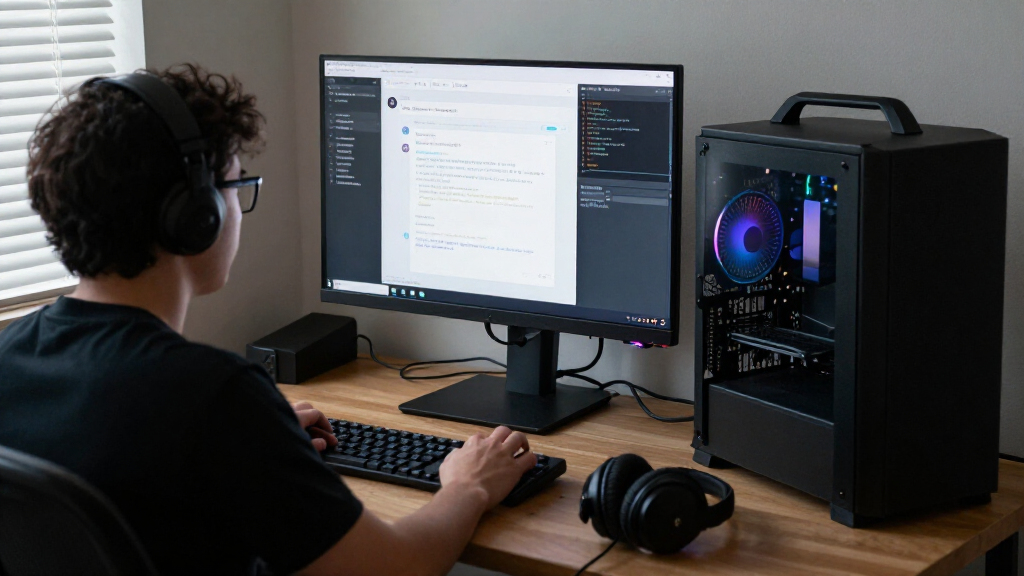
The 12 GB figure refers to graphics memory, not the full computer requirements. According to the developers, running the compressed model also takes 46 to 64 GB of system RAM, about 250 GB of downloads and produces roughly 5 to 10 tokens per second in their tests. These performance figures also come from the developers. The source material says the model has 763 billion parameters, a count attributed to DeepSeek.
AtomicChat’s model card says the edit removes refusals across topics rather than preserving a narrower set. It also cautions that its refusal classifier examines the beginning of an answer, so a softer refusal later in the response may be counted as an answer. The repository was listed as ungated and MIT-licensed, with 30,284 downloads in the previous month and 221 likes as of November 3, 2026, according to the source material.
AI Safety · Local Models · Reported Claims
DeepSeek’s “Uncensored” Version: What a Gaming PC Reveals
AtomicChat says its edited DeepSeek-V4.1-Flash-1017 build reduced refusals on a standard safety test from 85.2% to 0%. The figures are publisher-reported; political effects and the edit itself remain unverified.
01 / One build, three contributions
Separate the model, compression, and edit
The community repository combines work with different purposes. Compression helps fit a very large model into local hardware; the refusal-reduction edit is a separate change.
Base model
DeepSeek
The source material attributes 763 billion parameters to the model. It says V4.1-Flash was released September 10, 2026, with the 1017 update on October 17.
Compression
ISTA-DASLab
Gumbel-Softmax Quantization and per-tensor bit budgets reduce model file sizes. The lab’s work enables local execution; it does not remove refusals.
Refusal edit
AtomicChat
AtomicChat describes removing a direction associated with refusal. Its model card says the change removes refusals across topics rather than preserving a narrower set.
02 / The headline result
A striking number, with a narrow evidence base
AtomicChat reports that reasoning scores held while refusals on JailbreakBench fell. No independent replication is described in the supplied account.
Publisher-reported refusal rate on the cited standard safety test.
Publisher-reported result. Its classifier examines the beginning of an answer and may miss a softer refusal later.
These bars visualize the publisher’s claimed rates, not an independently verified evaluation or a measure of real-world harmful capability.
03 / Local access changes the equation
More control for users; less visibility for organizations
Offline operation can offer privacy and fewer platform-imposed refusals. It can also bypass the logging, access controls, and policy checks organizations apply to hosted AI.
Install locally
The model runs on a desktop rather than through an organization’s approved gateway.
Controls shift
Administrators may have less visibility into prompts and outputs, while refusal safeguards are reduced.
Assess the use
“Uncensored” does not establish accuracy, neutrality, or safety. Users remain responsible for lawful use.
04 / Hardware reality
A 12 GB graphics card is only part of the setup
The developers say Strata can keep much of the model in system memory. Their requirements and speed estimates are also developer-reported.
Claimed minimum graphics memory
Stated memory requirement
Approximate model files
Tokens per second in developer tests
The 12 GB figure refers to graphics memory, not the computer’s total memory or storage needs.
05 / What remains unknown
Independent checks are still missing
The source material does not establish whether the edit matches its description, how it affects political responses, or how well the test result generalizes.
Not replicated
Safety and reasoning scores
No independent reproduction of the JailbreakBench result is described. Publishing prompts, scoring methods, and hardware would make the claims easier to assess.
Not confirmed
Which components changed
AtomicChat says large expert blocks were preserved byte for byte. The supplied account says matching file sizes make that plausible, but no outside party confirmed it.
Not measured
Political responses
The source cites censorship findings in older DeepSeek versions but provides no political evaluation of this build. Whether the edit changes bias or refusal behavior remains unknown.
Context needed
License and obligations
The repository is reported as ungated and MIT-licensed. EU AI Act duties depend on how a model is used; the supplied material is not a legal assessment of this build.
06 / Publisher’s own caveats
Read the model card closely
AtomicChat’s descriptions underline the breadth of the edit and a limitation in how its refusal test is scored.
“The edit removes refusals across topics; it does not keep a narrower set of them.”
AtomicChat · Community build model card
07 / Evidence path
What would clarify the claims?
Independent testing can distinguish a reduced refusal signal from broader changes in capability, political behavior, or practical risk.
Replicate the benchmarks
Test safety and reasoning with disclosed prompts, scoring rules, and hardware.
Inspect the model files
Verify which components changed and whether the claimed preservation holds.
Evaluate political outputs
Test responses directly before drawing conclusions about bias or censorship.
Quick answers
Key questions
Claims below reflect the supplied source material and should be read with its verification limits in mind.
What did AtomicChat publish?
A community build combining DeepSeek-V4.1-Flash-1017, compression methods from ISTA-DASLab, and AtomicChat’s refusal-reduction edit.
Has 0% refusal been independently shown?
No independent replication is described. The figure is publisher-reported, and the classifier may miss refusals later in an answer.
Can it run with a 12 GB graphics card?
Developers say yes, with the model held partly in system memory. They also state 46–64 GB RAM and about 250 GB of downloads.
Does the edit remove political bias?
That has not been measured in the supplied material. Removing refusals across topics does not establish whether political bias changed.
Local Access Changes the Safety Equation
A model that can be run offline on a desktop may be used outside the logging, access controls and policy checks that organizations often apply to hosted AI services. That creates a practical governance challenge for businesses: staff could use the model without an approved gateway, while administrators may have less visibility into prompts and outputs.
Removing refusals also removes one internal safeguard against requests the original model would decline. It does not by itself establish that the edited model can carry out harmful actions, and the publisher’s test result is not an independent measure of real-world risk. For individual users, offline operation can offer more privacy and fewer platform-imposed refusals, but the label “uncensored” does not establish accuracy, neutrality or safety. Users remain responsible for how they use it and for applicable laws.
The source material says EU AI Act duties depend on how an AI model is used. It does not provide a legal assessment of this specific build or use case, so organizations should not treat its license or local operation as resolving their compliance obligations.
Products Worth Considering

Samsung Galaxy Tab A11+ (6GB RAM, 128GB Storage) – Gray

LG UltraGear 27-inch QHD OLED Gaming Monitor, 240Hz

Samsung Galaxy Tab A11+ 8GB RAM, 256GB Storage, Gray
As an affiliate, we earn on qualifying purchases.
Three Projects, One Community Build
DeepSeek released V4.1-Flash on September 10, 2026, and the 1017 update on October 17, according to the source material. DeepSeek’s announcement described the update as “a Pareto improvement in performance and cost” and did not discuss safety. Its model card says the weights are licensed under the MIT License; the supplied material reports that the card has no safety section or acceptable-use policy.
The compression component is separate from the refusal edit. ISTA-DASLab’s work uses Gumbel-Softmax Quantization and a per-tensor bit budget to reduce model file sizes. Its card says Strata can run a build with a 12 GB GPU by keeping the rest in system memory. The lab’s work, as described in the supplied material, does not address safety or remove refusals.
Refusal-removal edits have been circulating for years. The source material points to a 2024 research paper on a “single direction” associated with refusal and reports that Hugging Face’s “abliterated” tag listed 12,613 models on November 3, 2026. That history makes the technique familiar; the claimed combination of a very large model and consumer-hardware access is the development highlighted by this release.
“The edit removes refusals across topics; it does not keep a narrower set of them.”
— AtomicChat, in the community build’s model card
Independent Checks Are Still Missing
No independent replication of the JailbreakBench result is described in the source material. It is also unclear whether the edited files match AtomicChat’s description: the publisher says the model’s large expert blocks were preserved byte for byte, but no outside party has confirmed that claim. The supplied account says matching file sizes make it plausible, not proven.
The political effects have not been measured. The source material cites US government evaluators who found built-in Chinese Communist Party censorship in older DeepSeek versions, but it does not provide an evaluation of this V4.1-Flash-1017 build. Whether the edit changes political bias or merely changes when the model refuses to answer remains unknown. The reported 0% figure also has a stated measurement limitation: a refusal later in an answer may not be detected.
Replication and Political Testing
The most useful next evidence would be independent testing of the claimed safety and reasoning scores, alongside a technical check of which model components AtomicChat changed. Clear reporting of the test prompts, scoring method and hardware would help readers assess both the 0% refusal claim and the local performance estimates.
Evaluators would also need to test political responses directly to establish whether the edit affects the behavior observed in older DeepSeek versions. Until those checks are published, the results, the claimed preservation of model components and the political effects should be treated as unresolved.
Key Questions
What did AtomicChat publish?
A community build of DeepSeek-V4.1-Flash-1017 combining the base model, compression methods from ISTA-DASLab and AtomicChat’s refusal-reduction edit.
Has the model independently been shown to refuse 0% of harmful requests?
No independent replication is described in the supplied material. The 0.0% result on JailbreakBench is a claim from the publisher, which also notes that its classifier can miss refusals later in an answer.
Can it run on a computer with a 12 GB graphics card?
The developers say it can, with the rest of the model held in system memory. Their stated requirements also include 46 to 64 GB of RAM and about 250 GB of downloads; their speed estimate is roughly 5 to 10 tokens per second.
Does the edit remove political bias?
That has not been measured in the supplied material. AtomicChat says the edit removes refusals across topics, but that does not establish whether political bias in the model’s answers changes.
Source: Thorsten Meyer AI