

The best software development testing tools in 2026 blend timeless test design principles with AI-accelerated workflows, and that split defines this entire category. Full Stack Testing: A Practical Guide for Delivering High Quality Software earns my top spot because it covers the whole testing pyramid — unit, API, UI, and CI integration — without padding. If your priority is classical rigor, Software Test Design teaches you to write test plans that catch bugs automation alone will miss; if your team is moving fast with AI, Software Testing with Generative AI shows where generated tests genuinely help and where they fail quietly. The main tradeoff readers face is depth versus speed: foundational books pay off over years, while AI-focused guides deliver immediate leverage but age faster and assume you already know what good testing looks like. Continue reading for the full breakdown of all twelve picks, who each one serves best, and which ones you can safely skip.

Get business pricing on monitors, keyboards and dev gear
- Business-only prices and quantity discounts
- Tax-exempt purchasing
- Multiple users, one account, clear invoices
Key Takeaways
- Full Stack Testing wins overall because it spans the entire stack and stays tool-agnostic, whereas single-focus books like the Selenium guide only cover one slice of the testing pyramid.
- The AI-driven titles split into two camps: practical prompt-and-workflow books (Mastering Claude Code, AI-Assisted QA) that deliver fast results, and methodology books (Spec-Driven Software Testing with AI) that change how your team writes software — pick based on how much process change you can absorb.
- Software Test Design is the highest-leverage pick for QA engineers because test design skill compounds across every tool you’ll ever use, unlike tool-specific tutorials that expire with the next framework release.
- How Google Tests Software remains the best choice for engineering leaders scaling test culture across large teams, but it offers little hands-on value for solo developers — a role no other book in this lineup covers for managers specifically.
- Two books here — The Hard Parts and Fundamentals of Software Architecture — only belong on your shelf if testing is a stepping stone toward architecture work; read them after, not instead of, a dedicated testing title.
| Full Stack Testing: A Practical Guide for Delivering High Quality Software |  | Best Overall | Format: Print / digital book | Primary Audience: Developers and QA professionals | Coverage: Full stack testing techniques and best practices | VIEW LATEST PRICE | See Our Full Breakdown |
| Software Test Design: Write Comprehensive Test Plans to Uncover Critical Bugs in Web, Desktop, and Mobile Apps | 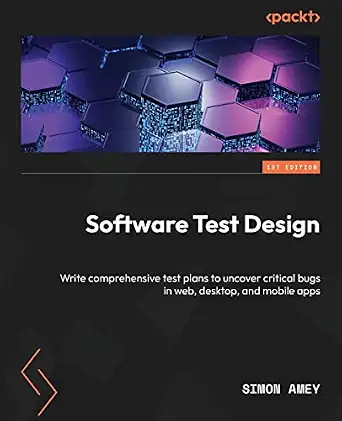 | Best for Test Planning Fundamentals | Format: Print / digital book | Primary Audience: QA testers and test leads | Coverage: Test plan design and bug discovery strategies | VIEW LATEST PRICE | See Our Full Breakdown |
| Software Testing with Generative AI |  | Best for AI-Driven Testing Strategy | Format: Print / digital book | Primary Audience: Developers, testers, and QA strategists | Coverage: Generative AI applied to software testing | VIEW LATEST PRICE | See Our Full Breakdown |
| Mastering Claude Code for Software Engineering: Automate Testing, Refactoring, and Daily Development Tasks with Anthropic’s Agentic CLI |  | Best for AI Workflow Automation | Format: Digital / print book | Primary Audience: Software engineers using AI tooling | Tool Focus: Claude Code and Anthropic’s Agentic CLI | VIEW LATEST PRICE | See Our Full Breakdown |
| Fundamentals of Software Architecture: A Modern Engineering Approach |  | Best for Engineering Context Beyond Testing | Format: Print / digital book | Primary Audience: Developers, architects, and tech leads | Coverage: Modern software architecture principles and engineering practices | VIEW LATEST PRICE | See Our Full Breakdown |
| Spec-Driven Software Testing with AI |  | Best for AI-Era Test Strategy | Format: eBook / Paperback | Primary Topics: Spec-driven testing, AI-assisted test generation, TDD | Secondary Topics: API testing, CI/CD integration, test automation | VIEW LATEST PRICE | See Our Full Breakdown |
| Full Stack Testing: A Practical Guide for Delivering High Quality Software in the Age of AI |  | Best Breadth Across the Testing Stack | Format: eBook / Paperback | Primary Topics: Full stack testing strategy, quality practices | Secondary Topics: AI in software delivery, release validation | VIEW LATEST PRICE | See Our Full Breakdown |
| How Google Tests Software |  | Best for Organizational Process | Format: Print / eBook | Primary Topics: Organizational testing process, quality roles, test strategy | Key Frameworks: Testing pyramid, SET/TE role model | VIEW LATEST PRICE | See Our Full Breakdown |
| Software Architecture: The Hard Parts | 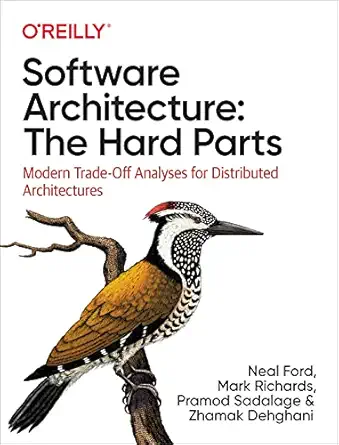 | Best for Testing in Distributed Systems Context | Format: Print / eBook | Primary Topics: Distributed architecture, trade-off analysis | Secondary Topics: Service granularity, data ownership, coupling | VIEW LATEST PRICE | See Our Full Breakdown |
| Software Testing with Selenium Automated Testing Tool: Selenium Book for Beginners |  | Best Beginner Entry Point | Format: eBook | Primary Topics: Selenium fundamentals, browser automation | Tool Focus: Selenium | VIEW LATEST PRICE | See Our Full Breakdown |
| AI-Assisted QA and Software Testing with Claude Code |  | Best for Agentic Test Automation | Format: Book / digital guide | Focus: AI-assisted QA and test automation | AI Platform: Anthropic Claude Code (agentic CLI) | VIEW LATEST PRICE | See Our Full Breakdown |
| Agentic Spec-Driven Development: A Practical Method for Using AI to Build Complete Specifications for Software, Products, and Knowledge Work |  | Best for Specification-First Teams | Format: Book / digital guide | Focus: Specification-driven development using AI agents | Scope: Software, products, and knowledge work | VIEW LATEST PRICE | See Our Full Breakdown |
| software development testing tool | Format | Approach | Audience Level |
|---|---|---|---|
| Full Stack Testing: A Practica | Print / digital book | Practical, delivery-oriented guidance | — |
| Software Test Design: Write Co | Print / digital book | Comprehensive, planning-first methodology | — |
| Software Testing with Generati | Print / digital book | Conceptual, tool-agnostic strategy | — |
| Mastering Claude Code for Soft | Digital / print book | Hands-on, workflow-driven | — |
| Fundamentals of Software Archi | Print / digital book | Foundational, systems-level design | — |
| Spec-Driven Software Testing w | eBook / Paperback | Methodology-driven with process guidance | Intermediate to advanced |
| Full Stack Testing: A Practica | eBook / Paperback | Broad practical guide with modern AI context | Intermediate professional |
| How Google Tests Software | Print / eBook | Narrative case study of Google’s practices | Intermediate to advanced |
| Software Architecture: The Har | Print / eBook | Trade-off-driven analysis with case-study framing | Advanced |
| Software Testing with Selenium | eBook | Introductory concept-by-concept tutorial | Beginner |
| AI-Assisted QA and Software Te | Book / digital guide | — | Intermediate to advanced |
| Agentic Spec-Driven Developmen | Book / digital guide | — | Intermediate to advanced |
More Details on Our Top Picks
Full Stack Testing: A Practical Guide for Delivering High Quality Software
Full Stack Testing earns the top spot because it treats testing as a whole-lifecycle discipline rather than a single tool or technique. Where Software Test Design zeroes in on test planning documents, this pick walks through the entire testing journey — unit, API, UI, and everything in between — making it the most complete foundation for someone who has to own quality end to end. Compared with How Google Tests Software, which leans heavily on one company’s culture, this guide translates strategy into actionable practices for everyday teams. The tradeoff: it assumes you already write code and understand CI pipelines, and the code examples are thinner than some readers will want. If you need copy-paste snippets, pair it with a tool-specific book like the Selenium title in this roundup.
Pros:- Covers the full testing spectrum from unit to end-to-end rather than one narrow layer
- Strategy is tool-agnostic, so guidance survives framework churn
- Written for both developers and QA professionals, bridging a common team divide
- Grounded in real-world delivery practices rather than academic theory
Cons:- Light on detailed, copy-ready code examples
- Paced too aggressively for readers new to automated testing
Best for: Mid-level developers and QA engineers who own quality across an entire application stack and want one book that covers the full testing lifecycle
Not ideal for: Absolute beginners — it moves fast, assumes coding fluency, and skips the hand-holding found in entry-level titles like the Selenium for Beginners book
- Format:Print / digital book
- Primary Audience:Developers and QA professionals
- Coverage:Full stack testing techniques and best practices
- Approach:Practical, delivery-oriented guidance
- Skill Level:Intermediate to advanced
- Focus Area:Testing strategy, tools, and quality processes
Our verdict“If you only buy one testing book, this is the one that covers the most ground with the fewest gaps.”
Software Test Design: Write Comprehensive Test Plans to Uncover Critical Bugs in Web, Desktop, and Mobile Apps
Not every tester needs to automate everything — some need to design better tests first. Software Test Design fills the planning gap that broader titles like Full Stack Testing only touch briefly. Its strength is platform breadth: one book, three application types (web, desktop, mobile), with concrete guidance on structuring test plans that surface serious defects early instead of after release. Compared with AI-focused entries like Software Testing with Generative AI, this is the disciplined, fundamentals-first counterpart — you learn why a test exists before you let a model generate one. The drawback is its traditional orientation; there is little on automation frameworks or AI-assisted workflows, so teams building fully automated pipelines will need a second book to fill that gap.
Pros:- Step-by-step guidance on writing test plans, not just running tests
- Applies to web, desktop, and mobile in a single resource
- Emphasizes uncovering critical bugs early, when they are cheapest to fix
- Useful for QA leads building repeatable team processes
Cons:- Little coverage of automated testing or modern CI/CD integration
- Sparse community feedback available to gauge real-world reception
Best for: Manual testers and QA leads who write formal test plans and need structured techniques for catching critical bugs across multiple platforms
Not ideal for: Automation engineers looking for framework setup or scripting guidance — this stays firmly in the planning and design layer
- Format:Print / digital book
- Primary Audience:QA testers and test leads
- Coverage:Test plan design and bug discovery strategies
- Platforms Covered:Web, desktop, and mobile applications
- Approach:Comprehensive, planning-first methodology
- Skill Level:Beginner to intermediate
Our verdict“The right pick when your problem is poorly designed tests, not missing tooling.”
Software Testing with Generative AI
Software Testing with Generative AI is the thinking person’s entry into AI-assisted quality work. Unlike Mastering Claude Code, which is tied to one vendor’s CLI, this book takes a tool-agnostic look at where generative AI genuinely improves testing efficiency and where it introduces risk. That framing makes it the safer long-term buy — models and products change monthly, but the judgment about when AI-generated tests help or hurt ages well. It pairs naturally with Spec-Driven Software Testing with AI from this roundup: read this one for the concepts, that one for a stricter specification-based method. The compromise is depth of implementation — readers wanting runnable prompts and detailed technical examples will finish hungry, and pricing information is thin.
Pros:- Tool-agnostic treatment of AI in testing, avoiding vendor lock-in
- Balances efficiency gains against the risks of AI-generated tests
- Accessible to both developers and career testers
- Concepts remain relevant as specific AI products change
Cons:- Light on detailed technical examples and working code
- Limited ratings and pricing data to validate reception
Best for: Test architects and engineering managers evaluating where generative AI fits into their quality strategy without betting on a single tool
Not ideal for: Hands-on developers who want concrete code, prompts, and tool walkthroughs — this stays at the conceptual and strategic layer
- Format:Print / digital book
- Primary Audience:Developers, testers, and QA strategists
- Coverage:Generative AI applied to software testing
- Approach:Conceptual, tool-agnostic strategy
- Focus Area:Testing efficiency and effectiveness with AI
- Skill Level:Intermediate
Our verdict“Choose this to build AI testing judgment, not to learn a specific AI tool.”
Mastering Claude Code for Software Engineering: Automate Testing, Refactoring, and Daily Development Tasks with Anthropic’s Agentic CLI
This is the most hands-on AI title of the batch. Mastering Claude Code skips the philosophy debate entirely and shows engineers how to wire an agentic CLI into daily work — generating tests, refactoring code, and handling routine chores. Compared with Software Testing with Generative AI, which explains whether AI should be in your pipeline, this book explains how, with a specific tool and concrete workflows. It also complements AI-Assisted QA and Software Testing with Claude Code in this roundup, going broader into refactoring and general development tasks beyond QA alone. The obvious tradeoff is vendor dependency: everything here is anchored to Anthropic’s tooling, so shifts in the product or its pricing can date the material quickly. Prerequisites are also underspecified, so newer developers may hit a wall.
Pros:- Directly practical — built around automating real daily engineering tasks
- Covers testing, refactoring, and general productivity in one place
- Timely coverage of agentic CLI workflows few books address
- Productivity-focused framing appeals to busy engineers
Cons:- Tightly coupled to one vendor’s product, risking rapid obsolescence
- Technical prerequisites and edition details are not clearly stated
Best for: Working software engineers already using or evaluating Claude Code who want to automate test generation and refactoring in their daily workflow
Not ideal for: Teams standardizing on non-Anthropic tooling, and beginners who need stated prerequisites and gentler onboarding
- Format:Digital / print book
- Primary Audience:Software engineers using AI tooling
- Tool Focus:Claude Code and Anthropic’s Agentic CLI
- Coverage:Automated testing, refactoring, and development tasks
- Approach:Hands-on, workflow-driven
- Skill Level:Intermediate to advanced
Our verdict“The fastest path from ‘curious about Claude Code’ to ‘automating my test suite with it’ — if you accept the single-vendor bet.”
Fundamentals of Software Architecture: A Modern Engineering Approach
Why does an architecture book belong in a testing roundup? Because testability is an architectural property, and this title explains the structural decisions that make software easy or painful to test. Fundamentals of Software Architecture earns its place as the big-picture companion: after Full Stack Testing teaches you how to test, this explains why some systems resist testing no matter how good your suite is. Compared with Software Architecture: The Hard Parts in the same roundup, it is the gentler, foundational entry — broader coverage, fewer distributed-systems war stories. The tradeoff is indirectness: there are no test scripts here at all, and readers chasing immediate testing tactics should start elsewhere. Supplementary materials and edition details are also thin, which matters for a book often used in team study groups.
Pros:- Connects architectural decisions directly to long-term maintainability and testability
- Broad, modern treatment of architecture principles and engineering practices
- Serves as durable reference material that outlives any testing framework
- Strong companion to testing titles for rounding out engineering judgment
Cons:- Contains no direct testing instruction, so it cannot stand alone for this goal
- Limited information on editions and supplementary materials
Best for: Senior developers and tech leads who want to design systems that are testable and maintainable from the ground up
Not ideal for: Readers who need immediate, tactical testing techniques — this works at the structural layer, not the tooling layer
- Format:Print / digital book
- Primary Audience:Developers, architects, and tech leads
- Coverage:Modern software architecture principles and engineering practices
- Approach:Foundational, systems-level design
- Focus Area:Scalable and maintainable system design
- Skill Level:Intermediate to advanced
Our verdict“Buy this after your testing book, not instead of it, to fix the structures that make testing hard.”
Spec-Driven Software Testing with AI
This option stands out for connecting specifications to automated testing pipelines, something most testing books still treat as separate concerns. Where How Google Tests Software explains how a giant organization structures quality, this book translates that philosophy into a modern workflow built around AI-assisted test generation, TDD, and CI/CD. Compared with Software Testing with Generative AI, it leans less on prompt tricks and more on repeatable process design, which makes it better suited to engineers building durable suites rather than experimenting. The tradeoff is density: some sections move quickly past worked examples, so readers who want line-by-line code walkthroughs will feel shortchanged. This pick makes the most sense for mid-career developers and QA leads who already understand automation basics and want a framework for spec-driven quality at scale.
Pros:- Bridges specification writing, AI tooling, and CI/CD into one coherent workflow
- Covers API testing and TDD alongside automation rather than in isolation
- Methodology-focused approach scales better than tool-specific tutorials
- Relevant to both testers and developers on the same team
Cons:- Some sections lack detailed worked examples, forcing readers to fill gaps themselves
- Technical assumptions make it a rough entry point for newcomers to testing
- AI tooling references may age quickly as the landscape shifts
Best for: Mid-career developers and QA leads who already know automation basics and want a structured, spec-first methodology enhanced by AI tooling
Not ideal for: Beginners or readers who need extensive worked code examples — several chapters assume prior comfort with CI/CD and API testing concepts
- Format:eBook / Paperback
- Primary Topics:Spec-driven testing, AI-assisted test generation, TDD
- Secondary Topics:API testing, CI/CD integration, test automation
- Audience Level:Intermediate to advanced
- Best Fit:QA engineers, developers, test leads
- Approach:Methodology-driven with process guidance
Our verdict“A strong choice for experienced engineers who want a process-level blueprint for AI-assisted, spec-driven testing rather than another tool tutorial.”
Full Stack Testing: A Practical Guide for Delivering High Quality Software in the Age of AI
Where Spec-Driven Software Testing with AI goes deep on one methodology, this book earns its place by covering the entire testing spectrum — from unit and integration testing through UI, performance, and release validation — with AI woven throughout rather than bolted on. That breadth is its defining strength and its main weakness: professionals get a rare end-to-end map of quality practices, but some chapters read like surveys, and readers wanting deep implementation detail in any single layer will need supplementary material. Compared with How Google Tests Software, it feels more current and more hands-on for individual practitioners, though less authoritative on organizational process. This pick makes the most sense for full-stack developers and QA generalists who own quality across the whole delivery pipeline and want one book that connects every layer.
Pros:- Genuinely end-to-end coverage spanning all testing layers
- AI integration framed as part of modern practice, not a gimmick
- Practical, delivery-oriented framing suited to working professionals
- Good connective tissue between testing, development, and operations concerns
Cons:- Chapters vary in technical depth, with some areas lacking concrete examples
- Dense for beginners still learning individual testing concepts
- Breadth means no single topic gets exhaustive treatment
Best for: Full-stack developers and QA generalists responsible for quality across the entire delivery pipeline, from unit tests to production monitoring
Not ideal for: Specialists who need deep coverage of one layer, such as performance engineers or dedicated security testers — the breadth trades away depth
- Format:eBook / Paperback
- Primary Topics:Full stack testing strategy, quality practices
- Secondary Topics:AI in software delivery, release validation
- Audience Level:Intermediate professional
- Best Fit:Full-stack developers, QA generalists, tech leads
- Approach:Broad practical guide with modern AI context
Our verdict“The right pick if you own quality across a whole stack and want one connected guide instead of a shelf of narrow ones.”
How Google Tests Software
This remains the reference point for testing at organizational scale, and no AI-era title in this lineup replaces it for that job. Where Full Stack Testing guides an individual practitioner, this book answers a different question: how does a company with thousands of engineers keep quality from collapsing? The answer involves roles (SWE, SET, TE), tooling philosophy, and the famous testing pyramid that still shapes how teams allocate effort today. The tradeoff is age — the practices reflect Google circa its publication, so there is no coverage of modern AI-assisted testing or current cloud-native tooling, and some described tools have evolved or retired. This pick makes the most sense for engineering managers and QA leads designing process rather than coders hunting for implementation tutorials, since the value here is mental models, not syntax.
Pros:- Foundational frameworks like the testing pyramid remain industry-standard references
- Unique insight into how a massive engineering organization structures quality roles
- Durable process thinking that outlives specific tools
- Readable narrative style despite the scale of the subject
Cons:- Content predates AI-assisted testing and modern cloud-native workflows
- Not a hands-on guide — little directly applicable code or configuration
- Google-scale practices can feel abstract for small-team readers
Best for: Engineering managers, QA leads, and architects who need proven frameworks for structuring quality processes across large teams
Not ideal for: Readers wanting hands-on tutorials or current tooling guidance — there’s no code to follow and no coverage of AI-era practices
- Format:Print / eBook
- Primary Topics:Organizational testing process, quality roles, test strategy
- Key Frameworks:Testing pyramid, SET/TE role model
- Audience Level:Intermediate to advanced
- Best Fit:Engineering managers, QA leads, process architects
- Approach:Narrative case study of Google’s practices
- Currency:Predates AI-assisted testing era
Our verdict“Still the best book on testing as an organizational discipline, provided you’re designing process rather than following along in an IDE.”
Software Architecture: The Hard Parts
This is the outlier in the roundup — not a testing book, but the one that explains why testing distributed systems is hard in ways dedicated testing titles never address. Where Spec-Driven Software Testing with AI tells you how to build a suite, this book explains the trade-off analysis — service boundaries, data ownership, coupling — that determines what you can even realistically test in a microservices architecture. Its trade-off-first framing is the standout: instead of prescribing patterns, it teaches a repeatable method for weighing options, which is exactly the skill senior engineers lack when quality problems trace back to architectural decisions. The drawback is indirectness — there are no test scripts, no automation walkthroughs, and beginners will find the distributed-systems assumptions heavy going. This pick makes the most sense for senior engineers and architects whose quality problems start at the design layer.
Pros:- Structured trade-off analysis method applicable well beyond testing decisions
- Deep, realistic treatment of distributed architecture pain points like data ownership and coupling
- Teaches decision-making frameworks rather than memorizable patterns
- Strong complement to any testing library for senior readers
Cons:- Not a testing book despite its place in this lineup — quality coverage is indirect
- Complex for anyone without prior distributed-systems experience
- Sparse worked code examples for a book about engineering decisions
Best for: Senior engineers and architects working in microservices or distributed systems who need to understand how architectural trade-offs constrain testability
Not ideal for: Hands-on testers wanting automation instruction — there’s no Selenium, no CI/CD walkthroughs, and no test-code guidance at all
- Format:Print / eBook
- Primary Topics:Distributed architecture, trade-off analysis
- Secondary Topics:Service granularity, data ownership, coupling
- Audience Level:Advanced
- Best Fit:Software architects, senior engineers, tech leads
- Approach:Trade-off-driven analysis with case-study framing
Our verdict“Worth it for senior readers whose hardest testing problems are actually architecture problems; everyone else should pick a dedicated testing title.”
Software Testing with Selenium Automated Testing Tool: Selenium Book for Beginners
Every roundup needs an on-ramp, and this is the most accessible entry in the lineup. Where Spec-Driven Software Testing with AI and Full Stack Testing assume you already know what automation looks like, this book starts from zero: what Selenium is, how browsers get automated, and how to write your first scripts. Its clear, plain-language explanations of automation fundamentals make it a genuinely low-friction starting point for career-switchers, manual testers, and students. The tradeoff is the ceiling — there’s little on frameworks, design patterns like Page Object Model at depth, or CI integration, and the absence of practical exercises means you’ll need to build your own practice projects to cement the material. Compared with the other titles here, this pick makes the most sense for absolute beginners who need vocabulary and first steps, not for anyone who has already written an automated test.
Pros:- Genuinely beginner-friendly language with no assumed background
- Focused single-topic scope avoids overwhelming newcomers
- Covers the core Selenium concepts needed to write first scripts
- Low-cost, low-commitment way to test interest in test automation
Cons:- No advanced topics like framework design or CI/CD integration
- Lacks practical exercises, so retention depends on self-directed practice
- Quickly outgrown once the basics click
Best for: Manual testers moving into automation, career-switchers, and students who need a gentle first exposure to Selenium and browser testing
Not ideal for: Anyone with prior automation experience — the content stops well short of framework design, CI integration, and advanced patterns
- Format:eBook
- Primary Topics:Selenium fundamentals, browser automation
- Tool Focus:Selenium
- Audience Level:Beginner
- Best Fit:Manual testers, students, career-switchers
- Approach:Introductory concept-by-concept tutorial
Our verdict“A sensible first rung on the automation ladder for complete beginners — just plan to graduate to a deeper title within months.”
AI-Assisted QA and Software Testing with Claude Code
This pick stands out as the most hands-on AI automation entry in the lineup, showing how Anthropic’s agentic assistant can generate and maintain unit, integration, and end-to-end tests. Compared with Software Testing with Generative AI, which surveys AI testing broadly, this resource goes narrow and operational — the reader leaves with workflows rather than background theory. That focus is its strength and its limitation: it pairs naturally with Mastering Claude Code for Software Engineering but assumes you already live in the CLI world. The upside is real productivity, since agentic tools catch regressions a human might skip under deadline pressure. The tradeoff is that thin documentation around the product means you are partly betting on the underlying tool’s trajectory, and teams without AI familiarity will face a learning curve before seeing returns.
Pros:- Covers the full testing pyramid — unit, integration, and end-to-end — in one workflow
- Directly leverages agentic AI for repeatable, automated test creation
- Improves testing accuracy by reducing manual error in repetitive test writing
- Practical for teams already invested in the Claude Code ecosystem
Cons:- Very limited published specifications and reviews make it hard to evaluate depth before buying
- Assumes prior familiarity with AI coding tools, so beginners face a steep on-ramp
Best for: Developers already comfortable with Claude Code who want to automate test generation across unit, integration, and end-to-end layers
Not ideal for: QA teams standardizing on traditional tools like Selenium — those readers will get more from Software Testing with Selenium Automated Testing Tool first
- Format:Book / digital guide
- Focus:AI-assisted QA and test automation
- AI Platform:Anthropic Claude Code (agentic CLI)
- Testing Levels Covered:Unit, integration, end-to-end
- Audience Level:Intermediate to advanced
- Prerequisites:Familiarity with AI coding assistants
Our verdict“A focused bet for CLI-savvy developers who want AI writing their test suites, not a starting point for AI-curious testers.”
Agentic Spec-Driven Development: A Practical Method for Using AI to Build Complete Specifications for Software, Products, and Knowledge Work
Where most entries in this roundup teach you to test code, this one argues you should fix the specs before a line is written. It slots in as the upstream companion to Spec-Driven Software Testing with AI: that book builds test suites from specifications, while this one shows how AI can produce the complete, unambiguous specifications those suites depend on. Compared with Full Stack Testing, which assumes requirements exist and moves straight to execution, this method targets the ambiguity that causes most bugs in the first place. Its broader scope — products and knowledge work, not just software — widens the audience but dilutes the testing depth some readers will want. The honest tradeoff: with few reviews and little published detail, buyers are trusting the methodology sight-unseen, and it presumes comfort with both AI tooling and formal development processes.
Pros:- Teaches a repeatable, AI-driven method for writing complete specifications
- Applies beyond software to product management and general knowledge work
- Reduces downstream defects by resolving ambiguity at the requirements stage
- Complements spec-based testing approaches covered elsewhere in this roundup
Cons:- Lacks detailed content previews and reader reviews, making quality hard to verify in advance
- Requires working knowledge of both AI tools and structured development processes
Best for: Tech leads and product engineers who want AI to produce rigorous, complete specifications before development begins
Not ideal for: Testers who need immediate, concrete automation recipes — Software Test Design delivers actionable test plans much faster
- Format:Book / digital guide
- Focus:Specification-driven development using AI agents
- Scope:Software, products, and knowledge work
- Core Method:Agentic AI-assisted specification writing
- Audience Level:Intermediate to advanced
- Prerequisites:Familiarity with AI tools and development lifecycles
Our verdict“Choose this if you believe bad specs are your biggest source of bugs — skip it if you need hands-on test automation guidance today.”

How We Picked
I judged every title against four criteria: breadth of testing coverage (does it address unit, integration, API, and UI layers, or just one?), actionability (can a developer apply the material on Monday morning?), durability (will the advice survive the next framework or AI model release?), and audience fit (individual contributor, QA specialist, or engineering leader). Books that teach transferable reasoning ranked above tool-specific tutorials, because testing tools churn but test design fundamentals do not. That said, immediate practicality still mattered — a brilliant theory book nobody finishes loses to a modest book people actually use.
The ranking logic follows a simple hierarchy: full-spectrum practical guides first, foundational skill-building second, AI-augmented workflow books third, and adjacent or narrow titles last. Where two books covered similar ground — as with the two Full Stack Testing editions and the three AI-focused titles — I favored the version with broader coverage and less dependence on a specific vendor’s product, flagging the alternatives for readers already committed to that stack.
| software development testing tool | Format | Audience Level |
|---|---|---|
| Full Stack Testing: A Practica | Print / digital book | — |
| Software Test Design: Write Co | Print / digital book | — |
| Software Testing with Generati | Print / digital book | — |
| Mastering Claude Code for Soft | Digital / print book | — |
| Fundamentals of Software Archi | Print / digital book | — |
| Spec-Driven Software Testing w | eBook / Paperback | Intermediate to advanced |
| Full Stack Testing: A Practica | eBook / Paperback | Intermediate professional |
| How Google Tests Software | Print / eBook | Intermediate to advanced |
| Software Architecture: The Har | Print / eBook | Advanced |
| Software Testing with Selenium | eBook | Beginner |
| AI-Assisted QA and Software Te | Book / digital guide | Intermediate to advanced |
| Agentic Spec-Driven Developmen | Book / digital guide | Intermediate to advanced |
Factors to Consider When Choosing Software Development Testing Tools
Before picking a title from this roundup, match the book to your actual gap — not the trend of the moment. The twelve picks above serve genuinely different needs, and the wrong choice wastes both money and, more expensively, reading time.Know Which Layer of Testing You’re Missing
Most developers buy a testing book when one specific layer hurts — flaky UI tests, untested APIs, or a CI pipeline that catches bugs too late. Diagnose that pain before ordering, because the picks above are sharply stratified by layer. The Selenium book covers browser automation only, the spec-driven titles concentrate on turning requirements into test suites, and Full Stack Testing spans everything from unit tests to end-to-end checks. A common mistake is buying a broad book when you need depth in one layer, then skimming past the chapters that would have actually fixed your problem. Conversely, teams often buy a narrow tool tutorial when their real issue is test strategy. If you cannot name which layer is failing, start broad and narrow later.
Foundational Books Age Well; Tool Books Age Fast
There is a direct relationship between how specific a testing book is and how quickly it becomes obsolete. Books grounded in test design principles, risk analysis, and trade-off thinking stay relevant for a decade, which is why titles like Software Test Design and How Google Tests Software still earn their place in 2026. Tool-centric and AI-model-centric books carry a shelf life of roughly two to three years — Claude Code workflows, for instance, will shift as the tool evolves. That does not make them bad purchases; it makes them purchases you should time deliberately. Buy the tool book when you are actively adopting that tool, not as future reference material. A smart library mixes both: one or two foundational anchors plus just-in-time tool guides.
AI Testing Books: Workflow or Methodology?
The AI titles in this roundup fall into two distinct genres, and confusing them is the most common misstep I see buyers make. Workflow books (Mastering Claude Code, AI-Assisted QA) teach you to operate specific AI tools inside an existing testing process — high immediate payoff, minimal organizational change. Methodology books (Spec-Driven Software Testing with AI, Agentic Spec-Driven Development) ask you to restructure how specifications are written before tests are generated — slower to adopt, but far more durable results. Individual contributors should default to workflow books; tech leads and architects get more from the methodology camp. Teams that skip the specification work often end up with AI-generated test suites that are voluminous but shallow, testing what the code already does rather than what it should do.
Match the Book to Your Role, Not Your Job Title
An SDET at a large company and a solo full-stack developer both “do testing,” yet they need almost opposite books. QA engineers get the best return from test design and planning titles, since their value comes from finding the bugs others miss. Developers benefit more from full-stack and CI-integrated guides that fit testing into feature delivery. Engineering managers should lean toward the Google book for its coverage of test culture, team structure, and blameless quality ownership. And if you are moving toward architecture responsibilities, the two architecture titles make sense — but only as a second purchase after a dedicated testing book, otherwise you will know how systems fit together without knowing how to verify they work.
Editions and Overlaps: Don’t Buy Twice
This category has real overlap problems, and publishers are not always transparent about it. Two Full Stack Testing editions appear in this comparison, and the “Age of AI” version reprints much of the original material with added AI chapters — buying both is rarely justified. Similarly, the three Claude Code and AI-testing titles share substantial conceptual ground. Before purchasing, check the table of contents against what you already own. A useful rule: when an updated edition adds a technology layer you actively use, the repurchase is worth it; when it adds commentary about trends, it is not. Duplicates also cost shelf time, and unread testing books have a way of becoming unread forever.
When to Pay More for Depth
Price differences in this category are modest, but the cost of a shallow book is not measured in dollars — it is measured in the bugs that reach production because your test suite had blind spots. Pay for depth when testing is core to your role, when you work in a regulated or high-stakes domain, or when you are the person accountable for quality across a team. Save money with shorter beginner guides when you simply need to stop shipping obvious breakage. The premium picks in this lineup justify their cost through trade-off analysis and scale-tested processes, not page count. As a rule, the more people whose code quality depends on your decision, the more the deeper book is the economical one.
Frequently Asked Questions
Should I learn traditional test design before using AI testing tools?
Yes, and the order matters more than most developers expect. AI tools generate tests quickly, but they optimize for coverage of what the code already does — they cannot independently judge what the software should do, which is where the most damaging bugs hide. A background in test design teaches you to spot those blind spots, write the specifications that guide AI generation, and review generated tests with a critical eye. Readers who skip straight to AI workflows tend to produce impressive-looking suites with shallow assertions. If budget allows only one book, a test design or full-stack fundamentals title will make every AI tool you later adopt more effective, rather than the reverse.
Is the AI-focused edition of Full Stack Testing worth it over the original?
It depends entirely on whether AI is already part of your pipeline. The AI edition reuses the original’s core chapters on test layers, tooling, and CI integration, then adds material on integrating generative AI into those same workflows. If you are actively using or evaluating AI-assisted testing, the added chapters save you the trial-and-error of figuring out integration points yourself. If your stack is conventional and likely to stay that way for a year or more, the original covers the same ground and is often cheaper. The one situation where the AI edition clearly wins is a team transition, since it frames AI as an addition to existing practice rather than a replacement for it.
Which of these books is best if I can only automate browser tests with Selenium?
The Selenium beginner book is the right starting point, but treat it as a first step rather than a destination. Selenium skills alone lock you into UI-level testing, which is the slowest and flakiest layer of the testing pyramid — valuable, but never sufficient on its own. Once you are comfortable driving a browser, a full-stack guide will show you how to shift checks down into API and unit layers, where they run faster and fail more precisely. The test design title then fills the strategy gap Selenium books do not address: what to test and in what priority. Teams that stay purely UI-focused typically watch their suite runtime grow until it stops being run at all.
Do I need a testing book if my team already has good test automation?
Automation and testing knowledge solve different problems, and mature teams often have the first without much of the second. If your suite passes consistently yet bugs still reach production, the gap is usually test design — the right scenarios are not covered, not that the existing scenarios are failing. Books like How Google Tests Software also address what automation cannot: how teams organize around quality, who owns which test layers, and how to prevent blame culture from suppressing bug reports. A team with strong automation and weak strategy gets measurable value from the process-oriented titles in this roundup. Automation amplifies whatever testing judgment you already have, in both directions.
Are spec-driven AI testing methods practical for small teams?
Practical, yes — but with a genuine adoption cost that small teams should budget for honestly. Spec-driven methods require writing rigorous specifications before any test generation happens, which slows your first few projects noticeably while the habit forms. The payoff arrives once those specifications become the single source of truth for tests, documentation, and AI-assisted development, reducing the rework that plagues ad-hoc testing. For a solo developer or pair, the lighter Claude Code workflow books may deliver 80 percent of the benefit at 20 percent of the process overhead. Spec-driven approaches start paying for themselves once multiple people must agree on what the software should do — below that team size, judge whether the discipline is worth the ceremony.
Conclusion
After comparing all twelve titles, the right choice comes down to where you sit on the spectrum from foundational skill to cutting-edge workflow. Best overall goes to Full Stack Testing: A Practical Guide for Delivering High Quality Software — it covers every layer of modern testing, stays readable, and serves developers and QA engineers alike. Best value is Software Test Design, which builds the single highest-leverage skill in this field for the price of one book. Best premium belongs to Spec-Driven Software Testing with AI for teams ready to invest in a durable methodology rather than chasing tool tricks. Best for beginners is the Selenium book, the gentlest on-ramp in the lineup, with How Google Tests Software as the clear pick for engineering leaders building test culture at scale. For AI-first developers, Mastering Claude Code for Software Engineering delivers the fastest day-to-day payoff. Whatever you choose, pair one foundational title with one tool-focused guide — that combination will outlast any single book on this list.