The best portable monitors for developers balance readable workspace, easy laptop connectivity, and a setup you can carry between desks. I’d make the Dell Pro 14 Plus P1425 the best overall starting point for a developer-focused shortlist, while the InnoView 16-Inch 240Hz 2K stands out for extra resolution and the InnoView 15.6-Inch Dual Portable Monitor for adding more screen area at once. The main tradeoffs are portability versus display size, a simple second screen versus a multi-screen extender, and practical coding features versus gaming-focused refresh rates. Connection compatibility and the number of cables your laptop needs can matter as much as the panel itself. Read on for the full breakdown and guidance on matching a monitor to your coding setup.

Get business pricing on monitors, keyboards and dev gear
- Business-only prices and quantity discounts
- Tax-exempt purchasing
- Multiple users, one account, clear invoices
Key Takeaways
Developer work favors readable workspace over gaming speed: The InnoView 16-Inch 240Hz 2K pairs the lineup’s strongest stated resolution and refresh-rate combination, but those gaming-oriented specs do not automatically make it the best fit for code, terminals, and documentation.
The Dell Pro 14 Plus P1425 is the work-focused anchor: Its 14-inch size makes it a more compact choice than the 15.6- and 16.1-inch models, while buyers who want more visible screen area should compare it with the larger standard monitors.
Extenders change the workflow, not just the screen count: The InnoView dual monitor and the Vixtan, ZUMWALT, and other triple-screen options can suit side-by-side coding tasks, but their added panels and mounting arrangements make portability and laptop fit more demanding.
Most of the lineup centers on 15.6-inch FHD: cocopar, KYY, MNN, ForHelp, InnoView, and Anyuse offer familiar-size alternatives, so differences in connectivity, case design, and setup compatibility deserve more attention than headline size.
Before choosing, verify the laptop connection path: USB-C and HDMI appear across several listings, but a port’s presence alone does not confirm that it carries video or provides enough power; check laptop support and the monitor’s connection requirements.
| InnoView 16-Inch 240Hz 2K Portable Monitor |  | Best for High-Refresh-Rate Coding and Gaming | Screen size: 16 inches | Resolution: 2560 × 1600 | Refresh rate: 240 Hz | VIEW LATEST PRICE | See Our Full Breakdown |
| cocopar 15.6-Inch Portable Monitor, 1080p FHD, 60Hz, IPS, USB-C and HDMI |  | Best Value for Straightforward Remote Work | Screen size: 15.6 inches | Resolution: 1920 × 1080 | Refresh rate: 60 Hz | VIEW LATEST PRICE | See Our Full Breakdown |
| ARZOPA Z1FC 16.1-Inch 144Hz Portable Gaming Monitor |  | Best for Smooth Motion on a Practical Full HD Budget | Screen size: 16.1 inches | Resolution: 1920 × 1080 | Refresh rate: 144 Hz | VIEW LATEST PRICE | See Our Full Breakdown |
| InnoView 15.6-Inch Dual Portable Monitor, 1080p |  | Best for Multitasking Across Two Portable Screens | Screen size: Two 15.6-inch panels | Resolution: 1920 × 1080 per panel | Refresh rate: 60 Hz | VIEW LATEST PRICE | See Our Full Breakdown |
| Dell Pro 14 Plus P1425 14-Inch Portable Monitor |  | Best Compact, Bright 16:10 Work Screen | Screen size: 14 inches | Resolution: 1920 × 1200 | Aspect ratio: 16:10 | VIEW LATEST PRICE | See Our Full Breakdown |
| Vixtan 14-Inch Triple Laptop Screen Extender, FHD IPS Portable Monitor |  | Best Compact Triple-Screen Extender | Screen size: 14 inches | Resolution: 1920 × 1080 (FHD) | Panel: IPS LCD | VIEW LATEST PRICE | See Our Full Breakdown |
| 15.6-Inch FHD Triple-Screen Laptop Monitor Extender |  | Best for a Freestanding Triple-Screen Desk Setup | Screen size: Two 15.6-inch displays | Resolution: 1920 × 1080 per display | Panel: IPS LCD | VIEW LATEST PRICE | See Our Full Breakdown |
| KYY 15.6-Inch 1080p Portable Monitor with Cover | 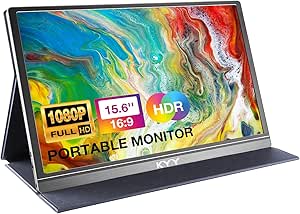 | Best for Flexible Desk-to-Travel Use | Screen size: 15.6 inches | Resolution: 1920 × 1080 | Panel: IPS LCD | VIEW LATEST PRICE | See Our Full Breakdown |
| MNN 15.6-Inch FHD Portable Monitor |  | Best Lightweight Single-Screen Pick | Screen size: 15.6 inches | Resolution: 1920 × 1080 (Full HD) | Panel: IPS LCD | VIEW LATEST PRICE | See Our Full Breakdown |
| ZUMWALT P7 15.6-Inch FHD Laptop Screen Extender, Dual Portable Monitors |  | Best for a Rugged Dual-Panel Work Kit | Display size: Two 15.6-inch displays | Resolution: 1920 × 1080 (FHD) | Panel: IPS LCD | VIEW LATEST PRICE | See Our Full Breakdown |
| ForHelp 15.6-Inch 1080p Portable Monitor with USB-C and Mini HDMI |  | Best for a Lightweight Desk-Space Extension | Screen size: 15.6 inches | Resolution: 1920 × 1080 (Full HD) | Display: IPS LCD, matte finish | VIEW LATEST PRICE | See Our Full Breakdown |
| InnoView 15.6-Inch FHD Portable Monitor with Protective Case |  | Best for Portrait-Mode Coding | Screen size: 15.6 inches | Resolution: 1920 × 1080 (FHD) | Display: IPS LCD with HDR | VIEW LATEST PRICE | See Our Full Breakdown |
| Anyuse 15.6-Inch FHD IPS Portable Monitor |  | Best for Frequent Carrying | Screen size: 15.6 inches | Resolution: 1920 × 1080 | Display: IPS LCD, matte finish | VIEW LATEST PRICE | See Our Full Breakdown |
| 14.2-Inch FHD Portable Laptop Screen Extender |  | Best for Laptop-Mounted Multitasking | Screen size: 14.2 inches | Resolution: 1920 × 1080 (FHD) | Display: IPS LCD | VIEW LATEST PRICE | See Our Full Breakdown |
| portable monitors for developer | Resolution | Brightness | Screen size | Weight |
|---|---|---|---|---|
| InnoView 16-Inch 240Hz 2K Port | 2560 × 1600 | 300 cd | 16 inches | — |
| cocopar 15.6-Inch Portable Mon | 1920 × 1080 | 280 cd/m² | 15.6 inches | 1.5 lb without cover; 2.4 lb with cover |
| ARZOPA Z1FC 16.1-Inch 144Hz Po | 1920 × 1080 | 300 cd/m² | 16.1 inches | 1.42 kg |
| InnoView 15.6-Inch Dual Portab | 1920 × 1080 per panel | 300 cd/m² | Two 15.6-inch panels | 3.1 pounds |
| Dell Pro 14 Plus P1425 14-Inch | 1920 × 1200 | 400 cd/m² | 14 inches | 0.65 kg |
| Vixtan 14-Inch Triple Laptop S | 1920 × 1080 (FHD) | 300 nits | 14 inches | 3.0 lbs |
| 15.6-Inch FHD Triple-Screen La | 1920 × 1080 per display | 300 nits | Two 15.6-inch displays | 3.9 lbs |
| KYY 15.6-Inch 1080p Portable M | 1920 × 1080 | 300 cd/m² | 15.6 inches | 1.7 pounds |
| MNN 15.6-Inch FHD Portable Mon | 1920 × 1080 (Full HD) | 300 nits | 15.6 inches | 1.5 pounds |
| ZUMWALT P7 15.6-Inch FHD Lapto | 1920 × 1080 (FHD) | 280 nits | — | 4 lbs (1.8 kg) |
| ForHelp 15.6-Inch 1080p Portab | 1920 × 1080 (Full HD) | 300 cd/m² | 15.6 inches | 1.52 lb |
| InnoView 15.6-Inch FHD Portabl | 1920 × 1080 (FHD) | 250 cd/m² | 15.6 inches | 2.7 lb |
| Anyuse 15.6-Inch FHD IPS Porta | 1920 × 1080 | 300 cd/m² | 15.6 inches | 1.4 lb |
| 14.2-Inch FHD Portable Laptop | 1920 × 1080 (FHD) | 300 nits | 14.2 inches | 1.87 lb |
More Details on Our Top Picks
InnoView 16-Inch 240Hz 2K Portable Monitor
The 2560 × 1600 resolution gives developers more vertical room for code, logs, and documentation than a Full HD panel, while the 16:10 aspect ratio makes that space useful without a larger footprint. Its standout distinction is the 240Hz refresh rate: it can make scrolling and cursor movement look exceptionally smooth, though a compatible source device is needed to reach that rate. Compared with the ARZOPA Z1FC, this InnoView pairs a faster refresh rate with more pixels, but the ARZOPA lists a 1 ms response time and has a built-in kickstand. Two full-featured USB-C ports and HDMI offer flexible connections; the tradeoff is that 300 cd brightness may be limiting in bright work areas, and the listed refresh rate is more than most coding workflows require.
Pros:- 2560 × 1600 resolution provides more workspace than the Full HD options here
- 16:10 panel gives extra vertical room for code and long documents
- 240Hz refresh rate supports especially smooth motion when the source device can drive it
- Two USB-C ports and HDMI allow flexible device connections
Cons:- The source device must support 240Hz to use the stated refresh rate
- Listed brightness is 300 cd, without a per-area unit specified in the product data
- High refresh rate may add little value for developers who mainly read and edit static content
Best for: Developers who also play fast-paced games and want a high-resolution portable screen for code, terminals, and motion-heavy work.
Not ideal for: Developers focused on basic document work or bright outdoor setups who would rather prioritize simplicity or higher listed brightness over 240Hz.
- Screen size:16 inches
- Resolution:2560 × 1600
- Refresh rate:240 Hz
- Panel and aspect ratio:IPS, 16:10
- Color gamut:100% sRGB
- Brightness:300 cd
- Connectivity:2 USB-C ports, 1 HDMI port
- Viewing angle:178 degrees
Our verdict“Choose this InnoView if you want extra coding space and high-refresh gaming in one portable display, but skip it if your workflow does not benefit from 240Hz.”
cocopar 15.6-Inch Portable Monitor, 1080p FHD, 60Hz, IPS, USB-C and HDMI
The cocopar is the straightforward Full HD pick for developers who need a second screen for an editor, terminal, or reference material without chasing high refresh rates or extra resolution. Its 15.6-inch IPS panel and included cover stand keep setup simple, while HDMI gives you an alternative when a laptop’s USB-C port cannot send video. That compatibility caveat matters: USB-C video requires a device with DisplayPort Alt Mode or Thunderbolt. Compared with the Dell Pro 14 Plus P1425, cocopar offers a larger screen and both USB-C and HDMI, while Dell provides a sharper 1920 × 1200 layout and higher listed brightness. The cocopar’s 85% sRGB gamut is a modest fit for color-critical work, and its weight rises from 1.5 lb to 2.4 lb with the cover.
Pros:- 15.6-inch IPS screen provides a useful second workspace for everyday coding
- USB-C and HDMI offer more connection options than USB-C-only displays
- Included cover doubles as a stand
- VESA-compatible mounting supports desk or fixed workstation setups
Cons:- USB-C video requires a compatible DisplayPort Alt Mode or Thunderbolt device
- Weight increases to 2.4 lb with the cover
- 85% sRGB coverage is less suited to color-sensitive visual work
Best for: Developers who want an uncomplicated travel screen for code, browser documentation, and terminal output, with HDMI available for device compatibility.
Not ideal for: Developers who need extra vertical workspace, strong color coverage, or the lightest possible carry setup with the protective cover attached.
- Screen size:15.6 inches
- Resolution:1920 × 1080
- Refresh rate:60 Hz
- Panel and aspect ratio:IPS LCD, 16:9
- Brightness:280 cd/m²
- Color gamut:85% sRGB
- Connectivity:2 USB-C ports, HDMI, 3.5 mm audio
- Weight:1.5 lb without cover; 2.4 lb with cover
- Mounting and included accessory:VESA-compatible; cover stand included
Our verdict“Pick the cocopar for a simple Full HD coding companion with flexible ports, but choose the Dell P1425 for more vertical pixels and higher listed brightness.”
ARZOPA Z1FC 16.1-Inch 144Hz Portable Gaming Monitor
The ARZOPA Z1FC suits developers who want a larger 16.1-inch workspace and smoother motion than a standard 60Hz travel monitor, without moving to a higher-resolution panel. Its 144Hz refresh rate can make scrolling and animation feel fluid, while the built-in adjustable kickstand avoids relying on a separate cover as the support. Compared with the InnoView 16-Inch 240Hz 2K, the ARZOPA gives up resolution and peak refresh rate, but its 300 cd/m² brightness and listed 1 ms response time make its tradeoffs clear for a Full HD gaming-and-work screen. The 106% sRGB gamut is a specification advantage for colorful visuals, though it does not add coding space. Developers seeking adaptive sync should look elsewhere: this model does not support FreeSync or adaptive sync.
Pros:- 16.1-inch display gives code and reference windows more physical room
- 144Hz refresh rate supports smoother scrolling and gameplay than 60Hz models
- Built-in adjustable kickstand simplifies positioning
- 106% sRGB gamut and 300 cd/m² brightness are useful for vivid visuals
Cons:- 1920 × 1080 resolution provides less workspace detail than the InnoView 2K model
- No adaptive sync or FreeSync support
- Console connections may require following the manual’s setup instructions
Best for: Developers who want a roomy Full HD screen for coding and gaming, value an integrated adjustable stand, and can connect through USB-C or Mini HDMI.
Not ideal for: Developers who prioritize sharper text and extra vertical workspace, or need adaptive sync for a gaming setup.
- Screen size:16.1 inches
- Resolution:1920 × 1080
- Refresh rate:144 Hz
- Panel and aspect ratio:IPS LCD, 16:9
- Color gamut:106% sRGB
- Brightness:300 cd/m²
- Response time:1 ms
- Ports:2 USB-C, 1 Mini HDMI
- Weight:1.42 kg
Our verdict“Choose the ARZOPA for a larger, stand-equipped Full HD screen with 144Hz motion, but pick the InnoView 2K if coding space and sharper text matter more.”
InnoView 15.6-Inch Dual Portable Monitor, 1080p
When a developer’s bottleneck is screen count rather than pixel density, this foldable InnoView offers two 15.6-inch panels, each at 1920 × 1080. That lets you keep an editor on one display and documentation, logs, or a browser on the other without repeatedly rearranging windows. It supports extension, splicing, and copy modes, giving more flexibility than the single-screen Dell Pro 14 Plus P1425, though Dell is much lighter at 0.65 kg and more practical for a minimal travel kit. This dual-panel unit weighs 3.1 pounds and needs a 30 W or higher power supply, so portability comes with extra bulk and power planning. Windows extended display works without drivers; Mac users need a driver for extended mode.
Pros:- Two 15.6-inch panels create substantially more workspace than a single portable monitor
- Extension, splicing, and copy modes support different working arrangements
- Foldable design makes the dual-screen setup easier to pack
- Windows setup does not require drivers for extended display
Cons:- At 3.1 pounds, it is heavier than single-screen options such as the Dell P1425
- Mac extended display requires driver installation
- Requires a 30 W or higher power supply
Best for: Developers who regularly work across an editor, documentation, logs, and other windows and want two separate portable panels at once.
Not ideal for: Developers who travel light, use Mac extended displays but prefer not to install drivers, or have limited access to a 30 W or higher power supply.
- Screen size:Two 15.6-inch panels
- Resolution:1920 × 1080 per panel
- Refresh rate:60 Hz
- Display type and aspect ratio:IPS LCD, 16:9
- Brightness:300 cd/m²
- Display modes:Extension, splicing, and copy
- Connections:USB-C and HDMI
- Weight:3.1 pounds
- Power requirement:30 W or higher
Our verdict“Choose this InnoView when two simultaneous portable screens outweigh light carry weight and simple Mac setup.”
Dell Pro 14 Plus P1425 14-Inch Portable Monitor
The Dell Pro 14 Plus P1425 takes a more work-focused approach than the larger, gaming-oriented InnoView and ARZOPA models. Its 14-inch 1920 × 1200 display uses a 16:10 layout, adding vertical room over Full HD 16:9 screens for code, documents, and terminal output while keeping the display compact. At 400 cd/m² brightness, it has the highest listed brightness among these five, which may help in brighter workspaces. Its 0.65 kg weight also makes it easier to carry than the dual-panel InnoView, though it cannot match that model’s sheer multitasking area. The limits are a 60Hz refresh rate, USB-C-only connectivity, and a glossy finish that may reflect nearby light. Its three-year warranty is also the longest listed here.
Pros:- 1920 × 1200 resolution and 16:10 aspect ratio provide more vertical workspace than Full HD 16:9 displays
- 400 cd/m² is the highest listed brightness among these five options
- 0.65 kg weight suits frequent travel
- Three-year warranty is longer than the two-year terms listed for the cocopar and ARZOPA
Cons:- Glossy screen finish may reflect surrounding light
- USB-C is the only listed connection type
- 14-inch screen is smaller than the 15.6- and 16.1-inch alternatives
Best for: Developers who travel frequently and want a light, compact 16:10 screen with higher listed brightness for code and documents.
Not ideal for: Developers who need HDMI connectivity, a matte panel for reflection control, a larger display, or a refresh rate above 60Hz.
- Screen size:14 inches
- Resolution:1920 × 1200
- Aspect ratio:16:10
- Brightness:400 cd/m²
- Refresh rate:60 Hz
- Connectivity:USB Type-C
- Weight:0.65 kg
- Screen finish:Glossy
- Warranty:3 years
Our verdict“Pick the Dell for a light, bright, compact 16:10 coding screen, but choose a larger model if you need more physical workspace or HDMI.”
Vixtan 14-Inch Triple Laptop Screen Extender, FHD IPS Portable Monitor
The Vixtan 14-inch extender is the space-conscious choice for developers who want two extra laptop-attached screens without carrying a pair of full-size 15.6-inch panels. Its FHD IPS display and 100% sRGB gamut suit code editors, terminals, and documentation, while the rotating stand supports portrait layouts for long files or logs. USB-C and HDMI connections keep setup flexible across supported systems. Compared with the 15.6-Inch FHD Triple-Screen Laptop Monitor Extender, Vixtan is smaller and lighter, but gives up some screen area. The key compatibility caveat is for MacBook M1, M2, and M3 models, which support only one screen without a DisplayLink adapter. It may also need a separate power adapter if brightness drops or the screen flickers, so it is not the simplest all-in-one travel setup.
Pros:- Two additional displays support coding alongside documentation or a terminal
- 14-inch FHD IPS panel with 100% sRGB coverage
- Rotating stand supports flexible screen orientation
- USB-C and HDMI connectivity with plug-and-play setup
Cons:- MacBook M1, M2, and M3 models are limited to one screen without a DisplayLink adapter
- May need a separate 5V/3A-or-higher power adapter if flickering or dimness occurs
- Smaller display area than the 15.6-inch triple-screen extender options
Best for: Developers with 13–17.3-inch laptops who want an attached multi-screen workspace in a more compact package, especially Windows or Linux users.
Not ideal for: MacBook M1, M2, or M3 users who need two additional independent displays without buying a DisplayLink adapter, and developers who prioritize maximum panel area.
- Screen size:14 inches
- Resolution:1920 × 1080 (FHD)
- Panel:IPS LCD
- Brightness:300 nits
- Color gamut:100% sRGB
- Weight:3.0 lbs
- Connectivity:USB-C, USB-A, HDMI
- Laptop compatibility:13–17.3-inch laptops
- Compatible operating systems:Windows, macOS, ChromeOS, Android, Linux
Our verdict“Choose the Vixtan if you want an attached triple-screen coding setup but need to keep its size and weight below those of 15.6-inch alternatives.”
15.6-Inch FHD Triple-Screen Laptop Monitor Extender
This extender is aimed at developers who want a three-screen workspace but would rather place the side displays on a freestanding stand than attach them to the laptop lid. Its two 15.6-inch FHD IPS panels give code, browser output, and reference material more room than the Vixtan 14-Inch Triple Laptop Screen Extender, though the larger setup also weighs more at 3.9 pounds. USB-C and HDMI inputs, adjustable picture modes, and an included carry bag make it adaptable for moving between workspaces. The tradeoff is that this is not a universal plug-in arrangement: the laptop needs suitable video output, and some Mac configurations require a separately obtained H5 cable. Developers seeking one lightweight secondary display should skip this bulkier dual-panel system.
Pros:- Two 15.6-inch FHD IPS panels add substantial workspace
- Freestanding adjustable stand avoids attaching screens to the laptop lid
- USB-C and HDMI connections support different laptop setups
- Carry bag is included for transport
Cons:- Requires compatible video output from the laptop
- Some Mac configurations need a separately obtained H5 cable
- At 3.9 lbs, it is heavier to carry than a single-screen portable monitor
Best for: Developers who regularly work at temporary desks and want two large extra displays on a freestanding stand rather than a laptop-mounted extender.
Not ideal for: Frequent travelers who want a single compact screen, or Mac users who cannot confirm compatibility and obtain any required H5 cable.
- Screen size:Two 15.6-inch displays
- Resolution:1920 × 1080 per display
- Panel:IPS LCD
- Refresh rate:60 Hz
- Brightness:300 nits
- Weight:3.9 lbs
- Connectivity:USB-C, HDMI
- Laptop size compatibility:12–17.3 inches
- Compatibility:Windows, macOS, Chrome, Android, and select game consoles; video output required
Our verdict“Pick this model if you need two full-size extra screens and prefer a freestanding arrangement over the more compact, attached Vixtan extender.”
KYY 15.6-Inch 1080p Portable Monitor with Cover
The KYY 15.6-inch monitor is a single-screen option for developers who need a portable second display, not a laptop-mounted multi-screen rig. Its matte FHD IPS panel is well suited to code and reference windows, and USB-C plus mini HDMI make it easier to connect to different laptops and devices. At 1.7 pounds, it is more manageable to carry than the dual-panel ZUMWALT P7, while the magnetic cover gives it protection and a basic stand. That stand has only two viewing-angle positions, limiting adjustment at an unfamiliar desk. A one-cable USB-C setup also depends on the connected device supporting video over USB-C, so some developers will need to use HDMI and provide power separately. This is a practical choice for a straightforward second screen, not for maximizing simultaneous panels.
Pros:- 15.6-inch FHD IPS screen provides room for code and a second application
- Matte finish helps limit reflections in varied work settings
- USB-C and mini HDMI support a range of source devices
- Lightweight body and magnetic cover suit travel
Cons:- Single display adds less workspace than the Vixtan or ZUMWALT dual-screen extenders
- Cover stand offers only two viewing-angle positions
- One-cable USB-C operation requires a compatible video-output device
Best for: Developers who want a lightweight, single portable screen for a laptop bag and switch between USB-C and HDMI devices.
Not ideal for: Developers who need multiple extra displays, fine-grained stand positioning, or a guaranteed one-cable connection with every laptop.
- Screen size:15.6 inches
- Resolution:1920 × 1080
- Panel:IPS LCD
- Screen finish:Matte
- Brightness:300 cd/m²
- Weight:1.7 pounds
- Connectivity:USB-C, mini HDMI, 3.5 mm audio
- Built-in speakers:2
- Included accessory:Magnetic PU leather cover and stand
Our verdict“Choose the KYY for a light, single-screen coding companion with flexible ports, rather than a multi-display laptop extender.”
MNN 15.6-Inch FHD Portable Monitor
For developers who want a conventional second screen without the size and setup demands of a triple-screen extender, the MNN 15.6-inch monitor keeps the kit simple. Its 1.5-pound body is lighter than the KYY and far easier to pack than the 15.6-Inch FHD Triple-Screen Laptop Monitor Extender, while the matte FHD IPS panel gives a comfortable canvas for an editor, terminal, or browser. Two USB-C ports and HDMI provide connection options, and the included cables reduce the need to source basics separately. The main limitation is device compatibility: a single-cable USB-C connection requires Thunderbolt 3 or USB-C DP Alt Mode. It also remains one extra display, so it cannot match the expanded workspace of Vixtan or ZUMWALT when several coding tools need to stay visible at once.
Pros:- Light 1.5-pound design is easy to pack
- Matte FHD IPS display with HDR support
- Two USB-C ports and HDMI offer connection flexibility
- Includes a smart cover and USB-C and Mini HDMI cables
Cons:- One-cable USB-C use requires Thunderbolt 3 or USB-C DP Alt Mode
- Single screen cannot match the extra workspace of triple-screen extenders
- The smart cover doubles as a stand, rather than a separate adjustable stand
Best for: Developers who want a very light 15.6-inch second screen with included cables for laptop work in multiple locations.
Not ideal for: Developers seeking two extra displays or anyone whose laptop lacks Thunderbolt 3 or USB-C DP Alt Mode and cannot use HDMI.
- Screen size:15.6 inches
- Resolution:1920 × 1080 (Full HD)
- Panel:IPS LCD
- Screen finish:Matte
- Brightness:300 nits
- Weight:1.5 pounds
- Ports:2 USB-C, 1 HDMI
- Response time:5 ms
- Included accessories:Smart cover, 1.0-meter Mini HDMI cable, 1.0-meter full-function USB-C cable
Our verdict“Choose the MNN if portability and a ready-to-connect single second screen matter more than adding multiple displays.”
ZUMWALT P7 15.6-Inch FHD Laptop Screen Extender, Dual Portable Monitors
The ZUMWALT P7 suits developers who want two added 15.6-inch screens and value a sturdier shell and a more complete travel bundle. Its aluminum construction, matte FHD IPS panels, carrying bag, cables, and power adapter make it a more equipped package than the Vixtan 14-Inch Triple Laptop Screen Extender, though it is also heavier at four pounds and its panels are slightly less bright at 280 nits. Landscape, mirrored, and portrait modes let developers arrange code, logs, and reference material around their workflow. Compatibility can add friction: some laptops need an additional H5-T cable and driver installation. This is a better fit for developers willing to verify their ports and carry a larger kit than for anyone prioritizing quick, lightweight setup.
Pros:- Two 15.6-inch FHD IPS panels expand the coding workspace
- Matte screens and 178-degree viewing angles suit varied desk setups
- Aluminum shell and included carrying bag add protection for transport
- Includes cables and a power adapter, with landscape, mirrored, and portrait modes
Cons:- Four-pound weight makes it less convenient for frequent travel than the single-screen MNN
- Some devices require an additional H5-T cable and driver installation
- 280-nit brightness is lower than the 300-nit panels in several alternatives
Best for: Developers who need two extra panels, want an aluminum-shell extender with travel accessories, and can check device connection requirements before buying.
Not ideal for: Developers who prioritize a light laptop bag, want a simple single-screen setup, or need to avoid extra cables and driver installation.
- Display size:Two 15.6-inch displays
- Resolution:1920 × 1080 (FHD)
- Panel:IPS LCD
- Brightness:280 nits
- Screen finish:Matte
- Weight:4 lbs (1.8 kg)
- Ports:1 HDMI, 1 USB
- Compatibility:Windows, Mac, Chrome, and Switch; fits 13–17.3-inch laptops
- Included accessories:Cables, power adapter, carrying bag
Our verdict“Pick the ZUMWALT P7 if you want two large extra displays and a sturdier travel bundle, and are comfortable checking for added cable or driver requirements.”
ForHelp 15.6-Inch 1080p Portable Monitor with USB-C and Mini HDMI
The ForHelp suits developers who want a standard-size Full HD workspace without carrying a heavier panel. At 1.52 pounds, it is substantially lighter than the InnoView 15.6-Inch FHD Portable Monitor with Protective Case, which weighs 2.7 pounds, while both offer 15.6-inch IPS screens and USB-C/HDMI connectivity. The matte display and 300-nit brightness are useful for code and documentation in varied indoor lighting, and the included cover serves as a stand. Its two stand positions offer less flexibility than an adjustable-angle setup, though, and USB-C video works only with devices that support DisplayPort Alt Mode. ForHelp’s Mini HDMI port can give developers another connection route, but that setup still needs a compatible video source and cable.
Pros:- 15.6-inch matte IPS screen with Full HD resolution and wide viewing angles
- At 1.52 pounds, lighter than the InnoView 15.6-inch option in this lineup
- USB-C and Mini HDMI provide more than one connection path
- Included cover doubles as a stand and offers two viewing positions
Cons:- USB-C video requires DisplayPort Alt Mode support from the connected device
- The cover stand has only two fixed viewing angles
Best for: Developers who want a lightweight 15.6-inch second screen for coding, documentation, and remote work, and whose laptop supports USB-C video or HDMI.
Not ideal for: Developers who need frequent stand-angle adjustments or want a USB-C display that works with laptops lacking DisplayPort Alt Mode.
- Screen size:15.6 inches
- Resolution:1920 × 1080 (Full HD)
- Display:IPS LCD, matte finish
- Brightness:300 cd/m²
- Refresh rate:60 Hz
- Connectivity:2 USB-C ports, 1 Mini HDMI port
- Weight:1.52 lb
- Thickness:0.3 in
Our verdict“Choose the ForHelp if you want a light, full-size coding companion and can work within its two-position stand.”
InnoView 15.6-Inch FHD Portable Monitor with Protective Case
Among the 15.6-inch screens here, the InnoView has a useful distinction for developers who read long files or logs: it supports portrait as well as landscape orientation. That makes it more adaptable for source code, terminal output, and documentation than the ForHelp 15.6-Inch 1080p Portable Monitor, whose supplied stand is limited to two positions. Its IPS panel and 1200:1 contrast ratio provide a clear Full HD workspace, while USB-C and HDMI cover common laptop connections. The cost of that flexibility is portability: at 2.7 pounds, it is the heaviest of the three 15.6-inch monitors in this batch. Brightness is listed at 250 cd/m², and HDMI use may need a separate power cable, so it is less suited to bright environments or a minimal-cable travel setup.
Pros:- Supports both portrait and landscape orientations
- 15.6-inch Full HD IPS screen with a listed 1200:1 contrast ratio
- USB-C and HDMI connections support different laptop setups
- Protective cover doubles as an adjustable stand
Cons:- At 2.7 pounds, it is heavier than the ForHelp and Anyuse 15.6-inch options in this batch
- 250 cd/m² brightness is lower than the 300 cd/m² listed for the ForHelp and Anyuse
- HDMI use may require a power cable that is not included
Best for: Developers who regularly work with long code files, logs, or documentation and want the option to rotate a second screen into portrait orientation.
Not ideal for: Frequent travelers prioritizing a very light bag, or developers who need a bright screen for sunlit workspaces and a ready-to-go HDMI power setup.
- Screen size:15.6 inches
- Resolution:1920 × 1080 (FHD)
- Display:IPS LCD with HDR
- Brightness:250 cd/m²
- Contrast ratio:1200:1
- Connectivity:2 full-function USB-C ports, 1 HDMI port
- Orientation:Landscape and portrait
- Weight:2.7 lb
- Warranty:18 months
Our verdict“Pick the InnoView if portrait coding is a priority and you are willing to carry more weight for that flexibility.”
Anyuse 15.6-Inch FHD IPS Portable Monitor
The Anyuse is the lightest 15.6-inch choice in this batch at 1.4 pounds, making it a sensible pick for developers who move between home, office, and client sites. It keeps the familiar Full HD IPS format and adds a matte finish and low-blue-light feature, while its 300-nit brightness matches the ForHelp rather than the dimmer InnoView. Two USB-C ports and Mini HDMI offer flexible connections, provided the USB-C device supports video output. Unlike the InnoView, the supplied details do not confirm portrait mode or a contrast ratio, so I would not choose it for a workflow that depends on those specifics. Built-in speakers and display modes add versatility, but developers focused on screen real estate rather than carrying weight may prefer the ForHelp’s similarly bright screen and explicitly described cover stand.
Pros:- Lightest 15.6-inch monitor in this batch at 1.4 pounds
- Matte Full HD IPS display with 300-nit brightness
- Two USB-C ports and Mini HDMI support multiple connection types
- Two built-in speakers and a listed two-year warranty
Cons:- USB-C video requires a connected device with video-output support
- The product data does not specify an exact contrast ratio
- The listed details do not confirm portrait mode or describe a stand
Best for: Developers who carry a 15.6-inch second screen between work locations and want a lighter panel with USB-C and Mini HDMI options.
Not ideal for: Developers who need confirmed portrait orientation, a specified contrast ratio, or detailed information about an included stand.
- Screen size:15.6 inches
- Resolution:1920 × 1080
- Display:IPS LCD, matte finish
- Brightness:300 cd/m²
- Refresh rate:60 Hz
- Connectivity:2 USB-C ports, 1 Mini HDMI port
- Weight:1.4 lb
- Response time:2 ms
- Warranty:2 years
Our verdict“Choose the Anyuse when carrying weight matters more than having confirmed portrait support or a fully specified stand.”
14.2-Inch FHD Portable Laptop Screen Extender
Unlike the standalone ForHelp, InnoView, and Anyuse panels, this 14.2-inch extender is designed to attach to a laptop and add a nearby screen. That arrangement can keep code, a terminal, and reference material together on a compact mobile workstation, and its portrait mode and adjustable angle make it more adaptable than the fixed two-position ForHelp cover stand. The 300-nit IPS panel and Full HD resolution match the brighter options in this batch, while USB-C, HDMI, and USB-A setup options broaden compatibility. This format is not as flexible as a separate monitor: it is intended for laptops between 14 and 17.3 inches, and port availability still shapes setup. At 1.87 pounds, it also weighs more than the Anyuse, despite its smaller screen.
Pros:- Laptop-mounted design keeps a second screen close to the main display
- Supports extended, mirrored, and portrait display modes
- 300-nit Full HD IPS panel with adjustable viewing angle
- USB-C, HDMI, and USB-A setup options with no driver required
Cons:- Designed for 14–17.3-inch laptops rather than independent placement as a standalone monitor
- At 1.87 pounds, it is heavier than the Anyuse despite having a smaller screen
- Setup compatibility depends on the laptop’s available ports
Best for: Developers with a 14–17.3-inch laptop who want an attached second display for coding and reference material while working on the move.
Not ideal for: People using smaller laptops, those who want a standalone monitor for multiple devices, or developers whose laptop lacks the ports needed for setup.
- Screen size:14.2 inches
- Resolution:1920 × 1080 (FHD)
- Display:IPS LCD
- Brightness:300 nits
- Refresh rate:60 Hz
- Adjustable angle:0–226 degrees
- Laptop compatibility:14–17.3-inch laptops
- Connectivity:USB-C or HDMI and USB-A
- Weight:1.87 lb
Our verdict“Choose this extender if your laptop falls within its supported size range and you want a second screen attached to your mobile workstation.”
How We Picked
I ranked these monitors around developer workflow fit: whether the screen size and stated resolution support readable code, whether refresh-rate claims offer a useful benefit beyond gaming, and how straightforward the listed connection options appear for laptop use. I also weighed portability and setup complexity, including the practical difference between a single panel with a cover and a dual- or triple-screen extender that must attach to a laptop.
The order favors a balanced work display over specialized speed or maximum screen count. The Dell Pro 14 Plus P1425 leads as the more compact, work-oriented option; the higher-resolution InnoView and multi-screen products rank strongly for narrower needs, but their advantages involve tradeoffs. The many 15.6-inch FHD models are judged by the setup details named in their listings, not by assumed differences in panel quality. Product-specific rankings should be read alongside laptop compatibility checks, since the supplied names and specifications do not establish brightness, color coverage, power draw, or stand adjustability.
Factors to Consider When Choosing Portable Monitors For Developers
Picking a developer monitor is less about maximizing a spec sheet and more about building a usable workstation wherever your laptop goes. I’d start with the coding tasks and connection limits you actually have, then decide whether a single portable display or an extender makes sense.
Choose Screen Area Around Your Daily Layout
A second display is most useful when it gives a recurring task its own space: documentation beside an editor, logs beside a running app, or a browser beside a terminal. A 15.6-inch panel is a common middle ground in this roundup, while 14-inch models trade some workspace for a smaller carry footprint. Larger screens can make split layouts less cramped, but they also take more room on a narrow desk or tray. Before buying, check your laptop’s screen size and how much desk space you typically have. Avoid choosing by diagonal measurement alone; usable resolution and scaling settings determine how much code fits comfortably. If you rely on small text, confirm your operating system can scale the external display independently.
Check Resolution and Scaling for Code
Resolution affects how much content fits on screen, but it is only helpful when text remains comfortable at your usual viewing distance. The InnoView 16-Inch 240Hz 2K is the standout listed option for buyers seeking more pixels, while many models here use FHD at 15.6 inches. FHD can be a sensible choice for an auxiliary panel used for chat, documentation, or logs, even if it offers less desktop space than a higher-resolution screen. A common mistake is assuming a higher resolution always improves a coding setup; small interface text may require scaling and reduce the extra workspace. Think about whether the portable panel will hold your main editor or secondary tools. If it will be your main coding display for long sessions, prioritize comfortable text rendering over a gaming headline spec.
Confirm Video, Power, and Cable Compatibility
USB-C is not a guarantee of a one-cable display setup: the laptop port must support video output, and the screen may still need separate power. HDMI can provide another connection route, but it may add a cable and adapter depending on your computer. Check the exact ports on both devices and whether your laptop can supply enough power for the monitor. Also confirm what accessories are included rather than assuming a cable or adapter comes in the box. Developers who move between machines should check compatibility with each laptop, since port names and capabilities vary even within the same connector type. A slightly simpler display can be the better travel choice if it avoids a fragile chain of dongles.
Decide Whether an Extender Fits Your Laptop
Dual- and triple-screen extenders promise more simultaneous workspace, which can help when you regularly compare code, documentation, and output. They also attach to or sit around the laptop, so fit, weight, balance, and available clearance matter more than they do with a standalone monitor. Measure the laptop’s screen dimensions and check the extender’s stated compatibility before ordering. A multi-panel setup can be awkward on a small café table or during frequent room changes, even if it reduces window switching at a fixed desk. It may also ask more of your laptop’s ports and graphics setup. Choose an extender for a repeatable, multi-window workflow; choose one portable panel if you value flexible placement and a lighter setup.
Treat Refresh Rate as a Secondary Work Spec
High refresh rates can make scrolling and pointer movement look smoother, but they do not by themselves improve code legibility or create more workspace. The InnoView 240Hz and ARZOPA 144Hz models are the clear speed-focused choices in this group. For most coding tasks, resolution, text clarity, connection reliability, and comfortable positioning are more relevant purchase checks. A high refresh rate can make sense if the same screen will also serve gaming or motion-heavy work. Check whether your laptop can output the listed resolution at the listed refresh rate over the connection you plan to use. Do not pay for a headline specification that your laptop or day-to-day work cannot take advantage of.
Plan for Positioning, Protection, and Travel
A portable screen is only useful if you can place it at a workable height and angle. Covers can protect a panel in a bag, but a cover does not necessarily provide the same range of positioning as a dedicated stand. Think through whether the display will sit beside the laptop, above it, or attach directly to it, and whether that arrangement leaves room for your keyboard and mouse. Repeated packing also makes screen protection and cable storage part of the buying decision. A lighter single-panel setup usually suits frequent travel better than a multi-screen rig, while a larger extender may be more practical for regular desk-to-desk moves. If ergonomics matter for long coding sessions, plan for a separate stand rather than assuming a portable monitor’s included support will suit every workspace.
Frequently Asked Questions
Is a 2K portable monitor better than an FHD model for coding?
It can show more desktop content, which may help when you keep several editor panes or reference windows visible. In this lineup, the InnoView 16-Inch 240Hz 2K is the clearest higher-resolution option, while many 15.6-inch alternatives are FHD. The difference is most useful if your laptop can drive the screen at its native resolution and you can read text comfortably at the needed scaling. FHD may be the more practical choice for a secondary screen used mainly for documentation or chat. Compare the full setup and intended role, not resolution alone.
Will a USB-C portable monitor work with any laptop that has USB-C?
No. A USB-C port may support data and charging without supporting video output, and monitor power needs can vary. Check the laptop’s specifications for display output over USB-C, then compare the monitor’s required power and included connection options. Some setups may call for HDMI or an external power source instead of a single cable. If you use multiple laptops, verify each one separately. This compatibility check can prevent a screen that physically connects but does not display an image as expected.
Should I choose a laptop screen extender or a standalone portable monitor?
Choose an extender if you regularly need several fixed panels for tasks such as coding, documentation, and logs, and your laptop fits the extender’s mounting requirements. A standalone monitor is more flexible: it can sit on either side of the laptop and can work with different devices that support its inputs. Extenders such as the InnoView dual model and the triple-screen options in this roundup add workspace but also add setup and portability demands. A small desk, frequent travel, or changing laptop sizes can make a standalone display easier to live with. Decide based on your usual workspace rather than the maximum number of screens advertised.
Is a 144Hz or 240Hz portable monitor worthwhile for software development?
For ordinary coding, refresh rate is usually less relevant than comfortable text, suitable resolution, and dependable connections. The ARZOPA Z1FC and InnoView 16-Inch 240Hz are more compelling if the display will also be used for gaming or other motion-heavy work. Your laptop and chosen cable must support the refresh rate at the resolution you plan to use. If the screen will mainly show code, terminals, or documentation, an FHD model may meet the need without prioritizing speed. Treat high refresh as a bonus for mixed use, not a substitute for workspace quality.
What should I check before buying a portable monitor for travel between work sites?
Check the monitor’s dimensions and weight, how it is protected in transit, and whether its stand or cover can hold it securely at your usual work surfaces. Confirm that the laptop can drive it through the cables you plan to carry, including any power adapter or dongles. A standalone 14- or 15.6-inch panel is generally simpler to place than a triple-screen extender, though the right choice depends on your work setup. Also consider whether you can use the display on a cramped table without blocking the laptop keyboard. A short cable and power checklist can be more useful than choosing a model by screen size alone.
Conclusion
For a balanced developer setup, I’d start with the Dell Pro 14 Plus P1425 as the best overall pick, especially if a compact work-oriented screen matters more than maximum size. The best value direction is a straightforward 15.6-inch FHD model such as the cocopar, KYY, MNN, ForHelp, InnoView, or Anyuse; compare their connectivity and included protection against your laptop rather than expecting a major resolution difference. For a best-premium or higher-spec choice, the InnoView 16-Inch 240Hz 2K offers the strongest listed resolution and speed combination, though those specs suit mixed gaming and work better than coding alone. For beginners, I’d favor a single FHD monitor with familiar USB-C or HDMI options over a multi-screen extender. If you specifically need more simultaneous panels, compare the InnoView dual display with the Vixtan, ZUMWALT, and other triple-screen extenders, and verify laptop fit before choosing. The right pick is the one that adds useful workspace without making your daily setup harder to connect, carry, or position.