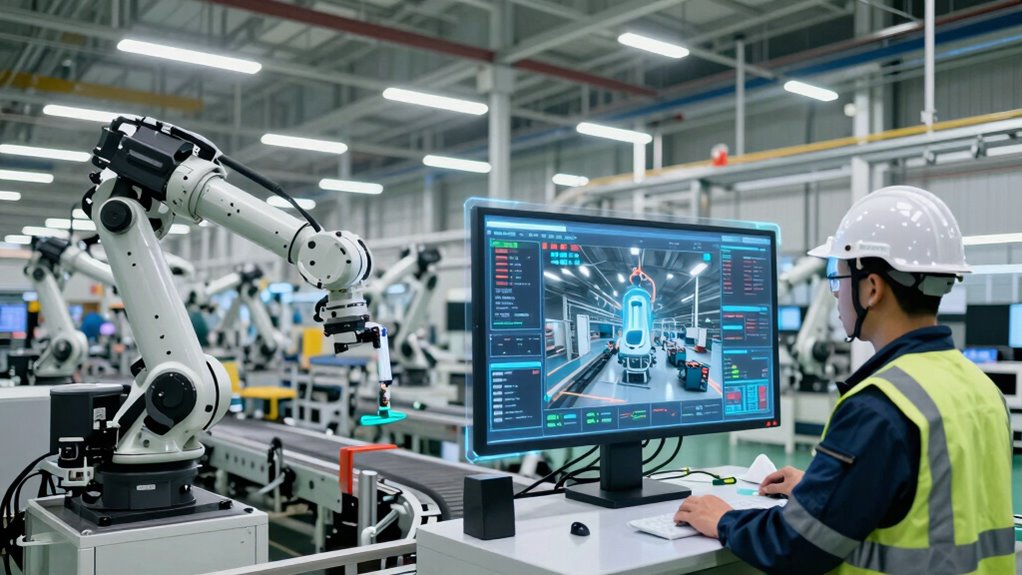
You can use digital twins to create real-time virtual models of your manufacturing equipment, allowing you to monitor performance continuously. By syncing these models with live sensor data, you guarantee they stay accurate and reliable over time. This enables you to detect potential issues early, plan maintenance proactively, and prevent unexpected failures. Using digital twins, you’ll optimize operations, extend equipment life, and stay ahead of problems—much more than just maintenance, as you’ll discover when you explore further.
Key Takeaways
- The plant created dynamic digital replicas of equipment for continuous performance monitoring and real-time data updates.
- Digital twins enabled early detection of potential failures through pattern and anomaly analysis.
- Simulation of operational scenarios optimized maintenance schedules and reduced unexpected downtime.
- Real-time data synchronization ensured virtual models accurately reflected actual asset conditions.
- Predictive insights from digital twins led to proactive maintenance, extending equipment lifespan and increasing efficiency.
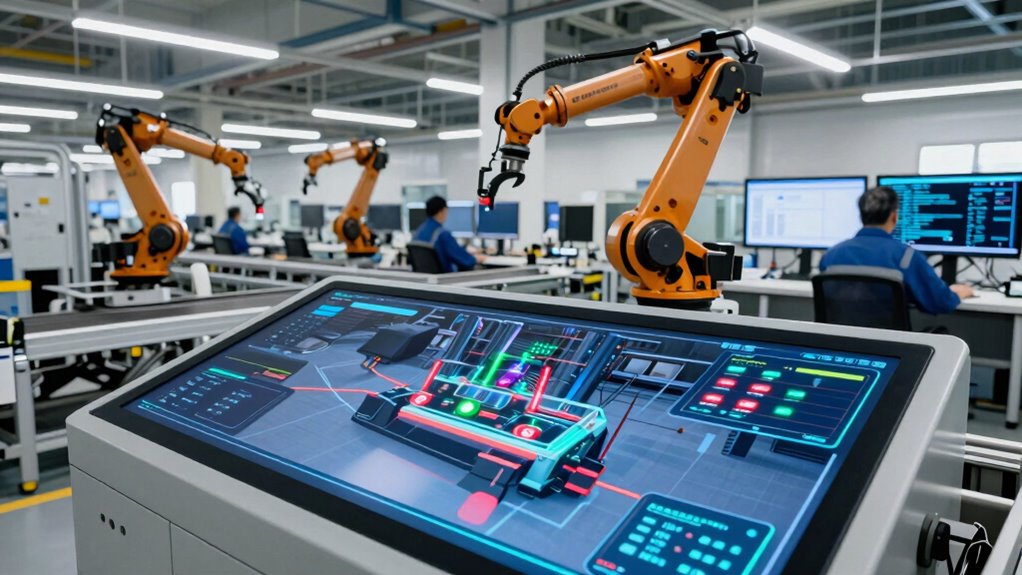
Digital twins are transforming predictive maintenance by providing real-time, accurate simulations of physical assets. When you leverage virtual modeling, you create a dynamic digital replica of your manufacturing equipment, allowing you to monitor and analyze performance continuously. This virtual model mirrors the actual asset’s behavior, capturing every nuance of its operation, which means you can detect potential issues before they escalate. Data synchronization plays a vital role here, ensuring that the digital twin stays up-to-date with live information from sensors embedded in your machinery. As your equipment runs, data flows seamlessly between physical and virtual worlds, maintaining a real-time connection that’s essential for effective predictive maintenance.
Digital twins enable real-time, accurate simulations for predictive maintenance by syncing live sensor data with virtual models.
By integrating virtual modeling with consistent data synchronization, you gain an extensive view of your plant’s operations. Instead of waiting for equipment to break down, you can anticipate failures based on patterns and anomalies detected through the digital twin. For example, if a motor begins to vibrate more than usual, the digital twin immediately reflects this change, alerting you to potential bearing wear. This proactive approach minimizes unexpected downtime, saves costs, and extends the lifespan of your equipment. Furthermore, because the digital twin continuously updates with fresh data, you’re equipped with a high-fidelity simulation that evolves alongside your machinery, offering insights that static dashboards simply can’t provide. Additionally, data synchronization is crucial for maintaining the accuracy and reliability of the virtual model over time. This process ensures that your digital twin remains a trustworthy representation of physical assets. Regular maintenance routines, including oil checks, can also be informed and optimized by insights gained from the digital twin, further enhancing equipment longevity.
The real power of digital twins in predictive maintenance comes from their ability to simulate different scenarios. When you manipulate parameters within the virtual model—perhaps increasing load or adjusting coolant flow—you see how these changes impact performance. This virtual testing allows you to optimize maintenance schedules and operational settings without risking actual equipment. As data synchronization ensures your virtual model is always aligned with reality, your decisions are grounded in the most current information available. It also enables you to predict failures more accurately, reducing unexpected disruptions. Incorporating advanced sensor technology enhances the fidelity of your digital twin, providing deeper insights into your equipment’s condition. It’s like having a crystal ball that shows you potential failures before they happen, giving you the chance to act swiftly and prevent costly downtime.
In your manufacturing plant, implementing digital twins means embracing a smarter, more responsive maintenance strategy. You’re no longer relying solely on scheduled checks or reactive fixes. Instead, you’re using virtual modeling and data synchronization to keep your equipment running smoothly, efficiently, and reliably. This approach not only enhances productivity but also transforms maintenance from a reactive necessity into a strategic advantage. With accurate simulations and real-time data, you’re empowered to make informed decisions, optimize operations, and maintain a competitive edge in today’s fast-paced manufacturing environment.
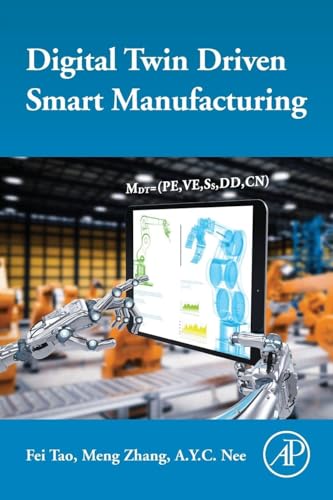
Digital Twin Driven Smart Manufacturing
As an affiliate, we earn on qualifying purchases.
As an affiliate, we earn on qualifying purchases.
Frequently Asked Questions
How Much Does Implementing Digital Twins Typically Cost for a Manufacturing Plant?
Implementing digital twins usually costs between $50,000 and $500,000, depending on the plant’s size and complexity. You should conduct a detailed cost estimation and investment analysis to determine the precise expenses. Factors like software licensing, hardware upgrades, and integration efforts influence the total cost. While it’s a significant investment, many plants find the long-term benefits of improved efficiency and reduced downtime justify the initial expenditure.
What Are the Main Challenges in Integrating Digital Twins With Existing Systems?
You’ll face challenges like guaranteeing data security while integrating digital twins with your existing systems, which requires safeguarding sensitive information from cyber threats. Additionally, tackling integration complexity can be tough because your current infrastructure might not be compatible, demanding custom solutions or upgrades. Overcoming these hurdles involves careful planning, robust cybersecurity measures, and collaboration between your IT and operational teams to guarantee seamless, secure integration.
How Long Does It Take to See ROI From Digital Twin Deployment?
You can typically see ROI within 6 to 12 months of deploying a digital twin, depending on your cost analysis and implementation scope. By monitoring equipment performance and predicting failures, you reduce downtime and maintenance costs. The ROI timeline accelerates if you incorporate digital twins seamlessly with your existing systems and focus on high-impact areas. Regularly evaluating your savings ensures you stay on track and maximize your investment’s value.
What Skills Are Required for Staff to Manage Digital Twins Effectively?
To manage digital twins effectively, you need staff trained in data analysis and digital technologies. Focus on staff training to develop skills in interpreting real-time data, troubleshooting issues, and updating the digital models. They should understand sensor data, IoT systems, and simulation tools. Equipping your team with these skills helps optimize operations, predict failures, and guarantee smooth maintenance, leading to better ROI and operational efficiency.
Are Digital Twins Suitable for All Types of Manufacturing Equipment?
Digital twins aren’t suitable for all manufacturing equipment. Equipment compatibility and data integration are key factors; complex or older machinery may lack the sensors or data interfaces needed for effective digital twin implementation. You need to assess whether your equipment can support real-time data collection and integration. If compatibility or data flow issues arise, digital twins might not deliver the benefits you expect, making them less practical for certain types of equipment.

Machine Reliability and Condition Monitoring: A Comprehensive Guide to Predictive Maintenance Planning (Maintenance Strategy & Reliability Series)
As an affiliate, we earn on qualifying purchases.
As an affiliate, we earn on qualifying purchases.
Conclusion
By embracing digital twins, you transform your manufacturing plant into a finely tuned orchestra, where each instrument plays in harmony. Predictive maintenance becomes your maestro, preventing unexpected breakdowns before they strike. This technology acts as your crystal ball, offering foresight into equipment health and optimizing operations. With digital twins guiding your decisions, you’ll navigate challenges smoothly, turning risks into opportunities. It’s not just innovation—it’s your secret weapon for a resilient, future-ready plant.

Smart Baby Monitor, ContinuousThermal Tracking System with 24-Hour Real-Time Monitoring, Audio & High-Temperature Alerts for Infant Safety
24/7 Real-Time Thermal Monitoring: The smart bedside LCD base keeps you informed day and night without disturbing your…
As an affiliate, we earn on qualifying purchases.
As an affiliate, we earn on qualifying purchases.

Virtual Industries HV-KIT-B Handi-VAC HANDLING Tool Static Dissipative
Please read descriptions carefully before ordering.
As an affiliate, we earn on qualifying purchases.
As an affiliate, we earn on qualifying purchases.