
📊 Full opportunity report: The Memory Squeeze: Why Your RAM Bill Doubled on ThorstenMeyerAI.com — validation score, market gap, and execution plan.

TL;DR

Memory prices have doubled or tripled in early 2026 due to a strategic industry shift toward AI chip production. Major manufacturers prioritize high-margin AI components over consumer RAM, causing shortages and price hikes.

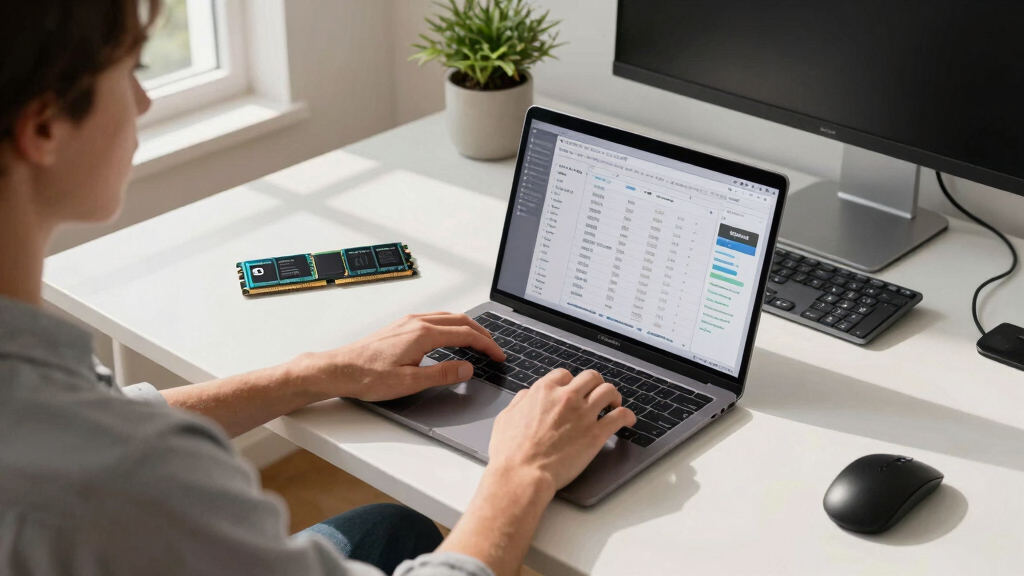
Memory prices have surged dramatically in 2026, with the cost of a 32GB DDR5 kit rising from about $120 to nearly $375, and 64GB kits exceeding $600. This sharp increase is driven by a fundamental industry shift, as manufacturers prioritize AI hardware over consumer RAM, creating a persistent shortage and record-high prices.The core cause of the price hike is a reallocation of wafer fabrication capacity by the three dominant DRAM producers—Samsung, SK Hynix, and Micron—toward manufacturing High Bandwidth Memory (HBM) for AI accelerators. HBM is far more profitable but consumes significantly more wafer area per bit, reducing the supply of standard consumer DRAM. This strategic shift means that, unlike past shortages, increased capacity cannot quickly resolve the issue, as new fabs are years away and existing capacity is deliberately held back to maintain high margins. Major buyers, including hyperscalers, are placing large, long-term contracts, further limiting supply for the broader market. As a result, consumer brands like Apple, Lenovo, and Dell are raising prices, and counterfeit modules are emerging amid the scarcity.
At a glance
reportWhen: ongoing; price increases observed throu…
The developmentThe global DRAM market is experiencing a significant price surge, with prices doubling or more, driven by a deliberate reallocation of manufacturing capacity toward AI hardware.
The Memory Squeeze — Why Your RAM Bill Doubled
AI Dispatch · Reality Check · The Memory Squeeze · Part 1 of 10

Why your RAM bill doubled

“Doubled” is the polite version — consumer DRAM is running 3–6× its 2024 lows. The boom-bust cycle that always brought cheap RAM back isn’t coming this time, because the factories that make your RAM now make something far more profitable instead.

The price shock — then vs. now
32GB DDR5 kit$80–120$375
64GB DDR5 kit$150–200$600+
DRAM price move, Q1 2026 alone+90% in one quarter
Memory’s share of a PC’s parts cost15–18%~35%
The mechanism: a zero-sum game inside the fab
1 bit
HBM
=
…of consumer DDR5 wafer area, removed from the world.
One bit of HBM eats 3–4× the wafer area of DDR5. Every wafer shifted to AI doesn’t subtract one wafer of your RAM — it subtracts three or four.
HBM module: $60–100  vs  comparable DDR5: $5–10
HBM now eats ~23% of all DRAM wafer output (up from 19%)
Why it won’t fix itself on the old timeline
~16% supply growth
vs the 20–30% historical norm (IDC, 2026)
Fabs in 2027–28
new capacity is years out; build times in years
~95% in 3 hands
suppliers managing scarcity, not racing to solve it
Locked to 2030
take-or-pay deals spoke for the supply already
The casualties already visible
Micron retired the Crucial consumer brand Apple hiked prices (stock −6%) Framework DDR5 +50% DDR4 now ≥ DDR5 per GB Allocation favors hyperscalers — small buyers last
The take

This is the quiet tax on the whole AI era. Relief isn’t forecast before 2028, and even then prices may settle 30–50% above pre-crisis levels. Buy what you genuinely need now; don’t panic-buy capacity you won’t use. You can’t out-wait the fab math — but, as this series will show, you can shrink what you need. Next: HBM Ate the Fab.

Sources: Tom’s Hardware price tracker; IDC; TrendForce; Counterpoint; Micron Q3 FY26; Wikipedia “2025–present memory shortage”; Sourceability. Figures are point-in-time, late June 2026, and fast-moving.
thorstenmeyerai.com

Why the Memory Shortage Has Lasting Impact

This shift toward high-margin AI memory components means that the traditional supply-demand dynamics no longer apply. Consumers face persistent shortages and record prices, and the industry’s strategic focus on AI hardware is likely to sustain these conditions well into the future. The scarcity affects not only individual consumers but also the entire PC and electronics manufacturing ecosystem, potentially slowing innovation and increasing costs across the board.
Crucial 32GB DDR5 RAM Kit (2x16GB), 5600MHz (or 5200MHz or 4800MHz) Laptop Memory 262-Pin SODIMM, Compatible with Intel Core and AMD Ryzen 7000, Black - CT2K16G56C46S5

Crucial 32GB DDR5 RAM Kit (2x16GB), 5600MHz (or 5200MHz or 4800MHz) Laptop Memory 262-Pin SODIMM, Compatible with Intel Core and AMD Ryzen 7000, Black – CT2K16G56C46S5

  • Memory Capacity: 32GB DDR5 RAM Kit (2x16GB)
  • Memory Speed: 5600MHz, 5200MHz, or 4800MHz
  • Performance Boost: Enhances multitasking and responsiveness

As an affiliate, we earn on qualifying purchases.

As an affiliate, we earn on qualifying purchases.
Industry Shift Toward AI-Optimized Memory Manufacturing

Historically, DRAM shortages were resolved through increased capacity and market flooding, but the current situation is different. The three main producers—Samsung, SK Hynix, and Micron—are reallocating wafer capacity to produce HBM for AI, which is more profitable but less efficient in wafer area. This reallocation has been ongoing since late 2025, with the share of wafer output dedicated to AI memory rising from 19% to 23%. New capacity expansions are not expected to significantly impact supply until 2027–2028, and existing capacity is being deliberately held back to preserve margins. The demand for AI hardware continues to grow rapidly, outpacing supply increases, and large buyers are locking in multi-year contracts, further constraining supply for the broader market.

“We are focused on serving enterprise AI customers, which influences our product allocation and pricing strategies.”

— Micron spokesperson

CORSAIR Vengeance RGB RS DDR5 RAM 64GB (2x32GB) Up to 6000MHz CL40-50-50-96 1.35V AMD Expo Intel XMP Computer Desktop Memory – Gray (CMG64GX5M2D6000Z40)

CORSAIR Vengeance RGB RS DDR5 RAM 64GB (2x32GB) Up to 6000MHz CL40-50-50-96 1.35V AMD Expo Intel XMP Computer Desktop Memory – Gray (CMG64GX5M2D6000Z40)

  • Maximum Speed Requires Overclocking: Requires BIOS adjustments for max speed
  • Dynamic RGB Lighting: Individually addressable RGB lighting with panoramic diffuser
  • Onboard Voltage Regulation: Ensures reliable power at high frequencies

As an affiliate, we earn on qualifying purchases.

As an affiliate, we earn on qualifying purchases.
Unclear Duration and Future Market Dynamics

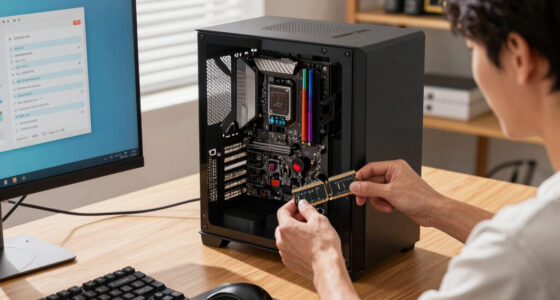
It remains uncertain how long the capacity reallocation will persist and whether new capacity expansions will eventually alleviate the shortage. While some expect relief around 2027–2028, the industry’s strategic focus on high-margin AI memory suggests shortages may continue or even intensify if demand for AI hardware outpaces supply growth. The exact impact of potential anti-trust investigations or market interventions is also still unclear.
Lexar OC DDR5 RAM 1x8GB 6000MHz CL38 288-Pin UDIMM Desktop Memory

Lexar OC DDR5 RAM 1x8GB 6000MHz CL38 288-Pin UDIMM Desktop Memory

  • High-speed DDR5 RAM: 6000MT/s with low latency CL38
  • Premium Aluminum Heatsink: Sandblasted, thermally efficient design
  • Compact Low-profile Design: 39mm height for versatile compatibility

As an affiliate, we earn on qualifying purchases.

As an affiliate, we earn on qualifying purchases.

Projected Developments and Industry Responses

Manufacturers are expected to continue prioritizing AI memory production through 2026 and into 2027, with capacity expansions not expected to significantly ease shortages until late 2027 or early 2028. Consumers and PC builders should prepare for ongoing high prices and limited supply, while industry analysts monitor capacity plans and potential market interventions. Long-term contracts with key buyers will likely sustain high prices, and counterfeit modules may become more prevalent. The industry may also explore new fab investments or technological innovations to address supply constraints eventually.
Radxa Cubie A7A,Edge AI Platform,High-Speed LPDDR5,Single Board Computer (Radxa Cubie A7A 6GB)

Radxa Cubie A7A,Edge AI Platform,High-Speed LPDDR5,Single Board Computer (Radxa Cubie A7A 6GB)

  • Powerful Computing: High-speed LPDDR5 memory for edge AI
  • Versatile Connectivity: Multiple USB, HDMI, Ethernet ports
  • Compact Design: Space-efficient circuit board layout

As an affiliate, we earn on qualifying purchases.

As an affiliate, we earn on qualifying purchases.

Key Questions

Why are RAM prices so high right now?

Prices have surged because manufacturers are reallocating wafer capacity from consumer RAM to more profitable AI memory, creating a supply shortage.

Will RAM prices go down soon?

It is unlikely in the near term, as new capacity expansions are years away and existing capacity is deliberately held back to maintain margins.

How does AI hardware affect consumer memory supply?

AI hardware requires high-margin HBM memory, which consumes a larger portion of wafer output, reducing the supply of standard consumer RAM.

Are there alternatives to DDR5 for consumers?

DDR4 remains available but is now nearly as expensive as DDR5, and future upgrades may be limited as DDR4 approaches end-of-life.

What can consumers do about rising RAM costs?

Consumers can consider delaying upgrades, exploring alternative configurations, or purchasing during sales, but prices are expected to remain high until supply improves.

Source: ThorstenMeyerAI.com

You May Also Like

The Speed And Scale Of China’s AI Releases: Four Models In Two Months

Chinese labs launched four major open-weight AI models between April and June 2026, signaling a rapid production line that impacts global AI development and sovereignty.

7 Best Tablet Stands and Docks for Prime Day Deals in 2026

Discover the best tablet stands and docks on Prime Day 2026, including options for desk, bed, and portable use, with expert picks and buying tips.

Operational SOP drift detector for franchise operators

A new SOP comparison tool is being tested for multi-location franchises to detect procedural drift, helping maintain consistency across outlets.

The Future Of AI: 8 Key Trends To Follow In 2026

Discover the eight major AI trends shaping 2026, including advancements in generative models, ethical AI, and industry adoption, based on expert insights.