
📊 Full opportunity report: Anonymous daily check-ins for 12-step sponsors on IdeaNavigator AI — validation score, market gap, and execution plan.
TL;DR
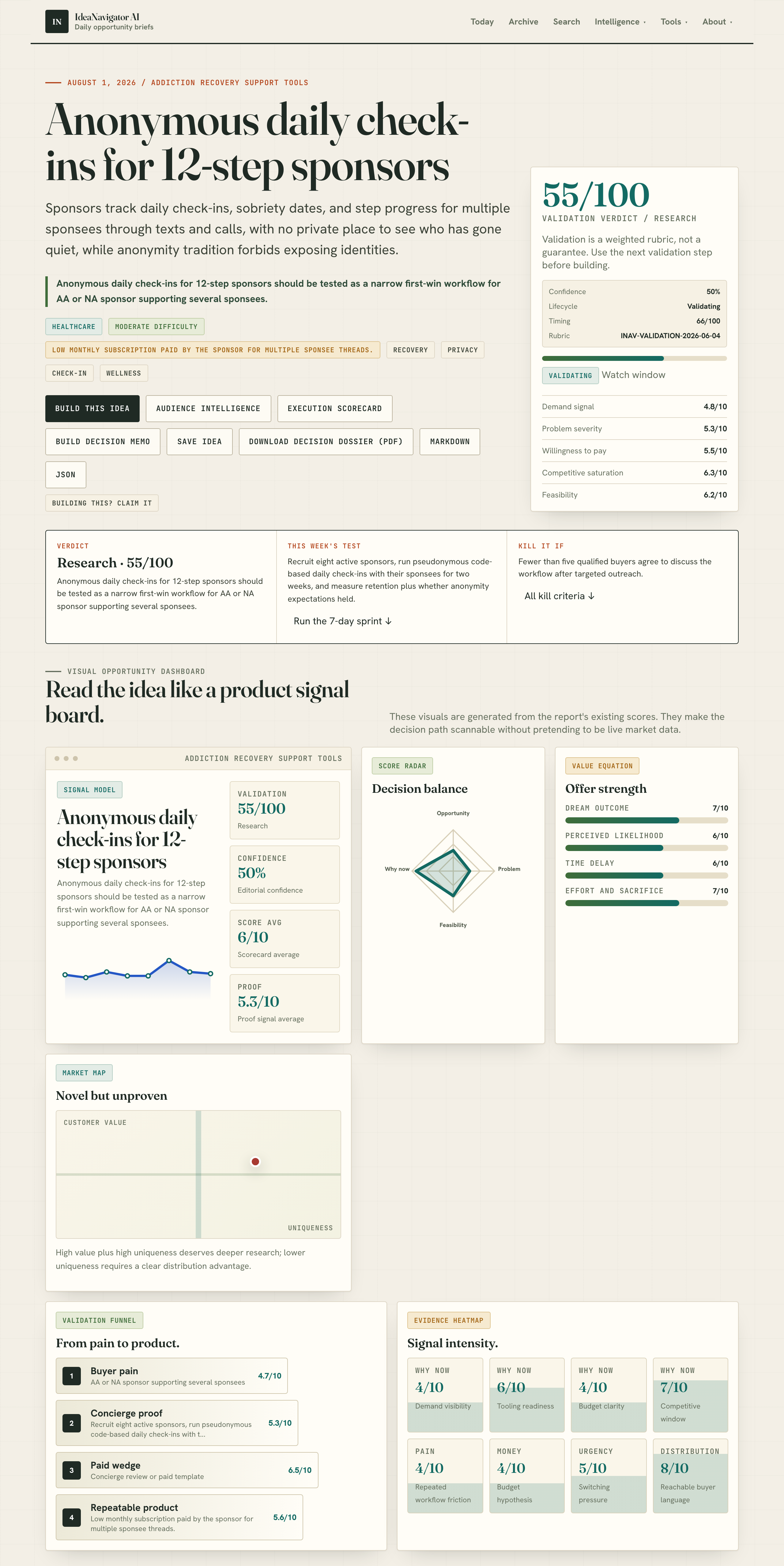
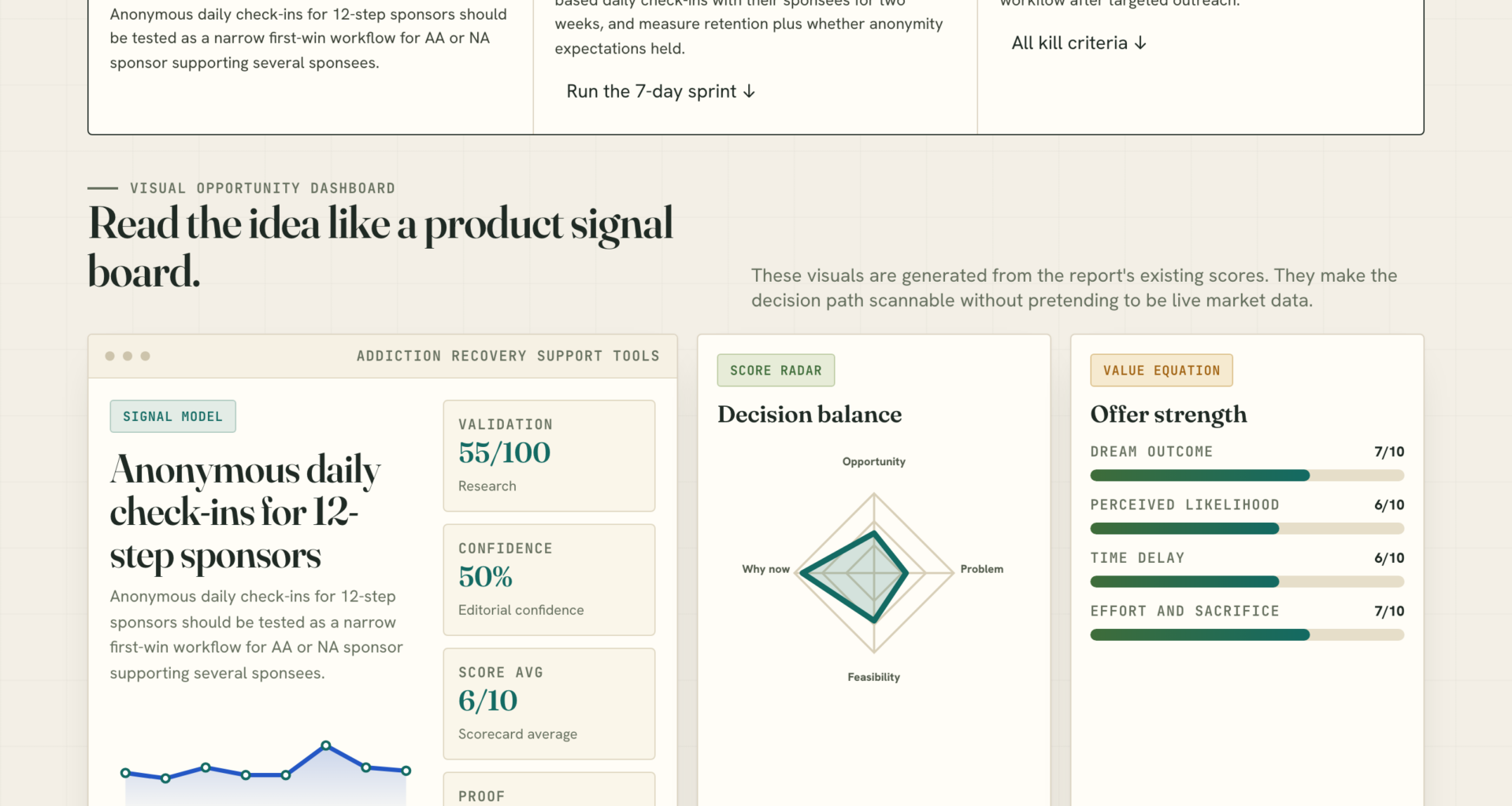
A proposed tool enables 12-step sponsors to conduct anonymous daily check-ins with multiple sponsees via pseudonymous codes. Pilot testing is planned to evaluate its effectiveness and privacy benefits, addressing longstanding confidentiality concerns.
Developers are launching a pilot program to test a new system that allows 12-step sponsors to conduct anonymous daily check-ins with multiple sponsees using pseudonymous codes. This initiative aims to address privacy concerns while maintaining effective support, a challenge that has grown as recovery support shifts onto mobile devices.
The proposed platform involves sponsors inviting sponsees via a one-time code, which then allows for daily status updates through a simple green or red check-in and optional notes. Importantly, no real names or phone numbers are stored, preserving anonymity in line with traditional twelve-step principles.
According to an anonymous researcher involved in the project, the system is designed to be a minimal viable product (MVP) that tests whether anonymity expectations can be upheld while providing a practical way to track progress across multiple sponsees. The initial test will involve eight active sponsors using the platform over a two-week period, measuring retention and adherence to anonymity standards.
Funding for the project is expected to come from a low monthly subscription paid by sponsors, supporting multiple pseudonymous check-in threads. The goal is to validate whether this approach can become a scalable tool for addiction recovery support, especially as digital communication increasingly replaces traditional in-person meetings.
Potential Impact on Privacy and Support in Recovery
This new check-in system could significantly improve privacy protections for individuals in recovery, addressing long-standing concerns about the exposure of identities through digital communication tools. If successful, it may set a new standard for confidentiality in online recovery support, enabling sponsors to better monitor progress without risking breaches of anonymity.
Furthermore, the system could streamline sponsor-sponsee interactions, making daily check-ins more manageable and consistent, particularly for sponsors supporting multiple sponsees. This could enhance engagement and accountability, which are critical for sustained recovery.
However, the approach also raises questions about security and whether pseudonymous codes can be reliably maintained without leaks or breaches. Its adoption could influence how digital tools are integrated into twelve-step programs and similar recovery frameworks.
As an affiliate, we earn on qualifying purchases.
Digital Shift in Recovery Support and Privacy Challenges
As addiction recovery support increasingly moves onto mobile devices, concerns about privacy breaches and identity leaks have grown. Mainstream messaging apps and habit-tracking tools often store or transmit real names and contact details, conflicting with the core twelve-step principle of anonymity.
Existing digital tools lack dedicated privacy safeguards for sponsorship relationships, leading to potential risks of exposure or breaches. This has prompted developers and recovery advocates to explore pseudonymous systems that can balance support needs with confidentiality.
The proposed platform is part of a broader effort to adapt twelve-step principles to the digital age, providing a confidential and scalable method for daily check-ins that respects traditional privacy standards.
“The goal is to test whether a pseudonymous check-in system can uphold anonymity while providing a practical support tool for sponsors and sponsees.”
— an anonymous researcher
As an affiliate, we earn on qualifying purchases.
Unconfirmed Aspects of System Security and Adoption
It is not yet clear whether the pseudonymous check-in system will prove secure against potential leaks or breaches over extended use. Additionally, the long-term adoption and integration into existing twelve-step practices remain uncertain, pending results from the initial pilot.
Questions also remain about how sponsors and sponsees will perceive the system’s ease of use, privacy guarantees, and whether it can scale beyond the initial eight participants.
privacy-focused sobriety tracking app
As an affiliate, we earn on qualifying purchases.
As an affiliate, we earn on qualifying purchases.
Next Steps for Pilot Testing and Evaluation
The project team plans to monitor the eight sponsors using the platform over the upcoming two weeks, collecting data on retention, privacy adherence, and user feedback. Results will inform whether the system warrants further development or wider deployment.
If successful, developers may expand the pilot, refine the platform, and explore integration with existing recovery apps. Further research will also assess long-term privacy and support efficacy.
pseudonymous recovery support platform
As an affiliate, we earn on qualifying purchases.
As an affiliate, we earn on qualifying purchases.
Key Questions
How does the pseudonymous check-in system protect privacy?
The system uses one-time codes to identify sponsees, with no storage of real names or contact details, reducing the risk of identity leaks while enabling daily status updates.
Can this system replace in-person sponsor meetings?
It is designed as a supplementary tool to support ongoing accountability, not a replacement for face-to-face meetings, but it could enhance remote or virtual support options.
What are the main risks associated with this platform?
Potential risks include security breaches, code leaks, or misuse that could compromise anonymity. Ongoing testing aims to evaluate and mitigate these concerns.
Will this system be available to all sponsors and sponsees?
Initially, the pilot targets a small group of active sponsors; broader availability will depend on pilot outcomes and further development.
Source: IdeaNavigator AI