

Software testing tools for students come in two broad flavors: hands-on automation frameworks like Selenium WebDriver, and structured learning resources that teach you how to think like a tester before you touch any code. After comparing the nine strongest options for 2026, my best overall pick is Full Stack Testing: A Practical Guide for Delivering High Quality Software, because it covers the entire quality pipeline rather than a single tool. Students focused on employability should look at the Selenium WebDriver with Java training guide, while anyone pursuing certification will want the ISTQB Foundations, 4th Edition text. The main tradeoff you will face is depth versus breadth — tool-specific books make you productive fast but date quickly, while methodology-focused titles age better but demand more patience. Keep reading for the full breakdown of where each option fits.

Get business pricing on monitors, keyboards and dev gear
- Business-only prices and quantity discounts
- Tax-exempt purchasing
- Multiple users, one account, clear invoices
Key Takeaways
- Breadth-first resources (Full Stack Testing) won the top spot because students who understand the whole quality pipeline learn any specific tool faster afterward.
- The two Selenium-focused titles split cleanly by language: the Java/POM guide suits students targeting enterprise jobs, while the Python edition fits data-oriented and scripting-heavy coursework.
- ISTQB Foundations is the only pick with direct certification value — worth prioritizing if your degree program or target employers recognize the credential.
- Two titles in this roundup share the same name (Full Stack Testing); the AI-focused edition is the more current choice unless you need the classic edition for a specific syllabus.
- Effective Software Testing: A Developer’s Guide filled a gap the others ignored: teaching computer science students to test their own code rather than QA as a separate career track.
| Lessons Learned in Software Testing: A Context-Driven Approach |  | Best for Building Testing Judgment | Format: Print/eBook book | Approach: Context-driven testing philosophy | Audience: Aspiring and practicing testers | VIEW LATEST PRICE | See Our Full Breakdown |
| Full Stack Testing: A Practical Guide for Delivering High Quality Software |  | Best for Career-Focused Students | Format: Print/eBook book | Coverage: Full stack: UI, API, backend, CI/CD | Audience: Developers and QA professionals | VIEW LATEST PRICE | See Our Full Breakdown |
| Learning Selenium Testing Tools with Python |  | Best for Hands-On Automation Beginners | Format: Print/eBook book | Primary Tool: Selenium with Python | Scope: Web application automation | VIEW LATEST PRICE | See Our Full Breakdown |
| Software Test Design: Write Comprehensive Test Plans to Uncover Critical Bugs in Web, Desktop, and Mobile Apps | 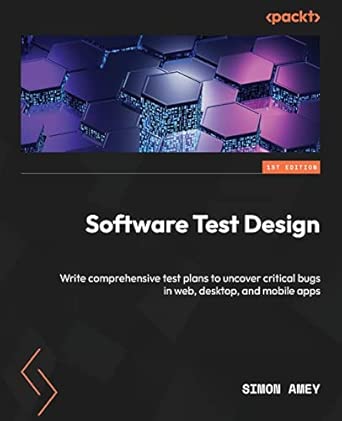 | Best for Test Planning Skills | Format: Print/eBook book | Focus: Test plan and test case design | Platforms Covered: Web, desktop, mobile | VIEW LATEST PRICE | See Our Full Breakdown |
| Selenium WebDriver Automation Tool Training with Java, Eclipse, TestNG, POM Framework, and Practical Tips |  | Best for Job-Market Readiness | Format: Training course | Primary Tools: Selenium WebDriver, Java, Eclipse | Frameworks Covered: TestNG, Page Object Model (POM) | VIEW LATEST PRICE | See Our Full Breakdown |
| Full Stack Testing: A Practical Guide for Delivering High Quality Software in the Age of AI |  | Best for Future-Proof Skills | Format: Book (digital edition available) | Topic Focus: Full stack software testing | AI Coverage: Yes — testing in the age of AI | VIEW LATEST PRICE | See Our Full Breakdown |
| Foundations of Software Testing ISTQB Certification, 4th Edition |  | Best for Certification Prep | Format: Paperback textbook, 4th Edition | Topic Focus: Software testing principles and practices | Certification Alignment: ISTQB Foundation Level | VIEW LATEST PRICE | See Our Full Breakdown |
| Effective Software Testing: A Developer’s Guide |  | Best for Developer-Testers | Format: Book (print and digital) | Topic Focus: Developer-oriented software testing | Intended Audience: Developers | VIEW LATEST PRICE | See Our Full Breakdown |
| AI Integrated Software Automation Testing with Java and Selenium |  | Best for Portfolio-Building Automation | Programming Language: Java | Frameworks: Selenium WebDriver, TestNG | AI Integration: Yes — GitHub Copilot support | VIEW LATEST PRICE | See Our Full Breakdown |
| software testing tools for student | Format | Certification Alignment | Content Type |
|---|---|---|---|
| Lessons Learned in Software Te | Print/eBook book | No | Real-world lessons and strategies |
| Full Stack Testing: A Practica | Print/eBook book | No | Methodologies, tools, best practices |
| Learning Selenium Testing Tool | Print/eBook book | — | Automation techniques, examples, best practices |
| Software Test Design: Write Co | Print/eBook book | No | Testing strategies and planning guidance |
| Selenium WebDriver Automation | Training course | — | Step-by-step tutorials and practical tips |
| Full Stack Testing: A Practica | Book (digital edition available) | None | — |
| Foundations of Software Testin | Paperback textbook, 4th Edition | ISTQB Foundation Level | — |
| Effective Software Testing: A | Book (print and digital) | None | — |
| AI Integrated Software Automat | — | — | — |
More Details on Our Top Picks
Lessons Learned in Software Testing: A Context-Driven Approach
Most testing books hand students a checklist; this one teaches them how to think about testing as a craft. The context-driven philosophy means readers learn that no technique works everywhere — a lesson that separates thoughtful testers from button-pushers. Compared with Software Test Design, which focuses on producing concrete test plans, this book is more about mental models and real-world judgment, drawn from decades of accumulated practitioner experience.
The tradeoff is real, though: a student expecting step-by-step tutorials or tool walkthroughs will be disappointed. There is no code, no framework setup, and nothing about automation — students pairing this with a hands-on resource like Learning Selenium Testing Tools with Python will get the theory-plus-practice combination that works best.
Pros:- Teaches transferable thinking rather than tool-specific steps
- Draws on real-world practitioner lessons, not abstract theory
- Applicable across any testing role, from QA to developer
- Serves as a long-term career reference, not a disposable textbook
Cons:- Contains no hands-on exercises, code, or automation instruction
- Dense and philosophical — slower reading than practical guides
- Not aligned with any certification syllabus like ISTQB
Best for: Students who already know basic testing mechanics and want to develop professional judgment and context-aware strategy
Not ideal for: Absolute beginners who need tool tutorials and code examples — this book assumes familiarity with testing concepts
- Format:Print/eBook book
- Approach:Context-driven testing philosophy
- Audience:Aspiring and practicing testers
- Content Type:Real-world lessons and strategies
- Hands-On Code:None
- Certification Alignment:No
Our verdict“This is the pick for students who want to understand why testing decisions matter, provided they get hands-on practice elsewhere.”
Full Stack Testing: A Practical Guide for Delivering High Quality Software
For a student aiming at a modern QA or developer role, this book maps the whole territory: frontend, backend, APIs, and CI/CD testing practices under one cover. Where Lessons Learned in Software Testing builds judgment without tools, this guide goes the opposite direction — it is practical and pipeline-oriented, reflecting how software quality work actually happens in industry today.
Compared with Learning Selenium Testing Tools with Python, it trades depth in one tool for breadth across the entire stack, which is exactly the right trade for someone deciding on a specialization. The cost of that breadth is depth: some sections skim past detailed code examples, and students wanting copy-paste automation scripts will need supplementary material.
Pros:- Covers the entire testing stack, from UI to backend to CI/CD
- Reflects current industry practices, making it resume-relevant
- Written for both developers and QA professionals
- Practical delivery focus rather than exam-syllabus material
Cons:- Some sections lack detailed code examples
- Broad scope means each individual topic gets limited depth
- Assumes some programming comfort from the reader
Best for: Students targeting full-time QA engineering or DevOps-adjacent roles who need end-to-end awareness of modern testing pipelines
Not ideal for: Students who want deep mastery of a single automation tool — the breadth here comes at the expense of tool-specific depth
- Format:Print/eBook book
- Coverage:Full stack: UI, API, backend, CI/CD
- Audience:Developers and QA professionals
- Content Type:Methodologies, tools, best practices
- Prerequisites:Basic programming knowledge
- Certification Alignment:No
Our verdict“The strongest single book for a student planning a testing career, as long as they supplement it with tool-specific practice.”
Learning Selenium Testing Tools with Python
When the goal is actually writing test code this semester, this is the most direct route on the list. Selenium plus Python is the friendliest automation entry point for students — readable syntax, free tooling, and immediate visual results in a browser. Compared with the Selenium WebDriver Automation Tool Training course, which uses Java and heavier tooling like Eclipse and TestNG, this Python-based path lowers the programming barrier considerably.
The book balances practical examples with best practices, so students build habits rather than just scripts. The tradeoff: it is narrowly scoped to web application testing. Anyone following Full Stack Testing will notice entire areas — API testing, mobile, CI pipelines — are simply out of scope here. Students also should verify edition currency, since Selenium’s API evolves.
Pros:- Python makes automation accessible to early-programming students
- Practical, runnable examples throughout
- Scales from beginner exercises to experienced-tester techniques
- Directly builds demonstrable portfolio skills
Cons:- Limited to web application testing only
- Edition and publication date uncertainty means content may lag current Selenium versions
- No coverage of interviewing staples like TestNG or JUnit
Best for: Students with basic Python skills who want to build portfolio-worthy web automation projects quickly
Not ideal for: Students preparing for interviews at Java-based shops, or those needing coverage beyond web UI testing
- Format:Print/eBook book
- Primary Tool:Selenium with Python
- Scope:Web application automation
- Audience:Beginners to experienced testers
- Content Type:Automation techniques, examples, best practices
- Prerequisites:Basic Python
Our verdict“The fastest path from zero to working web test automation, ideal for Python-comfortable students building a portfolio.”
Software Test Design: Write Comprehensive Test Plans to Uncover Critical Bugs in Web, Desktop, and Mobile Apps
Automation gets the glory, but test design is the skill interviewers actually probe. This book targets that gap directly: how to structure test plans that surface critical bugs across web, desktop, and mobile. Where Learning Selenium Testing Tools with Python teaches students to execute tests, this one teaches them to decide what to test in the first place — arguably the harder and rarer skill.
Compared with Lessons Learned in Software Testing, it is far more prescriptive: templates, structures, and concrete planning guidance rather than philosophy. That makes it better coursework companion material. The drawback is that it stays tool-agnostic, so students wanting runnable automation will finish this book with strong plans and no scripts to show for them.
Pros:- Teaches test plan creation, a skill rarely covered in coding bootcamps
- Applies across web, desktop, and mobile platforms
- Focuses on uncovering critical bugs, not just coverage metrics
- Directly useful for internship assignments and coursework
Cons:- No automation or tool instruction at all
- Unclear audience leveling — beginners may find planning frameworks abstract
- Coverage of three platforms means less depth per platform
Best for: Students preparing for internships or coursework that require writing formal test plans and test cases
Not ideal for: Students focused purely on automation engineering — the tool-agnostic content leaves them without coding practice
- Format:Print/eBook book
- Focus:Test plan and test case design
- Platforms Covered:Web, desktop, mobile
- Content Type:Testing strategies and planning guidance
- Hands-On Code:None — tool-agnostic
- Certification Alignment:No
Our verdict“The right choice for students who need to master what to test, ideally paired with an automation book for how to test it.”
Selenium WebDriver Automation Tool Training with Java, Eclipse, TestNG, POM Framework, and Practical Tips
This training course mirrors what actual job postings ask for: Selenium WebDriver with Java, TestNG, and the Page Object Model framework. Compared with Learning Selenium Testing Tools with Python, it demands more upfront — Java syntax and the Eclipse IDE — but pays that back with skills that map one-to-one onto enterprise QA automation roles. The POM framework coverage is a genuine differentiator; most beginner books stop at writing scripts, while this teaches structuring them the way real teams do.
The tradeoff is a steeper climb. A student without Java fundamentals will struggle early, and compared with Full Stack Testing, the scope is deliberately narrow — WebDriver only, no API or performance testing. Sparse details on course duration and level mean buyers should verify it matches their starting point.
Pros:- Teaches the exact Java, TestNG, and POM stack employers list in QA job ads
- Step-by-step tutorials make framework building approachable
- POM framework instruction goes beyond basic scripting
- Includes practical tips drawn from real automation work
Cons:- Requires existing Java fundamentals to be productive
- Narrowly focused on WebDriver — no API, mobile, or CI/CD content
- Vague documentation on course duration and difficulty level
Best for: Students with Java basics targeting enterprise QA automation roles where TestNG and POM are standard requirements
Not ideal for: Students without Java experience — the early modules will be a wall, and the Python Selenium book is the gentler start
- Format:Training course
- Primary Tools:Selenium WebDriver, Java, Eclipse
- Frameworks Covered:TestNG, Page Object Model (POM)
- Scope:Web UI automation
- Content Type:Step-by-step tutorials and practical tips
- Prerequisites:Java programming basics
Our verdict“The most employability-focused option on the list, provided the student already speaks Java.”
Full Stack Testing: A Practical Guide for Delivering High Quality Software in the Age of AI
For a student who wants their testing education to stay relevant as AI reshapes development, this book earns its place by covering the full testing stack — from unit checks to deployment pipelines — through an AI lens. Compared with Foundations of Software Testing ISTQB Certification, which anchors you in exam-standard fundamentals, this title pushes into modern continuous delivery practices that hiring managers increasingly expect. The tradeoff is depth of theory: it moves fast, and readers without prior coursework may find chapters on AI-augmented testing assume background knowledge. It also lacks detailed case studies, so students hoping for worked, end-to-end project walkthroughs should pair it with something like Software Test Design. This pick makes the most sense as a second or third testing book, not a first.
Pros:- Covers the entire testing stack, from low-level checks to delivery pipelines, giving a broad mental model
- Directly addresses AI integration, a skill gap most older testing books ignore
- Practical guidance students can apply to class projects and portfolio work immediately
- Bridges academic theory and what modern engineering teams actually practice
Cons:- Lacks detailed case studies, so there are few fully worked real-world examples to model assignments on
- Too technical for beginners; assumes familiarity with software development workflows
Best for: Intermediate CS students and bootcamp graduates who already know basic testing concepts and want to specialize in modern, AI-integrated quality practices
Not ideal for: Complete beginners who need vocabulary and fundamentals first — the pace and AI focus will feel overwhelming without a foundations text underneath it
- Format:Book (digital edition available)
- Topic Focus:Full stack software testing
- AI Coverage:Yes — testing in the age of AI
- Skill Level:Intermediate
- Includes:Best practices, tools, and delivery strategies
- Case Studies:Limited
- Certification Alignment:None
Our verdict“Students aiming for internships at modern software shops should pick this up after mastering fundamentals, not before.”
Foundations of Software Testing ISTQB Certification, 4th Edition
If a credential is the goal — and for many students it should be, since ISTQB Foundation Level is the most widely recognized entry certification in testing — this is the clear choice. Unlike Effective Software Testing: A Developer’s Guide, which teaches testing as a coding discipline, this book is organized around the ISTQB syllabus itself, with terminology, techniques, and structures mapped to what appears on the exam. The downside is tone: it reads like a study guide rather than a hands-on tutorial, and students who learn by building things will find fewer practical exercises here than in the Selenium-based options in this roundup. Compared with Full Stack Testing, it trades modern relevance for certification precision — a deliberate and defensible tradeoff for résumé building.
Pros:- Directly aligned with the ISTQB Foundation Level syllabus, reducing exam-prep guesswork
- Establishes industry-standard terminology that transfers to job interviews and real teams
- Structured, systematic coverage of testing principles, techniques, and standards
- Fourth edition reflects current certification requirements
Cons:- Study-guide format with limited hands-on exercises or code examples
- Little community feedback available — few reviews or ratings to gauge how well it works for self-study
Best for: Students preparing specifically for the ISTQB Foundation Level exam, or those who want industry-recognized vocabulary and structured fundamentals
Not ideal for: Learners who want hands-on automation practice — there is little code here, so developers seeking practical testing skills should look at the Selenium or Java-based picks instead
- Format:Paperback textbook, 4th Edition
- Topic Focus:Software testing principles and practices
- Certification Alignment:ISTQB Foundation Level
- Skill Level:Beginner to intermediate
- Includes:Fundamental concepts, testing techniques, industry standards
- Hands-On Content:Limited
- Edition:4th
Our verdict“Buy this if passing the ISTQB Foundation exam is your objective; skip it if you want to learn testing through writing code.”
Effective Software Testing: A Developer’s Guide
Most testing resources treat QA as a separate role; this one doesn’t, and that shift is exactly why it belongs here. Written for developers who test their own code, it teaches testing strategy as part of the development workflow rather than a downstream quality gate. Compared with Foundations of Software Testing ISTQB Certification, it is less formal and far more applied to daily coding practice, though it offers no certification path. And where AI Integrated Software Automation Testing with Java and Selenium jumps straight into tooling and frameworks, this book focuses on the thinking behind good tests — what to test, when, and why — which is knowledge that outlives any framework. The honest drawback: examples are thin in places, and a student who has never written a unit test may need supplementary tutorials.
Pros:- Teaches testing as an integral part of development, matching how modern engineering teams actually work
- Strategy-first approach that remains useful regardless of which tools you adopt later
- Practical guidance students can apply directly to coursework, side projects, and internships
- Focused enough to read in a semester without competing with class material
Cons:- Lacks detailed worked examples, so concepts sometimes stay abstract
- Assumes programming background — genuinely difficult for students new to coding
Best for: CS students and early-career developers who want to embed testing into their own coding workflow instead of treating QA as someone else’s job
Not ideal for: Students aiming for dedicated QA analyst roles or certification — the developer-centric framing and absence of ISTQB alignment leave those gaps unfilled
- Format:Book (print and digital)
- Topic Focus:Developer-oriented software testing
- Intended Audience:Developers
- Skill Level:Intermediate — assumes coding knowledge
- Includes:Testing strategies, best practices, quality techniques
- Certification Alignment:None
- Hands-On Content:Moderate — strategies over exercises
Our verdict“This is the right pick for the student developer who wants to write better code, not the aspiring certification holder.”
AI Integrated Software Automation Testing with Java and Selenium
For students who want résumé-proof automation skills, this stands out as the most hands-on option in the lineup. It pairs Selenium WebDriver and TestNG — the stack that dominates job listings — with AI-assisted features including GitHub Copilot support and machine learning-based flaky test detection, a genuinely differentiating capability that no other pick here offers. Compared with Learning Selenium Testing Tools with Python, this goes further by layering AI on top of the automation fundamentals rather than stopping at basics. The tradeoff is steepness: it requires working Java knowledge, and unlike Effective Software Testing, it spends little time on underlying theory. Students who cannot yet write comfortable Java should build that foundation first, because the setup alone can stall beginners.
Pros:- Combines Selenium, TestNG, and Copilot — a modern stack that maps directly to current job requirements
- ML-based flaky test detection teaches a skill most entry-level testers cannot demonstrate
- Project-oriented content that translates naturally into portfolio and GitHub work
- AI integration gives interview talking points that older testing resources cannot match
Cons:- Requires prior Java proficiency and familiarity with automation concepts
- Setup and configuration can be complex and time-consuming for students new to frameworks
Best for: Students with solid Java skills who want to build an AI-flavored automation portfolio project that stands out in internship applications
Not ideal for: Students without Java experience or automation background — the framework stack and AI tooling assume knowledge that beginners simply will not have yet
- Programming Language:Java
- Frameworks:Selenium WebDriver, TestNG
- AI Integration:Yes — GitHub Copilot support
- Machine Learning:Flaky test detection
- Skill Level:Intermediate to advanced
- Prerequisites:Java and automation testing knowledge
- Focus:Test automation and reliability
Our verdict“Java-capable students chasing standout internship applications get the most from this; everyone else should master fundamentals first.”

How We Picked
My ranking logic starts with one question: which resource best helps a student build durable testing skills on a student budget and timeline? That meant weighting books that teach transferable concepts — test design, exploratory thinking, quality pipelines — above narrow tool tutorials, because tools change far faster than curricula. I also prioritized resources with low barrier to entry: free or open-source tooling (Selenium, TestNG), widely taught languages (Java, Python), and content that does not assume professional QA experience.
From there, I separated the picks by career direction. Students aiming for QA roles benefit from ISTQB-aligned material and hands-on framework training; developer-track students need testing skills embedded in their coding workflow, which favored the developer’s guide. Practical factors — price, edition currency, exercise quality, and how well each book maps to real job postings — broke ties throughout. The ranking reflects versatility first, then specificity, then certification value.
| software testing tools for student | Format | Content Type | Certification Alignment |
|---|---|---|---|
| Lessons Learned in Software Te | Print/eBook book | Real-world lessons and strategies | No |
| Full Stack Testing: A Practica | Print/eBook book | Methodologies, tools, best practices | No |
| Learning Selenium Testing Tool | Print/eBook book | Automation techniques, examples, best practices | — |
| Software Test Design: Write Co | Print/eBook book | Testing strategies and planning guidance | No |
| Selenium WebDriver Automation | Training course | Step-by-step tutorials and practical tips | — |
| Full Stack Testing: A Practica | Book (digital edition available) | — | None |
| Foundations of Software Testin | Paperback textbook, 4th Edition | — | ISTQB Foundation Level |
| Effective Software Testing: A | Book (print and digital) | — | None |
| AI Integrated Software Automat | — | — | — |
Factors to Consider When Choosing Software Testing Tools For Students
Choosing a testing resource as a student is less about finding the “best” book and more about matching it to your coursework, your target job, and how much time you can realistically commit. These are the factors that actually change the outcome.Career Track: QA Specialist vs. Developer
The single biggest filter is whether you want to test other people’s software or your own. QA-track students need test design theory, exploratory technique, and automation frameworks — the kind of material in the ISTQB text and the Selenium guides. Developer-track students get more mileage from a guide that teaches unit-level thinking and integration testing within a coding workflow, because hiring managers for developer roles evaluate testing as a coding habit, not a separate discipline. A common mistake is buying a thick QA manual when a developer-focused book would have sharpened the skills actually assessed in technical interviews. Match the book to the job description you want in two years, not the course you are taking this semester.
Language Choice Matters More Than You Think
Automation books are effectively language books in disguise. A Selenium with Java guide doubles as enterprise-Java practice, which aligns with the stack most large employers still use, while the Python edition suits students in data science, scripting, or lighter-weight web projects. Switching later is possible but not free — framework patterns like page object models carry over, but setup, libraries, and idioms do not. Check what your program teaches and what your internship targets list in their requirements before committing. Choosing against your curriculum means relearning syntax mid-project, which is where most self-taught automation attempts stall.
Certification Value Depends on Your Region and Employers
The ISTQB Foundation certification is genuinely respected in Europe, India, and large enterprises with formal QA departments, and far less weighted at startups and big-tech companies that favor demonstrated automation skill. Paying for certification-oriented material only pays off if your target employers actually screen for the credential. A reasonable pattern many students follow: learn hands-on automation first, then sit the ISTQB exam in a final year when job applications begin. That sequencing means your certification study builds on practical understanding rather than replacing it. Skipping certification entirely is a legitimate choice — but make it deliberately, not by default.
Edition Currency and the AI Shift
Testing is changing quickly, and 2026-era job postings increasingly mention AI-assisted test generation and maintenance. Older editions of otherwise excellent books can teach patterns that modern teams are actively automating away. When two editions exist — as with the two Full Stack Testing titles — check the publication date against your course requirements, but lean toward the newer one if you are self-directing. That said, fundamentals like test design and risk analysis have barely changed in a decade, so a slightly older methodology book still beats a brand-new tool tutorial that teaches syntax without judgment. The safe bet is fundamentals from a proven text plus AI awareness from a current one.
Hands-On Projects vs. Theory: You Need Both
The mistake I see most often is students buying either a purely practical tutorial or a purely conceptual text and stalling out. Tool-only learners can build scripts but cannot explain what to test or why, which is exactly what interviewers probe. Theory-only learners can name techniques but crumble when asked to wire up a framework. Budget for one of each: a concept-heavy book for understanding and a project-driven guide for portfolio material. The project-driven books in this roundup are the ones that produce artifacts you can put on GitHub — which, for students without work experience, often matters more than any credential.
Total Cost of Learning, Not Just the Price of the Book
A book’s sticker price is a small fraction of what it costs to learn from it. Factor in whether the toolchain is free and open-source (Selenium, TestNG, Eclipse all are), whether the book assumes paid tools or cloud services, and how much setup friction exists between chapter one and your first working test. Library availability, legitimate student discounts, and whether the publisher offers updated digital editions also change the math. A slightly pricier book with working examples and maintained code repositories is cheaper overall than a bargain book that costs you weekends of debugging outdated setup instructions.
Frequently Asked Questions
Should I learn Selenium with Java or Python as a student?
Base the choice on your existing coursework and target jobs rather than which language is “better.” Java dominates enterprise QA job postings, and learning Selenium with Java means your automation practice doubles as preparation for those interviews — the enterprise guide in this roundup pairs Selenium with TestNG and page object patterns exactly the way large employers structure their suites. Python is faster to learn, integrates well with data and scripting coursework, and suits smaller teams and startups. If you already know one of the two from class, stick with it; the testing concepts transfer across languages, but switching mid-semester creates avoidable friction. Students with no programming background usually progress faster starting with Python and backfilling Java only if a target employer requires it.
Is the ISTQB certification worth it for a student, or should I focus on automation skills?
It depends on where you want to work. ISTQB Foundation is widely recognized in Europe, India, and formal enterprise QA departments, where it can genuinely differentiate a junior applicant. At startups and product companies, hiring managers typically care more about a GitHub portfolio of working automation than a certificate. The good news is the choice is not permanent: a sensible sequence is to build hands-on skills first, then study for ISTQB in your final year, since the exam is far easier once you have practical context. If money is tight, prioritize the automation route — the certification can always be added later, but a portfolio takes months to build.
Why are there two books called Full Stack Testing, and which one should I buy?
The two titles cover the same broad territory — testing across the entire software stack — but the AI-focused edition is the more current purchase for self-directed learners, covering AI-assisted test generation and the workflow changes modern teams face. The classic edition remains the right choice only if your course syllabus specifically assigns it or you want the fundamentals without AI material mixed in. Practically, this duplication is common in technical publishing, so always check the publication date and subtitle before ordering. If you are buying one book to carry you into job hunting in 2026, the AI edition better matches what interviewers now ask about.
I’m a computer science student, not a QA major. Do I still need a testing book?
Yes, and the right one is probably different from what QA-track students buy. Developer-track students benefit most from Effective Software Testing: A Developer’s Guide, which teaches testing as part of writing code — unit tests, integration tests, and designing code so it can be tested at all. This is the skill evaluated in technical interviews and code reviews, and most CS degrees cover it only lightly. A full QA manual teaches you to test systems you did not build, which is a different mental model. If your degree includes a capstone or team project, developer-side testing skills pay off immediately in fewer late-night debugging sessions.
Can I actually get job-ready from books alone, or do I need paid courses too?
Books alone can get you surprisingly far, because every tool in this roundup — Selenium, TestNG, Eclipse, Python — is free and open-source, so the only real cost is your time. What books cannot give you is accountability and a review loop, which is where structured courses earn their price. A workable free path: pick one methodology book and one project-driven guide from this list, then build a small public project testing a real website end to end. That portfolio piece answers the “show me what you have done” question better than any course certificate. Add a paid course only if you find yourself stalling on setup or needing deadlines to stay consistent.
Conclusion
For best overall, Full Stack Testing earns the top spot because it teaches the entire quality pipeline, making every other tool easier to learn afterward — the AI edition is the smarter buy for 2026 job hunting. The best value pick is Learning Selenium Testing Tools with Python: it pairs a free toolchain with the most beginner-friendly language in the lineup. For best premium/career investment, the Selenium WebDriver with Java, TestNG, and POM training guide maps directly onto how enterprise teams actually structure their suites, which matters if you are targeting corporate QA roles. Best for certification-driven students is clearly the ISTQB Foundations, 4th Edition text — no other pick converts study time into a recognized credential. Beginners who find automation intimidating should start with Lessons Learned in Software Testing to build judgment before syntax, while developer-track students should go straight to Effective Software Testing: A Developer’s Guide. And if AI-era testing is your differentiator, AI Integrated Software Automation Testing with Java and Selenium is the specific-need pick that future-proofs your resume.
Halloween Picks
halloween
As an affiliate, we earn on qualifying purchases.