
📊 Full opportunity report: Discover The Stories Along Your Route With Narrated Walks on IdeaNavigator AI — validation score, market gap, and execution plan.

Get business pricing on monitors, keyboards and dev gear
- Business-only prices and quantity discounts
- Tax-exempt purchasing
- Multiple users, one account, clear invoices
TL;DR
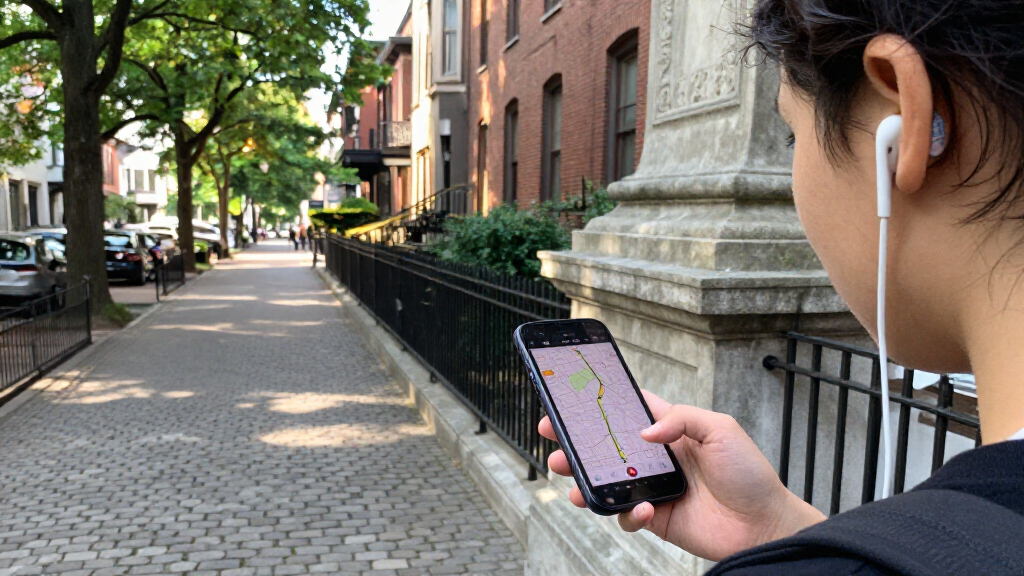
IdeaNavigator AI has proposed an audio walking app that generates narration about a user’s route, including local history, buildings and unusual details. The concept calls for testing in two cities, with week-four repeat use and narration accuracy as measures; no launch, test results or product announcement are provided.
IdeaNavigator AI has outlined a concept for an audio walking app that would narrate stories about a person’s surroundings and respond as their route changes. The proposal describes a possible product and a way to test demand, not a released app or a report of completed trials.
According to IdeaNavigator AI’s product concept, the proposed app would let users start a walk and hear narration tied to their live route, covering subjects such as local history, architecture and distinctive details. The concept says it could react when users reach corners or landmarks, offer themed listening modes for history, architecture or nature, and let people save favorite routes.
The concept is aimed at people who want their neighborhood walks and travel routes narrated. IdeaNavigator AI argues that existing audio options leave a gap: podcasts are generally not tied to a listener’s location, while many tour apps focus on recognized landmark districts. That is the proposal’s assessment of the market, not an independently established finding in the information provided.
For validation, IdeaNavigator AI recommends launching a test in two cities, then measuring walks per week among users who remain active at week four and checking narration accuracy across a sample of routes. The concept also sketches a consumer subscription and a licensing tier for tourism boards as possible revenue streams. No pricing, city selection, partner, product name or test results are specified in the proposal.
AUDIO WALKING · PRODUCT CONCEPT
Discover the Stories Along Your Route With Narrated Walks
IdeaNavigator AI proposes an app that could narrate local history, architecture, and unusual details as a person walks. It is an early concept with a suggested two-city test; no launch or trial results are reported.
01 / The listening experience
A walk that responds to place
The concept would generate spoken stories tied to a user’s route, then adapt as the walk reaches corners or landmarks. Suggested modes and saved routes could make the experience useful across familiar streets and travel.
01 · Discover
Local stories
Hear narration about neighborhood history, buildings, and distinctive details along the way.
02 · Follow
Route-aware audio
The proposed narration could respond when walkers reach a corner or a point of interest.
03 · Personalize
Themes and favorites
Possible listening modes include history, architecture, and nature, with favorite routes saved for later.
02 / Why propose it
Beyond fixed tour routes
IdeaNavigator AI’s market assessment is that podcasts are generally not location-specific, while many tour apps focus on recognized landmark districts. The proposal suggests generated narration could serve everyday streets too; that market gap has not been independently established here.
Existing format
Podcasts
Often made for broad listening rather than the places a person passes in real time.
Existing format
Recorded tours
Can serve landmark districts well, but are commonly prepared for specific destinations or routes.
Proposed approach
Generated for the route
Large language models and open place information are offered as a possible way to create route-specific narration. No model, data source, or cost comparison is specified.
03 / Suggested validation
From concept to evidence
The proposed first test is deliberately focused on two questions: do walkers return, and can the stories be trusted? The concept supplies measures, but no schedule, city selection, or completed results.
-
1
Scope
Choose two cities
A two-city pilot is recommended; no locations are named.
-
2
Invite
Recruit walkers
Recruitment and eligibility details remain unspecified.
-
3
Measure
Check week-four use
Track walks per week among users active at week four.
-
4
Review
Audit story accuracy
Review narration across a sample of routes; method and threshold are not given.
Key questions are still open
The concept does not report a prototype, launch date, participating cities, user figures, pricing, or tourism-board agreements.
- Accuracy: How will well-supported history be separated from details that cannot be verified?
- Method: Who judges the route sample, and what error level is acceptable?
- Practical use: How will location updates, limited connectivity, and privacy be handled?
- Business: Will consumers or tourism organizations pay for the service?
04 / What comes next
Retention, trust, and viability
A pilot could help establish whether people keep listening and whether narration meets a reliable standard. A consumer subscription and tourism-board licensing are possible revenue ideas, with no prices or customers reported.
Is the app available now?
No launch is reported. The information describes a product concept and proposed test, not an available app or release date.
What might it do on a walk?
Generate route-linked narration about local history, buildings, and unusual details, with possible themed modes and saved routes.
How would the idea be tested?
IdeaNavigator AI recommends a two-city test, measuring weekly walks among week-four active users and auditing accuracy on sampled routes.
How could it make money?
The concept suggests consumer subscriptions and licensing for tourism boards. Pricing and demand are not established.
Testing Audio Beyond Tourist Districts
The idea targets an everyday use case: turning familiar streets, as well as travel routes, into an audio experience without requiring a guide to record a separate tour for each location. If the narration can reliably follow a person’s route, it could give users a reason to listen while walking rather than choosing a fixed podcast or searching for a tour limited to a handful of attractions.
The proposal’s commercial case depends on more than whether the app can generate narration. Repeat use by week four would help indicate whether people return after trying it, while an accuracy audit would address whether the stories are trustworthy enough to hear in public spaces. Those are proposed measures in IdeaNavigator AI’s concept, not evidence that the idea has met either test.
A tourism-board licensing option could give the service another potential customer group beyond individual subscribers. But the proposal does not identify any interested boards or establish that licensing would be viable. For readers, the development is best understood as an early product opportunity, with user retention, factual reliability and a workable business model still to be demonstrated.
Products Worth Considering

Jackery Explorer 2000 v2 Portable Power Station, 2042Wh

Anker SOLIX C300 Portable Power Station, 288Wh

Bose QuietComfort Ultra Wireless Noise-Cancelling Headphones with Spatial Audio, Black
As an affiliate, we earn on qualifying purchases.
Why Location-Based Audio Is Proposed
Traditional audio tours commonly depend on content prepared for specific routes or destinations. That can make them useful in a landmark district but less suited to ordinary neighborhood streets or routes that change from one walk to the next. IdeaNavigator AI’s concept seeks to address that limitation by generating narration in response to location rather than relying only on a fixed recording.
IdeaNavigator AI says that large language models, combined with open information such as historical records, architecture details and place data, could lower the cost of producing route-specific narration. This is the rationale offered in the proposal for why the idea may be more practical now; no model, data provider, technical evaluation or cost comparison is named, and the proposal does not report a working system.
The suggested first step in the concept is deliberately narrow: focus on walkers seeking narrated neighborhood and travel routes, test in two cities, and evaluate repeat usage and factual accuracy. The material does not give a development schedule or explain how locations would be selected for the initial test.
Product Readiness and Accuracy Remain Open
IdeaNavigator AI reports no app launch or completed test. Its concept does not say whether a prototype exists, who would build or operate the service, which cities might take part, or when a trial could begin. It also provides no user counts, retention figures, subscription prices or tourism-board agreements.
The accuracy of generated stories is a central open issue. IdeaNavigator AI recommends auditing a sample of routes but gives no audit method, acceptable error threshold or plan for handling gaps and conflicting records. The proposal also does not explain how the app would distinguish well-supported local history from generated details that cannot be verified.
Other practical questions raised by the proposed features include how frequently the app would update a user’s location, how it would work when connectivity or location data is limited, and what privacy safeguards would apply. These are questions about the concept, not reported failures or confirmed product decisions.
A Two-City Trial Is Proposed
IdeaNavigator AI’s concept sets out a two-city pilot followed by measurement of walks per week at week four and an accuracy review of narration on sampled routes. The proposal announces no dates or participating cities, so it is not clear whether or when that test will happen.
If a pilot is arranged, its results could help determine whether users return regularly and whether route-based stories meet a reliable standard. Further details would be needed to assess the concept fully, including how the test recruits walkers, what counts as an active walk, how accuracy is judged and whether either consumers or tourism organizations are willing to pay.
Key Questions
Is the audio walking app available now?
No launch is reported. IdeaNavigator AI has outlined a product concept and proposed a test; the information provided does not identify an available app or release date.
What would the app do during a walk?
IdeaNavigator AI proposes generating narration tied to a user’s route, including local history, buildings and unusual details, with possible reactions at corners or landmarks. The concept also suggests themed modes and saved routes.
How would the idea be tested?
IdeaNavigator AI recommends testing in two cities, measuring walks per week at week four and auditing narration accuracy on a sample of routes. No trial schedule or results have been provided.
How might the service make money?
The concept suggests a consumer subscription and a separate licensing tier for tourism boards. It does not provide pricing, confirmed customers or evidence of demand.
Source: IdeaNavigator AI