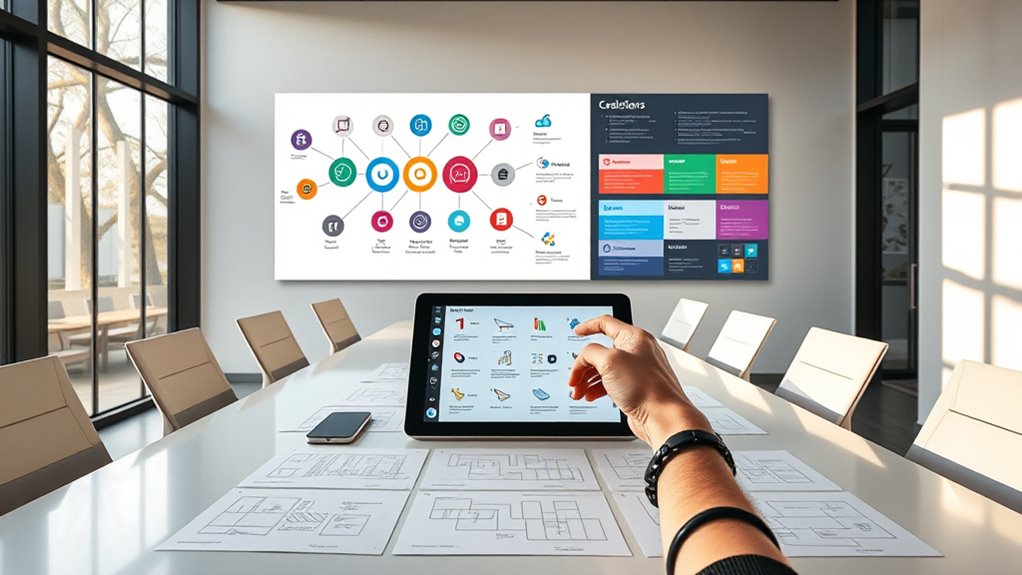

To choose the right modern design pattern, focus on your project’s specific needs—whether you need to decouple object creation with factory methods or control resource access with singletons. Understand the problems you’re solving and select patterns that improve flexibility, reusability, and maintainability. Matching patterns to your challenges helps you create scalable, clean code. Stay aware of common solutions, and you’ll discover more strategies that fit your situation perfectly.
Key Takeaways
- Understand the specific problem to determine if object creation, resource management, or flexibility is the priority.
- Choose Factory Method for decoupling object creation from implementation, promoting extensibility.
- Use Singleton when a single, shared resource or configuration instance is necessary for consistency.
- Combine patterns thoughtfully to solve complex design challenges effectively.
- Consider pattern benefits, such as maintainability and flexibility, to select the most suitable solution.

Have you ever wondered how software developers create flexible, reusable, and maintainable code? One key approach involves using well-established design patterns that solve common problems elegantly. Among these patterns, factory methods and the singleton pattern stand out for their ability to streamline object creation and guarantee controlled access to resources. Understanding when and how to apply these patterns can considerably improve your code’s structure and robustness.
Factory methods provide a way to create objects without specifying the exact class of the object that will be created. Instead of directly instantiating classes with the `new` keyword, you define a factory method that returns an instance of a class, often based on input parameters or configuration. This pattern is especially useful when your code needs to work with multiple related classes, but you want to keep it decoupled from specific implementations. By encapsulating object creation, factory methods promote flexibility, making it easier to extend or modify your code later without touching the core logic. For example, if you’re developing a UI framework that supports multiple themes, a factory method can generate the appropriate theme components based on user preferences, without altering the rest of your codebase.
Factory methods enable flexible object creation without tying code to specific classes.
The singleton pattern, on the other hand, guarantees that a class has only one instance and provides a global point of access to it. You might use this pattern when managing shared resources like configuration settings, logging, or database connections. By restricting instantiation, the singleton pattern prevents conflicts and inconsistencies that could arise from having multiple instances. When you implement a singleton, you typically make the constructor private and provide a static method that returns the single instance, creating it if it doesn’t already exist. This ensures controlled access and guarantees that all parts of your application refer to the same resource. For instance, a singleton logger class guarantees that all log messages go through a single, consistent logging mechanism, simplifying debugging and monitoring.
Both factory methods and singleton pattern serve different purposes but are essential in building flexible, maintainable applications. Factory methods abstract and encapsulate object creation, making your code adaptable to change, while the singleton pattern controls resource access, maintaining consistency across your application. When choosing which pattern to apply, consider whether you need to decouple object creation from implementation details or enforce a single shared resource. Using these patterns thoughtfully helps you write cleaner, more efficient code that can evolve easily as your project grows. Ultimately, mastering these patterns empowers you to craft software that’s not only functional but also resilient and adaptable to future requirements.
Furthermore, understanding the contrast ratio in your projectors can significantly impact the visual quality, especially in dark scenes.

MATEIN Travel Laptop Backpack, Business Anti Theft Slim Sturdy Laptops Backpack Personal Item Bag, Water Resistant College School Computer Bag Gift for Men & Women Fits 15.6 Inch Notebook, Grey
LOTS OF STORAGE SPACE&POCKETS: One separate laptop compartment hold 15.6 Inch Laptop as well as 15 Inch,14 Inch...
As an affiliate, we earn on qualifying purchases.
Frequently Asked Questions
How Do I Decide Which Design Pattern Fits My Project Best?
When selecting a pattern, you should analyze your project requirements carefully. Consider the problem you’re solving, the complexity, and the flexibility needed. Look at how different patterns address these aspects, and choose one that promotes maintainability, scalability, and simplicity. Pattern selection involves evaluating options against your specific needs, ensuring you pick a solution that fits seamlessly into your project’s goals without overcomplicating things.
Can Design Patterns Be Combined for Complex Solutions?
Imagine weaving a rich tapestry, where pattern integration creates vibrant threads blending seamlessly. Yes, you can combine design patterns for complex solutions, allowing pattern customization to suit your unique needs. By thoughtfully integrating patterns, you build a flexible, robust system that adapts to challenges, much like layering colors in a painting. Embrace this approach to craft elegant, powerful solutions that evolve with your project’s demands.
Are There Performance Impacts When Using Certain Design Patterns?
Yes, using certain design patterns can impact performance, especially with overhead costs and scalability concerns. For example, patterns like Singleton or Observer may introduce extra processing or memory use, affecting efficiency as your app grows. You should evaluate how each pattern’s overhead aligns with your scalability needs and optimize accordingly. Careful selection helps balance maintainability and performance, ensuring your solution remains responsive under increasing load.
How Do Design Patterns Evolve With Modern Programming Languages?
They say “the only constant is change,” and that’s true for how design patterns evolve with modern languages. You’ll find that new language features like generics, lambdas, and async/await boost pattern adaptability, making them more concise and efficient. As languages advance, patterns adapt to leverage these features, transforming traditional solutions into more flexible, powerful tools for your development process. Keep up, and you’ll stay ahead of the curve.
What Are Common Pitfalls When Applying Design Patterns?
When applying design patterns, watch out for anti-patterns like over-engineering, which can complicate your code unnecessarily. You might fall into the trap of forcing a pattern where it’s not needed, leading to decreased readability and maintainability. Be mindful of overuse, and make certain the pattern fits your problem. Focus on simplicity and clarity, avoiding the temptation to use a pattern just because it’s popular or complex.

KROSER Travel Laptop Backpack 17.3 Inch XL Computer Backpack with Hard Shell Saferoom RFID Pockets Water-Repellent Business College Daypack Stylish Bag for Men/Women-Black
DURABLE MATERIAL: This stylish laptop backpack is made of high-quality water-repellent ballistic fabric; Dimensions: 18.6”x13.5”x10.8”, fits up to...
As an affiliate, we earn on qualifying purchases.
Conclusion
Choosing the right design pattern is like finding the perfect key for a lock—you’ll unseal more efficient, maintainable solutions. By understanding your needs and the strengths of each pattern, you can craft systems that are both elegant and effective. Don’t rush the process; think of it as planting a seed that will grow into a sturdy tree over time. With patience and insight, you’ll build software that stands the test of time, just like a well-tended garden.

KROSER TSA Friendly Travel Laptop Backpack 17.3 inch XL Computer Backpack Water-Repellent College Daypack Business Backpack with RFID Pockets & USB Port for Men/Women-Black
【QUALITY MATERIAL】: This stylish laptop backpack is made of durable and high-quality water-repellent ballistic fabric; Dimensions: 18.6”x13.5”x10.8”, fits...
As an affiliate, we earn on qualifying purchases.
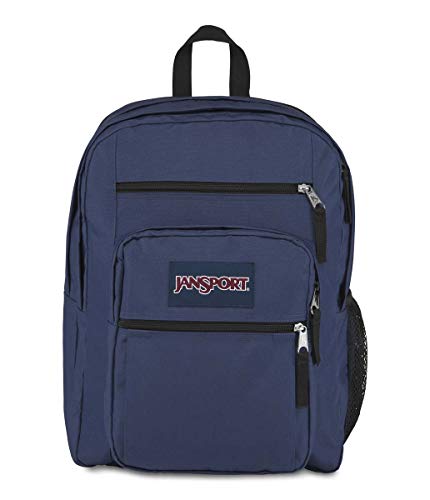
JanSport Laptop Backpack - Computer Bag with 2 Compartments, Ergonomic Shoulder Straps, 15” Laptop Sleeve, Haul Handle - Navy
THE MOST TRUSTED NAME IN BACKPACKS - Every JanSport comes with a lifetime warranty. Carry your JanSport with...
As an affiliate, we earn on qualifying purchases.