
📊 Full opportunity report: Corvus ISR Day 1: Laying The Groundwork For WAMI Exploitation From Synthetic Data on ThorstenMeyerAI.com — validation score, market gap, and execution plan.
TL;DR
Corvus ISR has publicly demonstrated a synthetic wide-area motion imagery (WAMI) scene with live detection and tracking. This marks the start of a build-in-public effort to develop WAMI exploitation software using synthetic data, addressing data restrictions and legal concerns.
Corvus ISR has launched its first public demonstration of a synthetic wide-area motion imagery (WAMI) scene, featuring live detection and tracking, as part of a build-in-public effort. This development aims to establish a foundation for WAMI exploitation software that can operate on infrastructure controlled by the customer, addressing key challenges in the field.
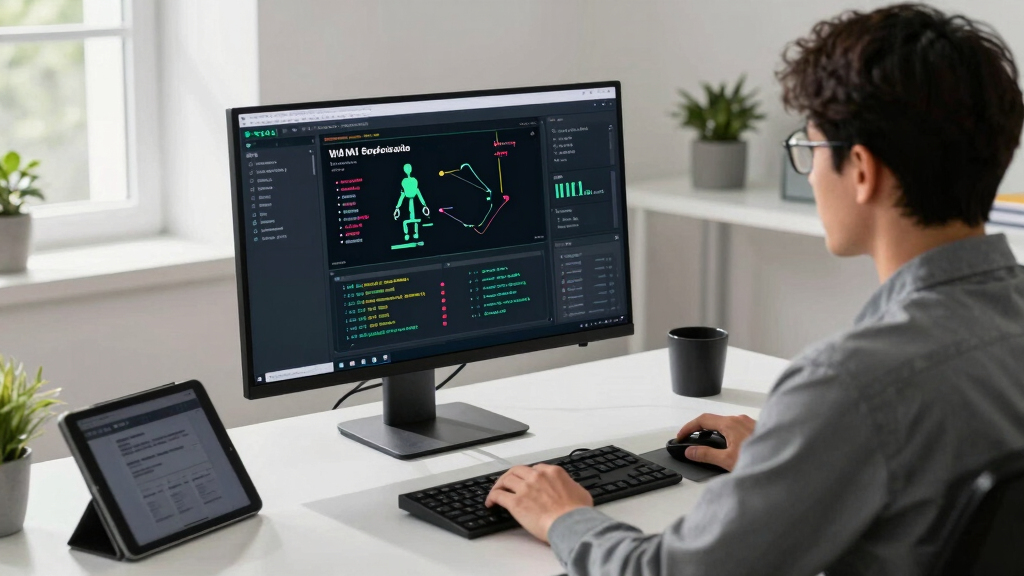
The demonstration includes a procedurally generated scene with hundreds of moving vehicles, a simulated sensor with adjustable coverage, and a live exploitation pipeline that detects, tracks, and labels moving objects in real time within a browser environment. This is the first artifact from Corvus ISR’s project, emphasizing a geometric detection approach without deep learning, to ensure transparency and measurable outputs.
Corvus ISR’s initiative starts with synthetic data due to the restrictions and costs associated with real WAMI data. Synthetic scenes are legally unencumbered, come with perfect ground truth, and can be deliberately challenging to test detection and tracking robustness. The project aims to benchmark and refine the system before transitioning to real data, which remains a future step.
CORVUS ISR · synthetic WAMI scene — live detect & track
BUILD IN PUBLIC · DAY 1 ARTIFACTImpact of Synthetic Data on WAMI Software Development
This development is significant because it demonstrates a new approach to building WAMI exploitation software that circumvents legal, privacy, and cost barriers associated with real surveillance data. By starting with synthetic scenes, Corvus ISR can develop, test, and benchmark detection and tracking algorithms in a controlled environment, potentially accelerating the deployment of effective WAMI analysis tools.
Additionally, the emphasis on infrastructure control—offering both sovereign and governed editions—aligns with European buyers’ preferences for data sovereignty and compliance, potentially reshaping how WAMI exploitation solutions are procured and deployed across jurisdictions.
synthetic WAMI scene simulation software
As an affiliate, we earn on qualifying purchases.
As an affiliate, we earn on qualifying purchases.
Background on WAMI and Data Challenges
Wide-area motion imagery (WAMI) sensors produce gigapixel images covering entire cities at high frame rates, generating vast amounts of data—far exceeding satellite imagery in volume. Traditionally, this data has been stored and analyzed post-flight by human analysts, creating a bottleneck due to the sheer volume and limited software tools.
Despite proliferation of WAMI platforms on drones, aerostats, and manned aircraft, the exploitation software layer remains limited, often US-controlled and closed. European concerns about dependency on US analysis software have increased, highlighting the need for local, compliant solutions.
Real WAMI data is restricted, classified, or expensive, making it difficult to develop and test new algorithms. Synthetic data offers a promising alternative for initial development, benchmarking, and eventual transfer to real-world scenarios.
“This first synthetic scene demonstrates the feasibility of developing WAMI exploitation software in a controlled, legally compliant environment, paving the way for future real-data applications.”
— Thorsten Meyer
wide-area motion imagery detection tools
As an affiliate, we earn on qualifying purchases.
As an affiliate, we earn on qualifying purchases.
Remaining Challenges in Synthetic-to-Real Transfer
It is still unclear how effectively the developed algorithms will transfer from synthetic scenes to real WAMI data, which often includes noise, occlusion, and other complexities not fully captured in simulations. The transition to real data remains a future milestone, with its own technical and legal hurdles.
real-time object tracking software
As an affiliate, we earn on qualifying purchases.
As an affiliate, we earn on qualifying purchases.
Next Steps for Corvus ISR’s WAMI Exploitation Roadmap
The immediate next step is to refine detection and tracking algorithms within synthetic environments, increasing scene complexity and realism. Following that, the team plans to test the pipeline on real WAMI datasets, if available, or further simulate realistic conditions. Concurrently, development of the software infrastructure for both sovereign and governed editions will continue, aiming for a production-ready prototype in the coming months.
geometric detection software for surveillance
As an affiliate, we earn on qualifying purchases.
As an affiliate, we earn on qualifying purchases.
Key Questions
Why is synthetic data important for WAMI software development?
Synthetic data allows developers to create legally unencumbered, perfectly labeled scenes for benchmarking detection and tracking algorithms, avoiding legal and privacy issues associated with real surveillance footage.
What are the main technical challenges in moving from synthetic to real WAMI data?
Real data includes noise, occlusion, and other complexities that synthetic scenes may not fully replicate, making transfer learning and robustness testing critical next steps.
How does Corvus ISR’s approach differ from traditional WAMI exploitation efforts?
Corvus ISR focuses on starting with synthetic scenes for initial development, emphasizing transparency, measurable outputs, and infrastructure control, rather than relying solely on real data or closed systems.
What are the potential benefits for European buyers?
European buyers could gain access to local, compliant WAMI exploitation solutions that do not depend on US-controlled software, aligning with data sovereignty and legal requirements.
Source: ThorstenMeyerAI.com