
To master GraphQL at scale, focus on implementing effective caching strategies like in-memory and CDN caches to boost response times and reduce server load. Combine multiple schemas through schema stitching to unify data sources and simplify client queries. Regularly review cache invalidation and schema configurations to prevent stale data and conflicts. Monitoring performance helps you optimize your architecture for growth. Keep these best practices in mind, and you’ll unleash scalable, high-performing GraphQL systems. There’s more to discover as you progress.
Key Takeaways
- Implement schema stitching to unify multiple data sources, simplifying data retrieval and reducing client complexity at scale.
- Use layered caching strategies, including in-memory, CDN, and persistent caches, to optimize response times and reduce server load.
- Apply cache invalidation and data freshness policies to prevent stale data and maintain system reliability.
- Monitor performance metrics to identify bottlenecks, cache misses, and optimize caching configurations accordingly.
- Design scalable architecture by leveraging delegation, modular schemas, and continuous evolution to adapt to organizational growth.

As organizations grow, so do their data needs, making it essential to efficiently manage GraphQL implementations at scale. You need strategies that optimize performance while maintaining flexibility, and two key techniques come into play: GraphQL caching and schema stitching. Implementing effective caching can drastically reduce response times and server load, especially when dealing with repetitive queries or large datasets. By leveraging caching layers—like in-memory caches, CDN caches, or persistent storage—you can serve frequently requested data faster and free up resources for more complex operations. Properly configured, GraphQL caching ensures that your system remains responsive and scalable as user demand increases. Additionally, understanding the Comparative Advantage Principle can help in designing distributed caching systems that maximize efficiency across diverse data sources.
Efficient GraphQL caching and schema stitching are essential for scalable, high-performance APIs in growing organizations.
Schema stitching, on the other hand, helps you unify multiple GraphQL schemas into a single, cohesive API. This approach is crucial when your application integrates several microservices or data sources, each with its own schema. Instead of managing separate endpoints and handling complex client-side logic, schema stitching enables you to compose these schemas into one unified schema, simplifying data retrieval and improving developer experience. It also allows you to modularize your backend, making it easier to update individual components without disrupting the entire system.
However, mastering these techniques requires understanding their nuances. With GraphQL caching, you need to determine what data can be safely cached and for how long, balancing freshness with performance. Implement cache invalidation strategies to prevent serving stale data, especially in dynamic environments. When it comes to schema stitching, you must carefully resolve naming conflicts and ensure that data types align across different schemas. You’ll also want to implement delegation to fetch data from underlying services efficiently, avoiding unnecessary overhead.
As you scale, it’s important to monitor how these techniques perform in real-world scenarios. Use analytics to identify bottlenecks and cache misses, then fine-tune your caching policies accordingly. Regularly review your schema stitching setup to accommodate new data sources or evolve existing ones without introducing inconsistencies. This ongoing process helps you maintain an optimized, resilient GraphQL architecture that can handle increased traffic and complexity.
Ultimately, by combining smart caching strategies with thoughtful schema stitching, you’ll create a robust, scalable GraphQL environment. This setup not only improves performance but also streamlines development, making it easier to adapt as your organization’s data landscape evolves. Mastering these techniques ensures your GraphQL implementation remains efficient, flexible, and ready to handle the demands of growth.

FoxAlien Masuter Pro 3-Axis CNC Router Machine, Beginner Hobby Engraving Machine All-Metal Structure for Wood Acrylic MDF Nylon Routing Milling Carving
All-Aluminum Structure & Enhanced Stability: Engineered with an all-metal framework and linear rail Z-axis, the FoxAlien Masuter Pro...
As an affiliate, we earn on qualifying purchases.
Frequently Asked Questions
How to Troubleshoot Common Graphql Performance Issues?
To troubleshoot common GraphQL performance issues, focus on query optimization by analyzing and refining your queries to reduce over-fetching. Implement effective caching strategies, such as query caching or response caching, to minimize server load and improve response times. Use tools like Apollo Engine or GraphQL Playground to identify slow resolvers and bottlenecks. Regularly monitor performance metrics, and optimize data fetching patterns to make certain your GraphQL API runs smoothly at scale.
What Are Best Practices for Schema Design at Scale?
To guarantee effective schema design at scale, prioritize schema optimization by keeping your schema lean and avoiding over-fetching. Maintain design consistency across your schema to simplify maintenance and improve developer experience. Use clear naming conventions and modular structures to enhance readability and scalability. Regularly review and refactor your schema as your data models evolve, ensuring it stays aligned with your application’s growth and performance goals.
How Does Federation Impact Security and Data Privacy?
Federation acts like a double-edged sword, boosting your API’s flexibility but also raising federation security and privacy concerns. You need to carefully manage access controls across services, ensuring sensitive data stays protected. It’s vital to implement strict authentication and authorization, monitor data sharing, and sanitize data in federation layers. Without these measures, you risk exposing private information, turning a powerful tool into a potential security vulnerability.
What Tools Assist in Monitoring Graphql API Health?
You can monitor your GraphQL API health effectively using monitoring tools like Apollo Studio, Grafana, or DataDog. These tools provide real-time insights into performance metrics, errors, and request patterns. Analytics dashboards help you visualize data and identify issues quickly, ensuring your API remains reliable and performant. Regularly reviewing these dashboards allows you to proactively address problems, optimize performance, and maintain a seamless experience for your users.
How to Handle Versioning in a Federated Graphql Architecture?
You handle versioning in a federated GraphQL architecture by focusing on schema evolution and maintaining backward compatibility. To do this, introduce new fields or types without removing existing ones, ensuring clients can still access current data. Use deprecation directives to guide clients toward updated schemas and coordinate changes across services. This approach helps you smoothly evolve your schema while preserving stability and minimizing disruptions for consumers.
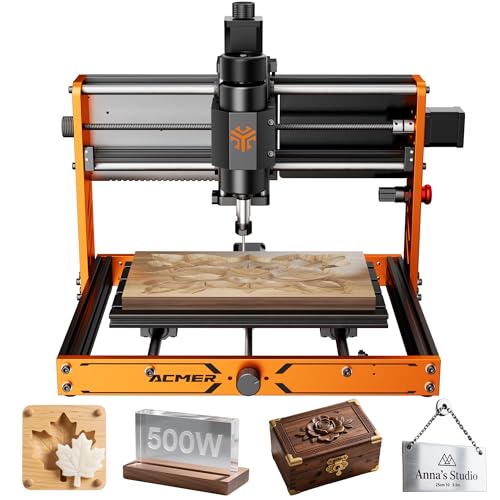
CNC Router Machine, ACMER Ascarva 3 S 500W CNC Milling Machine, Working Area 11.81” x 7.09” x 3.07” for Wood Plastic Metal Acrylic MDF Nylon Carving Cutting
Powerful 500W Spindle & Precision Performance: Driven by a 500W (48V) high-speed DC spindle motor reaching up to...
As an affiliate, we earn on qualifying purchases.
Conclusion
As you scale your GraphQL architecture, remember it’s like tuning a high-performance engine—you need precision and care to keep everything running smoothly. I once saw a team transform a sluggish API into a seamless experience by optimizing their federation layers, much like tuning an engine for peak performance. Keep refining, monitor your metrics, and stay agile. With patience, your GraphQL system will power your growth just like a finely tuned machine—ready for any challenge ahead.

VEVOR CNC Router Machine, 300W, 3 Axis GRBL Control Wood Engraving Carving Milling Machine Kit, 400 x 400 x 75 mm / 15.7 x 15.7 x 2.95 in Working Area 1200 RPM for Wood Acrylic MDF PVC Plastic Foam
Large Engraving Area: This CNC engraving machine features an effective engraving area of 15.74 x 15.7 x 2.95...
As an affiliate, we earn on qualifying purchases.

Genmitsu Cubiko CNC Router Machine with Enclosure, PCB Milling Machine, Smart Desktop CNC with Auto Z-Probing, WiFi & APP Supported, Great for Polishing, Drawing, Woodworking
CNC for Everyone: Ready to use out of the box—no assembly. Plug in and carve with ease. Supports...
As an affiliate, we earn on qualifying purchases.