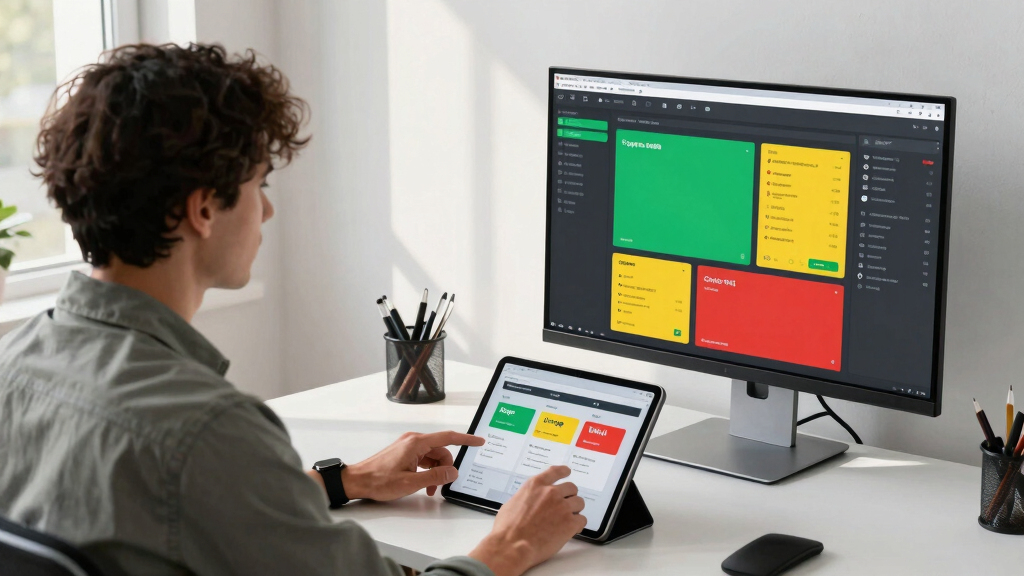

📊 Full opportunity report: Outcome-First Decisions: Keep, Change, or Kill on ThorstenMeyerAI.com — validation score, market gap, and execution plan.
TL;DR
Outcome-First Decisions is a framework that guides organizations to evaluate ongoing initiatives based on current outcomes and cost, advocating for stopping projects that no longer justify their expense. It emphasizes pruning to optimize capacity and reduce sunk costs.
The Outcome-First Decisions framework, introduced recently, provides a structured approach for organizations to evaluate whether ongoing projects should continue, be modified, or be terminated based solely on current outcomes and costs.
The framework, developed by Thorsten Meyer, centers on a decision mechanism called the Worth Filter, which assesses initiatives by their current outcomes rather than past investments or effort. It produces three verdicts: keep, change, or kill. The primary goal is to eliminate ‘quietly consuming’ projects that drain resources without delivering value, thereby freeing capacity for more productive work. The framework is open source under the AGPL-3.0 license and designed to run locally on owned infrastructure, making it accessible and provider-agnostic. It aims to close the decision loop in portfolio management, ensuring continuous pruning and preventing accumulation of dead projects. The approach challenges traditional backward-looking metrics, emphasizing forward-looking outcome evaluation to promote more disciplined resource allocation.Outcome-First Decisions — keep, change, or kill
The hardest decision isn’t what to start — it’s what to stop. Judge every initiative by the outcome it produces now, not the effort already spent.
Independent commentary, produced with AI assistance under human editorial oversight. The views are the author’s own and may change. Outcome-First Decisions is open source under AGPL-3.0, provided “as is” without warranty; see the repository LICENSE. The framework’s verdicts are reasoning aids based on the inputs given and may be wrong — decision support, not decisions; verify independently before acting. Product and company names are trademarks of their respective owners; mention does not imply endorsement.
Why Outcome-First Decisions Reshape Portfolio Management
This framework offers a method for organizations to systematically prune underperforming initiatives, reducing sunk costs and reallocating resources more effectively. By focusing on current outcomes, it helps prevent the common trap of continuing projects due to emotional attachment or past effort, thus enabling more agile and efficient decision-making. Its open-source nature encourages transparency and adaptability, potentially setting a new standard for portfolio discipline across industries.

Innovation Portfolio Management: Linking Strategy to Execution
As an affiliate, we earn on qualifying purchases.
As an affiliate, we earn on qualifying purchases.
The Challenge of Maintaining Healthy Portfolios
Organizations often accumulate a long tail of ongoing projects that neither succeed nor are formally stopped, leading to hidden costs in focus, maintenance, and opportunity. Traditional decision-making often relies on backward-looking metrics like effort or sunk costs, which can bias organizations toward continuation. The Outcome-First approach addresses this by shifting the focus to real-time results, aiming to prevent portfolio silt-up and promote active pruning. The concept aligns with ongoing industry discussions about efficient resource management and agile portfolio practices, but formalized decision tools like this are still emerging.
“The hardest decision in any portfolio isn’t what to start. It’s what to stop.”
— Thorsten Meyer
Project & Environmental Impact Assessment Guide: Practical Tools and Techniques for Sustainable Development, Environmental Consultants, Project Managers, … Tools for Climate–Health Decision-Making)
As an affiliate, we earn on qualifying purchases.
As an affiliate, we earn on qualifying purchases.
Limitations and Risks of Outcome-First Judgments
It remains unclear how the framework performs in complex, slow-start projects where outcomes are difficult to measure early. There is also concern about potential misuse if outcome metrics are poorly chosen or gamed, and whether emotional resistance to killing projects can be fully mitigated by the tool. The effectiveness of outcome measurement and the risk of premature termination are still being evaluated in real-world settings.

Nursing Diagnosis Handbook: An Evidence-Based Guide to Planning Care
As an affiliate, we earn on qualifying purchases.
As an affiliate, we earn on qualifying purchases.
Next Steps for Adoption and Validation
Organizations are encouraged to pilot the framework within their portfolios to assess its practical impact. Further development and case studies are expected to refine outcome metrics and address potential biases. The open-source nature allows for community input and adaptation, potentially leading to broader adoption in portfolio management practices across industries.
![DeskFX Free Audio Effects & Audio Enhancer Software [PC Download]](https://m.media-amazon.com/images/I/41fXbDohyuS._SL500_.jpg)
DeskFX Free Audio Effects & Audio Enhancer Software [PC Download]
- Audio Transformation: Enhance sound from speakers and headphones
- Sound Quality Improvement: Adjust audio with various effects
- Audio Control: Manage sound through your hardware
As an affiliate, we earn on qualifying purchases.
As an affiliate, we earn on qualifying purchases.
Key Questions
How does the Outcome-First framework differ from traditional portfolio reviews?
It shifts focus from effort and sunk costs to current outcomes, making kill decisions easier and more justified based on real-time value rather than past investment.
Can this framework prevent organizations from prematurely killing slow-start projects?
While it emphasizes outcome-based evaluation, it cannot fully account for slow-start or long-term initiatives without careful metric selection and contextual judgment.
Is the framework suitable for all types of projects?
It is designed to be provider-agnostic and flexible, but its effectiveness depends on choosing appropriate outcome metrics aligned with organizational goals.
What are the main risks of using Outcome-First Decisions?
The primary risks include mismeasuring outcomes, gaming metrics, and emotional resistance to killing initiatives, which can undermine its effectiveness.
How can organizations implement this decision process?
By integrating the framework into existing portfolio management cycles, running local reviews, and fostering a culture open to disciplined pruning based on outcome assessments.
Source: ThorstenMeyerAI.com