📊 Full opportunity report: Small Office Document Scanning: A Step-by-Step Starting Point on IdeaNavigator AI — validation score, market gap, and execution plan.
TL;DR
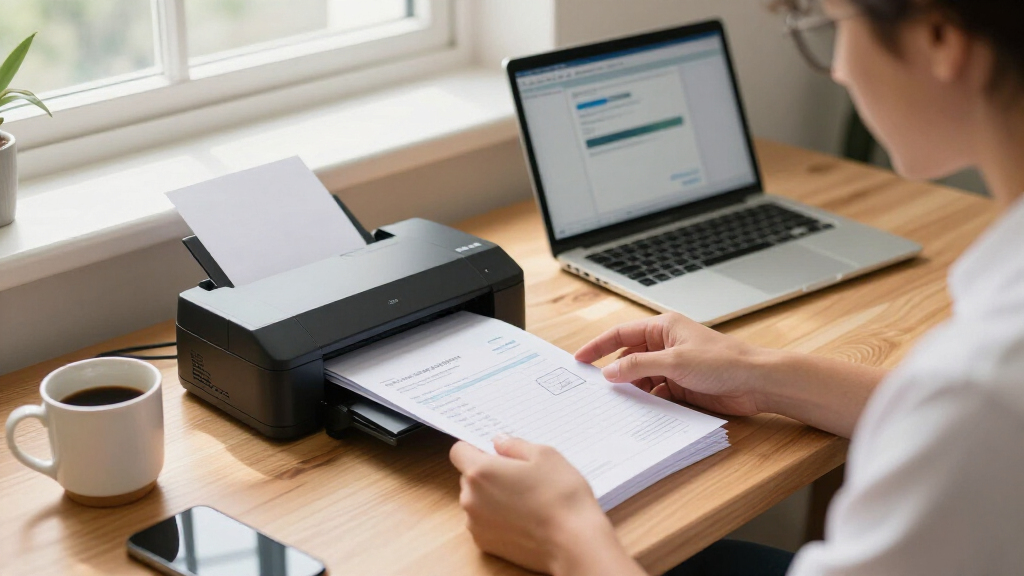
IdeaNavigator AI outlines a proposed document-scanning workflow for small nonprofits, clinics and law offices. The plan would use phone photos and OCR to suggest document categories and filenames, then save searchable PDFs; a five-office pilot is proposed, but no test results or product launch are reported.
IdeaNavigator AI has outlined a proposed document-scanning workflow for small nonprofits, clinics and law offices, recommending a limited pilot to test whether software can turn paper backlogs into searchable, automatically filed PDFs. The proposal describes a potential product and validation plan, not a launched service or confirmed test result.
The suggested workflow starts with an office employee photographing a stack of paper documents using a phone. The app would use optical character recognition (OCR) to read the pages, suggest a document category and filename, and save each result as a searchable PDF in a shared folder. An example filename would combine a document type, date and vendor for an invoice.
The proposal targets offices that handle records such as intake forms, invoices and client or patient records, but lack a dependable digital filing process. It argues that general-purpose scanning apps can leave staff with unsorted images that still need manual naming and organization. That is the problem the proposed automatic classification and field extraction are meant to address.
To test the idea, IdeaNavigator AI proposes recruiting five small offices for a one-week pilot. Each office would scan a real backlog of 200 documents. The test would measure how often the app classifies documents correctly and whether staff would pay for it per seat. The proposed business model is a monthly per-seat subscription, with a page-volume limit and charges for additional pages.
Reducing Manual Filing Work
For a small office, scanning is useful only if staff can later find and trust the digital record. A workflow that reads, labels and files documents could reduce repetitive sorting and make older paperwork easier to search, if its suggestions are accurate and easy to correct. That could matter to organizations with limited administrative capacity and no dedicated IT team.
The proposal’s emphasis on a real-world backlog also recognizes that a tidy sample may not represent day-to-day paperwork. Documents can vary in layout, image quality and completeness. Testing 200 items per office could reveal how the workflow handles that variety, though the suggested pilot is small and would not by itself establish performance across the wider market.
Pricing is another practical issue. A per-seat plan with page caps may suit offices with predictable scanning needs, but organizations with seasonal or unusually large backlogs could face extra costs. The proposed willingness-to-pay measure would help assess demand, but no price, customer commitment or revenue is reported.
document scanner with OCR for small offices
As an affiliate, we earn on qualifying purchases.
As an affiliate, we earn on qualifying purchases.
From Paper Backlogs to Searchable Files
The concept is aimed at small organizations that still rely on paper records and do not have a dedicated digitization system. It focuses on converting existing documents, rather than replacing the underlying record-keeping or case-management software. The shared-folder destination is part of the proposed minimum viable product; the proposal does not specify integrations with particular storage or office platforms.
IdeaNavigator AI presents on-device and API-based OCR, along with layout-aware models, as technologies that may make automated naming and classification more accessible to smaller offices. These are the proposal’s rationale for why the idea could be tested now, not published performance findings. The material provides no benchmark results, product demonstration, named vendors or independent evaluation of accuracy.
As an affiliate, we earn on qualifying purchases.
Accuracy, Privacy and Pilot Status
No pilot results are provided, and it is not clear whether any offices have agreed to participate or whether a working product exists. The proposal does not give a target classification accuracy, explain how staff would review or correct mistakes, or report how the system performs on difficult scans and handwritten entries.
Privacy and data handling also remain unspecified. Small nonprofits, clinics and law offices can process sensitive information, but the proposal does not say whether document images would remain on a phone, be sent to an external API, or how long files would be retained. It also does not identify security controls, access permissions, compliance requirements or supported shared-folder services. These details would need answers before offices could judge whether the workflow is appropriate for their records.
mobile document scanning app for small business
As an affiliate, we earn on qualifying purchases.
As an affiliate, we earn on qualifying purchases.
A Pilot Would Test the Workflow
The next step in the proposal is a one-week trial with five offices, using 200 documents from each organization’s existing backlog. Useful results would include classification accuracy by document type, the amount of staff correction required, processing time and whether employees can retrieve files afterward. The suggested test also asks whether offices would pay per seat, but no launch date, recruitment plan or follow-up milestone is stated.
Until a pilot is reported, the scanner remains a product concept rather than a proven way to reduce filing work. Any later assessment would need to pair accuracy and pricing data with clear information about document storage, privacy protections and how the tool handles errors.
Source: IdeaNavigator AI
automatic document classification software
As an affiliate, we earn on qualifying purchases.
As an affiliate, we earn on qualifying purchases.
Key Questions
Is the document-scanning app available now?
The proposal describes a possible minimum viable product. It does not report that the app has launched or provide a release date.
How would the proposed scanner work?
Staff would photograph documents with a phone. The app would use OCR to read them, suggest a category and filename, and save searchable PDFs to a shared folder.
How would the idea be tested?
IdeaNavigator AI proposes a one-week pilot at five small offices, with each office scanning 200 documents. The measures would include classification accuracy and willingness to pay per seat.
What remains unknown about the proposal?
No pilot findings, product status, pricing, privacy practices or security details are reported. The proposal also does not specify how users would correct misclassified documents.
Source: IdeaNavigator AI