

📊 Full opportunity report: The Twelve Real Complaints About AI Tools in 2026 — A Reddit, Twitter, and GitHub Synthesis on ThorstenMeyerAI.com — validation score, market gap, and execution plan.
TL;DR
Users across Reddit, Twitter, and GitHub are raising consistent complaints about AI tools in 2026, citing faster rate limit depletion, degraded context quality, and reliability issues. These complaints reveal significant deployment friction that contrasts with vendor marketing claims, impacting trust and adoption.
In 2026, users on Reddit, Twitter, and GitHub report that AI tools are not meeting advertised capabilities, citing faster-than-expected rate limit exhaustion, declining context window quality, and unreliable performance, which erodes trust in AI deployment.
Multiple documented incidents and user reports confirm that AI vendors’ advertised limits and capabilities often do not align with real-world usage. For example, Anthropic’s GitHub issue #41930 revealed that rate limits across paid tiers are being depleted significantly faster than promised, with some users hitting quotas within minutes of use. These issues are linked to capacity constraints, bugs in prompt-caching, and session-resumption flaws, leading to user frustration and skepticism.
Additionally, the quality of context windows, especially in models like Claude 4.6, degrades well before reaching the advertised token limits. Heavy usage results in outputs that exhibit circular reasoning, forgotten details, and reduced coherence, confirmed by detailed bug reports and telemetry data. These problems are compounded by inconsistent communication from vendors about ongoing issues, further damaging trust.
Overall, the pattern of complaints indicates that AI deployment in 2026 faces structural friction, with reliability and predictability falling short of vendor claims, affecting enterprise and individual users alike.
Twelve complaints.
One pattern.
AI tools in 2026 are more useful than ever and less reliable than their marketing implies. Both are true.
Documented sources only — Anthropic GitHub Issue #41930, the AMD Senior Director’s 6,852-session telemetry, the GPT-5 model-picker backlash, Cursor’s June 2025 billing change, the sycophancy-to-pushback paradox. The user-side reality check companion to the marketing-side capability stories.
6,852 sessions. 73% collapse.
An AMD Senior Director of AI filed a GitHub issue on April 2, 2026 with telemetry from three months of stable internal engineering work. The same model number, the same engineering workload, dramatic measurable degradation.

SANSUI 34 Inch Curved Monitor 240Hz UWQHD 3440×1440 Gaming Monitor, 21:9 2K Curved1500R,HDR400,Fast VA, PIP/PBP,AI Crosshair,AIPQ(Visual Enhance),MPRT 1ms,HDMI2.1 * 2,DP1.4 * 2(HDMI Cable Included)
34 Inch Curved 240Hz UWQHD(3440*1440) Fast VA Ultrawide 21:9 HDR400 Gaming Monitor with AI Crosshair and AI Bluelight.
As an affiliate, we earn on qualifying purchases.
As an affiliate, we earn on qualifying purchases.
Twelve complaints. Three severity tiers.
Every complaint below has either a documented thread, an acknowledged vendor incident, or measurable telemetry behind it. No complaints based on vague vibes.
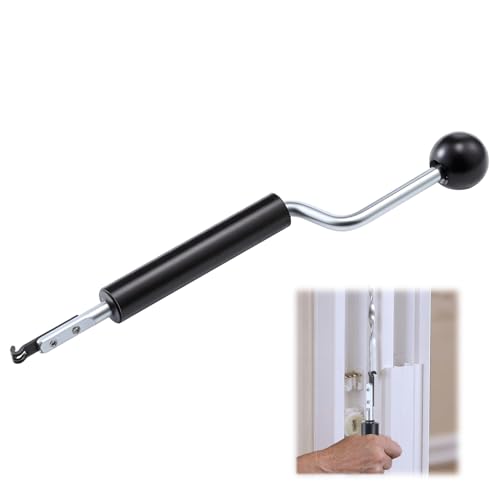
Leriton Tilt Window Tension Tool Heavy-Duty Window Service Tension Tool for Engage Tighten or Replace the Balance into the Proper Engage Shoe
Designed for Spiral Balancers: this window tension tool is specifically designed for double-hung or sash windows equipped with…
As an affiliate, we earn on qualifying purchases.
As an affiliate, we earn on qualifying purchases.
One issue. Four causes.
Community investigation identified four overlapping root causes hitting simultaneously. Anthropic confirmed peak-hour throttling on March 26 only after substantial public pressure. No blog post. No email. No status page entry.

AI-Powered Software Testing: Volume 2: Reliability, Security, and Enterprise Integration for Senior Architects and Ops Engineers (AI-Powered Software … … Integration, and Full-Stack Blueprints)
As an affiliate, we earn on qualifying purchases.
As an affiliate, we earn on qualifying purchases.
Twelve complaints. Five causes.
The structural pattern beneath the surface complaints. Each cause connects to multiple complaints, and each affects deployment velocity in different ways.
AI tools in 2026 are simultaneously the most powerful productivity tools available and unreliable enough that significant fractions of paying users are systematically frustrated. Both are true. The vendor narrative emphasizes the first; the user narrative emphasizes the second; the deployment trajectory depends on which stays true longer.

Data Analytics with AI Tools: A Practical Beginner’s Guide to Cleaning Data, Writing SQL, Building Dashboards, Prompting AI, and Using AI Safely
As an affiliate, we earn on qualifying purchases.
As an affiliate, we earn on qualifying purchases.
Impacts on AI Deployment and Trust in 2026
The persistent complaints about AI tools in 2026 highlight fundamental challenges in scaling and reliably deploying AI at scale. As users encounter faster quota depletion, degraded output quality, and opaque incident responses, trust in AI as a dependable productivity tool diminishes. This friction slows adoption and raises questions about the realistic productivity gains promised by vendors. Understanding these issues is crucial for stakeholders modeling future AI deployment trajectories and labor displacement impacts, as current user experiences suggest a more cautious outlook than marketing claims imply.
Growing User Frustration Reflects Broader Deployment Challenges
Throughout 2025 and into 2026, AI vendors promoted rapid capability improvements and expanding usage limits, but user reports from platforms like Reddit, Twitter, and GitHub reveal a contrasting reality. Incidents of rate limit exhaustion, quality degradation, and uncommunicated outages have become common. These issues are documented in multiple public forums and technical reports, indicating systemic deployment and reliability hurdles that have persisted despite marketing narratives of progress. The pattern of complaints underscores a gap between marketed promises and actual user experiences, shaping the current landscape of AI adoption.
“The rate limit depletion and context degradation are genuine bugs rooted in capacity constraints and prompt handling logic.”
— Anthropic engineer, on GitHub
Extent and Impact of Deployment Friction in 2026
While documented incidents and user reports confirm widespread issues, the full scope of deployment friction and its impact on AI adoption rates remain unclear. It is not yet certain how much these problems will slow overall AI deployment or how vendors will respond to rectify systemic issues at scale.
Monitoring Vendor Responses and User Reports in Coming Months
Expect ongoing discussions on social platforms and GitHub, with potential vendor updates addressing bugs and capacity issues. Regulatory agencies may also scrutinize transparency and incident handling. The next few months will be critical in determining whether these friction points are mitigated or deepen, influencing AI adoption trajectories.
Key Questions
Are these complaints isolated or widespread?
The complaints are widespread, documented across multiple platforms including Reddit, Twitter, GitHub, and tech press, involving thousands of users and technical reports.
Do these issues affect all AI vendors equally?
No, most complaints are centered around specific vendors like Anthropic and OpenAI, but similar issues are reported across multiple providers, indicating systemic deployment challenges.
Will vendors fix these problems soon?
Vendors have acknowledged some bugs and capacity constraints, but it is unclear how quickly systemic issues will be resolved, and user trust remains fragile.
How do these complaints impact AI’s future adoption?
Persistent reliability issues could slow adoption and deployment, especially in enterprise settings where dependability is critical, tempering expectations of rapid productivity gains.
What should users and developers do now?
Users should build deployment plans with headroom for capacity variability, and developers should monitor vendor updates and contribute to bug reporting to improve overall reliability.
Source: ThorstenMeyerAI.com