
TL;DR

Get business pricing on monitors, keyboards and dev gear
- Business-only prices and quantity discounts
- Tax-exempt purchasing
- Multiple users, one account, clear invoices
The VoiceEQ benchmark assesses voice AI systems on over 60 metrics, revealing strengths and weaknesses in real-world conditions. It highlights that models excel in some areas but struggle with nuanced cues like emotion and background noise. Results suggest organizations should select models based on specific operational needs.
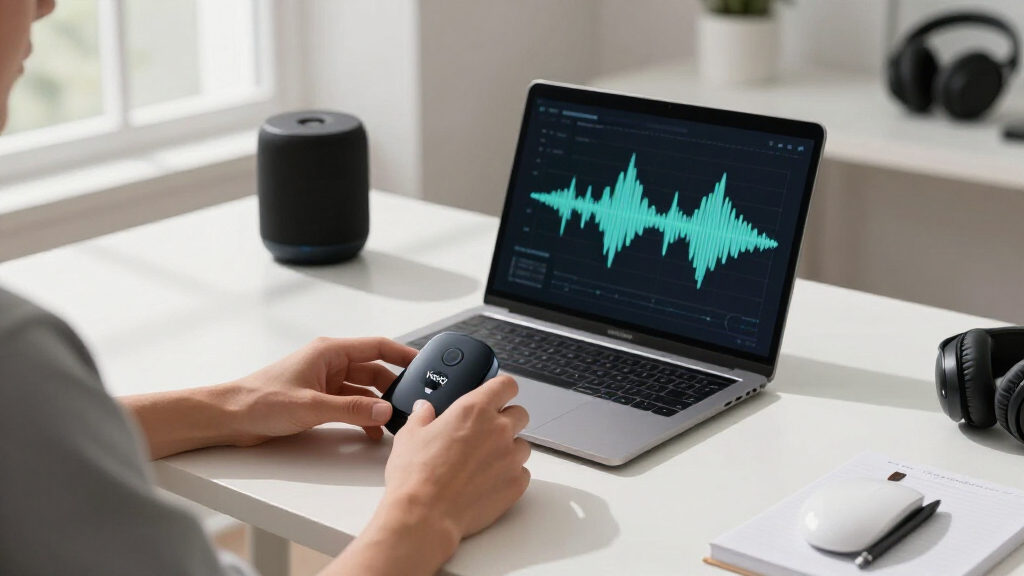
A team publishing on Hugging Face has introduced Real World VoiceEQ, a comprehensive benchmark designed to evaluate voice AI systems on their ability to recognize, generate, and respond to acoustic cues often omitted from transcripts. The benchmark assesses more than 40 proprietary and open-source models across over 60 metrics, based on over 1 million human ratings, revealing notable gaps in current voice AI performance under realistic conditions. For a detailed analysis, see the original analysis. This development underscores the need for more nuanced evaluation methods in voice technology.
Real World VoiceEQ evaluates voice models on a broad set of dimensions, including tone, emotion, speaker identity, background conditions, pronunciation, and conversational behavior. This approach aligns with emerging standards in voice technology evaluation, as detailed in the original analysis. Unlike traditional benchmarks focusing on word error rate and latency, VoiceEQ emphasizes audio cues that influence perceived naturalness and reliability. The evaluation was conducted via Kairos, the team’s voice-focused platform, involving over 785,000 text-to-speech and 48,000 speech-to-speech ratings.
The results show no single model dominates across all capabilities, emphasizing the importance of nuanced evaluation methods like VoiceEQ, as discussed in the original analysis. Some systems excel in producing accurate, precise content like names or references, while others offer more expressive speech but lack consistency in accuracy. The findings suggest that organizations may need to select models tailored to specific operational tasks rather than relying on a single, all-encompassing system. Additionally, the benchmark highlights that access to audio does not guarantee models effectively interpret tone, hesitation, or emphasis, which are vital for natural interactions.
Implications for Voice AI Deployment Strategies
This development is significant because it exposes the limitations of current voice AI systems when evaluated under real-world conditions, which often include background noise, overlapping speakers, and emotional nuances. The findings suggest that improvements in transcription accuracy do not necessarily translate into more natural or reliable interactions. For developers and organizations, this means that selecting the right model requires careful consideration of specific use cases, especially in sensitive sectors like healthcare or banking where precision and trust are paramount.
Furthermore, the benchmark emphasizes the importance of acoustic cues—such as tone and hesitation—in creating engaging and believable voice interactions. Failing to account for these factors could result in systems that, while technically accurate, feel unnatural or untrustworthy to users. The results could influence future development priorities, encouraging models that better interpret nuanced speech signals and adapt to diverse acoustic environments.
As an affiliate, we earn on qualifying purchases.
Background and Development of VoiceEQ Benchmark
Traditional voice AI evaluation has largely focused on word error rate, latency, and other transcript-based metrics. However, these measures often overlook the richness of human speech, including tone, emotion, and background influences. The VoiceEQ benchmark was created by researchers aiming to address these gaps, using extensive human ratings collected across diverse demographics, speaking styles, and acoustic settings. Its development involved evaluating over 40 models, both proprietary and open-source, to identify strengths and weaknesses in real-world scenarios.
The initiative builds on prior recognition that current benchmarks may overstate models’ readiness, especially when models perform well in controlled environments but falter amid noise, overlapping speech, or emotional cues. The VoiceEQ project aims to provide a more comprehensive picture of how voice systems function outside laboratory conditions, guiding future improvements and deployment decisions.
“Voice models have become better at speaking than actually listening.”
— Thorsten Meyer, Lead Researcher
noise-canceling headphones for voice clarity
As an affiliate, we earn on qualifying purchases.
As an affiliate, we earn on qualifying purchases.
Unverified Aspects and Methodological Gaps
Details about the full ranking of models, sampling procedures, and statistical measures such as rater agreement are not publicly available. It remains unclear how often the benchmark will be updated, whether results are reproducible independently, and if participating vendors had access to test data. The claim that models may be tuned to perform well on benchmarks is preliminary and not confirmed as a widespread practice.
Future validation efforts are needed to verify whether the reported gaps persist across different testing conditions and whether newer models can improve in interpreting tone and hesitation rather than just processing transcripts.
professional voice recording microphone
As an affiliate, we earn on qualifying purchases.
As an affiliate, we earn on qualifying purchases.
Next Steps for Validation and Model Improvement
Researchers and industry practitioners will likely scrutinize the full methodology, attempt independent reproductions, and apply the metrics to deployed systems to validate findings. Updates may include new models designed to better interpret acoustic cues, with a focus on emotional and contextual understanding. The upcoming evaluations will determine if future models can bridge the gaps identified by VoiceEQ, leading to more natural and reliable voice AI systems in practical applications.
audio interface for voice AI training
As an affiliate, we earn on qualifying purchases.
As an affiliate, we earn on qualifying purchases.
Key Questions
What is the main purpose of the VoiceEQ benchmark?
It aims to evaluate voice AI systems on their ability to recognize, generate, and respond to acoustic and conversational cues often omitted from transcripts, providing a more realistic assessment of performance.
How many models were tested in the VoiceEQ benchmark?
Over 40 proprietary and open-source models were evaluated across more than 60 metrics, based on over 1 million human ratings.
Does the benchmark identify a single best voice model?
No, the results show different models excel in specific capabilities, with no one system leading across all evaluated dimensions.
Why are traditional metrics like word error rate insufficient?
They mainly measure transcription accuracy and speed but overlook nuanced acoustic signals such as tone, emotion, hesitation, and background noise that influence interaction quality.
What are the next steps following the VoiceEQ release?
Further validation, independent testing, and development of models that better interpret acoustic cues are expected to improve voice AI performance in real-world scenarios.
Source: ThorstenMeyerAI.com
Fall Picks
fall essentials
As an affiliate, we earn on qualifying purchases.