
Zero-knowledge proofs let you verify a statement’s truth without revealing any secret details, boosting privacy on blockchains. They use advanced cryptographic methods so you can confirm transactions or identities securely, without exposing sensitive data. This technology balances transparency with confidentiality, preventing unauthorized access. If you want to understand how these proofs work and how they strengthen blockchain security, you’ll find valuable insights as you explore further.
Key Takeaways
- Zero-knowledge proofs enable validation of transactions or data without revealing underlying sensitive information.
- They enhance blockchain privacy by allowing verification without exposing transaction details or user identities.
- The process involves generating succinct proofs that are quickly verified, maintaining security and efficiency.
- These cryptographic protocols support secure identity verification and confidential data sharing in decentralized systems.
- Zero-knowledge proofs balance transparency and privacy, making blockchain networks more secure and privacy-preserving.
Have you ever wondered how you can prove something is true without revealing any details about it? That’s the core idea behind zero-knowledge proofs, a fascinating innovation in cryptography. When you use zero-knowledge proofs, you demonstrate the validity of a statement without sharing any underlying information. This process relies on sophisticated cryptographic protocols designed specifically for privacy enhancement. These protocols allow you to convince someone else that you possess certain knowledge—like a secret password or a valid transaction—without exposing the actual secret. It’s like proving you know the answer to a puzzle without revealing the answer itself. This capability is essential in blockchain security, where transparency and privacy often seem at odds.
In traditional systems, verifying information usually involves revealing sensitive data, which can be risky. Zero-knowledge proofs change that dynamic by enabling secure validation while keeping secrets hidden. Imagine you’re verifying your identity to access a service; with zero-knowledge, you can prove you’re authorized without sharing your full identity details. This privacy enhancement is key in blockchain networks, where transactions must be transparent yet private. For instance, zero-knowledge proofs can confirm that a transaction complies with rules without exposing the transaction details. This feature safeguards user privacy and prevents malicious actors from gleaning sensitive information. The use of cryptographic protocols ensures both security and efficiency in these processes.
These cryptographic protocols work through complex mathematical interactions. You, as the prover, generate a proof that can be quickly verified by others, the verifiers, without revealing any secret information. The process involves intricate algorithms that ensure the proof is sound and zero-knowledge—meaning no additional knowledge is transferred beyond the truth of the statement. This process is not only secure but also efficient, making it practical for real-world applications like cryptocurrency transactions, identity verification, and confidential data sharing.
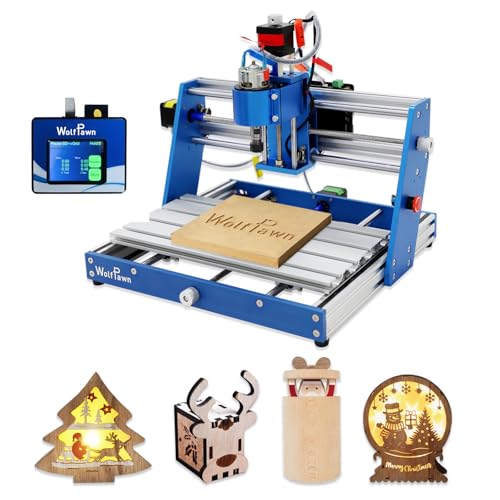
WolfPawn 3018 CNC Machine All-Metal CNC Router Machine, with Offline Controller/Emergency-Stop 3 Axis Plastic Acrylic PCB PVC Wood Carving Milling Engraving Machine, XYZ Working Area 300x180x60mm
Beginner-Friendly Design: Assembly is a breeze. The main parts of the machine are pre-assembled and can be completed...
As an affiliate, we earn on qualifying purchases.
Frequently Asked Questions
How Do Zero-Knowledge Proofs Impact User Privacy?
Zero-knowledge proofs considerably impact your privacy by enhancing anonymity and ensuring data confidentiality. They allow you to prove that you possess certain information without revealing it, keeping your personal data secure. This means you can verify transactions or identities without exposing sensitive details, reducing the risk of data breaches. Overall, zero-knowledge proofs strengthen your privacy by allowing secure, confidential exchanges without compromising your anonymity.
Are Zero-Knowledge Proofs Scalable for Large Blockchain Networks?
They say “the proof is in the pudding,” but scalability challenges remain with zero-knowledge proofs on large blockchain networks. While they enhance privacy, these proofs can contribute to network congestion, making it harder to scale efficiently. Ongoing innovations aim to reduce proof sizes and verification times, helping zero-knowledge proofs become more practical for big networks. With effort, they can evolve to meet the demands of extensive blockchain ecosystems.
What Are Common Real-World Applications of Zero-Knowledge Proofs?
You’ll find zero-knowledge proofs commonly used in identity verification, where they confirm your identity without revealing personal details. They also enable confidential transactions, allowing you to transfer funds securely while keeping details private. These proofs enhance privacy and security in real-world applications, making transactions and identity checks more efficient and trustworthy without exposing sensitive information. They’re transforming how we protect data in digital interactions.
How Do Zero-Knowledge Proofs Compare to Traditional Cryptographic Methods?
You’ll find zero-knowledge proofs are more efficient than traditional cryptographic methods in some ways, but they often involve more complex protocols. While conventional cryptography relies on straightforward encryption and decryption, zero-knowledge proofs allow you to verify information without revealing the data itself. This enhances privacy and security, but the trade-off is increased protocol complexity and sometimes less cryptographic efficiency. Overall, they offer a different balance suited for specific security needs.
What Are the Limitations or Challenges of Implementing Zero-Knowledge Proofs?
You’ll face challenges with zero-knowledge proofs, mainly due to their computational complexity, which can slow down processes. Implementation challenges also arise, as designing efficient and secure protocols requires deep expertise and careful optimization. These proofs often demand significant resources, making them harder to scale. Despite their advantages, you need to weigh these limitations against the security benefits they offer, especially in real-world blockchain applications.

FoxAlien Masuter Pro 3-Axis CNC Router Machine, Beginner Hobby Engraving Machine All-Metal Structure for Wood Acrylic MDF Nylon Routing Milling Carving
All-Aluminum Structure & Enhanced Stability: Engineered with an all-metal framework and linear rail Z-axis, the FoxAlien Masuter Pro...
As an affiliate, we earn on qualifying purchases.
Conclusion
Now that you understand zero-knowledge proofs, imagine safeguarding your data without revealing a single detail—like a secret kept in plain sight. While traditional methods leave vulnerabilities, these proofs offer unmatched security and privacy built into blockchain. It’s a game-changer, turning complex cryptography into practical protection. So, as you navigate the digital world, remember: true security isn’t just about hiding information, but proving you have it—without ever revealing it.

Genmitsu KABA Lite Enclosure PETG Box Kit for 3018 CNC Router, Enhanced Protection, Dustproof, Noise Reduction, Compatible with All 3018 CNC, 3018-PRO/3018/3018-MX3/3018-PROVer, 450 x 390 x 300 mm
Compatible with All CNC 3018 series machines in the market and 1810-PRO. Box dimensions are 17.71” x 15.35”...
As an affiliate, we earn on qualifying purchases.

AnoleX CNC Router Machine 3030-Evo Max, All-Metal XYZ Axis Dual Steel Linear Guides with 800W Trimmer Router, ideal for Cutting Aluminum, Brass, Stainless steel, Wood, Acrylic, MDF, Plastics
[800w Trim Router & Upgradeable 1.5kw Spindle ] Comes with 800W trim router & Er11-1/8" collet with 6-speed...
As an affiliate, we earn on qualifying purchases.