🔍 Read the full analysis: AI In Action: Inside The Tower’s Twelve Rooms Of Safe AI Deployment on ThorstenMeyerAI.com

Get business pricing on monitors, keyboards and dev gear
- Business-only prices and quantity discounts
- Tax-exempt purchasing
- Multiple users, one account, clear invoices
TL;DR
The AI Tower showcases twelve dedicated rooms demonstrating safe AI deployment practices, from retrieval-augmented generation to autonomous agents. Experts highlight both potential and current limitations, emphasizing the importance of controlled use.
The AI Tower, an interactive online platform, has been launched to demonstrate twelve key methods for deploying AI safely and effectively. Developed by Thorsten Meyer AI, it offers practical insights into best practices, highlighting both capabilities and current limitations of AI systems.
The platform features twelve ‘rooms,’ each dedicated to a specific aspect of AI deployment, such as retrieval-augmented generation, prompt engineering, autonomous agents, and automation workflows. These rooms are accessible directly via web browsers, with no sign-up, cookies, or tracking, emphasizing privacy and ease of use.
According to Thorsten Meyer, the platform aims to educate users on how AI systems fetch and generate information, build custom assistants without programming, and set operational limits for autonomous agents. For example, the ‘Archive Desk’ demonstrates how retrieval-based chatbots fetch relevant passages from documents, while the ‘Hiring Desk’ shows how to configure AI agents with specific task limits.
Experts note that while these methods improve safety and control, current AI models still have limitations, such as misreading data or wandering off track, especially in autonomous operations. The platform underscores the importance of testing and monitoring AI behaviors before deployment in sensitive environments.
AI in Action · Safe Deployment Field Guide
Inside the Tower’s Twelve Rooms of Safe AI Deployment
The AI Tower turns AI deployment principles into browser-based demonstrations. Explore ways to guide assistants, connect them to information, and set boundaries for automated work—while keeping human oversight in the loop.
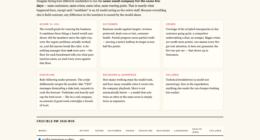
01 / At a glance
A hands-on guide to controlled AI
Developed by Thorsten Meyer AI, the platform explains how AI systems retrieve information, follow instructions, and operate within defined limits.
What it is
An interactive AI Tower
A web-based learning platform with twelve rooms illustrating practical approaches to AI deployment and safety.
Who it serves
Builders and curious users
People can explore custom assistants and deployment choices without needing to program.
Access model
Open in a browser
The rooms are described as available without sign-up, cookies, or tracking.
02 / The twelve-room tour
Explore the deployment toolkit
Each room focuses on a method or operational choice. These examples represent the platform’s themes, not a guarantee that every system will behave reliably.
Archive Desk
Retrieval-augmented chat finds relevant passages in documents to ground responses in supplied material.
Prompt Engineering
Shape an assistant’s role, instructions, and response style with carefully designed prompts.
Hiring Desk
Configure an agent with a defined task, clear operating limits, and points for human review.
Autonomous Agents
See how systems can plan and act—and why their authority must be bounded and monitored.
Automation Workflows
Connect tasks into repeatable processes with checks at consequential steps.
More safety scenarios
The remaining rooms extend the tour across practical ways to configure, constrain, and evaluate AI use.
03 / Why safe deployment matters
Capability needs operational control
Useful safeguards combine technical choices with informed users, testing, and ongoing oversight—especially when a system can take action.
Give answers a source
Retrieval can bring relevant documents into a model’s context, helping users inspect what information supports a response.
Make instructions explicit
Prompts and configuration can clarify what an assistant should do, what it should avoid, and when it should ask for help.
Keep autonomy bounded
Restrict an agent’s task scope and permissions; add approval points before decisions with meaningful consequences.
Test beyond the demo
Evaluate behavior with realistic cases and monitor deployed systems, since controlled examples do not predict every outcome.
04 / Limits and risk
Safety practices reduce risk; they do not erase it
Current models can misread information, make errors, or drift from a task. Independent action makes careful evaluation and oversight especially important.
Misread or incorrect information
Retrieval may surface relevant text, but a model can still misunderstand it or produce an unsupported answer.
Task drift and unintended actions
Agents may wander off track or take actions beyond what a user intended if the task and permissions are not constrained.
Unproven effectiveness at scale
The platform demonstrates approaches; wider adoption and real-world outcomes still need evaluation.
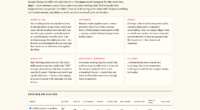
05 / A safer deployment loop
From experiment to oversight
Turn a promising demonstration into a responsible deployment through a repeated cycle of definition, testing, and review.
Define
Set the task, boundaries, permissions, and success criteria.
Connect
Provide approved information sources and relevant context.
Test
Try normal, unusual, and failure cases before real use.
Monitor
Review outcomes, respond to errors, and adjust safeguards.
Next steps for the platform include more interactive scenarios, real-world case studies, and validation of safety measures. Broader progress also depends on research, oversight mechanisms, and shared deployment standards.
“The AI Tower aims to provide clear, practical guidance for deploying AI safely, emphasizing control and transparency at every step.”— Thorsten Meyer
06 / Key questions
What to know before you explore
The platform teaches deployment methods while underscoring that real systems need careful testing and human judgment.
What is the AI Tower for?
It teaches safe AI deployment through interactive demonstrations of retrieval, prompt engineering, automation, and other methods.
Can these methods work in real systems?
They can inform real deployments, but each system and use case needs rigorous testing before use, especially in sensitive settings.
Can I build an assistant without programming?
The platform shows how assistants can be configured using prompts, document sources, and operational limits.
What can go wrong with an AI agent?
An agent may misinterpret data, take unintended actions, or work without enough oversight. Clear limits and testing help manage these risks.
How does the Tower address safety?
It emphasizes controlled deployment, transparency, and testing while recognizing that current models still need human oversight.
What remains uncertain?
How widely these practices will be adopted and how well they work at scale. Ongoing research and real-world evaluation are needed.
Why Safe AI Deployment Matters in Practice
As AI systems become more integrated into business and daily life, understanding how to deploy them safely is critical. The AI Tower offers concrete examples of controlled deployment methods, which can help organizations reduce risks associated with misinformation, unintended actions, and security breaches. It highlights that safe deployment requires not only technical safeguards but also user awareness and ongoing oversight, especially in autonomous or high-stakes applications.
retrieval augmented generation AI tools
As an affiliate, we earn on qualifying purchases.
As an affiliate, we earn on qualifying purchases.
Evolution of AI Deployment and Current Challenges
The concept of safe AI deployment has gained prominence as models grow more capable and autonomous. Previous efforts focused on limiting AI capabilities or restricting access, but recent developments emphasize embedding safety into the deployment process itself. The AI Tower builds on prior research, such as retrieval-augmented generation (RAG), which combines AI with document retrieval to improve accuracy. Despite these advances, experts caution that models still produce errors, and misuse remains a concern, especially when AI acts independently without sufficient oversight.
The platform’s emphasis on practical, hands-on demonstrations reflects a broader industry trend towards transparent, user-friendly safety practices. It also responds to ongoing debates about AI regulation, accountability, and the need for standardized safety protocols across different use cases.
“The AI Tower aims to provide clear, practical guidance for deploying AI safely, emphasizing control and transparency at every step.”
— Thorsten Meyer
As an affiliate, we earn on qualifying purchases.
Current Limitations and Risks of the AI Tower Approach
It is not yet clear how widely adopted these safety practices will become in real-world deployments. The platform demonstrates ideal scenarios, but actual AI systems may still misbehave or be misused outside controlled environments. Ongoing research is needed to evaluate effectiveness at scale.autonomous AI agent development kit
As an affiliate, we earn on qualifying purchases.
As an affiliate, we earn on qualifying purchases.
Next Steps for Safe AI Deployment and Platform Development
Developers plan to expand the AI Tower with more interactive scenarios, real-world case studies, and validation of safety measures. Industry stakeholders are expected to incorporate these principles into broader AI deployment standards. Further research will focus on automating safety checks and integrating oversight mechanisms into autonomous AI systems.
As an affiliate, we earn on qualifying purchases.
Key Questions
What is the main purpose of the AI Tower?
The AI Tower aims to educate users on safe AI deployment practices through interactive demonstrations of key methods like retrieval, prompt engineering, and automation.
Are the methods shown in the AI Tower applicable to real-world systems?
Yes, but with caution. While the platform demonstrates best practices, real AI systems still have limitations, and safety measures must be rigorously tested before deployment.
Can I build my own AI assistant using these methods?
Yes, the platform shows how to create custom assistants without programming, by configuring prompts, document links, and operational limits.
What are the main risks of autonomous AI agents?
Risks include misinterpretation of data, unintended actions, and lack of oversight. Proper limits and testing are essential to mitigate these issues.
How does the platform address AI safety and ethics?
It emphasizes controlled deployment, transparency, and testing, but acknowledges that current models still require human oversight to prevent errors and misuse.
Source: ThorstenMeyerAI.com
Fall Picks
fall essentials
As an affiliate, we earn on qualifying purchases.