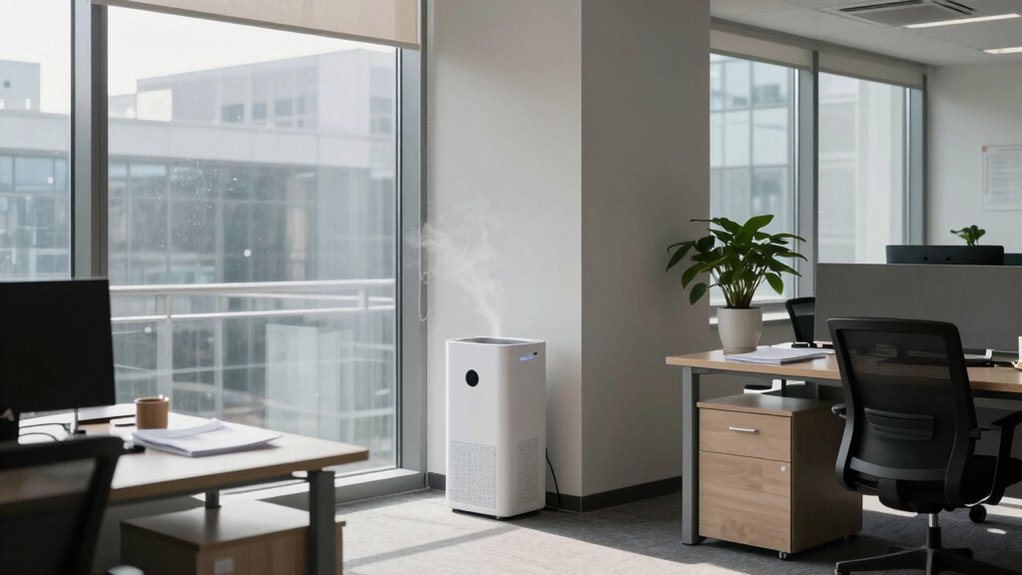

Poor indoor air quality can quietly kill your focus by causing fatigue, headaches, and distractions. Factors like inadequate ventilation, high humidity, mold, and allergens worsen the environment, impairing concentration and decision-making. Dust, VOCs, and stagnant air further diminish mental clarity. Using air purifiers, controlling humidity, and improving airflow can make a big difference. Keep exploring to discover how to create a healthier office space that boosts your productivity.
Key Takeaways
- Poor ventilation causes stale air and CO₂ buildup, impairing cognitive function and reducing focus.
- Indoor pollutants like mold, VOCs, and dust trigger allergies and fatigue, distracting employees.
- Inadequate humidity levels lead to dry eyes and headaches, decreasing mental clarity.
- Lingering odors and stagnant air signals poor circulation, negatively impacting concentration.
- Lack of regular air purifier maintenance reduces effectiveness, allowing pollutants to accumulate and impair focus.

Levoit Air Purifiers for Bedroom Home Pets Dorm Room, Small Air Purifiers
- Certified for Performance and Safety: AHAM verified for quality and efficiency
- Captures Pollutants Effectively: Pre-Filter and Main Filter trap lint, dander, smoke
- Reduces Odors and Fumes: Neutralizes smoke, odors, and fumes for fresh air
As an affiliate, we earn on qualifying purchases.
As an affiliate, we earn on qualifying purchases.
Why Office Air Quality Matters for Focus and Productivity

Good air quality in the office directly impacts your ability to concentrate and get work done. When the air is clean and fresh, your mental clarity improves, allowing you to focus on tasks without distraction. Poor air quality can cause fatigue, headaches, and sluggishness, all of which hinder productivity. You might notice yourself drifting off or struggling to think clearly, which slows progress and increases errors. Fresh, well-ventilated air helps your brain stay alert and engaged, making it easier to problem-solve and make decisions. Additionally, microplastics in dust can contribute to respiratory issues and reduce overall air purity, further impacting your focus. Proper humidity levels also play a crucial role in maintaining indoor air quality, preventing discomfort and respiratory problems. Maintaining good air quality isn’t just about comfort; it’s a vital factor in optimizing your focus and overall work performance. When the air is healthy, your mind stays sharp, and your productivity levels rise. Ensuring proper ventilation can also reduce dust accumulation, which is essential for maintaining a healthier workspace. Regular air quality assessments and cleaning can help minimize airborne pollutants, supporting a more focused environment. Addressing ventilation systems effectively can significantly improve overall indoor air quality and your concentration.

BOB AND BRAD Eye Massager with Heat and Cooling, FSA-HSA Eligible, Heated Eye Massager Mask for Dry Eyes, Migraines, Headaches Relief, Reduce Strain, Improve Sleeping, Birthday Gift for Women Men
- Developed by Physical Therapists: Relieves migraines and dry eyes
- Consistent Heat Therapy: Heats to 104°F-113°F for relief
- Rapid Heating Technology: Warms in 5 seconds with NTC tech
As an affiliate, we earn on qualifying purchases.
As an affiliate, we earn on qualifying purchases.
What Factors Affect Indoor Air Quality at Work

Several factors actively influence indoor air quality in the workplace, and understanding them can help you create a healthier environment. Office air filtration systems play a vital role in removing dust, allergens, and pollutants, ensuring cleaner air. Ambient noise, though often overlooked, can impact your focus and stress levels, indirectly affecting air quality perceptions. Poor ventilation and outdated HVAC systems can lead to stale air buildup, reducing oxygen and increasing pollutants. To clarify these influences, consider this table:
| Factor | Effect | Solution |
|---|---|---|
| Office air filtration | Removes airborne particles | Upgrade or maintain filters |
| Ambient noise | Causes stress, affects airflow | Use soundproofing or white noise |
| Ventilation | Controls air freshness and circulation | Regular system checks |
Proper air circulation can significantly improve overall air quality and comfort in the workspace, as ventilation systems are essential for preventing the buildup of indoor pollutants. Additionally, improving air exchange rates can help maintain optimal indoor air quality over time. Regular maintenance of these systems ensures consistent air quality and reduces health risks associated with indoor pollutants. Understanding the role of indoor pollutants can further enhance efforts to optimize air quality in office environments.

Amazon Basics 14x20x1 Air Filter, MERV 8 AC Furnace Filters, Allergen Control , Electrostatic, Removes Dust Pollen and Lint, 6-Pack (Actual Size: 13.75" x 19.75" x 0.75")
- Enhanced Air Quality: Captures dust, pollen, lint for cleaner air
- Furnace Efficiency: Traps particles to protect furnace
- Durable Construction: Beverage board frame with wire mesh
As an affiliate, we earn on qualifying purchases.
As an affiliate, we earn on qualifying purchases.
Common Indoor Pollutants That Hurt Your Concentration

You might not realize that mold, mildew, VOCs, dust, and allergens can all impact your focus at work. These indoor pollutants can cause discomfort, fatigue, and distractions that make it harder to concentrate. Addressing them can help create a healthier, more productive workspace. Regularly cleaning and ventilating your space can significantly reduce these indoor pollutants and improve air quality, leading to better focus. Incorporating household safety practices, such as using appropriate cleaning products and maintaining proper ventilation, can further enhance your environment. Using essential oils with respiratory health benefits, like eucalyptus or peppermint, can also promote clearer airways and reduce congestion, supporting better concentration. Understanding the importance of mammography guidelines can also promote a more mindful approach to maintaining a clean and respectful environment.
Mold and Mildew Growth
Mold and mildew thrive in damp, poorly ventilated environments, making indoor spaces prime for their growth. When mold spores settle, they can release allergens and irritants that impair your focus and energy. To combat this, prioritize mold prevention by controlling humidity levels, fixing leaks, and ensuring proper ventilation. Regularly clean surfaces prone to moisture buildup, such as windowsills and bathroom areas. If you discover mold, prompt mildew remediation is essential—scrape off visible growth, disinfect affected areas, and dry them thoroughly. Avoid letting moisture linger, as it fuels mold development. Maintaining a dry, well-ventilated office isn’t just about cleanliness; it’s about safeguarding your concentration by reducing these hidden indoor pollutants. Proper mold prevention and mildew remediation keep your workspace healthier and more conducive to focus. Additionally, using humidity control methods can significantly inhibit mold growth and improve indoor air quality.
Furthermore, monitoring and managing indoor moisture levels can help prevent future mold issues and create a healthier environment.
Volatile Organic Compounds (VOCs)
While controlling moisture and preventing mold is essential for indoor air quality, volatile organic compounds (VOCs) pose another silent threat to your concentration. These chemical emissions come from everyday items like cleaning supplies, furniture, and printers, releasing odors that can distract or cause headaches. VOCs subtly degrade air quality, impacting focus over time. To understand their effects, consider this:
| Source | Effect on Air Quality | Odor Control Method |
|---|---|---|
| Cleaning products | Irritation, headaches | Use natural alternatives |
| Furniture | Chemical emissions | Ventilate during setup |
| Printers | Off-gassing odors | Keep in well-ventilated space |
| Paints | Strong chemical odors | Use low-VOC options |
| Air fresheners | Persistent chemical fumes | Avoid or minimize use |
Additionally, incorporating indoor plants can naturally improve air quality by absorbing some VOCs. Reducing VOCs improves concentration and creates a healthier workspace.
Dust and Allergens
Dust and allergens are common indoor pollutants that can considerably impair your ability to focus and stay productive. These airborne toxins, including pet dander, settle in your workspace and trigger allergies or asthma. Here’s how they affect you:
- They cause sneezing, congestion, and irritation, making it tough to concentrate.
- Pet dander can linger in the air, especially if you have pets, worsening allergy symptoms.
- Dust buildup reduces air quality, leading to fatigue and decreased mental clarity. Upgrading your filtration system can significantly enhance air quality by removing these tiny particles.
- Using a Water Filtration System can help remove airborne particles and improve overall air quality. Properly maintaining air purifiers by following maintenance dos and don’ts ensures they operate efficiently to combat these pollutants. Regular cleaning and air filtration can help reduce these pollutants. Keep your workspace dust-free, maintain good ventilation, and consider using HEPA filters to create a healthier environment. Eliminating allergens boosts focus and keeps your mind sharp. Incorporating holistic SEO strategies such as optimizing your environment for better air quality can also support overall productivity and well-being. Additionally, choosing eco-friendly disposal methods for cleaning supplies and filters reduces environmental impact and promotes healthier indoor air.

16 in 1 Air Quality Monitor Indoor 7" Wildfire CO2 Monitor, 9 AQI+7 Alerts
- 16-in-1 Air Quality Monitoring: Detects 9 key air parameters and 7 alerts
- Large 7-inch LED Display: Clear, instant air quality readings with adjustable brightness
- High-Precision External Sensors: Accurate to 0.001 units for reliable detection
As an affiliate, we earn on qualifying purchases.
As an affiliate, we earn on qualifying purchases.
How Ventilation Impacts Your Ability to Think Clearly

Good ventilation plays a crucial role in maintaining your ability to think clearly in an office environment. When air exchange happens efficiently, fresh air replaces stale air, reducing pollutants and carbon dioxide buildup that can cloud your judgment. Poor ventilation efficiency causes these harmful substances to linger, making it harder to focus and process information. Proper airflow helps regulate oxygen levels, keeping your brain alert and responsive. If your workspace lacks adequate ventilation, you may notice increased fatigue or difficulty concentrating. Ensuring good air exchange isn’t just about comfort—it directly impacts cognitive function. Additionally, using weatherproof tool storage can help maintain the integrity of ventilation equipment, ensuring it functions properly over time. Understanding nail biology can also remind us of the importance of proper health and hygiene practices that extend to maintaining a clean and safe environment. Clear, fresh air is essential for sharp thinking and sustained focus throughout your workday.
The Effect of Humidity Levels on Cognitive Performance

When humidity levels are just right, you’ll notice it’s easier to stay focused and think clearly. Too much moisture, however, can make it harder to concentrate and drain your mental energy. Maintaining ideal humidity is key to keeping your cognitive performance sharp.
Optimal Humidity Promotes Focus
Maintaining ideal humidity levels in the office can considerably enhance your ability to focus and perform tasks efficiently. Proper humidity control guarantees the air moisture stays within a range that supports cognitive function. When humidity is just right, you’re less likely to experience dry eyes, sore throat, or fatigue, which can distract you from work.
To optimize air moisture:
- Keep humidity levels between 40-60% for comfort and clarity.
- Use humidifiers or dehumidifiers as needed to adjust air moisture.
- Regularly monitor humidity with a hygrometer to maintain stability.
Excess Moisture Impairs Cognition
Excess moisture in the office air can considerably hinder your cognitive performance. When humidity levels are too high, it can cause discomfort, reduce air circulation, and promote mold growth, all of which impair focus. Poor air filtration exacerbates these effects by allowing allergens and moisture to linger. To understand this better, consider the following:
| Humidity Level | Effect on Cognition |
|---|---|
| Too High | Sleep disruption, fatigue, concentration issues |
| Just Right | Improved focus, alertness, comfort |
| Too Low | Dry eyes, headaches, difficulty concentrating |
| Normal Range | Excellent mental clarity |
| Poor Air Circulation | Stagnant air, increased moisture |
Maintaining balanced humidity with good air circulation and air filtration helps safeguard your mental sharpness.
Signs Your Office Might Have Poor Air Circulation

Poor air circulation in your office can quickly become noticeable through several telltale signs. If you notice lingering odors despite cleaning, it’s a red flag. Additionally, stagnant air can make the space feel stuffy and uncomfortable. You might also see signs in your office plantings, such as wilting or yellowing leaves, indicating they aren’t getting enough fresh air. Using air quality sensors can help detect low airflow levels that aren’t obvious visually.
Here are three signs to watch for:
- Persistent musty or stale smells.
- Plants struggling or showing stress.
- Air quality sensors indicating poor circulation.
Paying attention to these indicators helps guarantee your office maintains healthy airflow, boosting focus and productivity.
Practical Ways to Improve Air Quality in Your Office

Improving air quality in your office is essential for creating a healthy and productive environment. One practical step is adding office plantings, which naturally filter toxins and boost oxygen levels. Choose low-maintenance plants like snake plants or pothos for easy care. Additionally, investing in ergonomic furniture can help reduce stress and improve posture, which indirectly benefits air quality by encouraging better airflow and circulation. Regularly cleaning your workspace to reduce dust and allergens also makes a difference. Keep windows open when possible to allow fresh air in, and avoid overcrowding your space. These simple changes create a healthier atmosphere, helping you stay focused and energized throughout the workday.
Do Air Purifiers Really Help? Benefits and Considerations

Air purifiers can effectively reduce pollutants like dust, allergens, and odors in your office, improving overall air quality. However, you should consider their costs and ongoing maintenance to determine if they’re a practical solution for your space. Understanding their benefits and limitations helps you decide if they’re worth the investment.
Effectiveness in Removing Pollutants
Many people turn to air purifiers expecting them to effectively eliminate pollutants from indoor environments, but their actual performance can vary. The key is in their air filtration capabilities and how well they remove pollutants.
Consider these points:
- High-quality filters, like HEPA, trap 99.97% of airborne particles, improving pollutant removal.
- Regular maintenance, such as changing filters, is vital for maximum pollutant removal.
- Some purifiers target specific pollutants, like VOCs or odors, but may not cover all indoor contaminants.
While air filtration can considerably reduce dust, allergens, and smoke, it’s not a complete solution. Effectiveness depends on the purifier’s quality, proper use, and the types of pollutants present.
Impact on Air Quality
While high-quality filters can greatly reduce airborne pollutants, it’s important to contemplate how much these devices truly improve overall indoor air quality. Air filtration helps remove dust, allergens, and some VOCs, but it doesn’t eliminate all odors or chemical vapors. Air purifiers with scent masking features can temporarily cover up unpleasant smells, yet they don’t address the root cause. Effectiveness varies based on device size, filter quality, and room size. Here’s a quick comparison:
| Feature | Benefits | Limitations |
|---|---|---|
| Air filtration | Removes particles and allergens | May not eliminate all odors |
| Scent masking | Covers smells temporarily | Doesn’t improve air chemistry |
| Air purifiers | Overall air quality improvement | Need regular filter changes |
| Room size fit | Ensures proper circulation | Ineffective in large spaces |
Cost and Maintenance Considerations
Considering the costs and ongoing maintenance of air purifiers is crucial before investing in one, as these factors directly impact their long-term effectiveness and affordability. Conducting a thorough cost analysis helps you understand initial purchase prices and potential replacement parts. A proper maintenance routine ensures the device functions efficiently and prolongs its lifespan.
Here are some key points to ponder:
- Initial investment – High-quality units may cost more upfront but save money over time.
- Filter replacements – Regularly changing filters is indispensable, and costs vary depending on the model.
- Energy consumption – Some purifiers consume more power, adding to your ongoing expenses.
Balancing these factors helps you choose an effective, budget-friendly option that maintains air quality without breaking the bank.
How Allergens in the Office Can Disrupt Your Focus

Allergens in the office can considerably disrupt your focus, making it harder to stay attentive and productive. Dust mites, mold spores, pet dander, and pollen can trigger allergic reactions or cause discomfort, pulling your attention away from work. To combat this, allergen mitigation is essential. Implementing effective air filtration systems helps remove airborne allergens, reducing their presence and minimizing symptoms. Regular cleaning, including vacuuming with HEPA filters and wiping surfaces, also plays a vital role in controlling allergens. When allergens are present, your body reacts, leading to sneezing, congestion, or itchy eyes, all of which divert your focus. By prioritizing air filtration and allergen mitigation strategies, you create a cleaner, healthier environment that supports sustained concentration and productivity.
Creating a Healthier Office Environment for Better Productivity
Creating a healthier office environment is essential for boosting productivity and overall well-being. To improve employee wellness and office ergonomics, focus on these key actions:
- Adjust your workstation so your chair and monitor support good posture, reducing strain and fatigue.
- Incorporate regular breaks to stretch and refresh your mind, preventing burnout.
- Improve air quality with proper ventilation and air purifiers to reduce pollutants and allergens.
Frequently Asked Questions
Can Plants Improve Indoor Air Quality and Boost Focus?
Plants can definitely improve indoor air quality and boost focus. Their benefits include filtering toxins and increasing humidity, creating a healthier work environment. When you add plants like snake plants or pothos, you enhance focus by reducing stress and increasing oxygen levels. Their presence also adds a calming touch, making it easier for you to concentrate. Incorporating plants into your workspace is a simple, natural way to enhance focus and overall air quality.
How Often Should Office Air Filters Be Replaced for Optimal Health?
You should replace your office air filters every 1 to 3 months for maximum health. The air filter lifespan depends on usage, filter type, and air quality, so following a regular replacement schedule is crucial. Check your filters monthly, especially in high-traffic or polluted areas, and replace them promptly when they appear dirty or clogged. This guarantees better air quality and helps maintain your focus and well-being at work.
Do Personal Air Purifiers Effectively Enhance Individual Focus at Work?
Yes, personal air purifiers can effectively enhance your focus at work by improving air quality around you. They target dust, allergens, and pollutants, creating a cleaner environment. When you use personal air purifiers, you’ll likely notice better concentration, fewer distractions from allergies or congestion, and an overall sense of well-being. Investing in one is a smart move if you want to optimize your workspace and maintain high productivity levels.
What Role Does Office Cleaning Play in Air Quality and Concentration?
Office cleaning plays a vital role in improving air quality and your concentration. Regular cleaning reduces airborne allergens and dust accumulation, which can cause sneezing, congestion, and distractions. When you keep your workspace tidy, you breathe cleaner air, leading to better focus and productivity. Neglecting cleaning allows pollutants to build up, making it harder to concentrate. So, consistent cleaning directly supports a healthier, more focused work environment.
Are There Specific HVAC Settings That Optimize Cognitive Performance?
You can optimize cognitive performance by adjusting your HVAC settings for better ventilation efficiency and regular maintenance. Guarantee your system provides consistent airflow and fresh air exchange, reducing indoor pollutants. Set the temperature to a comfortable level that promotes alertness, typically around 68-72°F. Regular HVAC maintenance keeps filters clean, improving air quality. These adjustments help create a healthier environment, boosting focus and productivity throughout your workday.
Conclusion
You might think a tidy desk boosts your focus, but neglecting air quality quietly hampers your productivity. While you chase deadlines, unseen pollutants and poor ventilation work against you, clouding your mind like fog. Improving air quality isn’t just about comfort—it’s about clarity and performance. Don’t wait for headaches or fatigue to remind you; take control now. Because in the race for success, clean air is the silent, essential edge you can’t afford to ignore.