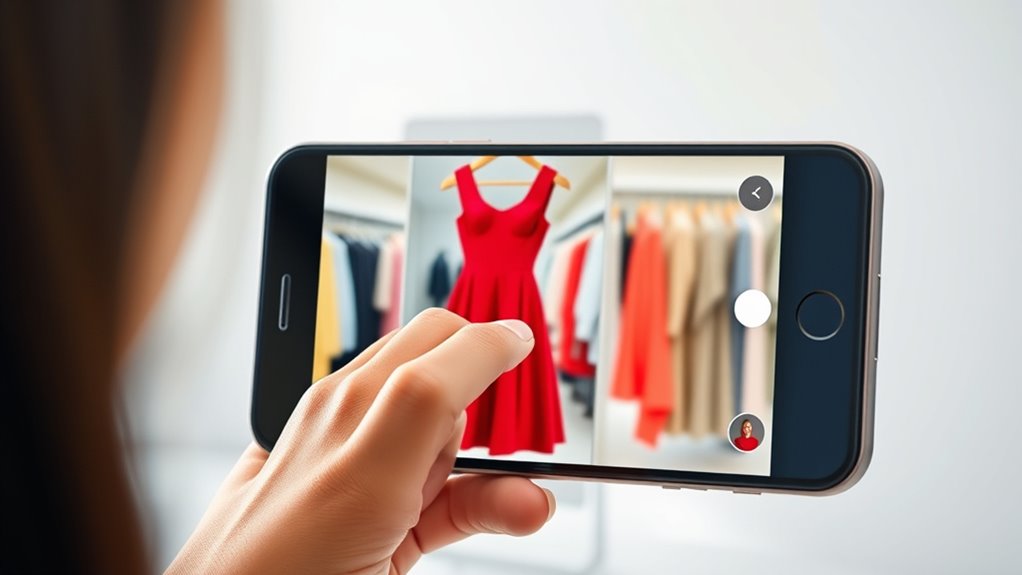

Implementing AR-powered virtual try-on in e-commerce allows you to visualize products like clothes, accessories, or makeup directly on yourself, reducing uncertainty and boosting confidence in your purchases. You can use your device’s camera to see lifelike overlays, experiment with styles, and make more informed choices. Retailers benefit too, by lowering returns and creating engaging shopping experiences. To explore how brands are successfully adopting this technology and enhancing customer satisfaction, continue exploring the case studies ahead.

Get business pricing on monitors, keyboards and dev gear
- Business-only prices and quantity discounts
- Tax-exempt purchasing
- Multiple users, one account, clear invoices
Key Takeaways
- Successful implementation of AR virtual try-on requires seamless integration with existing e-commerce platforms and user-friendly interfaces.
- Realistic rendering and accurate fit assessments enhance customer confidence and reduce product returns.
- Brands leveraging AR saw increased engagement, higher conversion rates, and improved customer satisfaction.
- Challenges include ensuring device compatibility, privacy concerns, and maintaining high-quality visual experiences.
- Future growth depends on technological advancements, personalized experiences, and sharing features to boost social shopping.

Have you ever wondered how augmented reality (AR) is transforming online shopping? It’s changing the way you browse, try, and buy products without ever leaving your home. One of the most exciting innovations is virtual fitting, which allows you to see how clothes, accessories, or even makeup will look on you through augmented shopping tools. Retailers are increasingly integrating AR into their platforms to create more immersive, engaging experiences that eliminate the uncertainty of purchasing online. This technology provides you with a realistic preview, reducing the need for returns and increasing satisfaction with your purchases.
AR is transforming online shopping with virtual fitting, making experiences more immersive and reducing returns.
When you visit an e-commerce site that uses AR for virtual fitting, you’re invited to try on products virtually using your smartphone or computer camera. Imagine browsing for a new pair of sunglasses or a dress, and instead of guessing how it might look on you, you simply click a button and see a lifelike overlay of the item on your image. This seamless virtual fitting process helps you assess fit, style, and even color options in real time. The result is a more confident buying decision, since you’ve virtually tried the item on as if you were in a fitting room. This form of augmented shopping bridges the gap between online and physical retail, giving you a more tactile experience despite being remote.
Implementing virtual fitting features benefits both you and the retailer. For you, it means fewer surprises and more certainty about your purchase. You can experiment with different styles or sizes effortlessly, saving time and avoiding disappointment. For the retailer, AR-driven virtual fitting reduces return rates and enhances customer loyalty. It also differentiates their brand in a competitive market, making the shopping experience more fun and interactive. As augmented shopping becomes more mainstream, you’ll find more brands investing in AR tech, creating virtual fitting rooms that feel personalized and intuitive. Additionally, understanding the key elements of modern farmhouse style can inspire aesthetic choices for home decor that complement your shopping experience.
In practice, AR in e-commerce often involves simple steps: upload a photo or use your device’s camera, select the product you want to try, and then see it virtually on your body or face. The technology is continually improving, offering more accurate representations and even allowing you to share your virtual try-on with friends for opinions. This interactive process makes shopping online feel less abstract and more engaging, mimicking the physical experience of trying on products. As AR continues to evolve, virtual fitting will become a standard feature, making augmented shopping an essential part of your online retail journey.
Frequently Asked Questions
How Does AR Impact Customer Purchase Decision Speed?
AR speeds up your purchase decisions by boosting virtual engagement and increasing your confidence in products. When you can virtually try on items, you spend less time hesitating, making it easier to decide quickly. This immersive experience helps you see how products fit or look, reducing doubts. As a result, AR enables you to make faster, more confident purchase choices, streamlining your shopping process and enhancing satisfaction.
What ARe the Costs Associated With Implementing AR in E-Commerce?
You should conduct a thorough cost analysis to understand expenses like software development, hardware, and integration. Vendor selection is vital; choose a reliable provider that fits your budget and needs. Expect costs for licensing, customization, and ongoing maintenance. While initial investments can be high, the improved customer experience can boost sales. Balance these costs carefully to guarantee AR implementation aligns with your budget and business goals.
How Does AR Integration Affect Website Loading Times?
You might think AR integration slows your website, but with proper image optimization and efficient server response, the impact is minimal. Studies show that optimized images and fast servers help maintain quick loading times, even with AR features. By streamlining assets and leveraging content delivery networks, you can guarantee AR enhances user experience without considerably affecting your site’s speed, making it a seamless addition for shoppers.
What ARe the Privacy Concerns With AR Customer Data?
You should prioritize data security and obtain clear user consent when collecting AR customer data. Privacy concerns arise if you don’t safeguard sensitive information or if users aren’t fully aware of how their data is being used. To build trust, implement robust security measures, be transparent about data collection, and always seek explicit user consent before capturing or processing any AR-related data.
How Can Small Businesses Adopt AR Without Large Budgets?
Think of adopting AR as planting a small seed that quickly grows; you don’t need a giant budget. You can start with affordable solutions and DIY tools that require minimal investment. Many platforms offer easy-to-use AR development kits and templates, making it accessible for small businesses. By leveraging these resources, you can integrate AR into your online store, enhancing customer experience without breaking the bank.
Conclusion
Incorporating AR for virtual try-ons transforms your shopping experience, making it more interactive and convenient. You’ll see increased customer engagement and reduced returns, boosting your business’s success. As you explore AR’s potential, ask yourself: are you ready to stay ahead in the competitive e-commerce landscape? Embracing this technology isn’t just a trend — it’s the future of retail. So, why not take the leap and elevate your shopping experience today?
Halloween Picks
halloween
As an affiliate, we earn on qualifying purchases.