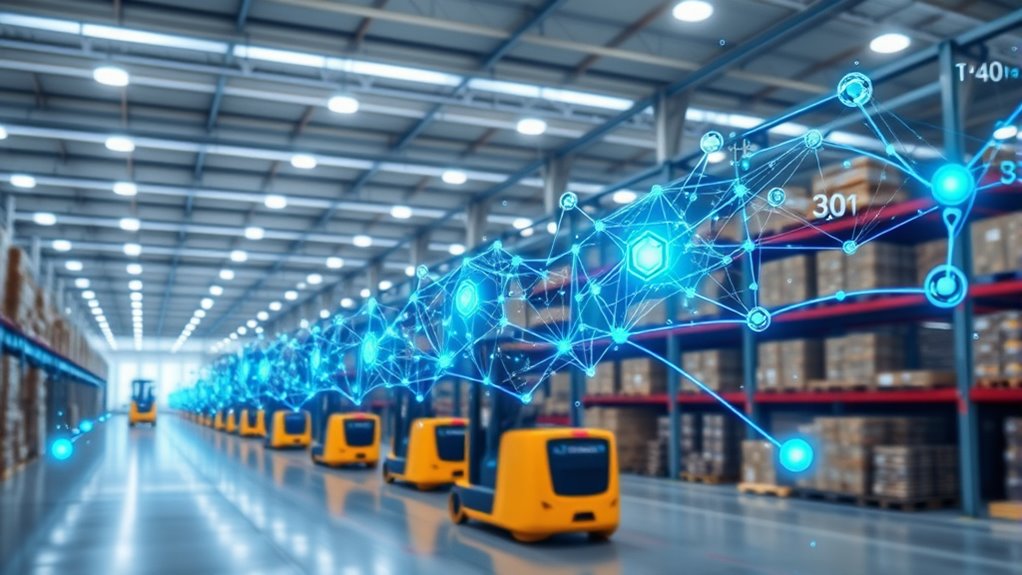

In this case study, blockchain technology enhances transparency in logistics by creating an immutable, shared digital ledger that records every transaction and movement of products. It allows you to track items in real time, verify authenticity, and quickly isolate issues like contamination or delays. Automated smart contracts streamline processes, reducing administrative tasks and risks. To discover how these innovations build trust and improve efficiency across supply chains, keep exploring the details behind these successful implementations.
Key Takeaways
- Blockchain enables real-time tracking of goods, ensuring transparent and tamper-proof records throughout the logistics process.
- Smart contracts automate compliance and payments, reducing delays and manual interventions in supply chain operations.
- Distributed ledger technology enhances security and creates an immutable audit trail for all transactions and product movements.
- Transparent data sharing improves accountability among stakeholders, facilitating quick issue resolution and recalls.
- Case studies demonstrate increased efficiency and trust, showcasing blockchain’s role in enhancing supply chain transparency.
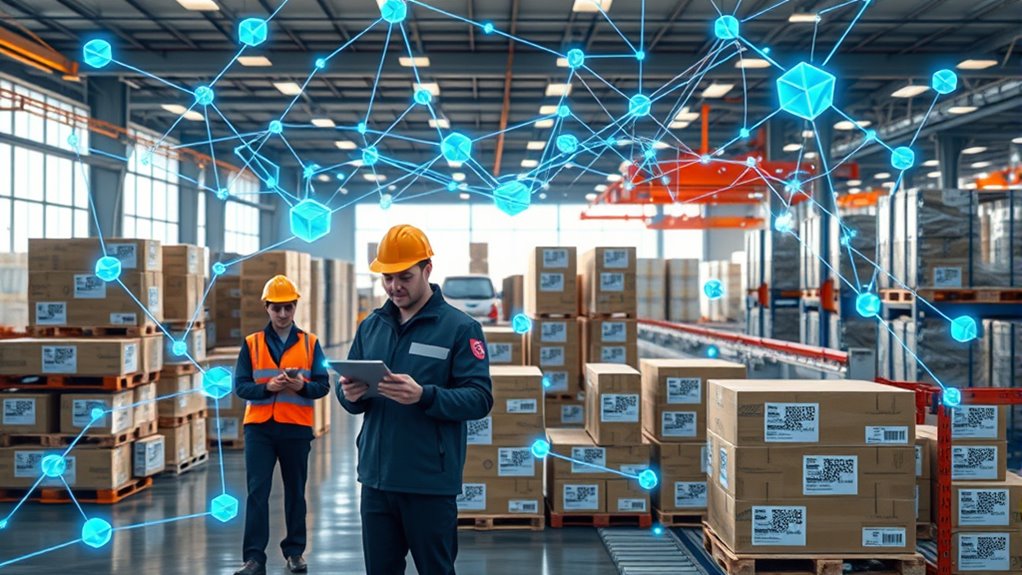
Blockchain technology is transforming supply chains by providing greater transparency and security. When you adopt blockchain, you tap into a system that records every transaction on a digital ledger accessible to all stakeholders. This ledger is unchangeable, guaranteeing that data remains accurate and tamper-proof. With this setup, you can confidently track products from origin to delivery, reducing errors and disputes. The transparency built into blockchain helps everyone involved see the same information in real-time, fostering trust and accountability across the supply chain.
Blockchain enhances supply chain transparency and security by providing a tamper-proof, real-time shared digital ledger.
One of the key features driving this transformation is the smart contract. These are self-executing agreements embedded within the blockchain that automatically enforce terms when predefined conditions are met. For example, when a shipment reaches a warehouse, a smart contract can trigger payment processing or release of documentation without manual intervention. This automation reduces delays, minimizes paperwork, and lowers the risk of fraud or miscommunication. By integrating smart contracts into your supply chain, you streamline operations and ensure that all parties adhere to agreed-upon terms, making processes more efficient and reliable.
The digital ledger acts as the backbone of this system, recording every transaction, movement, and verification step. Because it’s distributed across multiple nodes, no single entity can manipulate the data without consensus from the network. This decentralization means you gain a higher level of security, as hacking or altering data becomes considerably more difficult. Additionally, because every transaction is time-stamped and linked to previous records, the digital ledger provides an all-encompassing audit trail. This trail is invaluable when resolving disputes or verifying compliance with regulations, especially in complex logistics networks involving multiple suppliers, manufacturers, and distributors.
Implementing blockchain in your supply chain also enhances traceability. When a product moves through various stages, each checkpoint updates the digital ledger, creating a transparent, immutable record. Should issues arise, such as contamination or recalls, you can pinpoint the affected batch quickly and accurately. This rapid traceability not only improves safety and quality control but also builds consumer trust, knowing that products are sourced transparently. Moreover, blockchain’s real-time data sharing reduces administrative burdens, allowing you to react swiftly to disruptions or changes in demand.

Convergence of Blockchain, AI, and IoT: Concepts and Challenges (Innovations in Big Data and Machine Learning)
As an affiliate, we earn on qualifying purchases.
As an affiliate, we earn on qualifying purchases.
Frequently Asked Questions
How Does Blockchain Enhance Real-Time Supply Chain Tracking?
Blockchain enhances real-time supply chain tracking by providing a secure digital ledger that records every transaction instantly. You can verify transactions quickly through the blockchain, ensuring data accuracy and transparency. This system allows you to monitor goods’ status, location, and condition in real-time, reducing delays and errors. With transaction verification built-in, you gain confidence in the data, enabling more efficient decision-making and improved supply chain visibility.
What Are the Main Challenges in Implementing Blockchain Logistics Solutions?
You face hurdles like integrating digital identity systems and deploying smart contracts seamlessly. It’s a tall order to get all stakeholders on the same page, especially when legacy systems resist change. Ensuring data security and privacy can feel like chasing shadows, while establishing trust takes time. Overcoming these challenges requires careful planning, clear standards, and collaboration, but the payoff is worth it—more transparent, efficient logistics.
How Does Blockchain Ensure Data Security and Privacy?
Blockchain guarantees data security and privacy through cryptography techniques like hashing and digital signatures, which protect data integrity and authenticity. You can also implement access controls that restrict data visibility to authorized parties. By combining these methods, blockchain creates a secure, transparent environment where data remains tamper-proof and privacy is maintained, giving you confidence that sensitive information stays protected while enabling trustworthy, decentralized transactions.
What Are the Cost Implications of Adopting Blockchain Technology?
Imagine planting a seed that grows into a robust tree; adopting blockchain has similar costs. You’ll face initial investment challenges, including purchasing technology and training staff. A thorough cost analysis helps you understand ongoing expenses like maintenance and updates. While the upfront costs might seem steep, the long-term savings in transparency and efficiency can outweigh them, making blockchain a valuable investment in your supply chain’s future.
How Can Small Businesses Leverage Blockchain in Their Supply Chains?
You can leverage blockchain in your supply chain by using digital credentials to verify suppliers and products, ensuring transparency and trust. Implement smart contracts to automate transactions and streamline processes, reducing delays and costs. These tools help small businesses enhance security, improve traceability, and build stronger relationships with partners. By adopting blockchain, you gain a competitive edge, making your supply chain more efficient and resilient in today’s dynamic market.

AI-Powered Contract Management: AI-Powered Contract Management:AI contract management, legal automation, contract lifecycle management, AI legal tech, … compliance monitoring, smart contracts.
As an affiliate, we earn on qualifying purchases.
As an affiliate, we earn on qualifying purchases.
Conclusion
Imagine blockchain as a shining beacon guiding your supply chain through foggy waters, illuminating every step with clarity and trust. By embracing this technology, you’re not just enhancing transparency—you’re building a fortress of integrity around your logistics. Feel the confidence swell as data flows seamlessly, forging unbreakable bonds with partners and customers alike. With blockchain, you transform chaos into harmony, turning your supply chain into a resilient, transparent symphony that resonates with trust and excellence.

Blockchain Solutions for Rural Development
As an affiliate, we earn on qualifying purchases.
As an affiliate, we earn on qualifying purchases.

LandAirSea 54 GPS Tracker – Made in the USA from Domestic & Imported Parts. Long Battery, Magnetic, Waterproof, Global Tracking. Subscription Required
Premium GPS Tracker — The LandAirSea 54 GPS tracker provides accurate global location, real-time alerts, and geofencing. Easily…
As an affiliate, we earn on qualifying purchases.
As an affiliate, we earn on qualifying purchases.