To cut your AWS costs by 70%, you’ll want to start with a thorough resource audit to identify idle or underused instances. Implement automated policies to shut down non-essential resources during off-hours, resize instances based on demand, and adopt reserved instances for predictable workloads. Using tagging for better tracking and exploring serverless options can also help. Following these strategic steps will guide you toward significant savings while keeping your services intact—discover how to make it happen.
Key Takeaways
- Startup X conducted a thorough resource audit, identifying idle and underutilized instances running 24/7.
- Implemented auto-scaling and switched to cost-effective instance types to match real demand.
- Adopted reserved instances for predictable workloads, leading to substantial savings.
- Automated shutdowns during off-hours and optimized resource resizing, reducing waste.
- Regular monitoring, tagging, and continuous automation efforts resulted in approximately 70% AWS cost reduction.
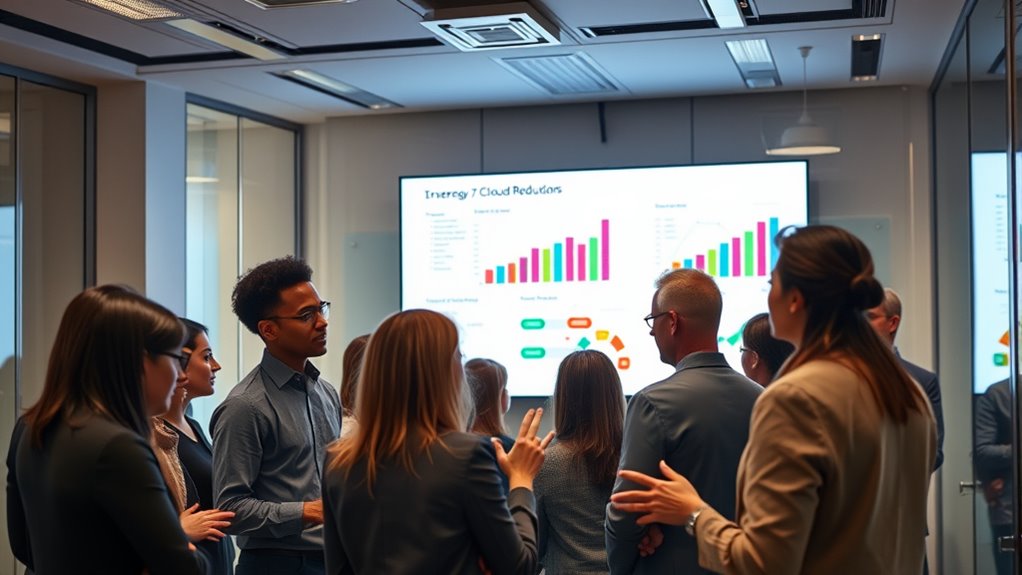
Many organizations struggle with rising cloud expenses, often unsure how to optimize their spending without sacrificing performance. If you’re in this situation, focusing on effective cost optimization and resource management can make a significant difference. Startup X faced this exact challenge with their AWS bills ballooning beyond expectations. They knew they needed a strategic approach to control costs without compromising their service quality. By honing in on resource management, they identified where overspending was happening and took targeted actions to reduce waste.
Many organizations face rising cloud costs and need strategic resource management to optimize spending effectively.
The first step they took was to conduct a thorough audit of their cloud resources. This involved analyzing usage patterns, identifying idle or underutilized instances, and eliminating unnecessary components. Many organizations overlook these small inefficiencies, but they add up quickly. Startup X discovered that some instances remained running 24/7 despite low utilization, leading to unnecessary charges. By switching to more suitable instance types and leveraging auto-scaling, they ensured resources were only active when needed, directly impacting their bottom line. Additionally, controlling expiration of cloud resources is crucial for avoiding unexpected costs and ensuring budget adherence.
Cost optimization isn’t just about cutting back; it’s about smarter resource management. Startup X implemented tagging strategies to track spending across different teams and projects, making it easier to pinpoint the most significant cost drivers. They also adopted reserved instances for predictable workloads, which offered substantial savings compared to on-demand pricing. This move required upfront planning but paid off in the long run, reducing their overall cloud expenses by about 70%. Regular monitoring and reporting became part of their routine, allowing them to adapt quickly to changing needs and avoid surprise bills.
Automation played a key role in their cost management strategy. They set up policies to automatically shut down non-essential resources during off-hours and to resize instances based on real-time demand. These automated actions minimized human error and kept costs in check continuously. Additionally, Startup X explored serverless options for certain workloads, which further minimized resource waste and optimized their cost structure.
Through disciplined resource management and a focus on cost optimization, Startup X transformed their cloud spending. They learned that ongoing vigilance and strategic planning are crucial to maintaining a lean cloud environment. If you’re aiming to reduce your AWS expenses, start by auditing your resources, adopt automation, and leverage pricing options like reserved instances. The results may surprise you, just as they did for Startup X, who managed to cut their cloud costs by 70% while still delivering high-quality services. With the right approach, you can achieve similar savings and better control over your cloud investments.

TRENDnet 6-Outlet Managed PDU, TPI-06, Rackmount Power Distribution Unit, UL Certified, 1 x NEMA 5-15R Bypass Power Outlet, 1 x Gigabit RJ-45 Port, Overload Protection, Surge Protection 2160J, Black
DEVICE INTERFACE: 6 x NEMA 5-15R Managed Power Outlets (15A max. @ 120V AC); 1 x NEMA 5-15R-Bypass...
As an affiliate, we earn on qualifying purchases.
Frequently Asked Questions
What Tools Did Startup X Use to Monitor Cloud Expenses?
You used specialized cost tracking tools like Cloudability and AWS Cost Explorer to monitor your cloud expenses. These tools allow you to gain detailed insights into your AWS spend, identify wasteful resources, and optimize costs effectively. By leveraging these tools, you can continuously track expenses, set budgets, and implement cost-saving strategies, ensuring your cloud spending remains controlled and aligned with your business goals.
How Long Did the Cost Reduction Process Take?
The cost reduction process took about three to six months, depending on the complexity of your infrastructure. You should start with a thorough cost analysis, then develop a clear timeline plan that includes regular reviews and adjustments. By setting milestones and tracking progress, you guarantee steady improvements, allowing you to identify inefficiencies early and implement cost-saving measures effectively within your planned timeline.
Were There Any Trade-Offs in Performance After Cost Cuts?
You might notice some minor performance impact initially, but it usually doesn’t affect user experience substantially. When you cut costs, you often optimize resources, which can lead to slight delays or reduced capacity during peak times. However, with proper monitoring and adjustments, you can maintain a smooth user experience while saving money. Keep an eye on performance metrics to balance cost savings and user satisfaction effectively.
Did Startup X Change Cloud Providers or Stay With AWS?
You might think Startup X would switch cloud providers after slashing costs, but surprisingly, they stayed with AWS. Their strategy focused on vendor neutrality, optimizing their existing setup without the hassle of a cloud provider switch. This approach allowed them to maintain flexibility, control, and cost efficiency, proving you don’t always need to switch providers to achieve big savings. Sometimes, smart optimization within your current vendor is all it takes.
How Did Team Communication Influence the Cost-Saving Strategy?
Your team’s strong alignment and stakeholder engagement played a vital role in the cost-saving strategy. When everyone understands the goals, you can collaborate effectively, share insights, and make informed decisions quickly. Open communication ensures that all stakeholders are on the same page, which helps identify unnecessary expenses and implement efficient solutions faster. This unified approach creates a proactive environment where cost reductions are prioritized, ultimately leading to significant savings.

Tripp Lite Metered PDU, 15A, 13 Outlets (5-15R), 120V, 5-15P, 100-127V Input, 15 ft. Cord, 1U Rack-Mount Power, 2 Year Warranty (PDUMH15), Unit Instruction Guide, Black
Safe, reliable power distribution ideal for distributing alternate waveform ups or generator power in rack enclosures, network closets...
As an affiliate, we earn on qualifying purchases.
Conclusion
So, after slashing your AWS expenses by 70%, you might think you’ve cracked the cloud cost code. But here’s the irony: the more you cut, the more you realize how much you can optimize—and how much you might have been overspending all along. Sometimes, trimming costs isn’t about saving money but about understanding your needs better. In the end, the real lesson is that smarter spending beats simply spending less, every single time.

Monoprice Blackbird Pro 4-Outlet Smart PDU, IP-Based Remote Power Management Solution, Power Up, Power Down or Reboot Your Remote Equipment from Anywhere Over TCP/IP
Provides remote access to power up or down devices using TCP/IP and built-in 10/100 Ethernet port.
As an affiliate, we earn on qualifying purchases.

Pyle 19 Outlet 1U 19" Rackmount PDU Power Distribution Supply Center Conditioner Strip Unit Surge Protector 15 Amp Circuit Breaker 4 USB Multi Device Charge Ports 15FT Cord, Black - PCO865
DETACHABLE 1U RACK DESIGN - Versatile space-saving 1U form factor rackmount power strip ideal for standard 19-inch racks....
As an affiliate, we earn on qualifying purchases.