
More companies are moving compute closer to the edge to boost speed, security, and operational efficiency. By processing data locally, you reduce latency, enabling real-time actions and faster decision-making. This approach also improves security and data privacy, especially for sensitive information, and enhances system resilience. It supports the growth of IoT and AI devices, making operations more scalable and responsive. Keep exploring to discover how edge computing can revolutionize your business infrastructure.

Get business pricing on monitors, keyboards and dev gear
- Business-only prices and quantity discounts
- Tax-exempt purchasing
- Multiple users, one account, clear invoices
Key Takeaways
- To reduce latency and enable real-time data processing for faster decision-making and operational agility.
- To enhance security and data sovereignty by processing sensitive information locally.
- To improve system resilience and reduce bandwidth reliance by decentralizing computing resources.
- To support the growth of IoT and AI applications with faster, more efficient edge processing.
- To stay competitive by leveraging proximity for smarter, more responsive digital infrastructure.
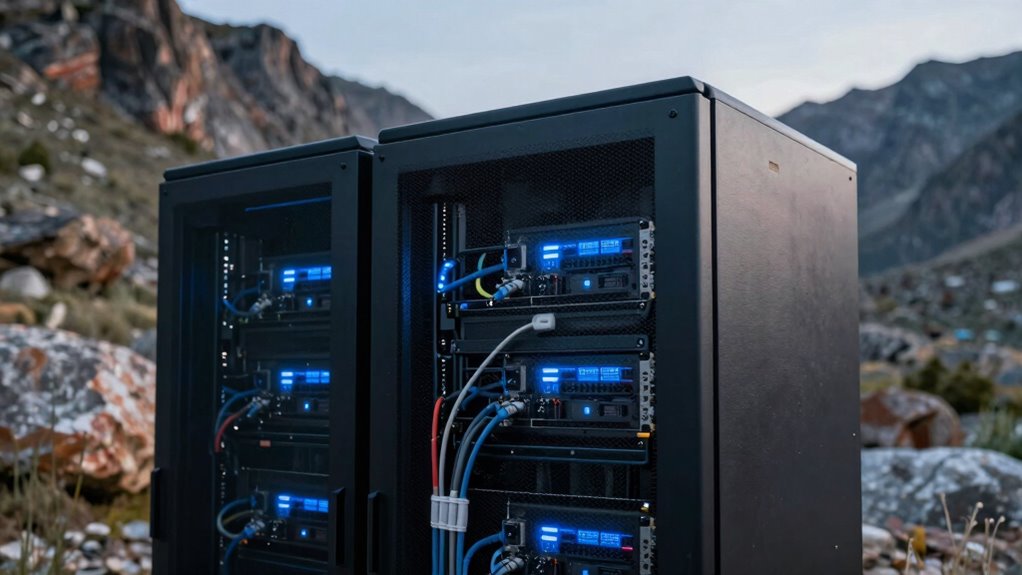
Edge computing is rapidly transforming how data is processed and analyzed by bringing computation closer to the source of data generation. This shift isn’t just about moving servers or data centers; it’s about creating a smarter, more responsive way to handle the vast amounts of data generated every second. As more companies adopt edge solutions, you’ll notice a significant boost in how efficiently your systems operate, especially when it comes to IoT integration and latency reduction. When devices are connected through IoT, they produce enormous streams of data that need quick processing to be meaningful. Instead of sending everything to a centralized cloud or data center for analysis, edge computing enables you to process data locally. This means you can act on insights immediately, whether it’s adjusting a manufacturing process or responding to a real-time security threat. By bringing compute power closer to the devices and sensors, you eliminate delays caused by long-distance data transfer. This reduction in latency is vital in scenarios where every millisecond counts, such as autonomous vehicles, industrial automation, or healthcare monitoring. When data is analyzed right at the edge, decisions happen faster, and your operations become more agile.
In addition to latency reduction, IoT integration becomes more seamless with edge computing. You’re working with a network of interconnected devices that need to share and process data continuously. Instead of relying solely on cloud services, which can introduce delays and bandwidth constraints, edge solutions allow you to distribute processing power across multiple locations. This decentralization enhances your system’s resilience, ensuring that even if connectivity to the cloud drops, your devices can still operate effectively. You can also scale your IoT deployment more efficiently because processing is no longer bottlenecked by the capacity of a central data center. For example, in a smart factory, sensors can detect equipment faults immediately, triggering maintenance alerts without waiting for cloud-based analysis. This rapid response not only saves time but also reduces downtime and maintenance costs. Additionally, as edge computing becomes more prevalent, organizations are recognizing its potential to improve security and data sovereignty by processing sensitive information locally. This trend highlights that bringing compute closer to the edge isn’t just about speed; it’s about security and compliance too. The decentralized processing of data ensures that sensitive information remains protected within specific jurisdictions. Moreover, integrating color accuracy and other visual quality factors into edge devices can enhance user experiences, especially in applications involving real-time video or imaging. As the use of AI-powered devices continues to grow, deploying AI models at the edge enables faster decision-making without relying on cloud-based inference. Organizations are also exploring edge device security measures to safeguard data and maintain trust in their distributed systems. The trend is clear: as IoT devices proliferate and the demand for real-time insights grows, edge computing becomes an essential component of modern digital infrastructure. You’re not just adapting to change—you’re positioning yourself ahead of it, leveraging proximity to data sources to stay competitive and innovate faster.
As an affiliate, we earn on qualifying purchases.
Frequently Asked Questions
How Does Edge Computing Impact Data Privacy and Security?
Edge computing enhances data privacy and security by allowing you to process data locally, reducing exposure during transmission. You can implement data encryption to protect sensitive information and enforce strict access control, ensuring only authorized users handle critical data. This approach minimizes risks of data breaches and unauthorized access, giving you better control over your data. As a result, your business benefits from improved privacy and a stronger security posture at the edge.
What Industries Are Most Benefiting From Edge Computing Adoption?
Imagine a bustling city where signals hum through streets, delivering real-time analytics instantly. Industries like manufacturing, healthcare, and retail benefit most from edge computing, as it enables localized processing. You see faster decision-making and reduced latency in autonomous vehicles, smart hospitals, and connected stores. By bringing compute closer, these sectors transform operations, making them more responsive and efficient, just like a city alive with seamless, real-time communication.
How Does Edge Computing Differ From Traditional Cloud Computing?
Edge computing differs from traditional cloud computing by employing a distributed architecture, where data is processed closer to its source. This setup reduces latency, allowing you to access information faster and make real-time decisions. Unlike centralized cloud systems, edge computing minimizes data transfer delays, improves responsiveness, and enhances performance, especially for applications requiring immediate action. This approach is ideal for environments demanding quick insights and low-latency operations.
What Are the Main Challenges in Deploying Edge Infrastructure?
You face challenges like managing network latency and ensuring infrastructure scalability when deploying edge infrastructure. As you expand, latency issues can slow data processing, affecting performance. Scalability becomes complex because you need to support numerous devices across diverse locations. You must also coordinate security and maintenance efforts, which grow more difficult with decentralized setups. Overcoming these hurdles requires careful planning, robust hardware, and adaptive network solutions.
How Is Edge Computing Influencing Iot Device Management?
Edge computing transforms IoT device management by enabling faster device provisioning and real-time data processing. You can optimize your network by reducing latency and bandwidth usage, ensuring devices communicate efficiently. This approach allows you to manage devices locally, troubleshoot issues quickly, and deploy updates seamlessly. Overall, edge computing enhances your control over IoT ecosystems, making device management more responsive, scalable, and reliable in dynamic environments.
industrial edge computing device
As an affiliate, we earn on qualifying purchases.
As an affiliate, we earn on qualifying purchases.
Conclusion
So, next time your smart fridge starts giving you attitude, remember: it’s just the edge computing revolution in action. Companies are bringing compute closer so your gadgets can gossip faster and smarter. Who needs cloud hubs when your toaster can decide your breakfast? As we race to the edge, one thing’s certain—your devices will be more opinionated, more connected, and maybe, just maybe, a little more fun to blame when things go sideways.
As an affiliate, we earn on qualifying purchases.
edge computing security appliance
As an affiliate, we earn on qualifying purchases.
As an affiliate, we earn on qualifying purchases.
Fall Picks
fall essentials
As an affiliate, we earn on qualifying purchases.