🔍 Read the full analysis: Llama.cpp V1.0.0 Lays Groundwork For Local AI Growth on ThorstenMeyerAI.com

Get business pricing on monitors, keyboards and dev gear
- Business-only prices and quantity discounts
- Tax-exempt purchasing
- Multiple users, one account, clear invoices
TL;DR
The ggml-org team has released llama.cpp and ggml as v1.0.0, establishing semantic-versioning rules for changes to their public interfaces. Breaking public C API changes are intended to trigger major-version bumps, while compatible additions and bug fixes receive minor and patch bumps. The announcement also lists planned distribution channels but gives no rollout schedule.
The ggml-org team has released llama.cpp and ggml v1.0.0, as detailed in the original analysis, setting formal semantic-versioning rules for changes that could affect applications built on the libraries. The policy is intended to give downstream developers a clearer signal when a release may break compatibility with a public C API.
Under the announced policy, a breaking change to a public C API in the projects’ include directories calls for a major-version bump. Compatible additions—including features, backend updates, and new model support—are assigned minor bumps, while fixes that do not change the API receive patch bumps. The team says it intends to make compatibility boundaries more visible as use of the projects grows.
The release covers libllama, used for large language model inference in C and C++, and libggml, the machine-learning tensor library used by llama.cpp. Their public headers are in the respective llama.cpp/include and ggml/include directories. The announcement presents v1.0.0 as recognition that downstream applications already depend on the projects and need interfaces that can evolve while remaining stable.
The team also lists intended distribution routes, including pre-release artifacts for Linux, macOS, Windows, Android, and iOS; Docker and Debian packages; Homebrew, conda-forge, MacPorts, and Winget; and XCFrameworks for Apple platforms. These are described as channels the project plans to broaden or use; the announcement does not say that every package is available now or give a release timetable.
llama.cpp v1.0.0 Clearer rules for library changes
llama.cpp and ggml introduced semantic versioning for their public interfaces. The policy gives developers a clearer signal when an update may affect their integrations.
What the libraries do
Their public headers are in the llama.cpp/include and ggml/include directories.
libllama
A C and C++ library for LLM inference in llama.cpp.
libggml
The tensor library used for machine learning by llama.cpp.
How version numbers signal change
The policy distinguishes incompatible changes from compatible development and fixes.
Breaking public C API changes—and API or ABI incompatibilities—are signaled with a major bump.
Backward-compatible features, backend updates, model support, and API additions receive a minor bump.
Bug fixes that do not change the API receive a patch bump.
Distribution plans
The announcement lists channels the team intends to support; rollout timing is unspecified.
- Linux, macOS, and Windows
- Android and iOS
- Docker, Debian, Homebrew, and conda-forge
- MacPorts, Winget, and XCFrameworks
Clearer Upgrade Signals for Integrators
Applications that embed libllama or libggml can be affected when public interfaces change. A major-version increment is intended to indicate that an upgrade may require code changes, while minor and patch increments distinguish compatible feature work from fixes that do not alter the API. Application maintainers and package distributors can use this convention when planning updates and communicating compatibility to users.
The policy’s practical effect will depend on how future releases apply it and describe changes in release notes. Version numbers do not prevent breakage or replace testing, migration guidance, and compatibility checks. The announcement establishes intended rules but does not explain how they will be applied in later releases or quantify the work required to move existing applications to v1.0.0.
Products Worth Considering

DJI Osmo Mobile 8 3-Axis Phone Gimbal Stabilizer
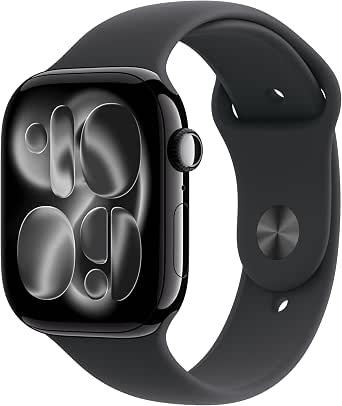
Apple Watch Series 11 GPS + Cellular, 46mm Jet Black Aluminum Case with Black Sport Band (M/L)

Samsung Galaxy Tab A11 8.7-Inch Wi-Fi Tablet, 64GB, 4GB RAM, 90Hz, Gray, with 20W Charger
As an affiliate, we earn on qualifying purchases.
From Inference Project to Library Contract
The team says llama.cpp began about 3.5 years before the announcement and has since accumulated downstream applications. It describes llama.cpp as a portable C and C++ implementation that uses quantization and optimized backends to run multimodal models across different hardware. These are descriptions of the project’s design and goals, not independent performance measurements.
llama.cpp uses ggml as its machine-learning engine. The announcement says ggml offers backends that can be compiled as dynamic libraries and optionally loaded at runtime, and reports support for more than 150 architecture variants and mainstream speculative-decoding methods. It does not provide an architecture-by-architecture list, benchmark results, or a dated compatibility matrix. The team also points to continuing work on continuous integration and hardware testing, with support it says comes from NVIDIA, AMD, Qualcomm, Arm, IBM, and Intel. Those efforts do not establish that every configuration is tested.
““Having a flexible but stable API is paramount.””
— The ggml-org team
Migration and Package Timing
The announcement does not identify any specific breaking changes in v1.0.0, list migration steps for existing applications, or provide a compatibility guide. It sets a rule for labeling future breaking changes to public C APIs, but offers limited detail about how ABI compatibility will be handled beyond saying incompatibilities will receive major-version bumps.
It is also unclear when the listed distribution channels will be available, whether all supported platforms will receive packages on the same schedule, or how often releases will be made. The announcement gives no support period for earlier interfaces and no detailed account of testing coverage across hardware and backend combinations. These points will affect how readily downstream teams can plan upgrades.
Future Releases Will Test the Policy
Developers integrating the libraries can review the v1.0.0 public headers and project release notes for changes relevant to their applications. The team points package maintainers to a discussion about adding ggml-org projects to packaging and release pipelines, but does not give a timetable for those efforts.
Future releases will indicate whether the announced convention is applied consistently, including whether public API compatibility breaks receive major bumps and release notes distinguish compatible features from fixes. No next release date or packaging milestone was provided in the announcement.
Key Questions
What changed with llama.cpp and ggml v1.0.0?
The ggml-org team released v1.0.0 versions of both libraries and announced semantic-versioning rules for their public interfaces. The announcement does not list specific breaking changes in this release.
How will the versioning rules work?
Breaking changes to a public C API are intended to receive a major-version bump. Compatible additions, backend updates, and model support are assigned minor bumps; fixes without API changes receive patch bumps.
Does v1.0.0 require developers to migrate their applications?
The announcement does not say whether v1.0.0 introduces breaking changes or provide migration instructions. Developers should check the project’s release information and test the update against their own integrations.
Are all the listed packages available now?
That is not established by the announcement. It lists distribution channels for several operating systems and package managers but gives no availability schedule or confirmation that every channel is already active.
Which projects are covered by the release?
The release covers libllama, for language-model inference in C and C++, and libggml, the tensor library used by llama.cpp. Their public headers are provided in the projects’ respective include directories.
Primary source: Hugging Face · via ThorstenMeyerAI.com