
TL;DR
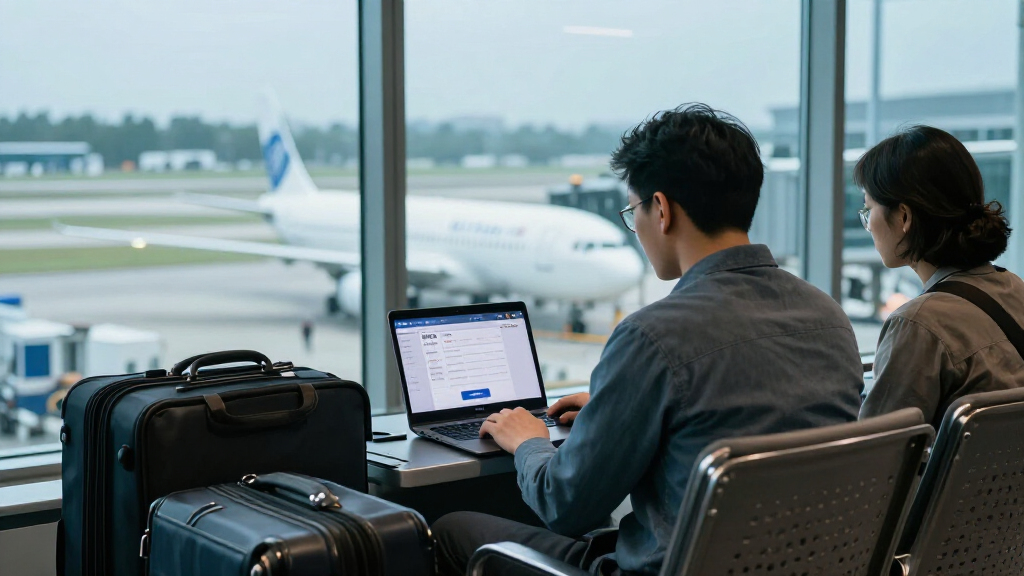
United Airlines updated its contract of carriage on November 11 to prohibit unauthorized third-party AI agents from booking, changing or managing tickets and other products. The rule applies even when a passenger supervises or approves an agent’s actions; travelers can still use assistants to search for flights, but must complete purchases themselves, according to reporting cited in the source material.
United Airlines has added a ban on unauthorized third-party AI agents making, changing or servicing tickets and other products, according to its contract of carriage revised November 11, 2026. The rule covers software actions even when a passenger supervises or approves them, putting a boundary around automated purchases on United’s digital channels and through travel intermediaries.

Get business pricing on monitors, keyboards and dev gear
- Business-only prices and quantity discounts
- Tax-exempt purchasing
- Multiple users, one account, clear invoices
United said it is taking steps to restrict access to its digital platforms directly and indirectly through travel agencies and aggregators. The airline said the work includes changes to its booking, ticketing and distribution policies. The contract lists use of AI agents to make, modify or service a ticket, or purchase a product or service, among prohibited practices.
The definition quoted by travel industry publications includes AI assistants, AI-enabled browsers and standalone agents that take autonomous or semi-autonomous action. It also reaches third-party assistants accessing United through tools or connections supplied by travel agencies or other intermediaries. The text does not name specific products. Reports say an AI assistant may still search for United flights and display fares, but the traveler must complete the purchase personally.
The contract text was reproduced by View from the Wing, One Mile at a Time and PPC Land on November 11. The author of the source material said United’s website could not be accessed from the research setup, so the wording is based on those publications’ quotations rather than an independent review of the live contract. The cited text also says United may cancel reservations made, modified or serviced by AI agents without notice. Other listed remedies include invalidating tickets, charging their full value, removing miles or terminating MileagePlus membership; the reporting says the contract does not specify whether United plans to apply those measures to agent bookings.

Why United Is Drawing a Booking Line
The policy sets a clear limit on how much of a flight purchase a personal AI assistant can handle. A traveler may ask software to compare schedules or fares, but, under the reported interpretation of the policy, the final booking and ticket management must remain with the traveler. That distinction matters as technology companies promote agents that can carry out tasks across websites and apps.
United cited account security, unintended purchases and possible regulatory concerns. It said sharing account credentials with personal AI assistants could expose sensitive information or lead to unwanted purchases, account changes or use of frequent-flyer miles. It also said automated actions could create issues under FAA and Department of Transportation rules, pointing to check-in acknowledgments about prohibited items in baggage.
United CEO Scott Kirby offered a commercial explanation at an event in Chicago, according to The Wall Street Journal as cited by View from the Wing: “To be honest, I don’t want to create another middleman.” That remark frames the dispute as one about control of the customer relationship and distribution as well as security. The source material cites Skift describing United as the first U.S. airline to state such a prohibition explicitly, while also noting that other travel companies are exploring AI partnerships.
Products Worth Considering

Apple AirPods Pro 3 Wireless Earbuds with Active Noise Cancellation

Bose QuietComfort True Wireless Earbuds with Active Noise Cancellation, Bluetooth 5.3, USB-C Charging, and IPX4 Water Resistance

LG UltraGear 34G600A-B 34-Inch Curved WQHD Gaming Monitor, 160Hz
As an affiliate, we earn on qualifying purchases.
The Rule Behind the Checkout
Personal AI agents are marketed as tools that can act on a user’s instructions: find a flight within a budget, select a seat, complete the purchase and handle later steps such as check-in. Travel has been promoted as a potential use case. Mark Zuckerberg described travel as a “top use case” for Meta’s Muse agent, according to Skift, as cited in the source material.
United’s contract places its AI restriction among “Prohibited Practices,” alongside ticketing practices such as hidden-city and throwaway ticketing. The reported text defines an AI agent by what it does, rather than by brand, and includes both fully autonomous and semi-autonomous actions. The source says the contract’s date-of-issue provision may mean tickets issued before November 11 are governed by the earlier contract wording; that is the cited publication’s reading, not a separately confirmed statement from United.
The rollout arrives while companies take different approaches to outside agents. The source material says Amazon and JPMorgan Chase have blocked outside agents, while Southwest and Expedia are working with ChatGPT. It also cites an Uber count of four agent-booked rides in a week with about 320 million trips and orders. That is a raw figure for the stated week; the source provides no comparison baseline, so it does not establish a growth rate or broader adoption trend.
““United is taking steps to restrict access – directly within our digital platforms and indirectly via travel agencies and aggregators – to prohibit use by unauthorized, third-party personal AI agents or assistants.””
— United Airlines
Enforcement and Older Tickets
United has not publicly specified in the material provided which agents or intermediaries it will block first, how it will detect agent activity, or how it will apply the contract’s listed remedies. Although the text authorizes cancellations and other consequences, the cited reporting says it does not clarify whether United intends to use every remedy against agent-made bookings.
The source material also raises a question about the airline’s regulatory rationale: it cites a federal rule concerning baggage acknowledgments but does not provide enough detail to establish how the rule applies to every form of AI-assisted booking or check-in. United’s restrictions are described as underway, and the full implementation timeline is not stated. Whether other airlines will adopt similar contract language is also unknown.
How United Applies the Restriction
The immediate next step is for United to implement the access restrictions described in its statement across its own website and app and through travel agencies and aggregators. The company has not provided a detailed timeline or named specific agents in the material available. Travelers using an assistant to plan a United trip should expect to review and complete the purchase themselves unless the airline clarifies otherwise.
Further clarity may come through updated booking policies, guidance to travel intermediaries or statements about enforcement and tickets issued before November 11. Until United addresses those points, the contract wording establishes the prohibition, while the practical reach and consequences of enforcement remain developing.
Key Questions
Can an AI assistant still search for United flights?
According to The Wall Street Journal as cited by View from the Wing, an assistant may search for flights and show fares. The traveler must complete the purchase themselves.
Does passenger approval make an AI booking acceptable?
The reported contract definition covers autonomous or semi-autonomous actions whether or not a passenger supervises or approves them. Approval does not create an exception in the quoted wording.
What can United do if an agent books or manages a ticket?
The cited contract text says United may cancel reservations made, modified or serviced by AI agents without notice. It also lists remedies including invalidating tickets, charging their full value, removing miles or ending MileagePlus membership; United has not said in the provided material how it will apply those measures.
Does the policy name particular AI products?
No specific product is named in the quoted contract language. The definition describes categories of software and services, including AI assistants and AI-enabled browsers.
Source: Thorsten Meyer AI