📊 Full opportunity report: How To Document Skin Changes While Following A Routine on IdeaNavigator AI — validation score, market gap, and execution plan.

Get business pricing on monitors, keyboards and dev gear
- Business-only prices and quantity discounts
- Tax-exempt purchasing
- Multiple users, one account, clear invoices
TL;DR
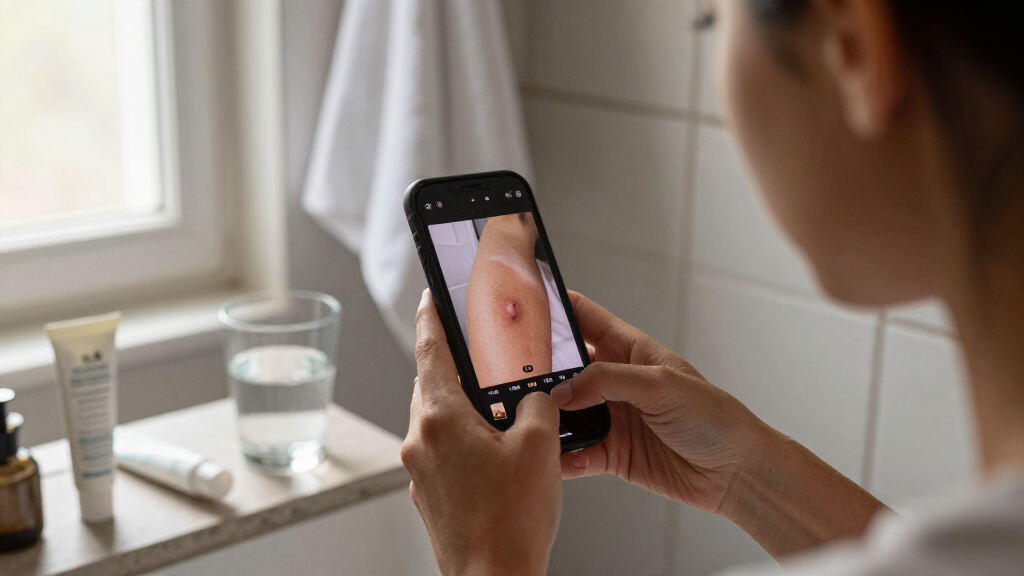
IdeaNavigator AI describes a proposed skincare-tracking app that would guide users through weekly selfies, estimate changes in texture, tone and blemishes, and log routine changes. The concept has not been shown to work: its suggested next step is a 12-week study of 500 users, with some app assessments compared against dermatologist photo reviews.
IdeaNavigator AI has proposed a skincare-tracking app that would use guided weekly selfies to document changes in skin texture, tone and blemishes while recording routine changes. The idea is aimed at people paying for skincare products who struggle to tell whether their routines are helping, but no app launch, clinical validation or user-study results are reported. These details come from IdeaNavigator AI’s proposal, which does not provide independent research supporting the concept.
According to IdeaNavigator AI’s proposal, the app would ask users to take photographs in a repeatable way, using guidance for alignment and lighting. It would then estimate skin metrics over time and let users annotate changes to their routine. The stated goal is to make gradual changes easier to compare than relying on memory or photographs taken under varying bathroom lights.
IdeaNavigator AI suggests tracking texture, tone evenness and blemish counts, then showing which routine changes came before measured improvement. That sequence could help users notice patterns, but it would not by itself establish that a particular product caused a change. Skin can vary for reasons beyond a routine, and the proposal provides no accuracy figures or evidence that its metrics can reliably distinguish those effects.
To test the concept, IdeaNavigator AI recommends a 12-week cohort of 500 users, comparing the app’s measurements with dermatologist assessments of photographs for a subsample and measuring retention. These are suggested study plans, not completed research. The proposal also describes a possible business model combining subscriptions and product affiliate revenue for products associated with user improvement; it identifies no pricing, partners or operating app.
Making Slow Skin Changes Easier to Track
Skincare changes can be gradual, making it difficult for people to judge progress from day to day. IdeaNavigator AI frames the problem around routines costing $50 to $200 a month, while users may make decisions based on memory or inconsistent photos. A standardized record could give users a clearer basis for reviewing whether their skin appears to be changing over time.
The distinction between tracking and proving effectiveness matters. A photo record might help a user spot a trend, but a metric score would need validation before it could be treated as dependable evidence. Even a measured change after a product switch would show timing, not necessarily causation. Readers should therefore view the proposed tool as a way to organize observations, not as a substitute for medical advice or a proven product-testing method.
The proposed commercial model also makes validation relevant to consumers. If affiliate revenue is linked to products associated with improvement, users would need to know how those associations are calculated and whether commercial relationships affect recommendations. IdeaNavigator AI’s proposal does not set out safeguards or disclose any existing commercial arrangements.
As an affiliate, we earn on qualifying purchases.
From Routine Notes to Photo Tracking
The concept focuses on a practical documentation problem: products are often changed before users can confidently assess slow-moving skin changes, while photographs may differ because of lighting, camera position or timing. IdeaNavigator AI proposes a regular capture schedule paired with prompts to record routine changes, rather than occasional snapshots chosen from memory.
IdeaNavigator AI presents the idea as a potential opportunity in beauty technology and skincare apps. It argues that controlled photo capture and skin-metric models could make quantified tracking more credible. That is the proposal’s rationale, not evidence that a particular model has achieved clinical accuracy. The material describing the idea names no model, dataset, dermatologist protocol or peer-reviewed study.
The 12-week test suggested by IdeaNavigator AI would be an early evaluation of whether users keep using the app and whether its photo-based assessments agree with dermatologist reviews in a subsample. Those outcomes would address different questions: retention would indicate whether people use the tool, while comparison with clinicians would provide an initial check on measurement agreement.
skin texture and tone measurement device
As an affiliate, we earn on qualifying purchases.
As an affiliate, we earn on qualifying purchases.
Accuracy, Causation and Study Status
No validation results are provided. IdeaNavigator AI’s proposal does not explain how the app would normalize lighting, calculate its skin metrics, or handle differences in devices, skin tones, camera distance and image quality. It also leaves unspecified the number of people in the proposed dermatologist-review subsample and the assessment method.
The proposal does not report that a 500-person cohort has been recruited or that the app is available. It gives no evidence that the metrics identify product effects, and no information about how users’ photographs would be stored, protected or deleted. Those privacy and data-handling details would matter for an app collecting repeated facial images.
It is also unclear how the affiliate model described by IdeaNavigator AI would distinguish a product’s contribution from other routine changes or natural variation. Until methods and results are available, claims about reliable measurement or products linked to improvement remain unverified.
As an affiliate, we earn on qualifying purchases.
A Cohort Would Test the Proposal
The next step set out by IdeaNavigator AI is a 12-week study involving 500 users. The proposed evaluation would compare app metrics with dermatologist photo assessments for a subsample and track whether participants continue using the app. IdeaNavigator AI supplies no start date, research team, recruitment plan or study registration.
Before the concept could support confident consumer decisions, developers would need to publish how images are captured and scored, how dermatologist comparisons are conducted, and how uncertainty in the measurements is presented. Evidence on privacy practices and any affiliate disclosures would also help users judge the service. For now, the development described by IdeaNavigator AI is a product proposal with a test plan, not a demonstrated skincare tool.
Source: IdeaNavigator AI
As an affiliate, we earn on qualifying purchases.
Key Questions
Is this skincare-tracking app available now?
No availability is reported. IdeaNavigator AI describes a proposed app and a suggested study, without a launch date or download information.
What would the app track?
The proposal from IdeaNavigator AI lists skin texture, tone evenness and blemish counts, using guided weekly selfies and notes about changes to a user’s routine.
Would a photo score prove that a product works?
No. A change recorded after a routine adjustment could be associated with that change, but it would not establish that a product caused the result. The metrics described in IdeaNavigator AI’s proposal have not been validated in results provided here.
How would the idea be tested?
IdeaNavigator AI suggests a 12-week cohort of 500 users, with app metrics compared against dermatologist photo assessments for a subsample and user retention measured. This is a proposed plan, not a completed study.
Source: IdeaNavigator AI
Halloween Picks
halloween
As an affiliate, we earn on qualifying purchases.