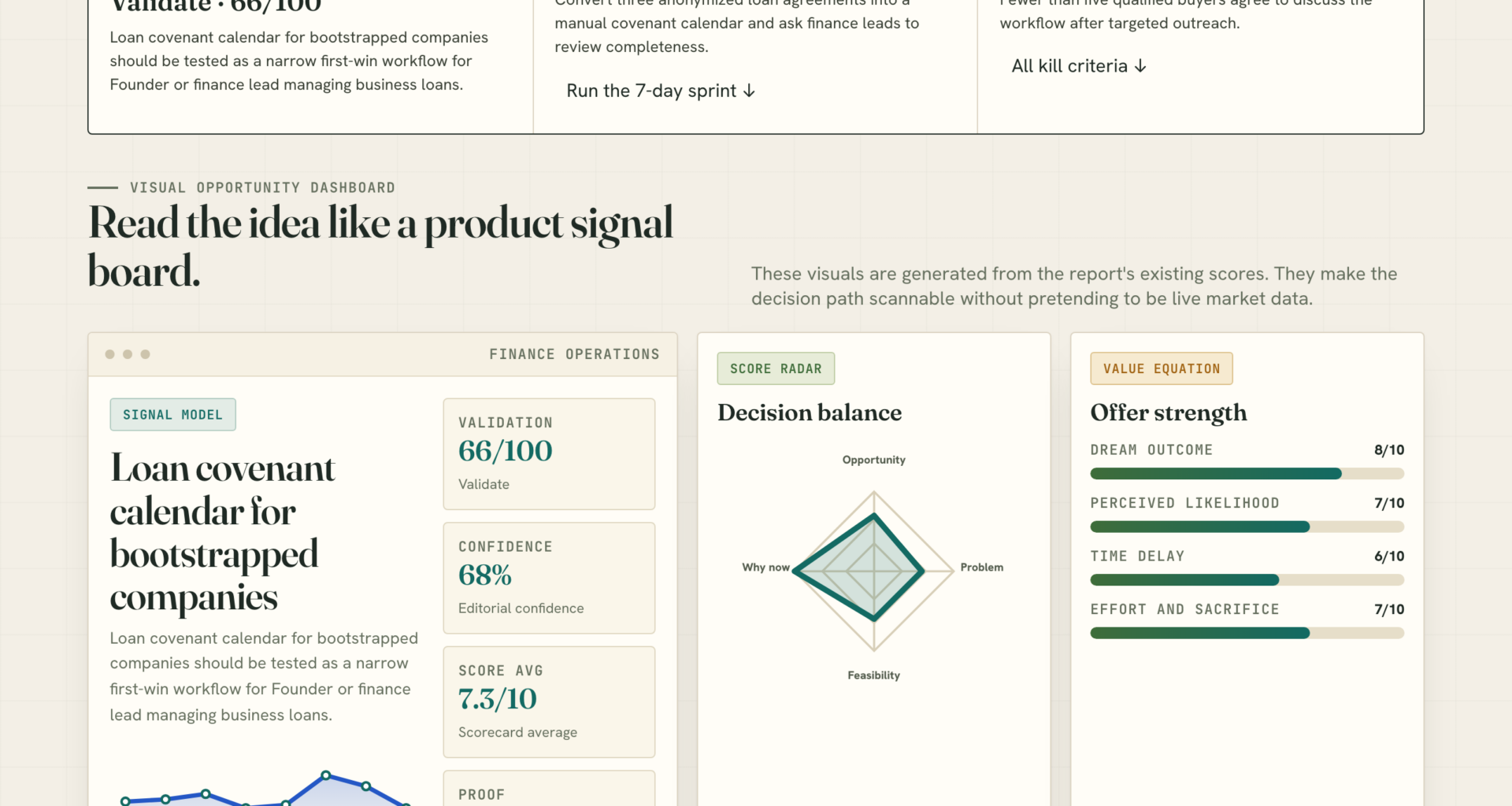

📊 Full opportunity report: Loan covenant calendar for bootstrapped companies on IdeaNavigator AI — validation score, market gap, and execution plan.

Get business pricing on monitors, keyboards and dev gear
- Business-only prices and quantity discounts
- Tax-exempt purchasing
- Multiple users, one account, clear invoices
TL;DR
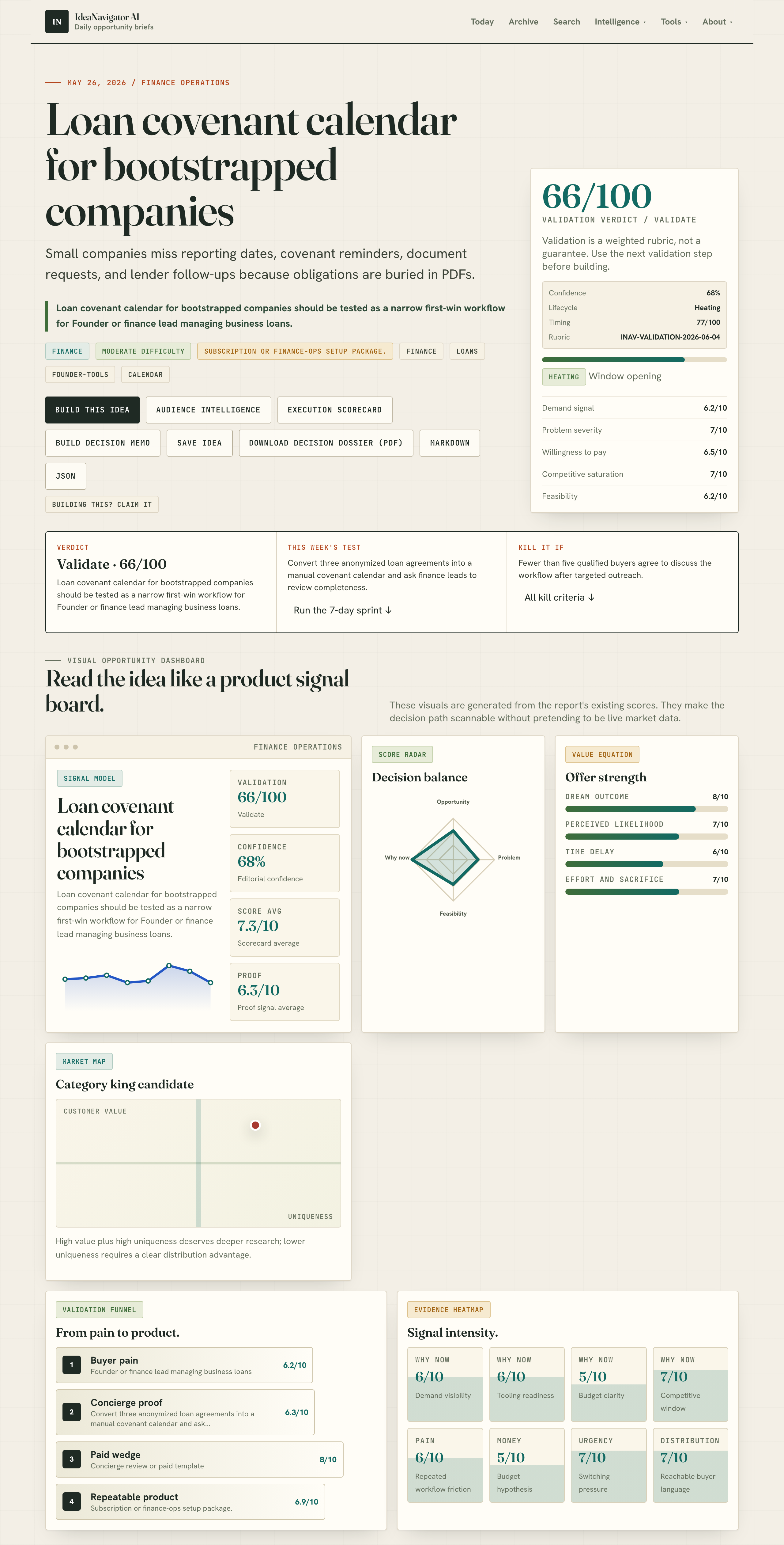
A prototype loan covenant calendar is being tested to help small companies track loan obligations more effectively. This tool aims to reduce missed deadlines and improve lender communication. Its success depends on validation with real loan agreements.
A new workflow tool designed to help bootstrapped small companies manage their loan covenants is entering a testing phase, focusing on extracting key obligations, due dates, and communication history from loan documents. This development aims to address operational challenges faced by small businesses in maintaining compliance and lender follow-up, especially as increased financing scrutiny makes diligent covenant management more critical.
The tool, proposed by IdeaNavigator AI, is intended as a minimal viable product (MVP) that automates the extraction of covenant obligations, owners, due dates, evidence files, and lender communication history from loan agreements. It is targeted at founders and finance leads managing business loans, who often struggle with tracking obligations buried within PDFs and scattered across different documents.
The initial validation involves converting three anonymized loan agreements into manual covenant calendars and asking finance professionals to review them for completeness. The goal is to demonstrate that the calendar can reliably capture all relevant obligations and streamline operational follow-up.
The market focus is on finance operations for small companies, with revenue potential from subscription models or setup packages tailored to finance teams. The development is driven by the need for better compliance tools amid rising scrutiny of small business financing, especially as lenders tighten oversight.
Why Improved Covenant Management Matters for Small Companies
Effective covenant management is critical for small, bootstrapped companies to avoid breaches that could lead to default or penalties. As lenders increase oversight, operational follow-up becomes more important, yet small companies often lack dedicated tools for this purpose. The proposed covenant calendar aims to fill this gap, potentially reducing missed deadlines and improving lender relationships, which can be vital for ongoing financing and growth.
Products Worth Considering

Sony WH-1000XM6 Wireless Noise-Canceling Over-Ear Headphones, Blue, Bundle

Samsung 27-Inch Odyssey QD-OLED G8 4K 240Hz Gaming Monitor

LG UltraGear 27-Inch QHD OLED Gaming Monitor, 240Hz, 0.03ms, G-SYNC Compatible, FreeSync Premium Pro, HDMI 2.1
As an affiliate, we earn on qualifying purchases.
Operational Challenges in Managing Business Loan Covenants
Small companies frequently face difficulties in tracking loan covenant obligations because such details are often buried in lengthy PDFs or scattered across multiple documents. Traditionally, founders or finance leads manually monitor these obligations, risking missed reporting dates or document requests. The rise in financing scrutiny, especially from lenders demanding tighter compliance, has increased the need for automated tools to manage covenant obligations effectively.
Current solutions are often limited to manual tracking or generic project management tools that lack specific features for covenant management. The idea of a dedicated covenant calendar aims to address this operational gap, providing a structured, automated approach to tracking obligations and communication history.
“The covenant calendar could significantly reduce missed obligations and improve operational follow-up for small companies managing loans.”
— an anonymous researcher
Uncertainties Around Tool Validation and Adoption
It is not yet clear how reliably the covenant calendar can extract obligations from diverse loan agreements or how quickly small companies will adopt the tool. The validation process is in early stages, with results pending from the review of converted agreements. Additionally, the extent to which this tool can integrate with existing finance systems remains uncertain.
Next Steps for Testing and Market Validation
The immediate next step is to complete the validation of the covenant calendar with the three anonymized loan agreements and gather feedback from finance professionals. If successful, the development team plans to refine the tool, expand testing with more agreements, and explore integration options. Long-term, the goal is to develop a subscription model or setup package for small companies to adopt the workflow tool.
Key Questions
What exactly does the covenant calendar do?
The covenant calendar automates the extraction of loan obligations, due dates, evidence files, and communication history from loan agreements, helping small companies stay compliant and improve follow-up.
Who is the target user for this tool?
Founders and finance leads managing business loans in small, bootstrapped companies are the primary target users.
How will the tool be validated?
Validation involves converting three anonymized loan agreements into manual covenant calendars and asking finance professionals to review their completeness and usability.
When will the tool be available for wider use?
The timeline depends on successful validation and refinement. If initial testing is positive, broader deployment could follow within several months.
Will this tool integrate with existing finance software?
Integration plans are still under consideration; initial focus is on manual validation, with potential for future system integration based on user feedback.
Source: IdeaNavigator AI