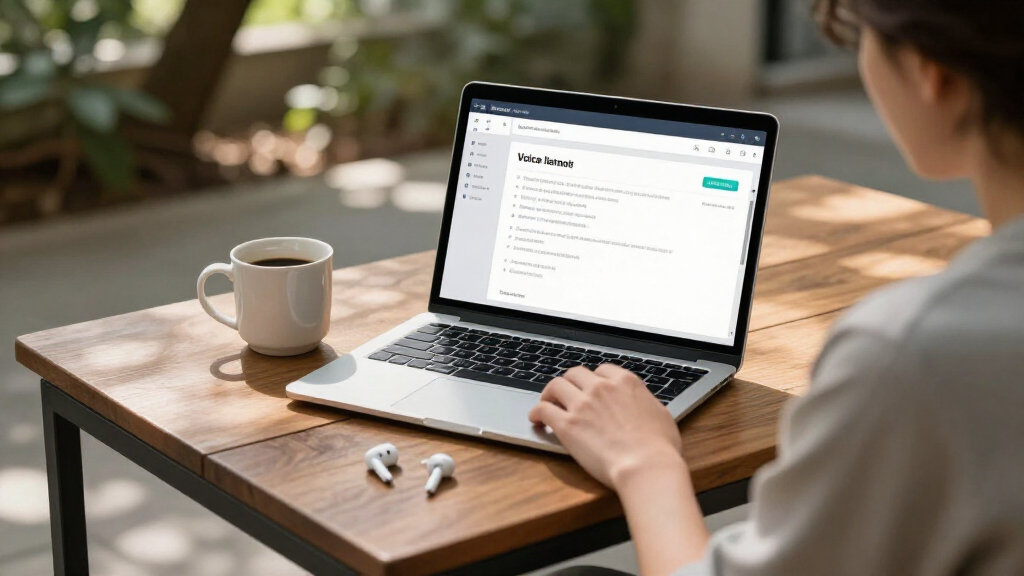

📊 Full opportunity report: Streamlined Voice Rights Licensing in the AI Marketplace on IdeaNavigator AI — validation score, market gap, and execution plan.

Get business pricing on monitors, keyboards and dev gear
- Business-only prices and quantity discounts
- Tax-exempt purchasing
- Multiple users, one account, clear invoices
TL;DR
A new licensing platform for voice actors’ AI clones offers a streamlined workflow for setting usage terms, approving projects, and tracking payments. This development aims to address current licensing challenges in AI voice technology, with early testing involving ten voice actors. The initiative could reshape how AI voice rights are managed and monetized.
A new licensing platform for voice actors’ AI clones is being tested to streamline the process of setting usage terms, approving projects, and managing payments. This initiative addresses a significant gap in current AI voice rights management, offering a structured, auditable process for licensing AI-generated voices, which is increasingly urgent as AI voice cloning becomes commercially viable.
The platform, developed by an industry-focused startup, allows voice actors to create license listings specifying permitted use cases, restrictions, and per-project rates. Buyers can submit project requests with a single click to approve or reject, with all transactions logged automatically. The system aims to replace the current ad hoc licensing methods, which often rely on informal email agreements without clear audit trails.
Initial validation involves recruiting ten voice actors who already have AI clones, enabling them to set licensing terms and route five real project requests through the new approval flow. The goal is to measure whether voice actors would prefer to route paid licensing deals through this system, which would generate revenue via a percentage commission on each transaction. This pilot aims to demonstrate feasibility and market interest before broader rollout.
Potential Impact on Voice Actor Rights Management
This development could significantly improve transparency and enforceability in the licensing of AI voice clones. By providing a structured, auditable process, it addresses legal and contractual uncertainties that currently hinder widespread adoption of synthetic voices in commercial projects. For voice actors, this platform offers a clearer way to control and monetize their AI-generated voices, potentially transforming the economic landscape of voice talent rights management.
For the industry, the platform may set a new standard for licensing workflows, encouraging more professional and scalable approaches to AI voice rights. It also responds to recent legal and union discussions emphasizing consent, scope, and fair compensation for synthetic voice use, making the process more compliant and transparent.
AI voice cloning licensing software
As an affiliate, we earn on qualifying purchases.
As an affiliate, we earn on qualifying purchases.
Background on AI Voice Cloning and Licensing Challenges
AI voice cloning technology has advanced rapidly, enabling the creation of highly realistic synthetic voices that can be used in various media. However, licensing these voices remains a challenge, as current practices are often informal, relying on email agreements that lack clear scope, usage limits, or enforceability. Voice actors typically have no straightforward way to specify permitted uses or track payments, which complicates rights management and raises legal concerns.
Recent industry developments include increased attention from unions, legal experts, and regulators on issues of consent, scope, and fair compensation for synthetic voices. This has heightened the need for structured licensing solutions that can accommodate the nuances of AI voice use while protecting the rights of voice actors and rights holders.
The proposed platform by IdeaNavigator AI aims to fill this gap by offering a dedicated hub for licensing and approval, starting with a focus on voice actors licensing their own AI clones.
“Having a clear, auditable process makes me more comfortable licensing my AI voice for commercial projects.”
— an anonymous voice actor participating in the pilot
voice actor AI clone management platform
As an affiliate, we earn on qualifying purchases.
As an affiliate, we earn on qualifying purchases.
Uncertainties Around Adoption and Legal Frameworks
It is not yet clear how widely voice actors and buyers will adopt the platform beyond the initial pilot. The legal and contractual enforceability of licenses created through this system remains to be tested in broader contexts. Additionally, questions about how the platform will handle disputes, scope creep, and updates to licensing terms are still unresolved.
As an affiliate, we earn on qualifying purchases.
Next Steps for Broader Deployment and Industry Adoption
The pilot involving ten voice actors will continue to gather data on usability, transaction volume, and satisfaction. If successful, the platform aims to expand to include more voice talent and clients, with potential integration into larger rights management ecosystems. Industry stakeholders will watch for legal clarifications and regulatory developments that could influence licensing standards for AI voices.
voice actor project approval system
As an affiliate, we earn on qualifying purchases.
As an affiliate, we earn on qualifying purchases.
Key Questions
How does the licensing platform improve current voice rights management?
The platform provides a structured workflow for setting usage terms, approving projects, and tracking payments, replacing informal email agreements with an auditable, enforceable process.
Will voice actors be able to control how their AI voices are used in the future?
Yes, the platform allows voice actors to specify permitted use cases, restrictions, and rates, giving them more control over their AI voice licensing.
Is this licensing system legally binding?
Its legal enforceability will depend on how licensing agreements are crafted and integrated with existing legal frameworks; this remains an area to be tested as the system scales.
When will the platform be available for wider use?
The initial testing phase is ongoing, with broader deployment expected if early results are positive, likely within the next few months.
How will this platform impact the AI voice industry?
It could set a new standard for transparent, scalable licensing, encouraging more professional rights management and fair compensation for voice actors.
Source: IdeaNavigator AI
Fall Picks
fall essentials
As an affiliate, we earn on qualifying purchases.