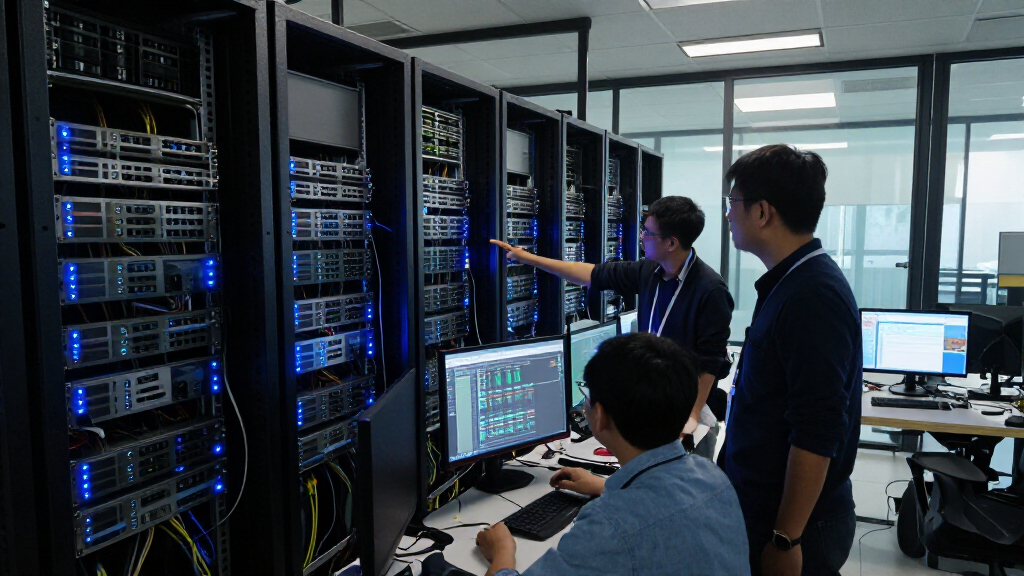

🔍 Read the full analysis: What Could OpenAI Gain By Buying Google TPU Chips? on ThorstenMeyerAI.com

Get business pricing on monitors, keyboards and dev gear
- Business-only prices and quantity discounts
- Tax-exempt purchasing
- Multiple users, one account, clear invoices
TL;DR
The Information and Bloomberg reported that OpenAI plans to buy Google’s AI chips, but neither company has confirmed a deal, and key terms remain unknown. If the reported plan proceeds, TPUs could give OpenAI another source of computing capacity and more leverage in negotiations with chip suppliers; no near-term change for ChatGPT users has been established.
The Information and Bloomberg reported on October 27 and 28 that OpenAI plans to buy Google’s tensor processing units (TPUs), potentially adding a new source of computing power as it expands its AI operations. The companies have not confirmed a purchase: OpenAI declined to comment, Google did not comment, and the reported number of chips, price and delivery schedule are unknown.
The reports, each citing one person familiar with the matter, describe an intended purchase, not a completed deal. Reuters, relaying The Information’s report, said it could not establish the financial terms or other details. Bloomberg also reported that final terms were not known. There is no public confirmation of a signed agreement or purchase order.
There is evidence OpenAI is preparing to work with the technology. Its careers page listed a TPU Compilers software engineering role, posted October 20, seeking experience optimizing machine-learning workloads on TPUs. The listing indicates active technical work, but does not establish that OpenAI has agreed to buy chips or how many it might use.
Google, meanwhile, has begun expanding access to its chips beyond its own facilities. On its October 28 earnings call, the company said nearly 100 customers use TPUs, naming Anthropic and Apple, and described partnerships with Oracle and Crux AI. Oracle has said it will offer Google TPUs through its cloud from 2027. Those developments make an outside sale more plausible, but they do not confirm an OpenAI transaction.
Infographic 01 · Reported, documented, confirmed
OpenAI and Google’s TPUs: what we actually know
The purchase itself is a report. The pieces around it, Google selling its chips and OpenAI hiring for them, are on the record.
- OpenAI plans to buy Google’s AI chipsReported
The Information, 27 October; Bloomberg, 28 October. Each cites one person familiar with the matter. OpenAI declined to comment; Google did not comment.
- OpenAI is hiring to optimize its frontier models on TPUsPrimary document
“Software Engineer, TPU Compilers”, posted on OpenAI’s careers page on 20 October 2026. A sign of serious work, not a purchase order.
- Google sells TPU systems into customers’ own data centersConfirmed
Announced on 29 April, first deliveries in the second quarter, “a meaningful revenue ramp in 2027” (Alphabet’s CFO, 28 October).
- Oracle will offer Google TPUs in its cloudConfirmed
The first cloud outside Google to do so. Available in calendar year 2027, ramping over several years.
- Price, number of chips, TPU generation, delivery dates, locationNot known
Nothing published. Not even whether the chips would sit in Google’s data centers, OpenAI’s or a partner’s.
How OpenAI and Google got here
- Jun 2025OpenAI rents Google TPUs, calls it early testingReuters: no active plans to deploy them at scale
- 29 Apr 2026Google: TPUs for customers’ own data centersAlphabet Q1 earnings call
- 20 Oct 2026OpenAI posts a TPU compiler jobOpenAI careers page
- 21 Oct 2026OpenAI models coming to Google CloudOpenAI announcement, as reported by Reuters
- 27 Oct 2026The Information reports the purchase plan; Oracle announces TPUsReported · Oracle press release
- 28 Oct 2026Bloomberg reports it too; Alphabet’s call does not mention OpenAIReported · Alphabet Q3 call
“Reported” means the outlets’ own reporting, which I could read only in part (paywalls). “Confirmed” means the company’s own statement or filing.
Sources: The Information via Reuters, 27 Oct 2026, Bloomberg, 28 Oct 2026, as cited by The Asia Business Daily, OpenAI careers, posted 20 Oct 2026, Reuters, 30 Jun 2025, Alphabet Q1 call, 29 Apr 2026, Q3 call, 28 Oct 2026, Oracle, 27 Oct 2026.
Powered by Thorsten Meyer AI
More Options for AI Computing
If the reported purchase goes ahead, the main potential gain for OpenAI would be another source of computing capacity. Training and operating advanced AI systems require large amounts of specialized hardware. Access to a different chip platform could give the company more ways to match particular workloads with available infrastructure and reduce reliance on any single supplier.
A second potential gain is greater negotiating leverage. OpenAI has announced or reported arrangements involving several other chip and computing providers, including Nvidia, AMD, Broadcom, Cerebras and Amazon’s Trainium. A credible ability to shift some workloads among suppliers could strengthen its position when negotiating prices, capacity and delivery schedules. That is a possible commercial effect, not a confirmed saving: no pricing terms for a Google deal have been disclosed.
For Google, a sale would show that its custom chips can attract a major outside customer, even one that competes with it in AI products. For other AI businesses, more suppliers could broaden the available sources of compute. But the reports do not establish that Google’s chips will replace Nvidia hardware or that OpenAI’s costs will fall.
Users should not expect an immediate change to ChatGPT based on this report. The number and timing of any chip deliveries are unknown, and other major infrastructure plans described in the source material point to 2027 or later. There is no confirmed link between the reported purchase and ChatGPT prices, performance or availability.
Products Worth Considering

Anker SOLIX C300 Portable Power Station, 288Wh

DJI Osmo Mobile 8 Gimbal with Mic Mini Transmitter, Infinity Black

Samsung Galaxy Tab S10 FE 128GB Wi-Fi Android Tablet, Blue
As an affiliate, we earn on qualifying purchases.
Google Opens TPU Sales
Google developed TPUs for its own data centers and has also made them available to customers through Google Cloud. This year it began a further step: delivering TPU systems to selected customers’ own data centers. On an April 29 earnings call, chief executive Sundar Pichai said Google would begin those deliveries as demand grew among AI labs and other customers. The company has since discussed outside customers and commercial partnerships on earnings calls.
OpenAI and Google have already had limited business ties. Reuters reported in June 2025 that OpenAI had started renting Google TPUs through Google Cloud. OpenAI told Reuters at the time that it was in early testing and had no active plans to deploy the chips at scale. On October 21, 2026, OpenAI also said its frontier models would be available through Google Cloud. These steps show that cooperation is possible despite the companies’ competition; they are separate from the newly reported plan to buy chips.
The reports also do not mark OpenAI’s first move beyond Nvidia. The source material lists previously announced arrangements with other providers, including a letter of intent involving 10 gigawatts with Nvidia, a 6-gigawatt arrangement with AMD, 10 gigawatts of custom chips with Broadcom, 750 megawatts with Cerebras and about 2 gigawatts of Amazon Trainium. These figures describe announced plans or commitments, not necessarily chips already installed or available for use.
““As TPU demand grows from AI labs, capital markets firms, and high performance computing applications, we will begin to deliver TPUs to a select group of customers in their own data centers in a hardware configuration.””
— Sundar Pichai, Google chief executive, on the company’s April 29, 2026, earnings call
Deal Terms Remain Unknown
No agreement has been publicly confirmed, and the reports rely on a single person familiar with the matter each. The companies have not provided details that would establish whether negotiations are complete, whether a purchase has been signed or whether the reported plan could change.
Unanswered questions include how many chips OpenAI might buy, which TPU generation is involved, what they would cost, when they might be delivered and where they would run. The reports do not specify whether OpenAI would install systems at its own sites, use Google’s data centers or access capacity through a cloud partner such as Oracle.
It is also unclear which OpenAI workloads would use TPUs, whether the chips would be used for training or inference, and how much capacity they could provide compared with OpenAI’s existing arrangements. The available information does not support a conclusion that the deal would lower operating costs or change services for users.
Watch for Terms and Timelines
The next meaningful development would be confirmation from OpenAI or Google, or a filing or company statement specifying a commercial arrangement. Details on delivery dates, chip quantities and infrastructure locations would help clarify whether the reported plan is a small test or a substantial supply commitment.
Google’s planned 2027 Oracle availability and its other customer partnerships may provide further evidence of how quickly the company can deliver TPUs outside its own data centers. Until OpenAI or Google provides more information, the purchase remains a reported plan, not an announced deal. No change to ChatGPT or a timeline for user-facing effects has been disclosed.
Key Questions
Has OpenAI confirmed that it will buy Google TPUs?
No. The Information and Bloomberg reported the plan, but OpenAI declined to comment and Google did not comment. No purchase agreement has been publicly confirmed.
What could OpenAI gain from Google’s chips?
If the reported plan proceeds, TPUs could give OpenAI another source of computing capacity and potentially more flexibility in allocating workloads. A broader supplier mix could also improve its negotiating position, though no price reduction or other saving has been established.
Would Google TPUs replace Nvidia chips at OpenAI?
The reports do not say that. OpenAI has arrangements involving several chip providers, and there is no confirmed plan to replace Nvidia or move all workloads to Google hardware.
Will this change ChatGPT for users?
No user-facing change has been announced. Delivery timing and the intended use of any TPUs are unknown, so it is not clear whether or when the reported plan could affect ChatGPT’s price, speed or availability.
Source: ThorstenMeyerAI.com