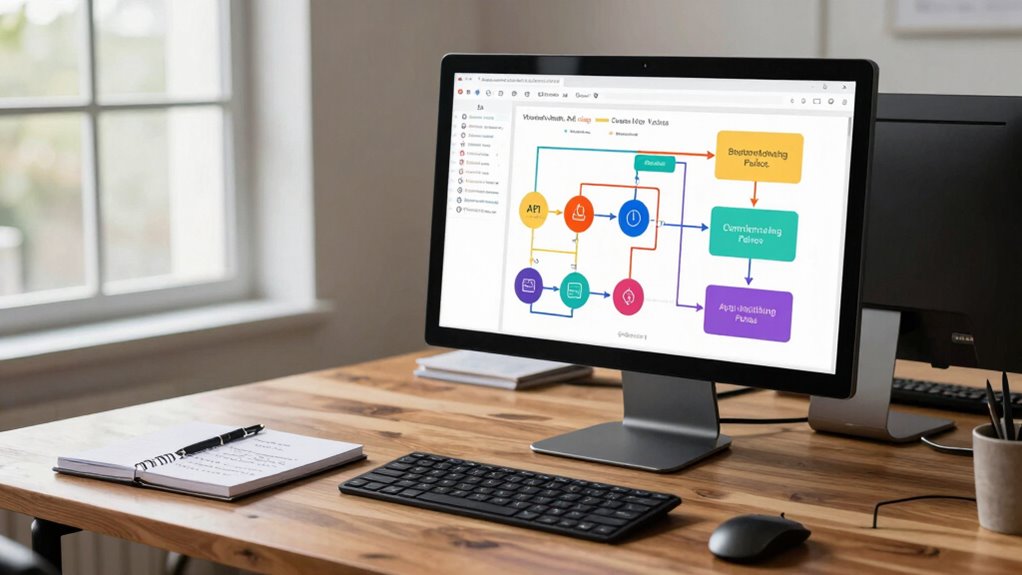

To minimize breaking changes, you should support backward compatibility and implement version negotiation, allowing clients to choose compatible versions. Supporting multiple versions simultaneously helps ease shifts and reduces disruptions. Establish clear deprecation policies by announcing timelines early, so clients can migrate smoothly. When making schema changes, avoid breaking modifications unless necessary and use versioning to manage changes carefully. Continuing this approach ensures your API remains stable and trustworthy as it evolves.

Get monitors, keyboards and dev gear delivered free — and shop member deals
- Fast, free delivery on millions of items
- Access to Prime Big Deal Days deals on October 6–7
- Prime Video, Amazon Music and more included
Key Takeaways
- Use semantic versioning to clearly distinguish between non-breaking (minor) and breaking (major) updates.
- Implement backward compatibility by maintaining support for older API versions during transitions.
- Negotiate API versions with clients to enable smooth upgrades without disrupting existing integrations.
- Clearly communicate deprecation timelines and support periods to allow planned migrations.
- Introduce breaking changes only in new versions after thorough planning and stakeholder notification.
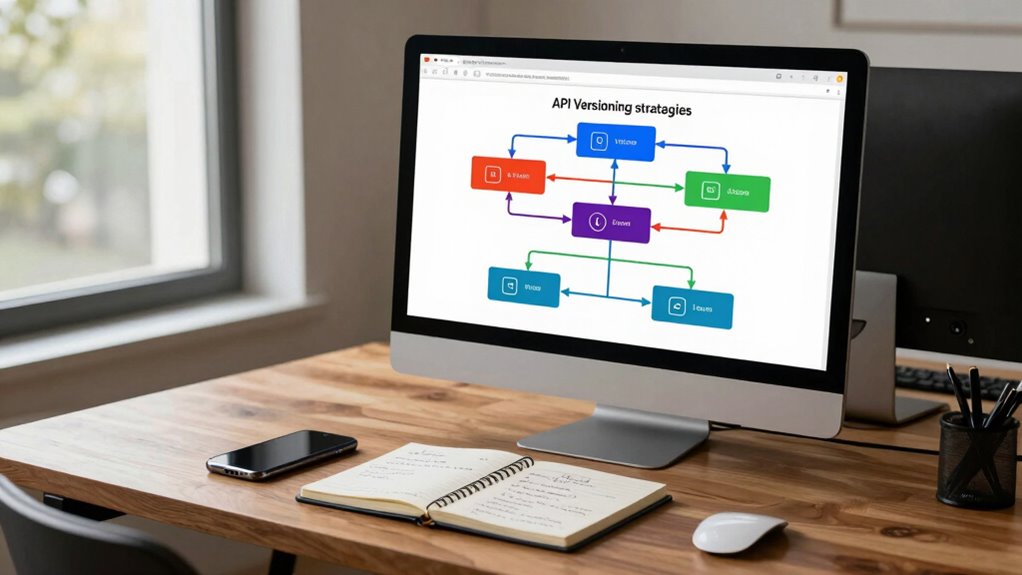
Have you ever wondered how APIs manage updates without disrupting existing users? The answer lies in effective API versioning policies designed to facilitate smooth transitions and minimal disruptions. One key concept is backward compatibility, which allows newer API versions to support functionalities that older versions relied on. When an API maintains backward compatibility, existing clients can continue their operations without needing immediate modifications, even as improvements or new features are introduced. This approach helps prevent breaking changes that could otherwise cause failures or data inconsistencies for users relying on older versions.
Effective API versioning ensures smooth updates, backward compatibility, and minimal disruption for users.
To enable seamless upgrades, APIs often implement version negotiation. This process involves clients and servers agreeing on a compatible API version during communication. By including version information in request headers or URLs, clients specify which version they support, and servers respond accordingly. This negotiation process grants flexibility, allowing the API to evolve without forcing all clients to upgrade simultaneously. It also provides a clear pathway for deprecating older versions gradually, giving developers time to adapt their applications at their own pace. Additionally, understanding API lifecycle management is crucial for planning effective versioning strategies. Incorporating versioning best practices can further streamline updates and help prevent unexpected issues.
Another effective strategy is to design APIs that support multiple versions concurrently. Instead of rewriting or removing existing endpoints, developers can introduce new versions alongside current ones, directing traffic based on client preferences. This coexistence allows users to migrate gradually, testing new features without risking their existing workflows. Furthermore, clear documentation and communication about version lifecycles help users plan updates and avoid surprises. Maintaining consistent API design across versions also contributes to smoother transitions and reduces confusion. A well-structured schema and adherence to standards, such as those emphasizing semantic versioning, enhance clarity and predictability during updates.
Implementing strict deprecation policies is equally important. By announcing deprecation timelines well in advance, you give clients ample time to adjust their integrations. During this phase, you can encourage users to migrate to newer versions while still supporting the older ones. Once the deprecation period ends, discontinuing support for outdated versions ensures that your API remains efficient, secure, and maintainable. Additionally, understanding the contrast ratio of the interface elements can improve user accessibility and visual clarity during transitions.
Finally, adopting a thoughtful approach to schema changes—such as avoiding breaking modifications—can make a significant difference. When necessary, versioning the API allows you to introduce breaking changes intentionally, but only after careful planning and communication. Combining these principles—backward compatibility, version negotiation, parallel version support, and clear deprecation policies—enables you to manage API updates gracefully. This way, you minimize the risk of breaking existing applications, foster user trust, and guarantee your API evolves smoothly over time.
As an affiliate, we earn on qualifying purchases.
Frequently Asked Questions
How Do I Decide Which Versioning Strategy Suits My API?
You should choose a versioning strategy based on semantic clarity and effective user communication. Consider how your users will understand updates—if they need clear, predictable changes, URI versioning or headers might work best. Think about your API’s complexity and how often you’ll update it. The goal is to minimize breaking changes while keeping users informed, so pick a strategy that balances clarity with flexibility for future growth.
What Are the Risks of Not Versioning My API?
If you don’t version your API, you risk breaking backward compatibility, which can disrupt existing users and damage your reputation. Without proper version management, updates may introduce breaking changes, forcing clients to modify their integrations constantly. This can lead to increased support requests and loss of trust. To maintain stability and smooth progression, implementing a clear versioning strategy helps you manage changes effectively while keeping your API reliable for users.
How Often Should I Release New API Versions?
You should release new API versions when significant updates or improvements are ready, typically every 3 to 6 months. This pace aligns with the API lifecycle and helps you manage user migration smoothly. Regular releases reduce the risk of breaking changes and keep your API current. An estimated 80% of developers prefer predictable update schedules, ensuring users aren’t overwhelmed and can adapt comfortably with each new version.
Can I Deprecate an API Version Gradually?
Yes, you can deprecate an API version gradually through a phased rollout. You start by marking features as deprecated, informing users about upcoming changes. Over time, you limit access to the deprecated version, encouraging migration. This approach minimizes disruptions, giving developers time to adapt. Clear documentation and communication are key, ensuring users understand which features are deprecated and when they’ll be fully retired, reducing potential breaking changes.
How Do I Handle Backward Compatibility During Updates?
To handle backward compatibility during updates, you should maintain legacy support while gradually introducing new features. Keep older API versions active to guarantee existing clients aren’t disrupted. Communicate clearly with your clients about upcoming changes and deprecations, giving them ample time to adapt. This approach minimizes breaking changes, maintains trust, and facilitates a smooth shift, balancing innovation with stability.
API version negotiation software
As an affiliate, we earn on qualifying purchases.
As an affiliate, we earn on qualifying purchases.
Conclusion
By adopting thoughtful API versioning policies, you can steer clear of breaking changes and foster trust with your users. Think of versioning as a delicate dance—balancing innovation with stability—ensuring your API evolves gracefully over time. When you prioritize clear communication and strategic updates, you create a resilient ecosystem that welcomes growth without sacrificing reliability. Ultimately, embracing these practices transforms your API into a steadfast partner, standing firm amid the shifting tides of technology.
API deprecation management platform
As an affiliate, we earn on qualifying purchases.
As an affiliate, we earn on qualifying purchases.
As an affiliate, we earn on qualifying purchases.
Halloween Picks
halloween
As an affiliate, we earn on qualifying purchases.