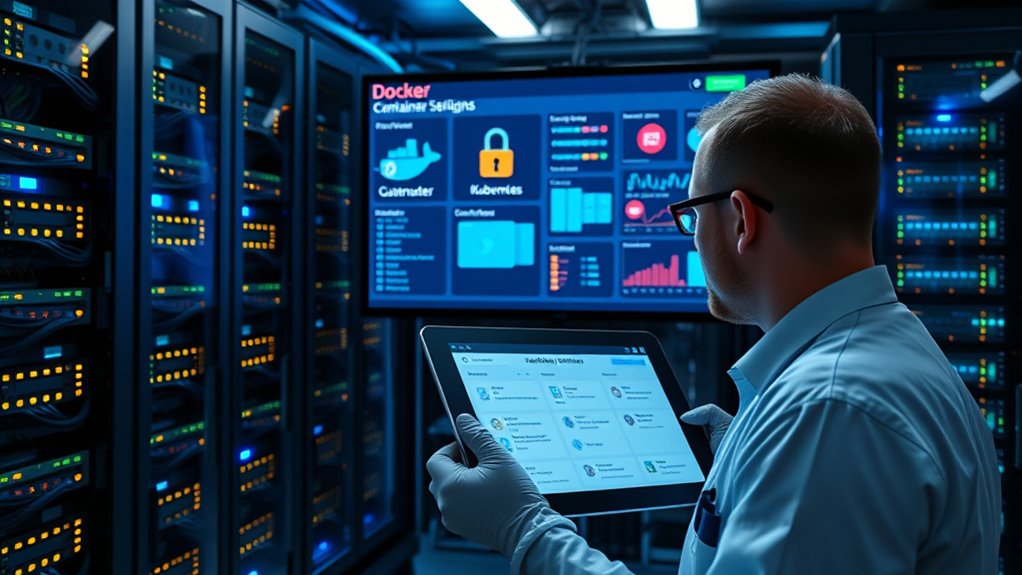

To secure your Docker and Kubernetes environments, focus on implementing runtime isolation using namespaces, cgroups, and security profiles like SELinux or AppArmor. Regularly scan images for vulnerabilities, use trusted sources, and keep them updated. Keep your platform patched and employ runtime security tools to detect suspicious activity. Enforce strict access controls, network segmentation, and continuous monitoring. Staying proactive helps you defend against threats—exploring these best practices further will give you the confidence to secure your containers effectively.
Key Takeaways
- Regularly update and patch Docker and Kubernetes platforms to fix vulnerabilities and security flaws.
- Use trusted, verified images from official repositories and scan them for known vulnerabilities before deployment.
- Implement runtime security tools and monitors to detect suspicious activity during container execution.
- Enforce least privilege principles by avoiding root containers and applying strict access controls.
- Isolate containers with network segmentation, namespaces, and resource limits to prevent lateral movement and reduce attack surface.

Have you ever wondered how to protect your applications and data in containerized environments? When you’re working with Docker and Kubernetes, security isn’t just a bonus—it’s vital. One of the key aspects to consider is runtime isolation, which ensures that each container runs independently, preventing malicious code from jumping from one container to another. Proper runtime isolation acts as a barrier, limiting the impact of any security breach to a single container rather than the entire system. You should also be aware of image vulnerabilities, which are weaknesses in container images that could be exploited by attackers. These vulnerabilities often stem from outdated software, misconfigurations, or the inclusion of unnecessary packages, all of which can give hackers an entry point into your environment.
Protect your containerized environments with runtime isolation and vigilance against image vulnerabilities.
To start, you need to minimize image vulnerabilities by regularly scanning your container images for known security flaws. Use trusted sources like official repositories, and keep images up to date with the latest patches. When you pull images from external sources, verify their integrity and authenticity to prevent supply chain attacks. Additionally, avoid running containers as the root user whenever possible, since this can escalate privileges if a vulnerability is exploited. Instead, configure containers with the least privileges necessary for their operation, reducing the risk of an attacker gaining control over the host.
Runtime isolation plays an essential role in container security. You should implement security profiles, such as SELinux or AppArmor, to enforce strict access controls within your containers. These profiles restrict what processes can do and what resources they can access, adding an extra layer of defense. Also, leverage namespaces and cgroups effectively to isolate processes and control resource usage, preventing a compromised container from affecting others or overwhelming system resources. Regularly monitor container activity and logs to detect unusual behavior that could indicate a security breach. Automated tools can help identify anomalies and alert you to potential threats before they escalate. Incorporating vetted security tools ensures that your container environment remains resilient against emerging threats.
Another best practice involves securing the container runtime itself. Keep your Docker and Kubernetes platforms patched and updated to fix known vulnerabilities. Use security tools like runtime security monitors that can watch for suspicious activities during container execution. It’s also wise to implement network segmentation, limiting container communication to only what’s necessary for your application to function, reducing the attack surface. By combining these practices—regular vulnerability scans, strict runtime isolation, and vigilant monitoring—you create a more resilient container environment that can better withstand cyber threats. Protecting your applications in containerized setups requires ongoing effort, but with these strategies, you can greatly reduce your risk and maintain a secure, reliable infrastructure.
Frequently Asked Questions
How Can I Monitor Container Runtime Security in Real-Time?
To monitor container runtime security in real-time, you should implement security monitoring tools like Falco, which detect malicious activity and policy violations instantly. Enable runtime security features within Docker and Kubernetes, such as audit logs and alerts. Continuously analyze container behavior, track anomalies, and review logs proactively. Regularly update your security monitoring setup to stay ahead of emerging threats, ensuring your container runtime remains protected around the clock.
What Are Effective Strategies for Securing Container Orchestration Networks?
To secure container orchestration networks, you should implement strong access controls and enforce network segmentation. Limit communication between containers to only what’s necessary, reducing attack surfaces. Use role-based access controls to restrict who can modify network configurations. Regularly audit network policies and monitor traffic for unusual activity. These strategies help contain potential breaches and guarantee only authorized interactions occur within your container environment.
How Do I Handle Secrets Management Securely in Containers?
You might think secrets storage is risky, but using tools like Kubernetes Secrets or Docker secrets, you can keep sensitive data secure. Implement strict access controls, ensuring only authorized containers access secrets. Avoid hardcoding secrets in images or environment variables. Instead, leverage encrypted secrets management solutions and role-based access control (RBAC). This way, you minimize exposure and keep your secrets safe, even if your containers are compromised.
What Are Common Container Security Vulnerabilities to Watch For?
You should watch for vulnerabilities in container images, like outdated software or insecure configurations, which can expose your system. Make certain access control is strict, limiting who can deploy or modify containers. Also, look out for misconfigured network settings and weak secrets, which can lead to unauthorized access. Regularly scan images for vulnerabilities and enforce proper access controls to protect your containers from common security risks.
How Can I Automate Container Security Compliance Checks?
You can automate container security compliance checks by implementing security automation tools that continuously monitor your Docker and Kubernetes environments. These tools perform automated compliance scans, detect vulnerabilities, and enforce security policies in real-time. By integrating automated compliance into your CI/CD pipeline, you guarantee consistent security checks without manual intervention. This proactive approach helps you catch issues early, maintain compliance, and reduce the risk of security breaches effectively.
Conclusion
By following these container security best practices, you considerably reduce your risk of breaches. Did you know that 60% of organizations experience security incidents due to misconfigured containers? Staying vigilant and implementing strong policies can make all the difference. Remember, securing your Docker and Kubernetes environments isn’t a one-time task—it’s an ongoing process. Keep learning, stay updated, and prioritize security to protect your applications and data effectively.