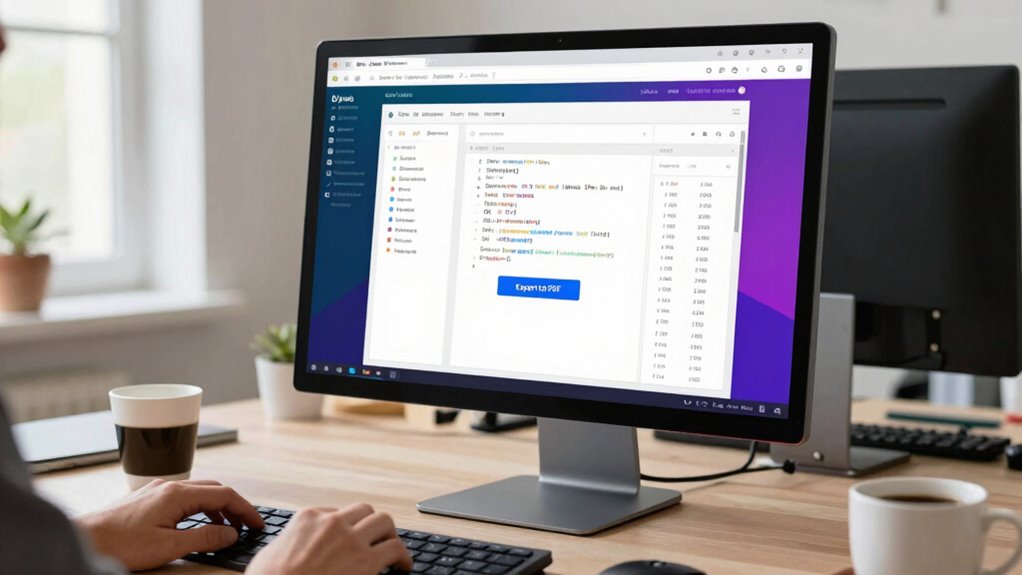
To create a PDF export feature in your Django app, choose a library like ReportLab or WeasyPrint based on your needs. Prepare your data by organizing it into clear, structured formats with headers and consistent styles. Use the library to generate professional-looking PDFs, ensuring readability and visual appeal. This process allows you to easily convert data into shareable documents, adding value to your app. Keep exploring for detailed steps to make this happen smoothly.
Key Takeaways
- Choose an appropriate PDF library like ReportLab, WeasyPrint, or xhtml2pdf based on project needs and expertise.
- Prepare and structure your data with clear headers, formatting, and organization for optimal presentation.
- Convert database objects or querysets into serialized formats suitable for the selected PDF library.
- Design the PDF layout with consistent styles, fonts, and sections to ensure a professional appearance.
- Integrate the PDF generation into your Django views, enabling users to download generated documents seamlessly.
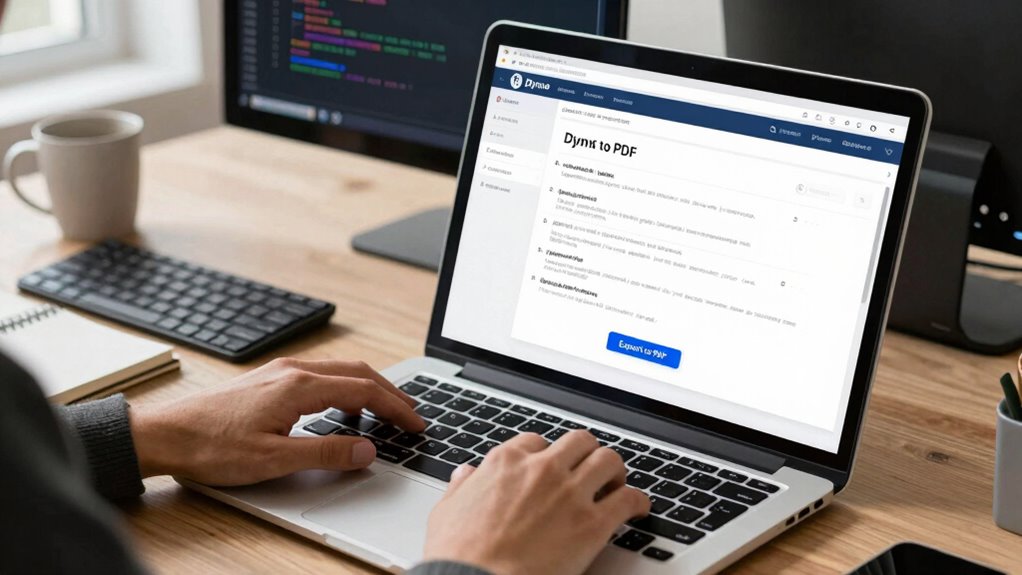
Adding a PDF export feature to your Django app can greatly enhance its functionality by allowing users to generate downloadable, professional-looking documents directly from your data. To do this effectively, you need to focus on how your data is formatted and which PDF libraries will best serve your purpose. Proper data formatting is essential because it determines how your information appears in the final document. You want your PDFs to look clean, organized, and easy to read, which requires structuring your data carefully before passing it to the PDF generation process. Additionally, understanding the PDF library options available can help you select the most suitable tool for your specific needs. Choosing the right PDF library is vital. Popular options like ReportLab, WeasyPrint, and xhtml2pdf offer different features suited to various needs. ReportLab, for example, provides a high level of control over the layout and styling of your PDFs, making it ideal if you want custom-designed documents. WeasyPrint, on the other hand, converts HTML and CSS into PDFs, so if you’re comfortable with web design, it allows you to leverage your existing skills and tools. Xhtml2pdf is a good choice for quick and simple PDFs, especially when you already have HTML templates ready.
Once you’ve chosen a PDF library, your next step is to prepare your data for export. This involves converting your database objects or querysets into a format that your PDF library can process efficiently. You might need to serialize data into dictionaries or lists, then feed this structured data into your PDF generation function. When formatting data, keep clarity in mind. For example, if you’re creating a report, include headers, subheaders, and clear separation of sections. Use consistent font styles, sizes, and colors to improve readability. Remember, the goal is to produce a document that looks professional and is easy for users to interpret.
PDF generation library for Django
As an affiliate, we earn on qualifying purchases.
As an affiliate, we earn on qualifying purchases.
Frequently Asked Questions
Can I Customize the PDF Layout Extensively?
Yes, you can customize the PDF layout extensively. With PDF styling and layout customization options, you control fonts, colors, margins, and placement of elements, giving you full flexibility. Using tools like ReportLab or WeasyPrint, you can design intricate layouts, add images, tables, and custom graphics. This allows you to create professional, tailored PDFs that match your app’s branding and specific content needs precisely.
How Does PDF Generation Affect Site Performance?
PDF generation can impact your site’s performance by increasing server load, especially if done frequently or with large documents. To mitigate this, you should implement caching strategies, such as storing generated PDFs temporarily or using background tasks for processing. This way, you prevent slowing down your site, ensuring users experience smooth interactions while managing resource consumption effectively during PDF creation.
Is It Possible to Add Dynamic Charts to PDFS?
Yes, you can add dynamic charts to PDFs by incorporating interactive visuals that support real-time updates. You’ll typically generate charts using libraries like Chart.js or Plotly, then embed them into your PDF with tools like WeasyPrint or ReportLab. This approach allows your PDFs to display up-to-date, interactive visuals, making reports more engaging and informative. Just make certain your chart data is current at the moment of PDF creation.
What Are the Best Libraries for PDF Creation in Django?
You should consider libraries like ReportLab and WeasyPrint for PDF creation in Django. ReportLab offers extensive font customization options and supports embedding images, making it ideal for detailed, styled PDFs. WeasyPrint converts HTML and CSS into PDFs, allowing you to easily customize fonts and embed images within your document layouts. Both libraries provide robust features to help you generate professional, visually appealing PDFs tailored to your needs.
How to Handle Large Data Exports Efficiently?
To handle large data exports efficiently, you should implement batch processing, which divides data into manageable chunks, reducing memory load. Use memory optimization techniques like streaming responses and generating PDFs incrementally, so your app doesn’t overload server resources. This approach guarantees faster processing, minimizes errors, and maintains app performance, even with extensive datasets. Combining batch processing and memory optimization will streamline your PDF export process effectively.
HTML to PDF converter WeasyPrint
As an affiliate, we earn on qualifying purchases.
As an affiliate, we earn on qualifying purchases.
Conclusion
So, go ahead and add that PDF export feature—because who doesn’t love turning their hard-earned data into a shiny, official-looking document? Just imagine impressing your boss with a sleek report, all while secretly questioning whether your code could handle the apocalypse. Remember, in the world of Django, a PDF export isn’t just a feature; it’s your ticket to web development glory—or at least a good excuse to procrastinate. Happy coding!
As an affiliate, we earn on qualifying purchases.
As an affiliate, we earn on qualifying purchases.