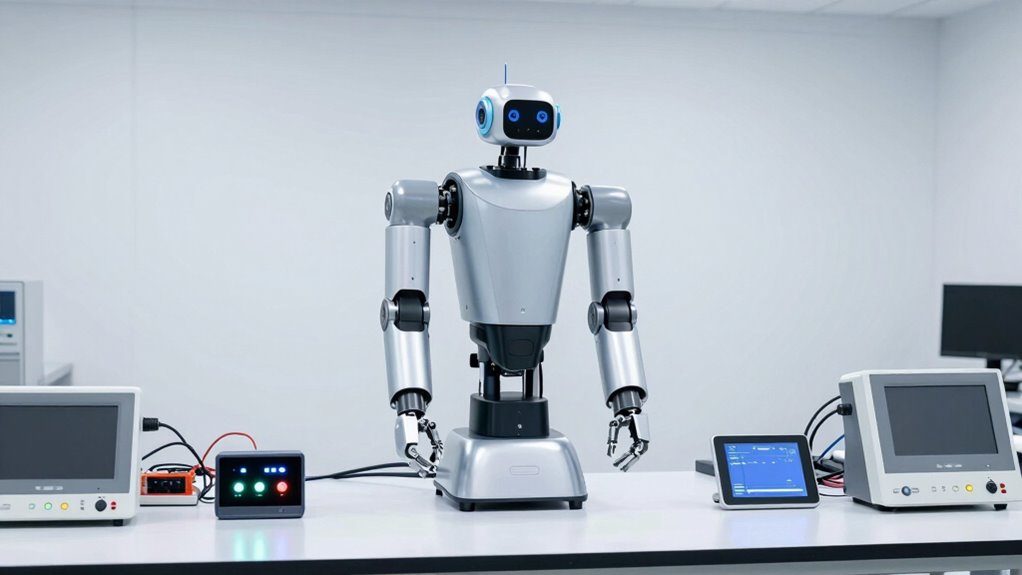

To record clean test data from your robot prototype, start by calibrating sensors regularly and securing them firmly to prevent skewed readings. Use filtering techniques like smoothing and low-pass filters to reduce noise, and log data consistently with timestamps to guarantee accuracy. Control the testing environment to minimize external influences, and analyze your data by checking for anomalies and comparing against benchmarks. Keep these steps in mind, and you’ll find how to refine your process even further.

Get business pricing on monitors, keyboards and dev gear
- Business-only prices and quantity discounts
- Tax-exempt purchasing
- Multiple users, one account, clear invoices
Key Takeaways
- Ensure proper sensor calibration and secure placement before testing to obtain accurate and reliable data.
- Use filtering techniques like moving averages or low-pass filters to reduce sensor noise.
- Record data at consistent intervals with timestamps, and consider redundant sensors for verification.
- Maintain a controlled environment to minimize external influences affecting sensor readings.
- Regularly analyze and validate data through normalization, anomaly detection, and visualization for accuracy.
As an affiliate, we earn on qualifying purchases.
How to Calibrate Sensors for Accurate Robot Data
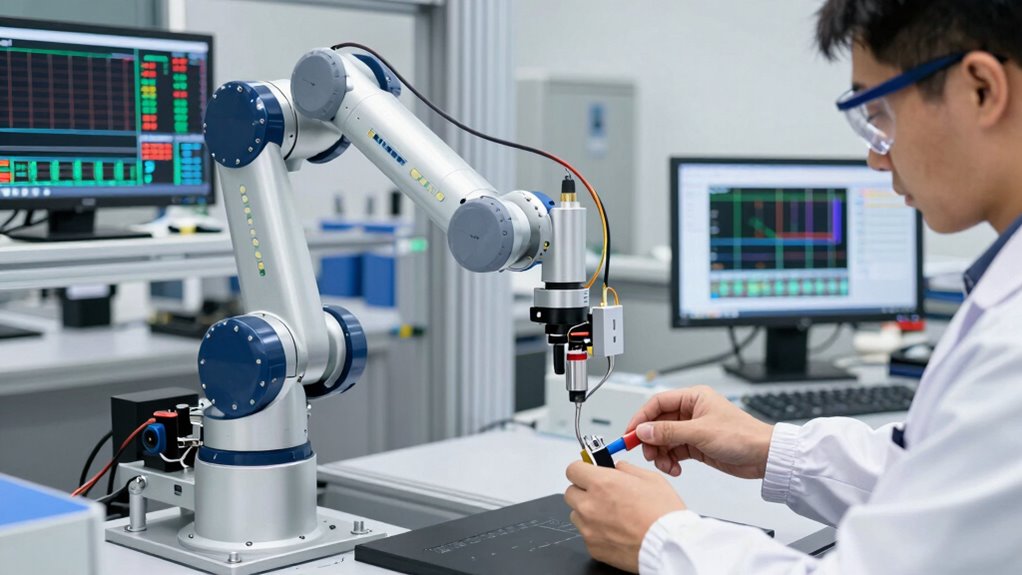
Calibrating sensors is a critical step in ensuring your robot collects accurate data, and it’s best to do it before any testing begins. Proper sensor placement is essential; position sensors where they can reliably detect the target environment without interference. Take time to secure sensors firmly and avoid obstructions that could skew readings. Regular calibration frequency is necessary to maintain accuracy, especially if your robot operates in varying conditions or over extended periods. Establish a routine calibration schedule based on your testing needs, whether daily or after significant environmental changes. Always verify sensor readings against known standards to confirm calibration accuracy. By paying close attention to sensor placement and maintaining a consistent calibration frequency, you set a solid foundation for trustworthy data collection. Additionally, understanding sensor behavior can help you interpret calibration results more effectively. Being aware of sensor drift over time can also help you anticipate when recalibration is necessary, ensuring ongoing data precision. Incorporating environmental factors into your calibration process can further improve reliability by accounting for external influences.
sensor noise filtering tools for robotics
As an affiliate, we earn on qualifying purchases.
As an affiliate, we earn on qualifying purchases.
How to Filter Sensor Data to Reduce Noise and Glitches
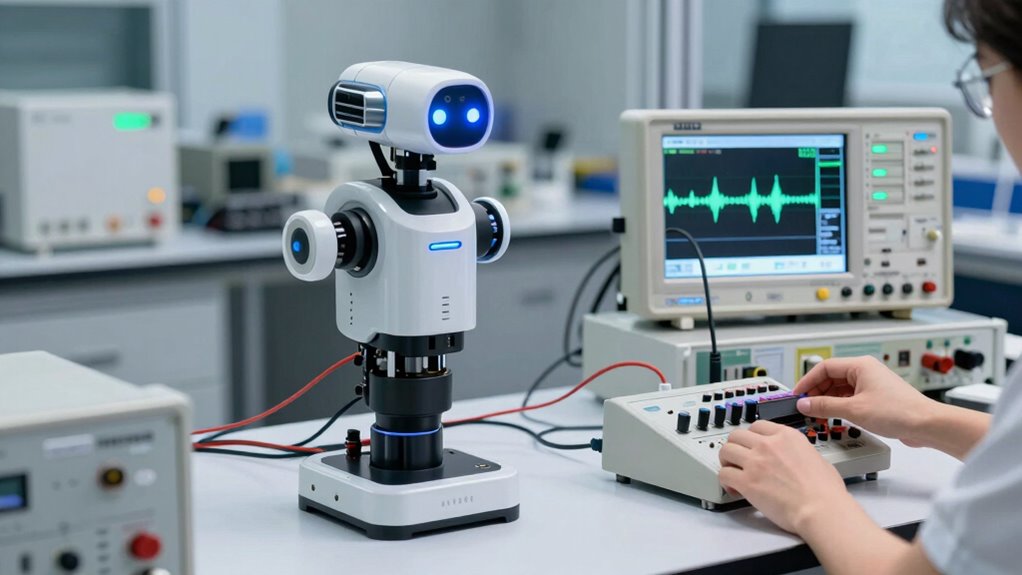
Sensor data often contains noise and glitches that can obscure true readings, making filtering an essential step in data processing. To improve data quality, use sensor smoothing techniques like moving averages or median filters, which help eliminate random fluctuations. Signal filtering methods, such as low-pass filters, are effective at removing high-frequency noise, allowing you to focus on meaningful signals. Adjust filter parameters carefully to balance noise reduction with preserving data integrity. When applying filters, confirm you’re not introducing lag or distortions that could affect your analysis. Consistently monitor the filtered data to verify that noise levels decrease without losing critical information. Proper filtering helps you obtain cleaner, more reliable test data, essential for accurate analysis and decision-making. Additionally, understanding the underlying AI technologies that process sensor data can guide you in choosing the most effective filtering strategies. Incorporating digital safety principles ensures that your data handling remains secure and trustworthy throughout the process. Being aware of the regional characteristics of the sensor environment can further help tailor filtering techniques to specific conditions. Considering sensor calibration is also vital to ensure the data accurately reflects real-world conditions and enhances the effectiveness of your filtering methods. Recognizing the importance of noise reduction techniques can significantly improve the quality of your sensor data.
As an affiliate, we earn on qualifying purchases.
Effective Data Logging Methods for Reliable Results

To guarantee your test results are dependable, selecting effective data logging methods is essential. Proper sensor placement ensures accurate data collection, minimizing errors caused by misaligned sensors or environmental interference. Position sensors where they can accurately capture the relevant parameters without obstruction. Implementing environmental considerations can help mitigate external influences that might skew data. Record data redundancy by recording the same data through multiple sensors or channels. This backup approach helps verify data integrity and identify potential sensor malfunctions. Use consistent logging intervals and timestamp all data to facilitate precise analysis. Regularly check and calibrate your sensors to maintain accuracy. Additionally, understanding the horsepower of electric dirt bikes can help in selecting appropriate motors and sensors for performance testing. Incorporating water-resistant sensors can also enhance data reliability in environments prone to moisture or splashes. Employing sensor calibration techniques ensures ongoing accuracy and reduces measurement errors. Moreover, considering sensor placement strategies can further optimize data collection and improve overall reliability. By combining strategic sensor placement with redundancy, you reduce the risk of missing or corrupted data, leading to more reliable, clean test results that truly reflect your robot’s performance.
environment control for robot testing
As an affiliate, we earn on qualifying purchases.
As an affiliate, we earn on qualifying purchases.
Controlling the Testing Environment for Consistent Data
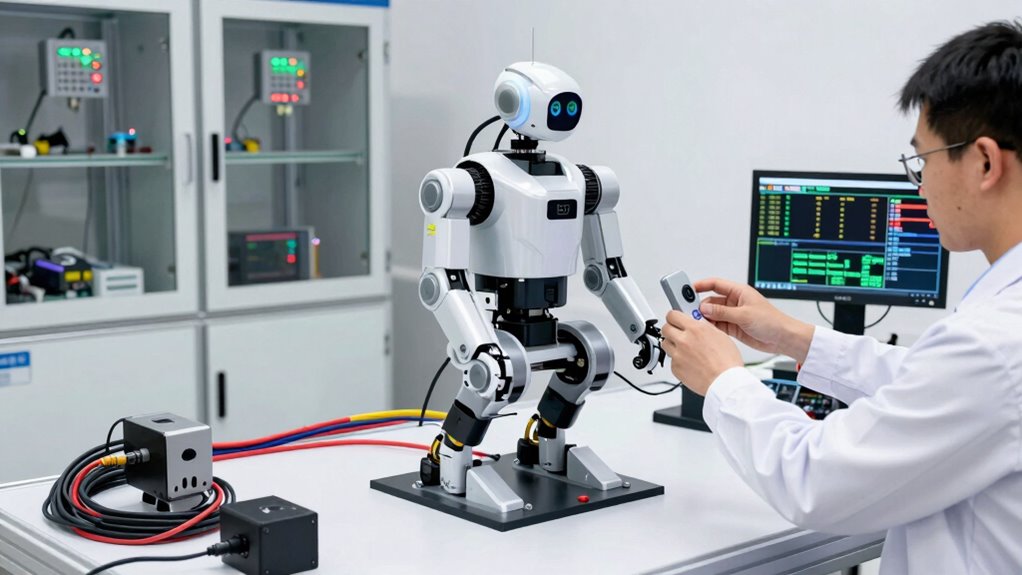
Controlling the testing environment is essential for gathering consistent data, as external factors can considerably impact your results. Implementing environmental controls helps minimize variations caused by temperature, humidity, or lighting, ensuring your tests remain stable. Use precise data synchronization techniques so all measurements and sensor readings align accurately in time, reducing discrepancies. By maintaining a stable environment, you prevent data fluctuations that could obscure true robot performance. Regularly monitor environmental conditions and document any changes. This practice supports the goal of environmental stability to ensure reliable data collection. Additionally, understanding the importance of external variables can help you better manage external influences. Ultimately, controlling these factors boosts confidence in your test results and simplifies troubleshooting, enabling you to focus on optimizing your prototype effectively.
How to Analyze and Validate Your Test Data for Accuracy
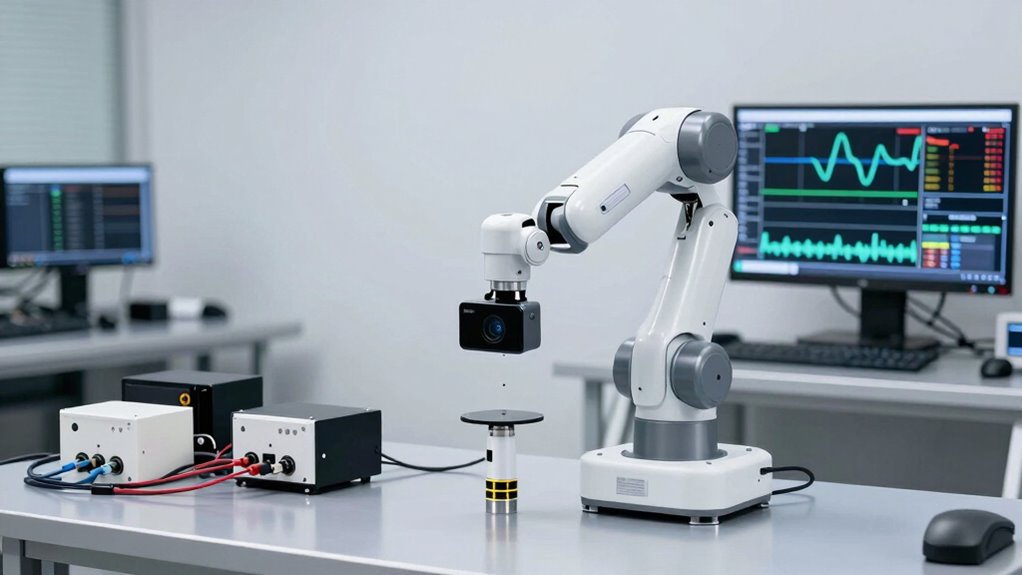
Once you’ve gathered your test data, the next step is to analyze and validate it to assure accuracy. Start by performing data normalization to guarantee consistency across datasets, making comparisons more meaningful. Next, implement anomaly detection to identify any outliers or irregularities that could skew results. Incorporating insights from astrological personality traits could also be useful in understanding patterns within your data. Additionally, be aware of passive voice in your reports to improve clarity and directness. Here are key steps to follow:
- Normalize data to standardize units and scales.
- Detect anomalies to flag potential errors or unusual readings.
- Cross-check data against expected ranges or behaviors.
- Validate results by comparing with baseline or known benchmarks.
- Utilize data visualization techniques to better interpret complex datasets and identify trends or issues more intuitively.
- Employ data quality assessment methods to systematically evaluate the reliability of your data, ensuring that your conclusions are based on solid information.
Frequently Asked Questions
What Types of Test Data Are Most Valuable for Robot Development?
The most valuable test data for robot development includes sensor calibration results and data normalization metrics. These guarantee sensors provide accurate readings and data consistency across tests. You should focus on collecting precise sensor outputs, normalizing data for comparability, and recording environmental conditions. This helps identify issues early, refine algorithms, and improve overall robot performance. Accurate, clean data ultimately guides better decision-making and faster development cycles.
How Can I Ensure Data Privacy During Robot Testing?
To guarantee data privacy during robot testing, you should implement data encryption to protect sensitive information from unauthorized access. Additionally, set strict access control measures, allowing only authorized personnel to view or modify the data. Regularly update security protocols and monitor access logs to detect any suspicious activity. These steps help safeguard your test data, maintaining privacy and integrity throughout the testing process.
What Are Common Mistakes to Avoid When Recording Test Data?
When recording test data, avoid neglecting data validation, which guarantees accuracy and consistency. Don’t ignore error tracking; it helps identify issues early. Be cautious about inconsistent data formats or missing entries, as they compromise data quality. Also, avoid rushing through data collection—meticulous recording prevents errors. Regularly review and validate your data to catch mistakes promptly, making sure your dataset remains reliable for analysis and decision-making.
How Do I Handle Missing or Incomplete Data Sets?
When handling missing or incomplete data sets, you should first perform data validation to identify gaps or inconsistencies. Use anomaly detection techniques to spot unusual patterns that might indicate errors. Then, decide whether to fill missing data through imputation, discard incomplete records, or flag them for review. These steps guarantee your dataset remains accurate, reliable, and ready for analysis during testing, minimizing potential inaccuracies.
What Tools or Software Are Best for Organizing Test Data?
Oh, surely you’ve found the ultimate software that magically organizes your test data, right? In reality, tools like LabVIEW, MATLAB, or even Excel with proper templates excel for organizing data. They help with sensor calibration records and data visualization, making complex datasets manageable. These tools allow you to spot trends, identify anomalies, and guarantee your robot’s performance isn’t just a beautiful illusion but scientifically validated.
Conclusion
By following these steps, you’ll capture test data as clear as a lake on a windless day. Calibrate sensors, filter noise, log data diligently, and control your environment to guarantee consistency. When you analyze and validate your results, you’ll see your robot’s true performance shine through—like a diamond in the rough. Stay meticulous and patient, and your clean test data will pave the way for successful development and future innovations.
Fall Picks
fall essentials
As an affiliate, we earn on qualifying purchases.