
The best books on automated testing tools for programmers teach both a usable framework and the judgment needed to build stable test suites. My best overall pick is Hands-On Automated Testing with Playwright because its modern web focus, practical structure, and scalability guidance suit the widest range of developers. The Way of the Web Tester is the friendlier starting point, while API Testing with Playwright & TypeScript is the sharper choice for service-level coverage. The main choice is between Playwright and Selenium, followed by whether you need beginner instruction, API specialization, reusable design patterns, or newer AI-assisted techniques. Continue reading for the full breakdown and a clear match for each buyer type.

Get business pricing on monitors, keyboards and dev gear
- Business-only prices and quantity discounts
- Tax-exempt purchasing
- Multiple users, one account, clear invoices
Key Takeaways
- Hands-On Automated Testing with Playwright ranks first because it offers the strongest balance of modern tooling, practical web testing, reliability, and room to scale.
- The Selenium books split into distinct camps: Absolute Beginner Selenium WebDriver favors accessibility, while Ultimate Selenium WebDriver and Hands-On Selenium WebDriver with Java target deeper framework work.
- API Testing with Playwright & TypeScript is the clearest specialist pick because most other entries focus more heavily on browser interaction than service-layer testing.
- The AI-focused books offer broader experimentation, but their fast-moving subject matter makes them less durable than Design Patterns for High-Quality Automated Tests for long-term engineering practice.
- The Way of the Web Tester and Test-Driven Development with Python provide stronger learning foundations than tool-only manuals, though neither is the fastest route to advanced Playwright implementation.
| Software Testing with Selenium Automated Testing Tool: Selenium Book for Beginners |  | Best Selenium Starting Point | Format: Book | Primary tool: Selenium | Testing scope: Automated software and browser testing | VIEW LATEST PRICE | See Our Full Breakdown |
| Intelligent Test Automation: Mastering Playwright with Agentic AI for Self-Healing, Adaptive Web Testing |  | Best for AI-Assisted Testing | Format: Book | Primary framework: Playwright | AI approach: Agentic AI | VIEW LATEST PRICE | See Our Full Breakdown |
| The Way of the Web Tester: A Beginner’s Guide to Automating Tests |  | Best for Testing Fundamentals | Format: Book | Primary topic: Web-test automation | Target level: Beginner | VIEW LATEST PRICE | See Our Full Breakdown |
| Hands-On Automated Testing with Playwright: Create fast, reliable, and scalable tests for modern web apps with Microsoft’s automation framework |  | Best Overall | Format: Book | Primary framework: Microsoft Playwright | Application scope: Modern web applications | VIEW LATEST PRICE | See Our Full Breakdown |
| Mastering Test Automation with the Robot Framework |  | Best for Keyword-Driven Automation | Format: Book | Primary framework: Robot Framework | Primary topic: Test automation | VIEW LATEST PRICE | See Our Full Breakdown |
| Test-Driven Development with Python: Obey the Testing Goat: Using Django, Selenium, and JavaScript |  | Best for Python Test-Driven Development | Resource type: Programming book | Primary language: Python | Web framework: Django | VIEW LATEST PRICE | See Our Full Breakdown |
| Absolute Beginner (Part 1) Selenium WebDriver for Functional Automation Testing: Your Beginners Guide |  | Best First Step for Selenium Beginners | Resource type: Beginner guide | Automation tool: Selenium WebDriver | Testing category: Functional automation testing | VIEW LATEST PRICE | See Our Full Breakdown |
| Ultimate Selenium WebDriver for Test Automation: Build and Implement Automated Web Testing Frameworks Using Java, Selenium WebDriver and Selenium Grid for E-Commerce, Healthcare, EdTech, Banking, and SaaS |  | Best for Building Selenium Frameworks | Resource type: Test automation framework guide | Programming language: Java | Browser automation: Selenium WebDriver | VIEW LATEST PRICE | See Our Full Breakdown |
| API Testing with Playwright & TypeScript: A Practical Guide from Zero to Expert |  | Best for Modern API Testing | Resource type: Practical API testing guide | Automation framework: Playwright | Programming language: TypeScript | VIEW LATEST PRICE | See Our Full Breakdown |
| Design Patterns for High-Quality Automated Tests: High-Quality Test Attributes and Best Practices | 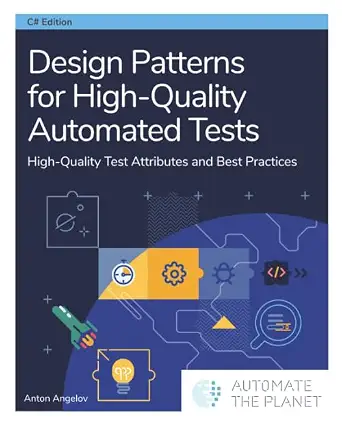 | Best for Maintainable Test Architecture | Resource type: Automated test design guide | Primary topic: Test design patterns | Quality focus: Reliability and maintainability | VIEW LATEST PRICE | See Our Full Breakdown |
| Hands-On Selenium WebDriver with Java |  | Best for Java End-to-End Testing | Primary framework: Selenium WebDriver | Programming language: Java | Testing scope: End-to-end testing | VIEW LATEST PRICE | See Our Full Breakdown |
| Implementing Automated Software Testing |  | Best for Automation Strategy | Primary subject: Automated software testing implementation | Core objective: Reduce testing time | Cost focus: Lower testing costs | VIEW LATEST PRICE | See Our Full Breakdown |
| AI Testing with Python |  | Best for AI-Assisted Python Testing | Programming language: Python | Browser framework: Selenium | Test framework: PyTest | VIEW LATEST PRICE | See Our Full Breakdown |
More Details on Our Top Picks
Software Testing with Selenium Automated Testing Tool: Selenium Book for Beginners
I rank Software Testing with Selenium Automated Testing Tool as the most direct Selenium introduction in this group because it pairs fundamental concepts with practical implementation. Unlike The Way of the Web Tester, which develops broader testing knowledge, this book stays centered on Selenium and the mechanics of browser automation. That narrower scope gives a new programmer a shorter route from unfamiliar terminology to a first automated test. Practical examples also make it more useful as a starter workbook than a theory-led overview. The tradeoff is a relatively low ceiling: readers planning complex framework architecture, Selenium Grid deployments, or mature CI pipelines will need another resource soon. The missing code repository also makes experimentation less convenient because examples cannot be cloned and adapted.
Pros:- Focused introduction to Selenium-based browser automation
- Practical examples connect concepts with implementation
- Accessible treatment of core testing terminology
- Narrow scope helps beginners start quickly
Cons:- Advanced framework design and scaling topics are not covered
- No accompanying code repository for cloning or experimentation
- Limited value as a long-term reference for experienced developers
Best for: Programmers new to browser automation who have already chosen Selenium and want a focused introduction with practical examples
Not ideal for: Experienced Selenium developers building distributed test suites or advanced automation frameworks, since the coverage stops at introductory concepts
- Format:Book
- Primary tool:Selenium
- Testing scope:Automated software and browser testing
- Target level:Beginner
- Learning approach:Concepts paired with practical examples
- Implementation coverage:Fundamental techniques
- Advanced coverage:Limited
- Code repository:Not included
Our verdict“I recommend this book to Selenium newcomers who value a direct starting path more than advanced depth.”
Intelligent Test Automation: Mastering Playwright with Agentic AI for Self-Healing, Adaptive Web Testing
Intelligent Test Automation earns its place by addressing a harder problem than basic script creation: keeping web tests useful when applications change. Its coverage of agentic AI, self-healing, and adaptive testing targets developers who want automation that can respond to unstable selectors and evolving interfaces. Compared with Hands-On Automated Testing with Playwright, this is the more experimental and specialized choice; the other book offers a clearer route into conventional Playwright engineering. The broader ambition may reduce repetitive maintenance, but it also creates complexity and greater dependence on AI behavior that teams must inspect carefully. Unstated prerequisites are another drawback, particularly for programmers who have not yet built ordinary Playwright suites. I rank it highly for forward-looking teams, though beginners will get a firmer foundation elsewhere.
Pros:- Combines Playwright automation with agentic AI techniques
- Addresses test maintenance through self-healing strategies
- Covers adaptive approaches for changing web applications
- Targets autonomous testing workflows rather than basic scripting alone
Cons:- Potentially difficult for readers without Playwright foundations
- Technical prerequisites are not stated
- AI-driven behavior can add debugging and governance overhead
Best for: Playwright developers and automation leads exploring self-healing web tests, adaptive workflows, and agent-based maintenance
Not ideal for: Programmers learning their first browser-testing framework, since the AI concepts add complexity and prerequisites are not stated
- Format:Book
- Primary framework:Playwright
- AI approach:Agentic AI
- Testing scope:Automated web testing
- Core techniques:Self-healing and adaptive testing
- Solution style:Autonomous test automation
- Target reader:Developers extending web-test automation
- Prerequisites:Not specified
Our verdict“I would choose this for an experienced Playwright team pursuing adaptive automation, not for a programmer’s first testing book.”
The Way of the Web Tester: A Beginner’s Guide to Automating Tests
I place The Way of the Web Tester ahead of tool-specific primers for readers who need to understand the reasoning behind automation before committing to one framework. Its clear explanations and practical techniques build a foundation for deciding what to automate and how web tests fit into development work. By comparison, Software Testing with Selenium Automated Testing Tool provides a faster route for someone who already knows Selenium is the destination. This broader book should age more gracefully than instructions tied closely to one interface, but breadth has a cost: it does not supply the advanced detail experienced test engineers need. The absence of included code examples or downloadable resources also weakens hands-on learning. I see it as an orientation guide rather than a desk reference or implementation manual.
Pros:- Explains foundational web-testing concepts in accessible language
- Covers practical automation techniques without assuming advanced knowledge
- Builds transferable testing judgment beyond one named tool
- Well matched to readers still choosing an automation approach
Cons:- Does not explore advanced automation architecture in detail
- No included code examples or supporting resources
- Less direct than a framework-specific guide for immediate implementation
Best for: Beginning programmers who want a broad mental model of web-test automation before selecting a specific framework
Not ideal for: Developers seeking copy-ready code, downloadable exercises, or advanced guidance for a production test architecture
- Format:Book
- Primary topic:Web-test automation
- Target level:Beginner
- Coverage:Fundamental concepts and practical techniques
- Framework focus:No single framework specified
- Learning orientation:Conceptual introduction
- Advanced coverage:Limited
- Included code resources:None stated
Our verdict“I recommend this to beginners who need durable testing principles before they choose Selenium, Playwright, or another framework.”
Hands-On Automated Testing with Playwright: Create fast, reliable, and scalable tests for modern web apps with Microsoft’s automation framework
Hands-On Automated Testing with Playwright takes my Best Overall position because its practical scope matches what many programmers need: building browser tests that remain fast, reliable, and manageable as a web application grows. The emphasis on scalable Playwright test design gives it more production relevance than a basic introduction. Compared with Intelligent Test Automation, it is the safer primary guide because it concentrates on Microsoft’s framework rather than layering agentic AI and self-healing behavior onto the stack. That focus should make the material easier to apply within ordinary development workflows. Still, the listing provides limited chapter-level detail, names no programming language, and states no prerequisites, leaving readers uncertain about the assumed background. I rank it first for mainstream Playwright adoption, while AI-focused teams may prefer the more specialized alternative.
Pros:- Practical focus on creating Playwright tests for modern web applications
- Connects test speed and reliability with scalable suite design
- Uses Microsoft’s browser-automation framework
- More approachable for mainstream Playwright adoption than an AI-centered guide
Cons:- Programming language is not specified in the supplied product details
- Prerequisites and assumed skill level are unclear
- Limited content detail makes the exact depth difficult to judge
Best for: Web programmers building maintainable Playwright suites for modern applications that need to scale beyond a few basic tests
Not ideal for: Buyers who need language-specific instruction or a confirmed chapter outline before purchasing, since those details are not supplied
- Format:Book
- Primary framework:Microsoft Playwright
- Application scope:Modern web applications
- Test priorities:Speed, reliability, and scalability
- Learning style:Hands-on practical guidance
- Programming language:Not specified
- Prerequisites:Not specified
- Detailed content outline:Limited in supplied data
Our verdict“I would make this the default pick for programmers who want practical Playwright guidance without making AI automation the central topic.”
Mastering Test Automation with the Robot Framework
I selected Mastering Test Automation with the Robot Framework for programmers and testers who prefer readable, framework-led automation backed by implementation guidance. Its combination of best practices, practical examples, and real-world strategies gives it a wider skill range than the beginner-only Selenium titles. Compared with Hands-On Automated Testing with Playwright, this pick makes more sense for teams committed to Robot Framework or seeking an approach that can be shared across mixed technical skill levels; Playwright remains the stronger match for developers focused specifically on modern browser applications. The drawback is narrower ecosystem relevance: readers outside Robot Framework will gain less direct value. Missing edition and publisher information also makes currency and editorial provenance harder to judge. I rank it as a strong specialist choice rather than the broad default.
Pros:- In-depth focus on Robot Framework automation
- Practical examples support real-world implementation
- Covers both implementation strategies and working practices
- Serves beginners and experienced testers within the same team
Cons:- Limited direct value for teams using other automation frameworks
- Edition and publisher details are not provided
- Technical scope beyond the named framework is not clearly described
Best for: Mixed-skill QA and development teams adopting Robot Framework and seeking practical guidance that serves both newcomers and experienced testers
Not ideal for: Playwright- or Selenium-centered web teams that need framework-specific APIs and examples for their existing toolchain
- Format:Book
- Primary framework:Robot Framework
- Primary topic:Test automation
- Coverage depth:In-depth
- Learning approach:Practical examples
- Methods covered:Best practices and implementation strategies
- Target level:Beginners and experienced testers
- Edition and publisher:Not provided
Our verdict“I recommend this for teams standardized on Robot Framework, especially when both programmers and less-experienced test authors need one shared guide.”
Test-Driven Development with Python: Obey the Testing Goat: Using Django, Selenium, and JavaScript
I rank Test-Driven Development with Python as the strongest choice here for programmers who want testing to shape how they write software, rather than sit at the end of development. Its combination of Python, Django, Selenium, and JavaScript connects unit-level thinking with browser automation, making it broader than Absolute Beginner Selenium WebDriver. The practical web-application focus also gives its lessons a clear setting: readers can see how short feedback cycles lead to code that is easier to change. That focus is also the main limitation. Developers working on mobile, desktop, embedded, or non-Django services will need to translate many examples into their own stacks. Compared with Design Patterns for High-Quality Automated Tests, this book offers a more guided implementation path but less emphasis on framework-independent test architecture.
Pros:- Connects test-driven development principles to working Python web projects
- Combines Django application testing with Selenium browser automation
- Shows how testing decisions affect code structure and maintainability
- Covers both back-end Python and front-end JavaScript concerns
Cons:- Assumes readers already understand basic programming concepts
- Django-centered examples have limited direct use outside web development
- Covers several technologies, which may slow readers seeking only Selenium instruction
Best for: Python and Django programmers who want to build web applications through test-first development and browser automation
Not ideal for: Developers seeking stack-neutral guidance or automation examples for mobile, desktop, and non-web systems
- Resource type:Programming book
- Primary language:Python
- Web framework:Django
- Browser automation:Selenium
- Front-end language:JavaScript
- Testing approach:Test-driven development
- Application focus:Maintainable web applications
Our verdict“I recommend this book to Python web developers who want testing woven into their coding process, but not to readers seeking a stack-neutral automation reference.”
Absolute Beginner (Part 1) Selenium WebDriver for Functional Automation Testing: Your Beginners Guide
I place Absolute Beginner Selenium WebDriver in the entry-level slot because its narrow scope reduces the initial burden for programmers who have never automated a browser. The step-by-step functional testing approach is easier to enter than Ultimate Selenium WebDriver, which moves toward Java framework design, Selenium Grid, and industry applications. That simplicity helps readers learn core WebDriver ideas without juggling architecture decisions at the same time. It also creates a firm ceiling: experienced testers will find little evidence of advanced coverage, scaling guidance, or maintainability patterns. The supplied product information does not describe the examples in much detail, so buyers cannot easily judge their depth before purchase. Compared with The Way of the Web Tester, this pick is more specifically tied to Selenium, making it useful for tool-focused learning but less suitable for broader testing education.
Pros:- Starts with Selenium WebDriver fundamentals for new automation learners
- Uses a guided, sequential teaching structure
- Keeps attention on practical functional browser testing
- Narrow scope can reduce setup and conceptual overload
Cons:- Does not promise advanced framework or scaling coverage
- Experienced Selenium users are likely to outgrow it quickly
- Limited content detail makes the depth of its examples hard to gauge
Best for: Programmers and junior QA engineers taking their first practical steps with Selenium WebDriver functional testing
Not ideal for: Experienced automation engineers who need framework architecture, Selenium Grid, scaling, or advanced maintenance techniques
- Resource type:Beginner guide
- Automation tool:Selenium WebDriver
- Testing category:Functional automation testing
- Skill level:Absolute beginner
- Teaching style:Step-by-step practical examples
- Series position:Part 1
- Primary focus:WebDriver fundamentals
Our verdict“I would choose this as a low-barrier Selenium starting point, then move to a framework-focused guide once the fundamentals are familiar.”
Ultimate Selenium WebDriver for Test Automation: Build and Implement Automated Web Testing Frameworks Using Java, Selenium WebDriver and Selenium Grid for E-Commerce, Healthcare, EdTech, Banking, and SaaS
I rank Ultimate Selenium WebDriver for Test Automation as the framework-building pick because it moves beyond individual test scripts into Java, WebDriver, and Selenium Grid. That combination matters for teams that need reusable automation and distributed browser execution rather than a few local checks. Its examples across e-commerce, healthcare, EdTech, banking, and SaaS also make it easier to connect framework choices with varied business workflows. Compared with Absolute Beginner Selenium WebDriver, this is the more ambitious resource, but it demands greater technical confidence and may frustrate readers still learning basic locators and assertions. It is also less appealing to teams standardizing on Playwright or TypeScript. While API Testing with Playwright & TypeScript concentrates on service-layer validation, this book is better suited to browser-heavy Java environments where Selenium remains an established part of the delivery pipeline.
Pros:- Covers both Selenium WebDriver and distributed execution with Selenium Grid
- Addresses reusable framework design rather than isolated scripts
- Uses examples spanning several regulated and commercial industries
- Fits Java-based teams with established Selenium infrastructure
Cons:- Likely too technical for readers without automation fundamentals
- Java and Selenium focus offers limited value to Playwright-centered teams
- Broad industry coverage may leave less room for depth in any single domain
Best for: Java developers and automation engineers designing reusable Selenium frameworks for browser-heavy enterprise applications
Not ideal for: New testers learning basic automation or teams committed to Playwright, TypeScript, or API-first testing
- Resource type:Test automation framework guide
- Programming language:Java
- Browser automation:Selenium WebDriver
- Distributed execution:Selenium Grid
- Testing focus:Automated web testing frameworks
- Industry coverage:E-commerce, healthcare, EdTech, banking, and SaaS
- Intended audience:Testers and developers
Our verdict“I recommend this guide for Java teams ready to turn Selenium scripts into a scalable framework, not for readers seeking their first automation lesson.”
API Testing with Playwright & TypeScript: A Practical Guide from Zero to Expert
I give API Testing with Playwright & TypeScript the API-focused role because it addresses programmers who want automated service checks without adopting a separate legacy testing stack. Pairing Playwright with TypeScript can let web teams keep API and browser tests within a familiar JavaScript ecosystem, reducing tool fragmentation. That makes it a more natural fit for modern TypeScript projects than Ultimate Selenium WebDriver, whose Java and Selenium Grid coverage favors established browser suites. The promised progression from beginner to expert is appealing, yet the material may still feel dense to readers who are learning TypeScript, HTTP concepts, and automation at once. It also has a narrower architectural focus than Design Patterns for High-Quality Automated Tests. I would prioritize this title for hands-on API implementation, while choosing the design-pattern book when long-term test structure matters more than learning a specific toolchain.
Pros:- Combines API automation with a modern TypeScript toolchain
- Offers a practical path from introductory to advanced techniques
- Can support shared tooling across API and browser test suites
- Targets hands-on test development rather than theory alone
Cons:- Learning TypeScript, Playwright, and API concepts together may overwhelm newcomers
- Tool-specific guidance may age faster than general testing principles
- Less useful for Java, Python, or language-neutral automation teams
Best for: TypeScript developers and web QA engineers who want to automate API checks with the same ecosystem used for Playwright browser tests
Not ideal for: Complete programming beginners or teams that need language-neutral test architecture rather than Playwright-specific implementation
- Resource type:Practical API testing guide
- Automation framework:Playwright
- Programming language:TypeScript
- Testing layer:APIs
- Skill range:Beginner to expert
- Learning approach:Hands-on techniques
- Primary outcome:Developing and automating API tests
Our verdict“I would pick this for TypeScript teams adding practical API coverage, while beginners without HTTP or coding foundations should start with a gentler resource.”
Design Patterns for High-Quality Automated Tests: High-Quality Test Attributes and Best Practices
I rank Design Patterns for High-Quality Automated Tests as the architecture choice for programmers whose suites already run but have become brittle, confusing, or expensive to maintain. Its focus on test attributes and reusable design patterns addresses how automation is structured, not merely how commands are written. Compared with Absolute Beginner Selenium WebDriver, it offers less hand-holding and fewer tool fundamentals, but its ideas should carry further across frameworks. It also differs from Test-Driven Development with Python: that book ties testing closely to Django development, while this option concentrates on the quality of the automated tests themselves. The tradeoff is abstraction. Beginners may struggle to apply pattern-oriented guidance without an existing suite, and readers seeking ready-made Selenium or Playwright code may prefer a tool-specific title. I see it as a stronger second book than a first introduction.
Pros:- Focuses on maintainability and reliability rather than tool syntax
- Explains reusable design patterns for automated test suites
- Offers concepts that can transfer across languages and frameworks
- Targets common structural weaknesses in mature automation projects
Cons:- Pattern-oriented material may be too abstract for beginners
- Does not center on a named automation tool or programming language
- Readers seeking copy-ready implementation examples may need another guide
Best for: Experienced programmers, test architects, and automation leads refactoring brittle suites into reliable, maintainable frameworks
Not ideal for: Beginners who need setup instructions, runnable tool tutorials, or an introduction to writing their first automated test
- Resource type:Automated test design guide
- Primary topic:Test design patterns
- Quality focus:Reliability and maintainability
- Method coverage:High-quality test attributes and best practices
- Tool specificity:Framework-independent
- Target stage:Test suite design and refinement
- Suggested experience:Intermediate to advanced
Our verdict“I recommend this as a second-stage guide for programmers improving an existing test suite, rather than as a first automation tutorial.”
Hands-On Selenium WebDriver with Java
I rank Hands-On Selenium WebDriver with Java as the specialist choice for programmers building browser-based tests in Java. Its end-to-end testing focus and practical Selenium techniques offer more implementation detail than the process-centered Implementing Automated Software Testing. That narrower scope helps Java teams turn browser workflows into maintainable automated checks instead of stopping at broad strategy. Compared with Ultimate Selenium WebDriver for Test Automation, this pick appears less centered on industry-specific framework examples and Selenium Grid. The tradeoff is limited breadth: readers seeking API testing, Playwright, Python, or AI-assisted workflows will get more range from AI Testing with Python. I also see weak purchasing transparency because the supplied data omits edition details, publication information, and reader feedback.
Pros:- Concentrates on Selenium WebDriver implementation with Java
- Connects practical examples to end-to-end browser testing
- Covers techniques and practices relevant to developers and testers
- Provides more coding focus than a strategy-led automation guide
Cons:- Narrow technology focus offers little help for non-Java automation stacks
- Provided product data does not identify an edition or publication date
- No customer-review evidence is supplied
Best for: Java developers and QA engineers who need practical guidance for building Selenium WebDriver end-to-end test suites
Not ideal for: Python, TypeScript, or Playwright teams that need coverage aligned with their existing language and automation stack
- Primary framework:Selenium WebDriver
- Programming language:Java
- Testing scope:End-to-end testing
- Test target:Web applications
- Instruction style:Practical techniques and examples
- Practice coverage:Automation testing best practices
- Intended audience:Developers and testers
Our verdict“I recommend this pick to Java teams that want hands-on Selenium guidance and do not need broad coverage of newer testing stacks.”
Implementing Automated Software Testing
I place Implementing Automated Software Testing in the strategy slot because it addresses how teams can reduce testing time and cost while improving quality. That makes it a better fit for automation leads than Hands-On Selenium WebDriver with Java, which concentrates on writing Java browser tests. Its process and efficiency guidance can help programmers decide where automation pays off before they commit to a particular framework. The downside is equally clear: readers wanting copy-ready PyTest, Selenium, or Playwright examples may find the material less immediately actionable than AI Testing with Python. The supplied description also suggests a technical treatment that may challenge newcomers. I would choose this for planning an automation program, but not as my first coding tutorial or as a reference for one specific toolchain.
Pros:- Links automation decisions to time, cost, and quality outcomes
- Supports team-level planning rather than one narrow framework
- Offers practical guidance for improving testing processes
- Fits developers and testers responsible for automation adoption
Cons:- Less useful as a framework-specific coding reference
- Technical material may be difficult for readers new to software testing
- Provided data gives no detailed edition or tooling information
Best for: QA leads, senior developers, and engineering managers planning a cost-conscious automated testing program across a team
Not ideal for: Beginning programmers who need step-by-step framework setup, runnable examples, and instruction in one testing language
- Primary subject:Automated software testing implementation
- Core objective:Reduce testing time
- Cost focus:Lower testing costs
- Quality focus:Raise software quality
- Guidance type:Practical implementation strategies
- Intended audience:Software developers and testers
- Named framework:None specified
Our verdict“I would pick this for designing an automation program, while programmers seeking a coding-first tutorial should choose a framework-focused book.”
AI Testing with Python
I rank AI Testing with Python as the forward-looking choice for programmers who want one learning path across Python, Selenium, APIs, PyTest, LLMs, and AI-powered tools. Its mixed UI and API coverage is broader than Hands-On Selenium WebDriver with Java, while its code-oriented scope is more concrete than Implementing Automated Software Testing. That range can help Python teams connect conventional test suites with intelligent automation techniques instead of treating AI as a separate discipline. Breadth is also its main compromise: a reader focused solely on browser automation may get a more concentrated treatment from Hands-On Automated Testing with Playwright. Beginners without Python or testing foundations may face a steep learning curve, and the supplied listing does not provide edition or publication details. I see it as a breadth-first choice for technically prepared readers.
Pros:- Combines Python testing with AI-assisted automation concepts
- Covers browser, API, and PyTest workflows in one resource
- Includes large language models alongside established testing tools
- Provides practical examples for developers and testers
Cons:- Wide topic range may limit depth in each individual framework
- Assumes enough testing and Python knowledge to follow technical material
- Provided listing omits edition and publication details
Best for: Python developers and experienced QA engineers adding LLM-assisted techniques to Selenium, API, and PyTest automation
Not ideal for: Testing newcomers who still need foundational Python instruction or a narrowly focused introduction to browser automation
- Programming language:Python
- Browser framework:Selenium
- Test framework:PyTest
- Service testing:API testing
- AI coverage:Large language models
- Automation approach:AI-powered testing tools
- Project focus:Intelligent test automation frameworks
- Intended audience:Testers and developers
Our verdict“I recommend this to Python practitioners seeking broad AI-assisted testing coverage, provided they already understand core programming and test concepts.”

How We Picked
I ranked these books by comparing their declared scope, intended skill level, supported languages, framework focus, and emphasis on maintainable test design. I placed the most weight on practical coding value, relevance to current development workflows, and whether a book explains why tests fail or become expensive to maintain. I also favored resources that connect setup and syntax to broader outcomes such as reliable CI runs, clearer failure diagnosis, and scalable suite organization.
The order reflects usefulness for programmers rather than topic novelty alone. A focused specialist book can outrank a broader title when it solves its stated problem more directly, but the best overall choice needs enough range for everyday development work. I treated Playwright coverage as a strong fit for modern web projects, while Selenium earned credit for ecosystem reach and established enterprise use. Books centered on design patterns and TDD scored well for lasting value, and AI-oriented titles were ranked more cautiously because tools and techniques in that area change quickly.
Factors to Consider When Choosing Automated Testing Tools For Programmers
I would choose a testing book by starting with the application, language, and failure risks in the actual project. A guide built around browser automation will not fully answer an API-heavy testing problem, and an advanced architecture book may slow down someone who still needs setup help. The best match should offer an attainable starting point, enough depth for the next project stage, and examples that resemble the reader’s stack. These five factors separate a useful reference from a book that stays on the shelf.
Match the Framework to the Application
I would begin with the system being tested, not the popularity of the framework. Playwright suits modern browser applications and can also cover APIs, while Selenium remains attractive for teams with existing WebDriver infrastructure or broad language needs. Robot Framework takes a keyword-driven approach that can make tests more readable to mixed technical teams. A common mistake is buying a browser-testing book when most defects occur in services, data contracts, or business logic. For an API-heavy system, a focused API resource may create useful coverage faster than a broad end-to-end guide. The framework should match where failures matter, how the team writes code, and what the build pipeline can support.
Choose Examples in a Language You Will Maintain
Code examples become far more valuable when they use the language and package ecosystem already present in the project. TypeScript and Playwright make sense for many web teams, while Java-centered Selenium books fit organizations with established JVM tooling. Python titles can connect testing with Django, PyTest, data work, and AI libraries, but that range may distract readers who only need frontend checks. I would avoid choosing a book solely because its framework is familiar if its sample language creates extra setup and debugging work. Translating every example can hide the lesson behind syntax differences and dependency problems. A close language match turns the book into a working reference instead of a conceptual overview.
Separate Learning Sequence From Reference Depth
A beginner usually needs a guided sequence, small exercises, and explanations of selectors, assertions, waits, and test structure. An experienced programmer gains more from architecture, diagnostics, and scaling patterns than from lengthy installation chapters. Books that promise zero-to-expert coverage can be convenient, but they may treat both ends too lightly. I would inspect the table of contents for a clear path from a first working test to fixtures, parallel execution, CI, and maintenance. A reference-heavy title works well beside an active project, whereas a tutorial-led book is easier for scheduled study. Paying for more pages has little value when the teaching level does not match the buyer.
Prioritize Test Design Over Test Volume
The costliest automation problems often come from fragile design rather than missing framework features. I would favor material covering stable selectors, isolation, data management, retry discipline, readable assertions, and ownership of failures. A book that only helps create more scripts can increase maintenance without improving confidence. Design-pattern guidance becomes especially valuable once a suite has many contributors or runs across several environments. Beginners still need working examples, but they should learn early why oversized end-to-end suites become slow and unreliable. Strong design instruction helps a team decide which checks belong at the unit, API, integration, and browser layers.
Treat AI Features as an Add-On, Not a Foundation
AI-assisted test generation and self-healing can reduce repetitive work, but they do not remove the need for sound assertions and clear failure signals. I would choose an AI-focused book after gaining a firm base in test architecture and framework behavior. Generated tests can reproduce weak assumptions at scale, and self-healing selectors may hide changes that deserve review. Buyers should also expect examples involving models, agents, or vendor services to age faster than core Selenium or Playwright concepts. Paying more for advanced AI coverage makes sense when experimentation is already part of the team’s roadmap. For a first purchase, a durable framework or design book usually supplies more immediate value.
Frequently Asked Questions
Should I learn Playwright or Selenium first in 2026?
I would start with Playwright for a new web project when the team uses JavaScript or TypeScript and wants browser tooling with modern defaults. Selenium is the better first choice when the employer already maintains WebDriver infrastructure, requires a supported language outside the preferred Playwright stack, or has a large existing suite. Playwright books in this roundup offer a cleaner route into current web and API workflows, while Selenium has more choices across beginner, Java, and enterprise framework levels. The right answer depends less on market popularity than on the codebase and team the reader expects to join. Learning sound test design makes moving between the two much easier later.
Is a beginner book enough to build a production test suite?
A beginner book can provide the setup, vocabulary, and first working tests, but production suites need more depth. I would expect to add material on architecture, CI execution, test data, parallelism, and failure diagnosis. The Way of the Web Tester or Absolute Beginner Selenium WebDriver can establish confidence, while Design Patterns for High-Quality Automated Tests can supply the next layer. Skipping the introductory stage may produce copied code without understanding, yet staying there too long can create a brittle suite. A paired learning path is usually stronger than expecting one book to cover every maturity level.
Do I need a separate book for API testing if Playwright can test APIs?
I would buy a dedicated API book when service contracts, authentication, payload validation, and backend workflows make up a large share of the testing workload. General Playwright books may introduce request testing, but API Testing with Playwright & TypeScript gives that layer sustained attention. A browser-focused guide may be enough for a small application with only a few supporting endpoints. API specialization also helps teams create faster checks that identify failures before the user-interface layer becomes involved. The separate purchase pays off when API coverage is a primary goal rather than a side task.
Are AI testing books worth buying when the tools change so quickly?
They can be worthwhile for programmers who already understand automation and want to explore self-healing, test generation, LLM workflows, or adaptive execution. I would not make one the only testing book in a personal library because product interfaces and model practices can change faster than core design principles. Intelligent Test Automation is the closer fit for Playwright-centered experimentation, while AI Testing with Python serves readers who want a broader Python-based toolkit. The useful parts are the workflow ideas and evaluation habits, not only the exact code snippets. A foundational Playwright, Selenium, or design-pattern book remains the safer first purchase.
Which book is best for a team maintaining a large Selenium suite?
I would choose Ultimate Selenium WebDriver for Test Automation when the goal is building or reshaping a Java-based framework across multiple business domains. Hands-On Selenium WebDriver with Java is a strong alternative for developers who want concentrated end-to-end implementation guidance. Mastering Test Automation with the Robot Framework makes more sense when readable keyword-driven tests and mixed-role collaboration matter more than direct Java control. A large suite also benefits from Design Patterns for High-Quality Automated Tests because framework code alone will not solve duplication or unclear ownership. The best pairing combines one Selenium implementation guide with one architecture-focused resource.
Conclusion
For most programmers, my best overall choice is Hands-On Automated Testing with Playwright because it balances modern browser coverage, practical implementation, and scalable test structure. My best value pick is The Way of the Web Tester, whose durable concepts can support readers beyond a single framework version. Beginners should choose Absolute Beginner Selenium WebDriver for a gentle Selenium start, while readers wanting broader foundations may prefer The Way of the Web Tester. For a premium advanced choice, Intelligent Test Automation fits Playwright users exploring agentic and self-healing methods, though its subject matter may age faster. API specialists should buy API Testing with Playwright & TypeScript, Python developers should choose Test-Driven Development with Python, and large Java teams should favor Ultimate Selenium WebDriver for Test Automation. Readers focused on long-term suite quality should place Design Patterns for High-Quality Automated Tests near the top of their list, even if they pair it with a framework-specific book.
Fall Picks
fall essentials
As an affiliate, we earn on qualifying purchases.