A portable monitor for laptop developers is one of the cheapest ways to reclaim screen real estate without hauling a desktop display between home, office and coffee shop. In this lineup, the ASUS ZenScreen MB16ACV earns my best overall pick for its anti-glare IPS panel, dependable single-cable USB-C operation and a three-year warranty that budget brands simply don’t match. The msi Pro MP165 E6 is the strongest premium-leaning alternative thanks to its ultra-slim metal build and tripod mounting, while the KYY 15.6-inch FHD model is the best value play if you want a competent second screen without paying brand-name prices. The core tradeoffs in this category come down to brightness and color coverage versus weight, stand stability, and whether the monitor draws power over USB-C or needs a second cable. Cheaper panels save money but often suffer glare and flimsy smart covers — frustrations you notice daily when reading code. Keep reading for the full breakdown, including who each monitor suits and which ones to skip.

Get business pricing on monitors, keyboards and dev gear
- Business-only prices and quantity discounts
- Tax-exempt purchasing
- Multiple users, one account, clear invoices
Key Takeaways
- Single-cable USB-C operation with proper power delivery separated the top picks from budget models that still demand a separate power brick or full-size HDMI cable.
- Brand-name models (ASUS ZenScreen MB16ACV and MB16ACE, msi Pro MP165) justified their premium through anti-glare coatings, 3-year warranties and consistently stable firmware — the budget field offered none of these.
- Almost every monitor here is the same 15.6-inch 1080p IPS panel, so stand design, cover quality and VESA/tripod mounting became the real differentiators rather than raw specs.
- 60Hz refresh and 85% sRGB coverage proved fine for coding and documentation, but glossy budget panels were noticeably worse near windows — glare matters more for text work than for gaming.
- Built-in speakers across the lineup were uniformly mediocre; developers relying on calls should treat speaker quality as a bonus, not a buying reason.
| cocopar Portable Monitor 15.6 Inch 1080P FHD 60Hz Travel Monitor |  | Best for Desk-to-Travel Flexibility | Screen Size: 15.6 inches | Resolution: 1920 x 1080 FHD | Refresh Rate: 60Hz | VIEW LATEST PRICE | See Our Full Breakdown |
| KYY Portable Monitor 15.6″ FHD 1080P USB C HDMI Gaming Monitor |  | Best Brightness for the Money | Screen Size: 15.6 inches | Resolution: 1920 x 1080 FHD | Refresh Rate: 60Hz | VIEW LATEST PRICE | See Our Full Breakdown |
| InnoView Portable Monitor 15.6 Inch FHD 1080P HDMI USB C Second External Monitor |  | Best for First-Time Portable Monitor Buyers | Screen Size: 15.6 inches | Resolution: 1920 x 1080 FHD | Refresh Rate: 60Hz | VIEW LATEST PRICE | See Our Full Breakdown |
| msi Pro MP165 E6 Ultra Slim & Light Portable Monitor |  | Best for Frequent Flyers | Screen Size: 15.6 inches | Resolution: 1920 x 1080 FHD | Refresh Rate: 60Hz | VIEW LATEST PRICE | See Our Full Breakdown |
| KYY Portable Monitor 15.6″ 1080P Computer Monitor Screen Extender w/Cover | 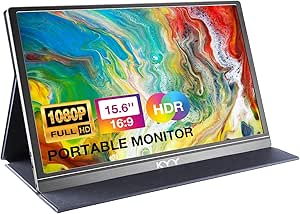 | Best Value Workhorse | Screen Size: 15.6 inches | Resolution: 1920 x 1080 FHD | Refresh Rate: 60Hz | VIEW LATEST PRICE | See Our Full Breakdown |
| InnoView Portable Monitor 15.6″ 1080P with Protective Sleeve and Built-In Stand |  | Best Commuter Pick | Screen Size: 15.6 inches | Resolution: 1920 x 1080 (FHD) | Panel: IPS, matte finish | VIEW LATEST PRICE | See Our Full Breakdown |
| VisionOwl Portable Monitor 15.6 Inch 1080P FHD with Speakers and VESA Mount |  | Best for Desk-to-Travel Flexibility | Screen Size: 15.6 inches | Resolution: 1920 x 1080 (FHD) | Panel: IPS, 85% sRGB, matte | VIEW LATEST PRICE | See Our Full Breakdown |
| ASUS ZenScreen MB16ACV 15.6 Inch Portable Monitor |  | Best Brand-Backed Pick | Screen Size: 15.6 inches | Resolution: 1920 x 1080 (FHD) | Panel: IPS, anti-glare | VIEW LATEST PRICE | See Our Full Breakdown |
| WCV 15.6 Inch 1080P Ultra-Slim Travel Monitor with Kickstand |  | Best Featherweight Pick | Screen Size: 15.6 inches | Resolution: 1920 x 1080 (FHD) | Panel: IPS, HDR, low blue light | VIEW LATEST PRICE | See Our Full Breakdown |
| WGK 15.6 inch Portable Monitor 1080P FHD with Stand, Speakers and VESA |  | Best Budget All-Rounder | Screen Size: 15.6 inches | Resolution: 1920 x 1080 (FHD) | Panel: IPS, 72% color gamut, HDR | VIEW LATEST PRICE | See Our Full Breakdown |
| ViewSonic VA1653 16 Inch 1080p Portable Monitor |  | Best Warranty and Power Delivery | Screen Size: 15.6 inches | Resolution: 1920 x 1080 FHD | Panel: IPS | VIEW LATEST PRICE | See Our Full Breakdown |
| ForHelp 15.6inch Portable Monitor |  | Best Budget All-Rounder | Screen Size: 15.6 inches | Resolution: 1920 x 1080 FHD | Panel: IPS, matte finish | VIEW LATEST PRICE | See Our Full Breakdown |
| MNN 15.6″ FHD 60Hz Portable Monitor |  | Best Value Pick | Screen Size: 15.6 inches | Resolution: 1920 x 1080 FHD | Panel: IPS, glossy finish | VIEW LATEST PRICE | See Our Full Breakdown |
| AOC 16T20 16″ Portable Monitor |  | Best Plug-and-Play Simplicity | Screen Size: 15.6 inches | Resolution: 1920 x 1080 FHD | Panel: IPS | VIEW LATEST PRICE | See Our Full Breakdown |
| ASUS ZenScreen MB16ACE 15.6″ Portable Monitor |  | Best for Eye Comfort and Daily Commuting | Screen Size: 15.6 inches | Resolution: 1920 x 1080 FHD | Panel: IPS, anti-glare | VIEW LATEST PRICE | See Our Full Breakdown |
| portable monitor for laptop developer | Screen Size | Resolution | Panel | Refresh Rate |
|---|---|---|---|---|
| cocopar Portable Monitor 15.6 | 15.6 inches | 1920 x 1080 FHD | IPS, 85% sRGB, 178° viewing angle | 60Hz |
| KYY Portable Monitor 15.6" FHD | 15.6 inches | 1920 x 1080 FHD | IPS, 1000:1 contrast, 178° viewing angle | 60Hz |
| InnoView Portable Monitor 15.6 | 15.6 inches | 1920 x 1080 FHD | A+ IPS, 1200:1 contrast, 178° viewing angle | 60Hz |
| msi Pro MP165 E6 Ultra Slim & | 15.6 inches | 1920 x 1080 FHD | IPS, 2000:1 contrast, 178° viewing angle | 60Hz |
| KYY Portable Monitor 15.6" 108 | 15.6 inches | 1920 x 1080 FHD | IPS, 1000:1 contrast, 178° viewing angle | 60Hz |
| InnoView Portable Monitor 15.6 | 15.6 inches | 1920 x 1080 (FHD) | IPS, matte finish | 60 Hz |
| VisionOwl Portable Monitor 15. | 15.6 inches | 1920 x 1080 (FHD) | IPS, 85% sRGB, matte | 60 Hz |
| ASUS ZenScreen MB16ACV 15.6 In | 15.6 inches | 1920 x 1080 (FHD) | IPS, anti-glare | 60 Hz |
| WCV 15.6 Inch 1080P Ultra-Slim | 15.6 inches | 1920 x 1080 (FHD) | IPS, HDR, low blue light | 60 Hz |
| WGK 15.6 inch Portable Monitor | 15.6 inches | 1920 x 1080 (FHD) | IPS, 72% color gamut, HDR | 60 Hz |
| ViewSonic VA1653 16 Inch 1080p | 15.6 inches | 1920 x 1080 FHD | IPS | — |
| ForHelp 15.6inch Portable Moni | 15.6 inches | 1920 x 1080 FHD | IPS, matte finish | — |
| MNN 15.6" FHD 60Hz Portable Mo | 15.6 inches | 1920 x 1080 FHD | IPS, glossy finish | 60Hz |
| AOC 16T20 16" Portable Monitor | 15.6 inches | 1920 x 1080 FHD | IPS | 60Hz |
| ASUS ZenScreen MB16ACE 15.6" P | 15.6 inches | 1920 x 1080 FHD | IPS, anti-glare | — |
More Details on Our Top Picks
cocopar Portable Monitor 15.6 Inch 1080P FHD 60Hz Travel Monitor
What separates the cocopar 15.6-inch from most budget travel monitors is its VESA mount compatibility — a feature shared only by the VisionOwl in this price bracket. For developers, that means the screen can live on a monitor arm at your desk during the week and slip into a backpack for weekend travel, without buying two separate setups. A single USB-C cable handles both power and video on Thunderbolt laptops, and reverse charging passes power through to keep your laptop topped up. The 85% sRGB gamut is respectable for code and documentation, though it falls short of the KYY’s brighter 300-nit panel for sunlit cafés. The tradeoff: at 1.5 lb without the cover (2.4 lb with it), it’s heavier than the MSI Pro MP165, and the flap-style cover stand is fiddlier than a built-in kickstand.
Pros:- VESA holes allow mounting on arms for a semi-permanent desk setup
- Single-cable USB-C with power pass-through reverse charging
- 85% sRGB coverage with 178° IPS viewing angles
- Portrait and landscape orientation support
Cons:- Heavier than competing ultra-slim models once the cover is attached
- Folio cover stand offers limited, less stable viewing angles than a built-in kickstand
Best for: Developers who split time between a VESA-equipped desk setup and travel, and want one screen for both
Not ideal for: Minimalists counting every gram — the magnetic cover adds nearly a pound and the folio stand is less stable than a folding kickstand
- Screen Size:15.6 inches
- Resolution:1920 x 1080 FHD
- Refresh Rate:60Hz
- Panel:IPS, 85% sRGB, 178° viewing angle
- Connectivity:2x USB-C (full-featured), HDMI
- Weight:1.5 lb (2.4 lb with cover)
- Mounting:VESA mountable
- Extras:HDR, low blue light, built-in speakers, magnetic cover stand
Our verdict“Pick this if you want a portable screen that doubles as a permanent VESA-mounted second display; skip it if every ounce in your bag matters.”
KYY Portable Monitor 15.6″ FHD 1080P USB C HDMI Gaming Monitor
The KYY K3 earns its spot with a 300-nit panel — noticeably brighter than the InnoView’s 250 nits — which makes a real difference when you’re coding next to a window or outdoors. HDR and Scene modes push contrast beyond what typical budget panels manage, and the 3.5mm audio jack plus built-in stereo speakers cover quick calls without headphones. Unlike the cocopar, there’s no VESA mounting, so this stays a purely portable play. The PU leather smart cover with two grooves gives you a couple of usable angles, though it’s the same wobbly folio design most sub-$150 monitors use rather than a rigid kickstand like the MSI Pro MP165. Port layout is genuinely well thought out: everything sits on one side, which kills the cable-spaghetti problem developers know from cheap dock setups.
Pros:- 300-nit brightness outshines similarly priced rivals like the InnoView
- All ports on one side keeps cable routing tidy
- 3.5mm audio input plus stereo speakers
- Matte finish reduces glare on text-heavy work
Cons:- Smart cover stand is less rigid than a built-in kickstand
- No VESA or tripod mounting options
Best for: Developers who work in bright environments and want a vivid, well-connected screen without paying premium-brand prices
Not ideal for: Anyone wanting a monitor-arm desk setup — no VESA holes means it’s folio-stand or nothing
- Screen Size:15.6 inches
- Resolution:1920 x 1080 FHD
- Refresh Rate:60Hz
- Brightness:300 cd/m²
- Panel:IPS, 1000:1 contrast, 178° viewing angle
- Connectivity:2x USB-C, mini-HDMI, 3.5mm audio
- Thickness:0.3 inches
- Warranty:12 months
Our verdict“A strong pick if panel brightness and tidy cabling matter more to you than mount flexibility.”
InnoView Portable Monitor 15.6 Inch FHD 1080P HDMI USB C Second External Monitor
The InnoView is the pick I’d point a developer toward if this is their first second screen and they don’t want to overthink it. Setup is genuinely plug-and-play: one full-function USB-C cable to a Thunderbolt or USB 3.1 DP Alt-Mode laptop and you’re extending your display, with an 18-month warranty that outlasts the KYY’s 12 months for extra peace of mind. The A+ IPS panel hits 178° viewing angles and a slightly better 1200:1 contrast than the KYY K3, though its 250-nit brightness means it struggles outdoors compared with that model. The honest caveat — and it applies to the whole budget category — is that power delivery from some laptops causes flicker, and the HDMI fallback path requires a power adapter that isn’t included. Budget a few extra dollars for a USB-C power brick if your laptop’s ports are underpowered.
Pros:- 18-month warranty beats most budget rivals
- True plug-and-play single-cable USB-C connection
- 1200:1 contrast ratio delivers slightly deeper blacks than the KYY K3
- Scratch-resistant PU cover with adjustable-angle grooves
Cons:- 250-nit brightness is dim for bright rooms or travel
- HDMI connection requires a separate power adapter not included in the package
Best for: Developers buying their first portable monitor who value a longer warranty and simple plug-and-play setup
Not ideal for: Laptop owners with older or underpowered USB-C ports — expect flicker unless you add an external power adapter that isn’t in the box
- Screen Size:15.6 inches
- Resolution:1920 x 1080 FHD
- Refresh Rate:60Hz
- Brightness:250 cd/m²
- Panel:A+ IPS, 1200:1 contrast, 178° viewing angle
- Connectivity:2x USB-C (full-function), HDMI
- Weight:2.7 pounds
- Warranty:18 months
Our verdict“A safe, warranty-backed entry point for developers testing whether a travel second screen fits their workflow.”
msi Pro MP165 E6 Ultra Slim & Light Portable Monitor
At 0.78 kg and 1.38 cm thick, the MSI Pro MP165 E6 is the lightest 15.6-inch screen in this lineup — roughly half the weight of the InnoView — and it’s the one I’d trust in a slim laptop sleeve next to a MacBook. This is the only model here with a built-in 1/4-inch tripod mount, which opens up positioning options no folio cover can match: raise it to eye level on a camera tripod, or attach it to a monitor arm via VESA when you’re back at your desk. The TÜV Rheinland low blue light and flicker-free certifications matter for all-day coding sessions in a way marketing-bullet “eye care” modes don’t. The compromises are real, though: the 49% color gamut is the narrowest here, so it’s a productivity screen, not a design tool, and the MSI brand premium buys you build quality rather than panel specs.
Pros:- Lightest and thinnest 15.6-inch option here at 0.78 kg
- Unique 1/4-inch tripod mount plus VESA compatibility
- TÜV Rheinland certified low blue light and flicker free
- L-shaped cable plugs keep cables flush for bag-friendly packing
Cons:- 49% color gamut is far below the cocopar’s 85% sRGB
- Premium brand pricing for otherwise standard 1080p/60Hz specs
Best for: Developers who travel constantly and need the lightest possible screen with flexible tripod or arm mounting
Not ideal for: Anyone doing color-sensitive work — the narrow 49% color gamut is the weakest in this batch
- Screen Size:15.6 inches
- Resolution:1920 x 1080 FHD
- Refresh Rate:60Hz
- Panel:IPS, 2000:1 contrast, 178° viewing angle
- Weight:0.78 kg (1.72 lb)
- Thickness:1.38 cm
- Connectivity:USB-C (DP 1.2a Alt Mode), mini-HDMI
- Mounting:1/4-inch tripod mount, VESA compatible
- Extras:Built-in speakers, foldable kickstand, TÜV certified eye care
Our verdict“The clear choice for road warriors prioritizing weight and mounting versatility over color accuracy.”
KYY Portable Monitor 15.6″ 1080P Computer Monitor Screen Extender w/Cover
This second KYY K3 variant is the pragmatic value play of the group. It shares the same 300-nit IPS panel, port layout, and metal housing as its sibling (B088TLQR3K), but the frameless magnetic design and included screen accessories make it the better pure budget buy — you get cables, a protective film, and the PU smart cover in the box rather than as add-ons. For a developer who just wants editor on one screen, terminal on the other, it does the job with no meaningful compromise versus pricier options. Where it loses ground is the same places all KYY models do: no VESA or tripod mounting (unlike the cocopar and MSI), and the two-groove cover stand gives you only coarse angle control. The 1000:1 contrast is also middling, so dark-theme IDEs look slightly flatter than on the MSI’s 2000:1 panel.
Pros:- Complete accessory bundle including cables, screen protector, and smart cover
- 300-nit brightness matches the brighter KYY variant
- Frameless magnetic design looks cleaner than bezeled rivals
- 24/7 support team and 12-month warranty
Cons:- Only two viewing-angle grooves via the folio cover
- 1000:1 contrast renders dark themes flatter than the MSI Pro MP165
- No mounting options of any kind
Best for: Budget-conscious developers who want a complete out-of-the-box dual-screen setup with cables and cover included
Not ideal for: Users who want precise ergonomic positioning — no VESA, no tripod mount, and only two cover angles
- Screen Size:15.6 inches
- Resolution:1920 x 1080 FHD
- Refresh Rate:60Hz
- Brightness:300 cd/m²
- Panel:IPS, 1000:1 contrast, 178° viewing angle
- Connectivity:2x USB-C, mini-HDMI, 3.5mm audio
- Weight:1.7 pounds
- Warranty:12 months
Our verdict“The sensible default if you want everything in the box for the lowest possible spend and don’t care about mounting.”
InnoView Portable Monitor 15.6″ 1080P with Protective Sleeve and Built-In Stand
The InnoView 15.6-inch earns its spot here by solving the problem most budget portables ignore: protection in transit. The bundled protective sleeve means a developer tossing a monitor into a backpack next to a laptop and charger does not need to buy a separate case, something the WCV ultra-slim model leaves you to figure out on your own. The built-in 90° adjustable stand is another convenience over the folio-cover stands on the cocopar and KYY options, which flop around if you breathe on them wrong. Image quality lands in the middle of this lineup — the 1200:1 contrast IPS panel is sharper than the WGK’s 1000:1, but brightness is unremarkable at 250 nits. The tradeoff: there are no built-in speakers, and some laptops will need a separate 15W power adapter to stop flickering, so a true one-cable setup is not guaranteed.
Pros:- Included protective sleeve spares you buying a separate case
- Built-in 90° adjustable stand is sturdier than folio covers
- Full-size HDMI port plus two USB-C ports, no fragile mini-HDMI
- 1200:1 contrast beats the WGK and VisionOwl panels
- Light 1.5 lb chassis with 0.25-inch profile
Cons:- No built-in speakers at all
- May require a separate 15W+ power adapter to avoid flicker on weaker laptops
- 250 nits brightness is dim for bright offices or window seats
Best for: Commuting developers who want a sleeve and stand included so the monitor survives daily backpack abuse without extra purchases
Not ideal for: Anyone wanting a single-cable desk setup — the flickering issue means some laptops will still need a separate power adapter, and there are no speakers for calls or media
- Screen Size:15.6 inches
- Resolution:1920 x 1080 (FHD)
- Panel:IPS, matte finish
- Contrast Ratio:1200:1
- Brightness:250 cd/m²
- Refresh Rate:60 Hz
- Ports:2x USB-C, 1x HDMI
- Weight:1.5 lbs
- Extras:Protective sleeve, built-in 90° stand
Our verdict“Buy this if your monitor lives in a backpack five days a week and you want case and stand handled out of the box.”
VisionOwl Portable Monitor 15.6 Inch 1080P FHD with Speakers and VESA Mount
What separates the VisionOwl from the sea of generic 15.6-inch portables is VESA 75×75 mounting. For a developer, that changes everything: you can park this panel on an arm in portrait mode for reading long files or stacked logs, then unclip it for travel — something neither the InnoView sleeve model nor the WCV can do. The aluminum alloy chassis also feels like a class above the plastic WGK, and its 3ms response time is the fastest in this batch, edging out the ASUS MB16ACV’s 5ms. The included accessory bundle is generous: power adapter, smart cover stand, and every cable you need. The compromises are real, though. Its 85% sRGB coverage is fine for code but short of what design work demands, the 1000:1 contrast trails the InnoView, and at 2.3 lbs with the cover it is one of the heavier options here.
Pros:- VESA 75×75 mount enables portrait mode and monitor-arm use
- Aluminum alloy build dissipates heat better than plastic rivals
- 3ms response time — the quickest in this batch
- Ships with adapter, cover stand, and all necessary cables
Cons:- 85% sRGB color gamut limits design and media work
- 2.3 lbs with cover is heavy for a frequent flyer
- 1000:1 contrast is lower than the InnoView and WCV
Best for: Developers who split time between a permanent desk setup and travel, and want portrait-mode VESA mounting for code review or long documents
Not ideal for: Color-critical frontend or design work — 85% sRGB is adequate for text but noticeably limited against wider-gamut panels, and it is heavier than pure travel picks
- Screen Size:15.6 inches
- Resolution:1920 x 1080 (FHD)
- Panel:IPS, 85% sRGB, matte
- Brightness:300 cd/m²
- Response Time:3 ms
- Refresh Rate:60 Hz
- Ports:2x USB-C, 1x HDMI
- Mounting:VESA 75x75mm
- Weight:1.4 lbs (2.3 lbs with cover)
Our verdict“The right call if you want one screen that serves a desk arm during the week and a laptop bag on Fridays.”
ASUS ZenScreen MB16ACV 15.6 Inch Portable Monitor
If support and longevity matter more to you than raw specs, the ASUS ZenScreen MB16ACV is the only entry in this batch backed by a 3-year manufacturer warranty and a company with a real service network — compare that to the 18 months from InnoView or the vague warranty terms on the WGK and WCV. The anti-glare coating and TÜV-certified flicker-free, low-blue-light eye care make it the friendliest panel here for ten-hour coding days, something the brighter but glossier VisionOwl does not emphasize. Its hybrid USB-C signal works even with laptops that only have USB Type-A ports, a flexibility the InnoView and WCV lack. On the downside, there is no HDMI port at all, no built-in speakers, and the 60Hz panel carries a 5ms response time, so it is unambiguously a work screen, not a gaming one.
Pros:- 3-year warranty from a major manufacturer
- TÜV-certified flicker-free and low blue light for long sessions
- Anti-glare surface handles bright offices well
- Hybrid USB-C/USB-A signal support for older laptops
- Kickstand works in both portrait and landscape
Cons:- No HDMI input — USB-C connection only
- No built-in speakers
- Typically pricier than equivalent generic-brand panels
Best for: Developers who want established-brand reliability, long warranty coverage, and the most eye-comfortable panel for full-day coding sessions
Not ideal for: Console gaming or HDMI-only setups — with USB-C only and no speakers, it is strictly a productivity screen
- Screen Size:15.6 inches
- Resolution:1920 x 1080 (FHD)
- Panel:IPS, anti-glare
- Response Time:5 ms
- Refresh Rate:60 Hz
- Ports:USB-C (power + video)
- Weight:1.8 lbs
- Warranty:3 years
Our verdict“Pay the brand premium for this one when uptime, warranty, and eye comfort outrank gaming features and price.”
WCV 15.6 Inch 1080P Ultra-Slim Travel Monitor with Kickstand
At 1.37 lbs, the WCV is the lightest screen in this batch — noticeably easier to carry than the 2.3-lb VisionOwl with cover or the 2.7-lb WGK — which is exactly why it belongs here for developers who travel constantly. The specs are respectable for the weight: a 1200:1 contrast IPS panel matching the InnoView, a claimed 1.98ms response time, HDR mode, low blue light, and two built-in speakers the ASUS MB16ACV omits entirely. But corners have been cut to hit that weight. The mini HDMI port is more fragile than the full-size ports on the InnoView and VisionOwl, the kickstand feels less rigid than ASUS’s dedicated stand, and the generic brand means warranty support is far less reassuring. It is also one of the dimmer panels in this lineup, so bright coffee shops will wash it out.
Pros:- Lightest option in this batch at 1.37 lbs
- 1200:1 contrast matches the InnoView panel
- Built-in dual speakers for calls and media
- HDR and low blue light modes for long sessions
Cons:- Fragile mini HDMI port instead of full-size HDMI
- Generic brand with unclear long-term support
- Modest brightness struggles in bright environments
Best for: Frequent travelers and digital nomads who count every ounce and want speakers included for calls on the road
Not ideal for: Anyone planning rough-and-tumble daily commutes or needing dependable warranty support — the mini HDMI port and generic-brand backing are weak points
- Screen Size:15.6 inches
- Resolution:1920 x 1080 (FHD)
- Panel:IPS, HDR, low blue light
- Contrast Ratio:1200:1
- Response Time:1.98 ms
- Refresh Rate:60 Hz
- Ports:2x USB-C, 1x mini HDMI
- Weight:1.37 lbs
Our verdict“Pick this when pack weight is your top constraint and you accept a few durability compromises to get there.”
WGK 15.6 inch Portable Monitor 1080P FHD with Stand, Speakers and VESA
The WGK takes a kitchen-sink approach: built-in speakers, a built-in adjustable stand, VESA mounting, and portrait/landscape switching, all at a price that undercuts the ASUS MB16ACV by a wide margin. For a developer on a strict budget, it covers every basic need — extend a laptop at a coffee shop, mirror a screen in a meeting, mount it vertically at a desk like the VisionOwl. The compromises are the specs you would expect at this tier. Its 1000:1 contrast and 72% color gamut sit below both the VisionOwl and WCV panels, so text and colors look flatter; at 2.7 lbs it is the heaviest here despite being marketed as portable; and like the InnoView, it can drop the screen when a laptop’s battery runs low, requiring a 5V/2A charger. The bulky listed dimensions suggest a thicker chassis than the sleeker WCV as well.
Pros:- Speakers, stand, and VESA mounting all included at a low price
- Multiple display modes (copy, extend, second screen) with portrait support
- Wide plug-and-play compatibility across laptops and consoles
- Low blue light mode for extended work sessions
Cons:- Weakest panel here — 1000:1 contrast and 72% color gamut
- Heaviest of the batch at 2.7 lbs with a thick chassis
- Needs a separate 5V/2A power source when laptop battery is low
Best for: Budget-conscious developers or students who want speakers, a stand, and VESA mounting in one cheap package and do not need color accuracy
Not ideal for: Travel-first buyers — at 2.7 lbs with a thicker chassis, it is the heaviest screen here, and its panel quality trails every other pick in this batch
- Screen Size:15.6 inches
- Resolution:1920 x 1080 (FHD)
- Panel:IPS, 72% color gamut, HDR
- Contrast Ratio:1000:1
- Response Time:5 ms
- Refresh Rate:60 Hz
- Ports:2x USB-C, 1x mini HDMI
- Weight:2.7 lbs
Our verdict“Choose this when the budget is tight and the monitor mostly stays on a desk; spend more if image quality or portability ranks higher.”
ViewSonic VA1653 16 Inch 1080p Portable Monitor
The ViewSonic VA1653 stands out for its two-way USB-C power delivery, a detail most budget rivals skip. When plugged into AC, it can charge your laptop while displaying, which matters for developers running long coding sessions away from an outlet. Compared with the MNN and ForHelp models below, the VA1653 trades a slightly heavier 1.5 lb frame for something rarer in this category: a 3-year warranty with US-based support. That backing is meaningful when your second screen is your primary productivity tool. The included protective sleeve and foldable stand support portrait mode, useful for reading long log files or documentation. The tradeoff is that it offers no HDR mode and no built-in speakers, so it’s a work-first screen rather than an all-rounder.
Pros:- Two-way power delivery can charge your laptop while in use
- 3-year limited warranty with US-based support team
- Foldable stand supports both portrait and landscape modes
- Single-cable USB-C connection keeps desk setups clean
Cons:- No built-in speakers for meetings or media
- No HDR mode, putting it behind MNN and ForHelp for visual punch
Best for: Developers who travel for work and want long-term warranty coverage and pass-through charging for all-day sessions
Not ideal for: Buyers who want one screen for work and evening gaming or media — the HDR and speaker omissions make it work-only
- Screen Size:15.6 inches
- Resolution:1920 x 1080 FHD
- Panel:IPS
- Thickness:0.7 inches
- Weight:1.5 lbs
- Ports:USB-C (power/video), Mini-HDMI
- Power:Two-way USB-C power delivery
- Warranty:3-year limited
Our verdict“A dependable work-first pick for developers who value warranty support and charging flexibility over entertainment extras.”
ForHelp 15.6inch Portable Monitor
Where the ViewSonic VA1653 is strictly business, the ForHelp 15.6-inch covers both halves of a developer’s day. Its matte IPS panel is the differentiator here — unlike the glossy MNN, it tames reflections under harsh office or café lighting, which matters when you’re staring at a code editor for hours. The 0.3-inch aluminum chassis feels less like a budget afterthought than the plastic builds common at this price, and the magnetic smart cover with two viewing grooves gives minimal but workable angle adjustment. Multiple display modes (copy, extend, second screen) plus HDR and built-in speakers mean it doubles for console gaming after hours. The compromises: only two cover grooves limits ergonomic tuning, and brightness is modest compared with premium picks like the ASUS ZenScreen.
Pros:- Matte IPS panel reduces glare in bright workspaces
- Aluminum alloy chassis at just 1.52 lbs and 0.3 inches thick
- HDR mode and built-in speakers for after-work gaming and media
- Multiple display modes for meetings, extending, and mirroring
Cons:- Smart cover offers only two viewing-angle grooves
- Modest brightness compared with premium alternatives
Best for: Students and junior developers who want a durable, matte-screen second display that also handles console gaming and video
Not ideal for: Users who frequently adjust screen angles — the two-groove cover stand is restrictive compared with a foldable kickstand design
- Screen Size:15.6 inches
- Resolution:1920 x 1080 FHD
- Panel:IPS, matte finish
- Viewing Angle:178 degrees
- Weight:1.52 lbs
- Thickness:0.3 inches
- Ports:2x USB-C, Mini HDMI
- Extras:HDR mode, built-in speakers, smart cover stand
Our verdict“A sensible budget pick for developers who want glare control and build quality without paying premium-brand prices.”
MNN 15.6″ FHD 60Hz Portable Monitor
The MNN 15.6-inch is the straightforward value play in this lineup. It delivers the same core formula as the ForHelp — dual full-featured USB-C, Mini HDMI, HDR mode, smart cover — with one key difference: a glossy screen finish that produces punchier colors but more reflections. In a controlled home-office lighting setup that gloss looks vivid; next to a window it becomes a mirror, which is why I’d point glare-sensitive buyers toward the ForHelp instead. For everyone else, MNN’s single-cable USB-C operation is genuinely plug-and-play with any Thunderbolt 3/4 or USB 3.1 DP Alt-Mode laptop, and portrait mode support suits documentation reading. The PU leather smart cover doubles as protection, but it’s flimsier than the AOC 16T20’s bundled cover, and there’s no VESA mounting like the cocopar or VisionOwl offer.
Pros:- Single-cable USB-C power and video with supported laptops
- HDR mode and 178-degree viewing angles
- Portrait mode supported for reading documentation
- Lightweight build travels easily in any backpack
Cons:- Glossy screen is reflective in bright environments
- Smart cover stand is flimsy with limited angle options
- No VESA mount for arm or tripod setups
Best for: Budget-conscious developers with controlled lighting who want the cheapest reliable USB-C second screen
Not ideal for: Bright or window-adjacent workspaces — the glossy panel reflects surroundings heavily
- Screen Size:15.6 inches
- Resolution:1920 x 1080 FHD
- Panel:IPS, glossy finish
- Refresh Rate:60Hz
- Brightness:300 nits
- Response Time:5 ms
- Ports:2x USB-C, Mini HDMI
- Extras:HDR, smart cover, portrait mode
Our verdict“A solid budget second screen for developers who control their lighting and don’t need mounting flexibility.”
AOC 16T20 16″ Portable Monitor
The AOC 16T20 earns its spot by removing friction. No drivers, no configuration — connect via USB-C or Mini HDMI to a MacBook, Windows laptop, or console and it works, which is exactly what you want when pairing with an unfamiliar machine before a client demo. Compared with the MNN and ForHelp, the 16T20’s advantage is polish: a trusted display brand’s panel tuning and a bundled smart cover that feels more considered than the generic sleeves in the budget tier. Its 170-degree viewing angles are slightly narrower than the 178 degrees others advertise, a negligible real-world difference for solo work. The honest limitations are the same as most of this list: a 60Hz refresh rate rules out competitive gaming, and there’s no HDR mode, so the ForHelp remains the better hybrid work-and-play choice.
Pros:- True plug-and-play with no drivers required
- Established brand panel tuning with accurate colors
- Ultra-slim, lightweight body with protective smart cover
- Broad compatibility across laptops, MacBooks, and consoles
Cons:- 60Hz refresh rate limits gaming appeal
- No HDR mode at this price point
Best for: Consultants and developers who present or pair-program on different machines and need zero-setup reliability
Not ideal for: Gamers and HDR content watchers — 60Hz with no HDR mode limits entertainment value
- Screen Size:15.6 inches
- Resolution:1920 x 1080 FHD
- Panel:IPS
- Refresh Rate:60Hz
- Viewing Angles:170°/170°
- Ports:2x USB-C, Mini HDMI
- Drivers Required:No
- Included:Smart cover
Our verdict“The most hassle-free option for developers who move between machines and just need the screen to work.”
ASUS ZenScreen MB16ACE 15.6″ Portable Monitor
The ASUS ZenScreen MB16ACE is the pick for developers whose second screen is a daily companion rather than an occasional accessory. Its standout feature is TÜV Rheinland-certified Eye Care — flicker-free and low blue light tech that the MNN and ForHelp only gesture at — genuinely reducing fatigue across eight-hour coding days. The anti-glare surface matches the ForHelp’s matte finish for reflection control, and the auto-rotation display switches between landscape and portrait automatically, which no other pick here does. Its hybrid-signal solution also works with USB Type-A ports, a lifeline for older laptops without USB-C. The tradeoffs are real: no HDR, no built-in speakers, and the lite smart case is thinner protection than ViewSonic’s sleeve. Like the VA1653, it carries a 3-year warranty, reinforcing its role as the long-haul choice.
Pros:- TÜV Rheinland-certified flicker-free and low blue light Eye Care
- Auto-rotation between landscape and portrait modes
- Anti-glare surface for bright environments
- Works with USB Type-C and Type-A ports plus 3-year warranty
Cons:- No built-in speakers or HDR mode
- Lite smart case offers less protection than bundled sleeves elsewhere
Best for: Full-time developers and remote workers who stare at the screen all day and need certified eye comfort plus automatic orientation switching
Not ideal for: Buyers on a tight budget or those wanting speakers and HDR — the MNN and ForHelp deliver more features for less
- Screen Size:15.6 inches
- Resolution:1920 x 1080 FHD
- Panel:IPS, anti-glare
- Connectivity:USB Type-C and Type-A (hybrid signal)
- Orientation:Auto-rotation landscape/portrait
- Eye Care:TÜV Rheinland-certified flicker-free, low blue light
- Stand:Foldable lite smart case
- Warranty:3-year
Our verdict“The premium daily-driver for eye-strain-sensitive developers who want polished quality over feature count.”

How We Picked
I evaluated every monitor through a single lens: daily usefulness as a developer’s second screen on the go. That meant prioritizing reliable USB-C single-cable connectivity (one port for video and power keeps a laptop’s limited ports free), panel quality for long text-reading sessions (matte or anti-glare surfaces, consistent IPS color), and stand and cover stability — a wobbly smart cover is a daily annoyance no spec sheet admits to. Weight and thickness mattered for anyone commuting with a backpack, and VESA or tripod support added flexibility for permanent desk setups.
Products ranked higher when they solved the frustrations developers actually report: port negotiation issues with certain MacBooks, reflective glossy panels, and covers that collapse when tapped. Established brands like ASUS and msi earned top positions partly for warranty length and firmware support, which matters for a device you’ll plug into different machines for years. Budget models ranked well only when they matched the fundamentals — IPS panels, decent covers, proper USB-C — rather than piling on gimmick features.
Factors to Consider When Choosing Portable Monitor For Laptop Developers
Before picking a specific model, it helps to understand what actually changes day-to-day usability for a developer carrying a second screen. These are the factors that separated the winners from the crowd in this comparison.Single-Cable USB-C vs. HDMI-plus-Power
The single biggest quality-of-life difference is whether the monitor runs on one USB-C cable carrying both video and power. Developers on 13-inch MacBooks or modern ultrabooks often have only two ports, and a monitor that eats both — one for HDMI, one for USB power — leaves you dongle-hunting mid-standup. Check whether your laptop’s USB-C port supports DisplayPort Alt Mode; many older or budget laptops don’t, which forces the two-cable setup regardless of what monitor you buy. Also watch for models that technically support USB-C video but still require supplemental power at full brightness — a common budget-brand shortcut the spec sheet buries. One clean cable is worth paying more for if you move between locations daily.
Panel Finish: Why Anti-Glare Beats Brightness
Spec sheets compete on brightness numbers, but for reading code and documentation, surface finish matters more. A glossy budget panel at high brightness is still miserable next to a window, because reflected light competes directly with small text. Matte and anti-glare coatings — a genuine strength of the ASUS ZenScreen models in this lineup — reduce eye strain during long sessions far more effectively than a marginal nits advantage. A common mistake is buying based on HDR branding: at this panel size and price, HDR support is mostly a checkbox with little visual payoff. If you work in varied lighting, prioritize finish over every other display spec.
Stand and Cover Design
The included smart cover or kickstand determines whether the monitor is genuinely portable or just theoretically portable. Covers that fold into a single-angle triangle become tiresome fast — adjustable stands like the InnoView’s 90-degree hinge or tripod-mountable designs like the msi MP165 give you ergonomic flexibility instead. VESA mounting support, present on the cocopar, VisionOwl and WGK models, lets you attach the screen to an arm at a permanent desk and take it down for travel — a hybrid setup many developers underestimate. Test mentally: will this stand survive being bumped on a café table? If a light tap topples it, you’ll resent the purchase within a week.
Weight, Size and the 15.6-Inch Default
Nearly every monitor here is 15.6 inches because that size pairs naturally with a 14-16 inch laptop and fits standard laptop sleeves. But weight varies meaningfully, and a few hundred grams decides whether the monitor lives in your bag or stays home. The msi Pro MP165 and ASUS ZenScreen MB16ACE sit at the lighter end, while models with heavier smart covers and metal stands push the carry weight up. If you commute by bike or walk, prioritize sub-800g panels; if the monitor mostly travels between home and an office by car, weight becomes a non-issue and sturdiness should win. The 16-inch ViewSonic and AOC options offer marginally more screen but check your bag’s sleeve dimensions first.
Warranty and Brand Support
Portable monitors lead rough lives — tossed in bags, plugged into unfamiliar machines, balanced on unstable surfaces. ASUS backs its ZenScreen line with a three-year warranty, and msi offers comparable brand support, while most budget brands in this list provide a single year with slower replacement processes. That difference matters because the most common portable monitor failure isn’t the panel; it’s the controller board or port, which surfaces after months of daily plugging and unplugging. If your second screen is essential to your workflow, the price gap between a budget panel and a warrantied brand-name one is cheap insurance. If it’s an occasional travel accessory, the risk calculus shifts toward saving money.
Resolution and Color: What Developers Actually Need
Tempting as higher resolutions sound, 1080p at 15.6 inches produces sharp-enough text for a secondary screen holding a terminal, chat window or docs — the pixel density is comparable to a 24-inch 1080p desktop monitor. What’s worth checking instead is color coverage and consistency: 85% sRGB panels like the cocopar and VisionOwl are fine for code, but front-end developers doing visual QA should verify colors aren’t wildly off from their primary display. A common mistake is paying extra for high refresh rates — 60Hz is completely adequate for anything except fast-paced gaming on the side. Match the secondary screen’s character to your primary display rather than chasing specs; consistency between screens reduces subtle eye fatigue more than any single number on a box.
Frequently Asked Questions
Will a portable monitor drain my laptop battery when I’m working unplugged?
Yes — any USB-C powered monitor draws power from your laptop, typically cutting battery life by 20-40% depending on brightness settings and panel efficiency. You can reduce the drain by lowering the monitor’s brightness when on battery, since backlight is the biggest power consumer. Some models include a separate USB power input that lets you run the screen off a wall charger or power bank instead of the laptop, which is worth looking for if you regularly work away from outlets. In this lineup, models accepting supplemental power while using USB-C video give you the most flexibility for café and airport sessions. If you mostly work plugged in at desks, battery drain becomes a non-issue.
Do these portable monitors work well with MacBooks?
Most work fine over USB-C with modern MacBooks, but there are caveats worth knowing. Older Intel MacBooks and some USB-A-only machines require adapters or the included HDMI-plus-power setup, and a few budget models have finicky cable negotiation with macOS that a cable swap usually fixes. The ASUS ZenScreen models have the strongest reputation for plug-and-play macOS behavior, which is part of why they rank highly here. Also check the power delivery situation: MacBook ports handle the monitor draw easily, but you’ll want a powered hub or the monitor’s own power input to charge the laptop simultaneously. Base model M1/M2 MacBooks that support only one external display can still use a portable monitor as that single second screen.
Is 15.6 inches big enough for a developer’s second screen?
For most workflows, yes — 15.6 inches at 1080p comfortably holds an editor sidebar, a terminal window, or documentation alongside chat, which is exactly what a secondary screen is for. The pixel density matches a standard 24-inch desktop monitor, so text stays readable rather than cramped. Where it falls short is heavy side-by-side work, like comparing two long files on the portable screen alone, or design work needing color-critical space. If your second screen mostly holds one or two persistent windows, the size is ideal; if you want it to replicate a full desktop monitor experience, you’ll eventually wish for 17 inches or a permanent desk display. The 16-inch ViewSonic and AOC options in this list buy you a little extra room without much weight penalty.
Can I use a portable monitor with a desktop PC as a third screen?
Absolutely — any model with HDMI, which is nearly all of them, works as a third display on a desktop with a spare port. The practical consideration is power: desktop setups mean you’ll use the included power adapter rather than USB-C bus power, so factor in an outlet near where the monitor sits. This is also where VESA mount support earns its keep, since a third screen on a desk is far better on a monitor arm than propped on its smart cover. The cocopar, VisionOwl and WGK models in this roundup include VESA holes, making them the natural picks for hybrid desk-and-travel use. Just confirm your GPU has a spare output or plan on a DisplayPort-to-HDMI adapter.
Are the cheap sub-$150 portable monitors actually usable for daily coding?
For pure text work, yes — the panels in the budget tier of this list are the same basic 15.6-inch 1080p IPS technology the brand names use, and code doesn’t demand more. Where the savings show up are in the details: glossier panel finishes, covers with fewer stable angles, shorter warranties, and occasional quirks like a power button that needs a firm press or speakers you’ll immediately abandon for headphones. If the monitor lives on a desk in consistent lighting and you treat it gently, a budget model like the KYY or MNN covers the fundamentals well. If it travels daily or your income depends on it, the brand-name models’ build quality and three-year warranties justify the extra spend. The honest middle ground: buy budget for a first portable screen to learn your needs, then upgrade if it becomes essential.
Conclusion
The right pick depends entirely on how a portable monitor fits your development routine. For the best overall choice, the ASUS ZenScreen MB16ACV combines an anti-glare IPS panel, clean USB-C operation and a three-year warranty — the safest long-term buy for developers who rely on a second screen daily. The KYY 15.6-inch FHD monitor is the best value, delivering the core single-cable experience at a price that makes trying a second screen low-risk. For a premium setup, the msi Pro MP165 E6 stands out with its ultra-slim metal chassis and tripod support, ideal for developers who move constantly and care about build feel. Beginners should start with the InnoView with adjustable stand, whose 90-degree hinge removes the most common first-week frustration of fixed-angle covers. For specific needs: hybrid desk-and-travel users get the most from the VESA-mountable cocopar or VisionOwl, and ASUS ZenScreen MB16ACE suits anyone prioritizing the lightest possible carry. Whatever you choose, match the monitor to your actual routine — the best panel is the one that’s with you when you need it.
Fall Picks
fall essentials
As an affiliate, we earn on qualifying purchases.