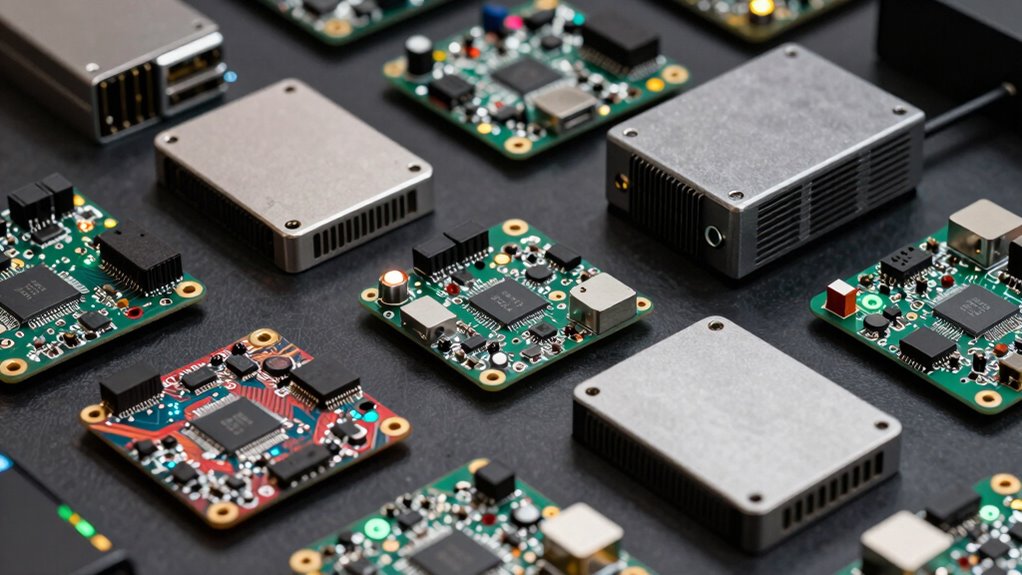

When selecting a single board computer for edge AI, the options range from compact, affordable modules to high-performance platforms capable of intensive processing. The Coral Dev Board stands out as the best overall choice, offering a good balance of AI capabilities and ease of use. For those seeking raw power, the NVIDIA Jetson AGX Orin provides unmatched GPU performance, while the Orange Pi 6 offers impressive specs at a more accessible price. The main tradeoffs involve balancing processing power, power consumption, size, and software support. Continue reading to explore these options in detail and find the best fit for your edge AI project.

Get business pricing on monitors, keyboards and dev gear
- Business-only prices and quantity discounts
- Tax-exempt purchasing
- Multiple users, one account, clear invoices
Key Takeaways
- The top-ranked Coral Dev Board offers excellent AI acceleration with simple integration, making it ideal for most developers.
- High-performance platforms like NVIDIA Jetson AGX Orin excel in intensive AI tasks but come at a higher cost and power consumption.
- Affordable and compact options like Orange Pi 6 provide good value but may lack some advanced features or ecosystem support.
- Power efficiency and size are critical tradeoffs, especially for deployed edge devices with limited space or power sources.
- Software ecosystem and community support significantly influence ease of development and long-term maintenance.
| Coral Dev Board |  | Best Overall for Edge AI Prototyping and Deployment | CPU: NXP I.Mx 8M SoC (Quad Cortex-A53, Cortex-M4F) | GPU: Integrated C Lite Graphics | ML Accelerator: Google Edge TPU Coprocessor | VIEW ON AMAZON | See Our Full Breakdown |
| Radxa Cubie A7A Edge AI Platform, 4GB RAM, Single Board Computer |  | Best for Compact, Versatile Edge AI Prototyping | Memory: 4GB LPDDR5 | Connectivity: USB, HDMI, Ethernet, GPIO | Processor: CIX CD8180 12-core | VIEW ON AMAZON | See Our Full Breakdown |
| NVIDIA Jetson AGX Orin 64GB Developer Kit |  | Best for Heavy-Duty AI and Robotics Applications | Memory: 64GB | AI Performance: 275 TOPS | GPU Architecture: NVIDIA Ampere | VIEW ON AMAZON | See Our Full Breakdown |
| Orange Pi 6 16GB RAM LPDDR5 with CIX SoC and AI NPU |  | Best for High-Performance Industrial and Edge Computing | Processor: CIX CD8180 12-core | RAM: 16GB LPDDR5 | AI Performance: 45 TOPS | VIEW ON AMAZON | See Our Full Breakdown |
| Orange Pi 4 Pro 4/6/8/12GB LPDDR5 with NPU and WiFi 6 |  | Best for High-Performance Edge AI with Connectivity Versatility | Processor: Allwinner A733 octa-core | RAM: 4GB/6GB/8GB/12GB LPDDR5 | NPU: Integrated AI NPU | VIEW ON AMAZON | See Our Full Breakdown |
| Orange Pi 5 Plus 8GB RK3588 Single Board Computer |  | Best Overall for High-Performance Edge AI | Processor: RK3588 8-core 64-bit | Main Frequency: up to 2.4GHz | Memory: 8GB LPDDR4 | VIEW ON AMAZON | See Our Full Breakdown |
| Coral Dev Board Mini |  | Best for Rapid Prototyping with AI Acceleration | MediaTek SoC: 8167s Quad-core Arm Cortex-A35 | Memory: 2 GB LPDDR3 | Storage: 8 GB eMMC | VIEW ON AMAZON | See Our Full Breakdown |
| reComputer J4011B – Edge AI Computer with NVIDIA Jetson Orin NX 8GB |  | Best for High-End AI Performance and Versatility | Processor: NVIDIA Jetson Orin NX | Memory: 8GB | Performance: up to 100 TOPS | VIEW ON AMAZON | See Our Full Breakdown |
| Tinker Edge R SBC Rockchip RK3399Pro Mini Motherboard with 4GB RAM and 16GB eMMC |  | Best for Versatile AI and Multimedia Projects | Processor: Rockchip RK3399Pro | Neural Network Processing Unit: 3.0 TOPS | RAM: 4GB | VIEW ON AMAZON | See Our Full Breakdown |
| Radxa Dragon Q6A Edge AI 12 Tops, LPDDR5, Octa-core Tri-Cluster CPU, Flagship GPU (12GB) |  | Best for High-End Edge AI with Advanced Multimedia | VIEW ON AMAZON | See Our Full Breakdown | |||
| Orange Pi 5 Max 8GB RAM LPDDR5 Rockchip RK3588 Development Board |  | Best Overall for Versatile Edge AI and Multimedia Integration | Processor: Rockchip RK3588 8-core | RAM: 8GB LPDDR5 | Video Decoding: 8K at 60FPS | VIEW ON AMAZON | See Our Full Breakdown |
| NVIDIA Jetson Orin Nano Developer Kit | 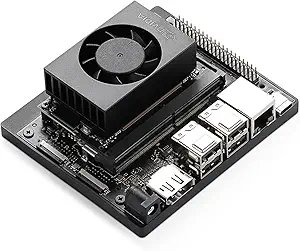 | Best for Entry-Level AI Prototyping with High Performance | Module: Jetson Orin Nano 8GB | GPU: Ampere | CPU: 6-core ARM | VIEW ON AMAZON | See Our Full Breakdown |
| Orange Pi 6 8GB/16GB LPDDR5 Single Board Computer with 12-Core Processor and Active Cooling |  | Best for High-Performance Edge AI with Versatile OS Support | Processor: CIX CD8180 12-core | AI Computing Power: 45 TOPS | Memory Options: 8GB/12GB/16GB LPDDR5 | VIEW ON AMAZON | See Our Full Breakdown |
| single board computers for edge ai | Connectivity | Processor |
|---|---|---|
| Coral Dev Board | Wireless, Ethernet | — |
| Radxa Cubie A7A Edge AI Platfo | USB, HDMI, Ethernet, GPIO | CIX CD8180 12-core |
| NVIDIA Jetson AGX Orin 64GB De | Ethernet, USB, Display Port | — |
| Orange Pi 6 16GB RAM LPDDR5 wi | Dual GbE, M.2 NVMe | CIX CD8180 12-core |
| Orange Pi 4 Pro 4/6/8/12GB LPD | WiFi 6, Bluetooth 5.4 | Allwinner A733 octa-core |
| Orange Pi 5 Plus 8GB RK3588 Si | — | RK3588 8-core 64-bit |
| Coral Dev Board Mini | — | — |
| reComputer J4011B | Wi-Fi, LTE, multiple USB, HDMI, Ethernet | NVIDIA Jetson Orin NX |
| Tinker Edge R SBC Rockchip RK3 | HDMI, USB 3.2, Dual MIPI CSI | Rockchip RK3399Pro |
| Radxa Dragon Q6A Edge AI 12 To | — | — |
| Orange Pi 5 Max 8GB RAM LPDDR5 | — | Rockchip RK3588 8-core |
| NVIDIA Jetson Orin Nano Develo | — | — |
| Orange Pi 6 8GB/16GB LPDDR5 Si | USB 3.0, HDMI, Ethernet | CIX CD8180 12-core |
More Details on Our Top Picks
Coral Dev Board
The Coral Dev Board stands out for its dedicated Edge TPU coprocessor, delivering high-speed ML inferencing with minimal power draw, making it ideal for on-device AI tasks. Compared with the Orange Pi 4 Pro, it offers specialized AI hardware that simplifies deployment, but at the cost of limited RAM—just 1 GB—which can restrict more complex models. Its full Linux environment and wireless connectivity support rapid prototyping, especially for developers familiar with TensorFlow Lite and AutoML. While its hardware is optimized for AI inferencing, its compact design and focus on ML limit its versatility for general-purpose computing tasks. The main tradeoff involves balancing dedicated AI acceleration against constrained memory capacity, making it less suitable for heavy multitasking or large models. Nonetheless, this pick makes the most sense for AI developers needing a reliable, straightforward edge inference device with low power consumption.
Pros:- Dedicated Edge TPU for rapid ML inferencing
- Low power consumption ideal for battery-powered devices
- Supports TensorFlow Lite and AutoML for easy model deployment
- Removable system-on-module enables scalable manufacturing
Cons:- Limited 1 GB RAM restricts complex application development
- Requires familiarity with Linux and ML frameworks
- No detailed pricing makes budgeting difficult
Best for: AI researchers and developers focused on edge ML deployment requiring dedicated inference hardware.
Not ideal for: General-purpose users or those needing extensive multitasking or large RAM for complex applications.
- CPU:NXP I.Mx 8M SoC (Quad Cortex-A53, Cortex-M4F)
- GPU:Integrated C Lite Graphics
- ML Accelerator:Google Edge TPU Coprocessor
- RAM:1 GB LPDDR4
- Connectivity:Wireless, Ethernet
- OS:Mendel Linux derivative
Our verdict“Best suited for edge AI projects where high-speed inference and low power use are priorities, with limited need for large RAM.”
Radxa Cubie A7A Edge AI Platform, 4GB RAM, Single Board Computer
The Radxa Cubie A7A offers a compact form factor combined with high-speed LPDDR5 memory, making it well-suited for diverse edge AI projects that demand quick processing and hardware flexibility. Unlike the Coral Dev Board, it provides more RAM—4 GB—which allows for more complex models and multitasking. Its versatile connectivity includes USB, HDMI, and Ethernet, along with multiple GPIO pins, supporting hardware expansion for specialized sensors or peripherals. However, compared to the NVIDIA Jetson AGX Orin, it lacks the raw AI processing power for heavy-duty applications, and setup could be challenging without pre-installed software or extensive technical knowledge. Its compact design makes it perfect for space-constrained environments, but users should be prepared for a steeper learning curve. This platform is ideal for those needing a flexible, high-performance edge device with plenty of connectivity options.
Pros:- High-speed LPDDR5 RAM for efficient processing
- Multiple connectivity options for diverse sensor integration
- Compact form factor suitable for embedded systems
- Supports various operating systems for flexibility
Cons:- Requires technical expertise for setup and software configuration
- Limited detailed specifications and pre-installed software
- No dedicated AI accelerator like Edge TPU or GPU
Best for: Developers and engineers building space-efficient edge AI prototypes with hardware expandability.
Not ideal for: Hobbyists seeking straightforward setup or applications requiring extreme AI compute power.
- Memory:4GB LPDDR5
- Connectivity:USB, HDMI, Ethernet, GPIO
- Processor:CIX CD8180 12-core
- AI Performance:45 TOPS
- Form Factor:Compact
- Supported OS:Debian, Ubuntu, Android, Windows, ROS2
Our verdict“A solid choice for developers needing a flexible, high-performance edge platform with extensive connectivity, suitable for advanced prototyping.”
NVIDIA Jetson AGX Orin 64GB Developer Kit
The NVIDIA Jetson AGX Orin 64GB Developer Kit is a powerhouse, offering up to 275 TOPS of AI performance for complex models in robotics, vision, and NLP. Its advanced GPU architecture and extensive connectivity options—Ethernet, USB, Display Port—make it ideal for large-scale AI projects, far surpassing the capabilities of the Coral Dev Board or Orange Pi 6. However, this level of performance comes with a steep price tag and a large size, which can be prohibitive for smaller deployments or hobbyist projects. Its setup requires technical expertise, and its high power consumption can be a challenge in constrained environments. The device excels where raw AI processing is the priority over cost or size, making it less suitable for simple or budget-conscious applications. It’s a logical choice for enterprises or research labs working on demanding AI solutions.
Pros:- Exceptional AI performance with 275 TOPS
- Rich connectivity for peripherals and sensors
- Supports multiple AI frameworks and NVIDIA software tools
- Large 64GB memory for extensive data processing
Cons:- High cost limits accessibility for hobbyists
- Requires significant technical expertise for setup
- Large size restricts deployment in compact systems
Best for: Research institutions, robotics labs, and enterprise developers needing top-tier AI performance.
Not ideal for: Hobbyists or small-scale projects with limited budgets or space constraints.
- Memory:64GB
- AI Performance:275 TOPS
- GPU Architecture:NVIDIA Ampere
- Connectivity:Ethernet, USB, Display Port
- Includes:Jetson AGX Orin 64GB module
- Size:Large
Our verdict“Best suited for high-end AI applications demanding maximum processing power and extensive connectivity, where budget is less of a concern.”
Orange Pi 6 16GB RAM LPDDR5 with CIX SoC and AI NPU
The Orange Pi 6 combines a 12-core CIX SoC with an impressive 45 TOPS AI NPU, making it a compelling choice for industrial automation, high-performance edge computing, and AI-driven projects. Unlike the more consumer-oriented Orange Pi 4 Pro, its support for multiple OS including Linux, Android, and Windows expands its versatility. Its extensive connectivity—dual 2.5Gb Ethernet, M.2 NVMe slots, and GPIO—enables complex sensor and device integrations. However, the setup can be challenging, especially without pre-installed software, and its high-performance hardware necessitates good cooling solutions. The device’s complexity and size make it less suitable for simple or hobbyist applications but ideal for demanding enterprise and industrial use where raw power and expandability are priorities.
Pros:- Powerful 12-core processor with 45 TOPS AI NPU
- Supports multiple operating systems for diverse applications
- Robust connectivity including dual Ethernet and NVMe slots
- Ideal for industrial automation and security systems
Cons:- Complex setup requiring technical expertise
- High hardware performance demands effective cooling
- Not designed for straightforward DIY projects
Best for: Industrial engineers and enterprise developers seeking a high-performance, expandable edge platform.
Not ideal for: Beginners or hobbyists who need simple, plug-and-play solutions.
- Processor:CIX CD8180 12-core
- RAM:16GB LPDDR5
- AI Performance:45 TOPS
- Connectivity:Dual GbE, M.2 NVMe
- Supported OS:Linux, Android, Windows
- Form Factor:Industrial suitable
Our verdict“A top-tier choice for industrial and enterprise applications demanding high AI power and extensive connectivity, with a tradeoff in complexity.”
Orange Pi 4 Pro 4/6/8/12GB LPDDR5 with NPU and WiFi 6
The Orange Pi 4 Pro offers a robust octa-core processor paired with an integrated NPU that accelerates AI workloads, making it well-suited for demanding edge AI, robotics, and IoT projects. Its support for multiple operating systems, including Android and Linux, adds flexibility for developers. With WiFi 6 and Bluetooth 5.4, it provides advanced connectivity options for real-time data transfer and peripheral integration. Compared to the NVIDIA Jetson Nano, it offers similar AI acceleration but at a more affordable price point, especially for higher RAM configurations. The setup, however, might be complex for beginners, and the hardware’s high performance can lead to heat management challenges. This platform is a strong choice for those needing a balance of AI capability, connectivity, and affordability for edge deployments.
Pros:- Octa-core processor with AI NPU for acceleration
- Supports multiple OS including Android and Linux
- WiFi 6 and Bluetooth 5.4 for advanced connectivity
- Available in multiple RAM configurations for scalability
Cons:- Complex setup may challenge beginners
- Heat dissipation needs careful management
- Price varies significantly with RAM options
Best for: Edge AI developers seeking powerful processing and flexible OS support for robotics, IoT, and AIoT projects.
Not ideal for: Hobbyists or users with limited technical skills looking for simple, out-of-the-box solutions.
- Processor:Allwinner A733 octa-core
- RAM:4GB/6GB/8GB/12GB LPDDR5
- NPU:Integrated AI NPU
- Connectivity:WiFi 6, Bluetooth 5.4
- Supported OS:Ubuntu, Debian, Android
- AI Performance:Up to 45 TOPS
Our verdict“An excellent choice for advanced edge AI projects requiring flexible OS, high processing power, and modern connectivity, with some setup complexity.”
Orange Pi 5 Plus 8GB RK3588 Single Board Computer
The Orange Pi 5 Plus stands out for its powerful RK3588 octa-core processor and integrated NPU capable of up to 6 Tops, making it one of the most capable single board computers for demanding edge AI tasks. Compared with the Radxa Dragon Q6A, it offers more versatile connectivity options and broader OS support, but requires external storage since it lacks onboard eMMC. Its open architecture and multiple interfaces make it ideal for embedded development and mini servers, although the setup can be complex for newcomers. The absence of onboard storage and potential customs fees are tradeoffs for its high performance and flexibility.
Pros:- Powerful RK3588 octa-core processor with 2.4GHz speed
- Supports multiple operating systems including Ubuntu and Android
- Rich interface options like HDMI, Ethernet, and M.2 slots
- High-performance NPU up to 6 Tops for AI acceleration
Cons:- Requires external modules for eMMC storage
- Setup process may be challenging for beginners
- Potential customs fees depending on shipping location
Best for: Developers and advanced hobbyists building high-end embedded AI projects requiring extensive I/O and OS choices.
Not ideal for: Beginners or those seeking a plug-and-play system, due to its complex setup and customization needs.
- Processor:RK3588 8-core 64-bit
- Main Frequency:up to 2.4GHz
- Memory:8GB LPDDR4
- Video Decoding:8K@60P
- Operating Systems:Orange Pi OS, Android 12, Debian 11, Ubuntu 22.04
- Interfaces:2 HDMI, 2 USB 3.0, 2 USB 2.0, 2 Type-C, PCIe, M.2 slots
Our verdict“This board is ideal for experienced developers needing maximum processing power and extensive connectivity for high-end edge AI applications.”
Coral Dev Board Mini
The Coral Dev Board Mini excels as a compact, purpose-built platform for deploying machine learning models directly on edge devices. Its integrated Edge TPU coprocessor provides fast ML inferencing, making it suitable for real-time AI applications like object detection and classification. Unlike the Orange Pi 5 Plus, which offers raw processing power, this device emphasizes AI acceleration and ease of use within a smaller form factor. However, its limited 8 GB eMMC storage and need for some technical setup might hinder larger or more complex deployment projects. This pick is perfect for those focused on AI inference rather than raw compute.
Pros:- Includes Google’s Edge TPU for fast ML inferencing
- Compact and self-contained with onboard eMMC storage
- Supports TensorFlow Lite and AutoML Vision Edge
- Wireless connectivity for easy remote deployment
Cons:- Limited storage capacity for large datasets
- Performance can vary with complex models
- Requires familiarity with ML frameworks for setup
Best for: AI developers and researchers needing quick deployment of TensorFlow Lite models on a compact, dedicated platform.
Not ideal for: Users needing extensive connectivity or running complex, multi-OS environments, as it is optimized mainly for AI inference tasks.
- MediaTek SoC:8167s Quad-core Arm Cortex-A35
- Memory:2 GB LPDDR3
- Storage:8 GB eMMC
- Power Consumption:0.5 watts per TOP
Our verdict“This device is best suited for AI practitioners focused on deploying efficient inference models in compact, dedicated environments.”
reComputer J4011B – Edge AI Computer with NVIDIA Jetson Orin NX 8GB
The reComputer J4011B leverages the NVIDIA Jetson Orin NX module, delivering up to 100 TOPS of AI processing power, far surpassing typical SBCs like the Radxa Q6A. Its extensive I/O options, including multiple USB ports, HDMI, M.2 slots, and GPIO, make it a flexible choice for complex edge AI deployments. The pre-installed JetPack software and certifications streamline professional use, but the physical size and power requirements are less suited for small, embedded projects. This platform is best for enterprise-grade AI at the edge, where raw performance and reliability are paramount, despite higher complexity and costs.
Pros:- Unmatched AI performance with up to 100 TOPS
- Rich I/O with multiple USB, HDMI, Ethernet, and M.2 ports
- Pre-installed JetPack and Linux BSP for quick setup
- Certified for multiple safety standards
Cons:- Limited details on physical size and power demands
- Higher cost and complexity compared to simpler SBCs
- Requires some expertise familiar with embedded Linux systems
Best for: Industrial developers and AI researchers needing top-tier processing with broad connectivity for sophisticated edge solutions.
Not ideal for: Hobbyists or small-scale projects due to its size, complexity, and potentially higher power needs.
- Processor:NVIDIA Jetson Orin NX
- Memory:8GB
- Performance:up to 100 TOPS
- Connectivity:Wi-Fi, LTE, multiple USB, HDMI, Ethernet
- Pre-installed Software:JetPack 5.1.3, Linux OS BSP
- Certifications:ROHS, CE, FCC, KC, UKCA, REACH
Our verdict“This platform is ideal for organizations demanding top-end AI processing combined with wide connectivity for industrial or research applications.”
Tinker Edge R SBC Rockchip RK3399Pro Mini Motherboard with 4GB RAM and 16GB eMMC
The Tinker Edge R combines a hexa-core RK3399Pro CPU with an integrated NPU supporting 3.0 TOPS, making it well-suited for multimedia and AI applications. Its multiple interfaces, including dual MIPI CSI, HDMI, and USB 3.2, facilitate advanced camera and display projects. Compared to the Coral Dev Board Mini, which emphasizes AI inference, this SBC offers broader multimedia capabilities and more flexible connectivity, but with only 4GB RAM, it might struggle with very large models or data-heavy tasks. It’s a strong choice for balanced AI and multimedia projects, but not for extremely intensive workloads.
Pros:- Powerful RK3399Pro CPU with dedicated NPU
- Multiple I/O including dual MIPI CSI and HDMI
- Supports deep learning frameworks like TensorFlow
- Wide-range power input for flexible deployment
Cons:- Limited RAM for very large models
- No onboard Wi-Fi or Bluetooth
- External storage needed for large datasets
Best for: Developers working on AI-integrated multimedia systems or stereoscopic applications requiring versatile I/O options.
Not ideal for: Projects demanding extensive RAM or large-scale data processing, due to its 4GB RAM limitation.
- Processor:Rockchip RK3399Pro
- Neural Network Processing Unit:3.0 TOPS
- RAM:4GB
- Storage:16GB eMMC
- Connectivity:HDMI, USB 3.2, Dual MIPI CSI
- Power:12V~19V wide-range DC
Our verdict“This SBC offers a balanced platform for multimedia and AI projects where flexible I/O and decent processing are needed without the highest-end specs.”
Radxa Dragon Q6A Edge AI 12 Tops, LPDDR5, Octa-core Tri-Cluster CPU, Flagship GPU (12GB)
The Radxa Dragon Q6A pushes the boundaries of edge computing with its impressive 12 Tops AI performance and 12GB LPDDR5 memory, making it a strong competitor in demanding AI and multimedia tasks. While detailed specs are limited compared to the extensive features of the Orange Pi 5 Plus, its high-speed memory and flagship GPU ensure smooth handling of complex models and high-resolution media. Its high power consumption and lack of detailed documentation may be drawbacks for some, but for those needing serious compute at the edge, it offers a compelling package. This makes it ideal for AI inference at scale and multimedia-rich applications.
Pros:- Exceptional 12 Tops AI acceleration
- Large 12GB LPDDR5 RAM for demanding workloads
- Powerful GPU for multimedia processing
- Designed for high-end edge applications
Cons:- Limited detailed specifications available
- Potentially high power consumption
- Price not specified, possibly costly
Best for: Advanced AI developers and multimedia professionals requiring top-tier performance in a single board format.
Not ideal for: Small-scale or low-power projects, given its significant power needs and limited product info.
Our verdict“This board is suited for high-end edge AI tasks requiring maximum processing power and multimedia support, despite its higher power draw and cost considerations.”
Orange Pi 5 Max 8GB RAM LPDDR5 Rockchip RK3588 Development Board
The Orange Pi 5 Max stands out for its powerful RK3588 processor, combining high-performance GPU capabilities with robust multimedia support, including 8K video decoding. Compared with the NVIDIA Jetson Orin Nano Developer Kit, it offers broader multimedia features at a more accessible price point, making it suitable for applications that blend AI inference with rich media processing. However, it requires a solid technical background to configure and maximize its potential, especially given the limited user reviews. Its multiple high-speed ports, Wi-Fi 6E, and Bluetooth 5.3 position it as a flexible platform for edge computing, AI, and multimedia projects alike. The size might limit expansion for some users who need extensive peripheral connectivity, but overall, it offers a compelling balance of power and versatility.
Pros:- Powerful RK3588 processor with high-performance GPU for demanding tasks
- Supports 8K video decoding and multiple high-speed data interfaces
- Wi-Fi 6E and Bluetooth 5.3 for fast, stable connectivity
- Supports multiple OS including Android, Ubuntu, and Debian
Cons:- Limited detailed user feedback makes troubleshooting harder
- Requires technical expertise for full setup and optimization
- Compact size may restrict additional expansion options
Best for: Developers and integrators seeking a flexible, high-performance SBC capable of handling multimedia and AI tasks in edge environments.
Not ideal for: Beginners with limited technical experience or users looking for plug-and-play solutions without extensive configuration requirements.
- Processor:Rockchip RK3588 8-core
- RAM:8GB LPDDR5
- Video Decoding:8K at 60FPS
- Wi-Fi:Wi-Fi 6E
- Bluetooth:BT 5.3
- Ports:HDMI 2.1, GPIO, USB 2.0/3.0, PCIe 2.5G, M.2 M-Key
Our verdict“This board suits experienced developers needing a powerful, multimedia-capable edge AI platform with versatile connectivity.”
NVIDIA Jetson Orin Nano Developer Kit
The NVIDIA Jetson Orin Nano Developer Kit delivers impressive AI capabilities with up to 40 TOPS performance, making it ideal for edge AI applications that demand complex inference, such as robotics or advanced surveillance. Its compact design is a significant advantage over larger SBCs like the Orange Pi 6, especially for mobile or space-constrained projects. However, this comes with a steeper learning curve and a higher price, which may deter hobbyists or small startups. Its extensive connectivity and support for multiple AI frameworks make it highly versatile, though managing its setup and firmware can require a higher level of technical skill. If your project benefits from high AI throughput, this kit is well-suited, but less so if budget or ease of setup is a priority.
Pros:- High AI processing power with up to 40 TOPS performance
- Compact size with extensive connectivity options
- Supports multiple AI frameworks and development tools
- Built-in GPU accelerates complex inference tasks
Cons:- Setup can be complex and demanding for newcomers
- Premium price may be prohibitive for small-scale projects
- Limited upgradeability due to integrated design
Best for: AI developers and researchers needing a compact, high-performance platform for prototyping advanced AI models at the edge.
Not ideal for: Beginners or hobbyists looking for straightforward, low-cost SBCs that don’t require advanced setup or high AI performance.
- Module:Jetson Orin Nano 8GB
- GPU:Ampere
- CPU:6-core ARM
- Performance:up to 40 TOPS
- Connectors:2 MIPI CSI, multiple others
Our verdict“This kit is perfect for experienced AI developers seeking a compact, high-performance platform for edge AI experimentation.”
Orange Pi 6 8GB/16GB LPDDR5 Single Board Computer with 12-Core Processor and Active Cooling
The Orange Pi 6 offers an impressive 12-core CPU paired with an integrated NPU and GPU, making it a strong choice for demanding AI and industrial automation projects. Its support for multiple operating systems, including Ubuntu, Debian, Android, Windows, and ROS2, provides flexibility that surpasses many SBCs like the Orange Pi 5 Max in terms of versatility. The inclusion of active cooling and support for dual NVMe SSDs enables it to handle intensive workloads and data-heavy applications. However, its complexity might be overkill for simple or hobbyist projects, and the active cooling system could generate noise in quiet environments. Overall, this SBC excels in industrial or research settings where raw power and flexibility are paramount.
Pros:- 12-core processor with integrated NPU and GPU for demanding AI tasks
- Supports multiple OS including Windows and ROS2 for versatility
- Fast LPDDR5 memory and dual NVMe SSD support for heavy workloads
- Active cooling system maintains performance under load
Cons:- Setup and configuration require significant technical knowledge
- Active cooling may add noise in quiet environments
- Higher cost compared to simpler SBCs
Best for: Industrial automation engineers and developers requiring a high-performance, multi-OS SBC capable of managing intensive AI and data workloads.
Not ideal for: Users seeking a plug-and-play or budget-friendly SBC for light AI or hobbyist projects, due to its setup complexity and active cooling noise.
- Processor:CIX CD8180 12-core
- AI Computing Power:45 TOPS
- Memory Options:8GB/12GB/16GB LPDDR5
- Storage Support:Dual NVMe SSD
- Connectivity:USB 3.0, HDMI, Ethernet
- Cooling:Active cooling
Our verdict“This SBC is best suited for industrial or research environments where high power, multi-OS support, and expandability are critical.”

How We Picked
These single board computers were evaluated based on their processing capabilities, AI acceleration features, build quality, software support, and ease of integration. Priority was given to devices with dedicated AI hardware, such as NPUs or GPUs, that can handle machine learning workloads efficiently. We also considered power consumption, size, and connectivity options to ensure practicality for real-world edge deployments. Devices were ranked by their overall performance-to-value ratio, ensuring that the top picks balance high-end features with affordability and usability for a range of users—from hobbyists to enterprise developers.| single board computers for edge ai | Processor |
|---|---|
| Coral Dev Board | — |
| Radxa Cubie A7A Edge AI Platfo | CIX CD8180 12-core |
| NVIDIA Jetson AGX Orin 64GB De | — |
| Orange Pi 6 16GB RAM LPDDR5 wi | CIX CD8180 12-core |
| Orange Pi 4 Pro 4/6/8/12GB LPD | Allwinner A733 octa-core |
| Orange Pi 5 Plus 8GB RK3588 Si | RK3588 8-core 64-bit |
| Coral Dev Board Mini | — |
| reComputer J4011B | NVIDIA Jetson Orin NX |
| Tinker Edge R SBC Rockchip RK3 | Rockchip RK3399Pro |
| Radxa Dragon Q6A Edge AI 12 To | — |
| Orange Pi 5 Max 8GB RAM LPDDR5 | Rockchip RK3588 8-core |
| NVIDIA Jetson Orin Nano Develo | — |
| Orange Pi 6 8GB/16GB LPDDR5 Si | CIX CD8180 12-core |
Factors to Consider When Choosing Single Board Computers For Edge Ai
Choosing the right single board computer for edge AI depends on several key factors. Understanding your project’s specific requirements—such as processing power, power efficiency, connectivity, and software support—will help narrow down options. It’s also important to consider scalability, ease of deployment, and long-term maintenance. A well-informed decision balances these technical needs with your budget and skill level, avoiding common pitfalls like overpaying for unused features or selecting underpowered hardware that hampers performance.Processing Power and AI Hardware Acceleration
Edge AI tasks often demand significant computational resources, especially for real-time inference. Prioritize boards with dedicated AI hardware like NPUs, VPUs, or powerful GPUs, which can drastically reduce latency and energy consumption. While high-end options like NVIDIA Jetson AGX Orin deliver unmatched performance, they also come with higher costs and power needs. Conversely, lower-cost boards with integrated NPUs, such as Orange Pi 6, can be suitable for lighter workloads but may struggle with complex models or larger datasets.
Power Consumption and Size
Many edge deployments require devices that operate efficiently on limited power or fit into small, constrained environments. Boards like the Coral Dev Board are designed with low power in mind, making them suitable for battery-powered applications. Size also matters; compact designs enable deployment in tight spaces or embedded scenarios. Be cautious, however, as smaller devices often trade off some processing capabilities or expandability, so matching power and size to your workload is vital.
Connectivity and I/O Options
Edge AI devices often need to connect easily with sensors, cameras, and networks. Look for boards with multiple I/O ports, including USB, Ethernet, and camera interfaces, to support your peripherals. Wireless options such as Wi-Fi 6 and Bluetooth 5.4 enhance flexibility, especially for remote or mobile applications. Avoid boards with limited connectivity if your project requires frequent data transfer or integration with other systems, as this can hinder performance and scalability.
Software Ecosystem and Community Support
A robust software environment simplifies development and troubleshooting. Boards supported by popular frameworks like TensorFlow, PyTorch, or NVIDIA’s JetPack typically offer smoother workflows. Community support also plays a crucial role in resolving issues and sharing solutions. Devices with established ecosystems tend to receive more frequent updates and documentation, reducing long-term maintenance effort and increasing reliability.
Cost and Long-term Value
Balancing price against features is essential. While high-performance boards offer cutting-edge capabilities, they may be overkill for simple tasks and strain budgets. Conversely, cheaper options may lack the necessary features or scalability for future needs. Consider total cost of ownership, including potential development, maintenance, and upgrade expenses, to ensure your investment aligns with project goals and expected growth.
Frequently Asked Questions
Which single board computer is best for real-time AI inference at the edge?
The NVIDIA Jetson AGX Orin is widely regarded as the best choice for real-time AI inference due to its powerful GPU and dedicated acceleration hardware. It can handle complex models with low latency, making it ideal for applications like robotics, surveillance, or autonomous systems. However, it comes with a higher price and power draw, so for less demanding tasks, boards like the Coral Dev Board or Orange Pi 6 may suffice. Ultimately, the best choice depends on the specific latency requirements and workload complexity.
How do I choose between a GPU-based and a NPU-based SBC for edge AI?
GPU-based boards like NVIDIA Jetson modules excel in processing large neural networks and offer extensive software support, making them suitable for complex, high-throughput applications. NPU-based boards, such as Coral Dev Board or Orange Pi 6, typically consume less power and are easier to integrate for simpler or smaller models. Your decision should hinge on workload size, power constraints, and development ecosystem. For intensive tasks with real-time demands, a GPU is usually preferable; for lightweight or battery-powered projects, an NPU-based system can be more efficient.
Are compact single board computers suitable for industrial edge deployments?
Yes, compact SBCs can be highly suitable for industrial edge applications, especially when space is limited, and reliability is critical. Devices like the Orange Pi 6 or Coral Dev Board are designed with small form factors and durable hardware, making them adaptable for embedded environments. However, it’s important to evaluate their ruggedness, thermal management, and long-term supply availability. For harsh industrial settings, additional enclosure and cooling solutions may be necessary to ensure durability and consistent performance.
What should I consider regarding software support for edge AI SBCs?
Software support is key to smooth development, updates, and troubleshooting. Look for devices with official SDKs, pre-installed frameworks, or compatibility with popular AI platforms like TensorFlow, PyTorch, or NVIDIA JetPack. A strong community provides valuable resources, tutorials, and shared solutions that can accelerate your project. Avoid platforms with limited or proprietary software ecosystems, as they can restrict flexibility and cause delays in deployment or scaling.
Is it worth paying more for a high-end edge AI single board computer?
Investing in high-end boards like NVIDIA Jetson AGX Orin often pays off if your application demands intensive processing, low latency, or future scalability. These platforms typically offer better GPU performance, more memory, and longer software support cycles. However, if your project involves lighter workloads or you’re just prototyping, lower-cost options like Orange Pi 6 or Coral Dev Board can deliver satisfactory results at a fraction of the price. Always match the hardware to the actual project needs to avoid overspending.
Conclusion
For most developers seeking a reliable, well-rounded platform, the Coral Dev Board offers excellent AI acceleration and ease of use as the best overall choice. Those with demanding workloads should consider the NVIDIA Jetson AGX Orin for maximum GPU power, while budget-conscious users will find great value in the Orange Pi 6. Beginners or hobbyists are better served by simplified options with strong community support, like the Coral Dev Board Mini. For industrial or embedded environments, compact and durable boards such as the Orange Pi 6 or NPU-optimized platforms make the most sense. Ultimately, your decision should align with your performance needs, budget, and project scale.
As an affiliate, we earn on qualifying purchases.Fall Picks
fall essentials