

Choosing the right travel router as a developer means balancing speed, security, and flexibility. The TP-Link WiFi Travel Router offers solid WiFi 5 speeds for basic needs, making it a great budget-friendly choice. For those needing cutting-edge technology, the Roam 7 BE3600 Wi-Fi 7 Router delivers ultra-fast Wi-Fi 7 with multiple modes and VPN support, but at a higher price and complexity. Meanwhile, the GL.iNet GL-MT3000 Beryl AX stands out with Wi-Fi 6, OpenWrt customization, and VPN capabilities, perfect for tech-savvy users who want control. Each option involves tradeoffs between simplicity, speed, and advanced features, depending on your specific requirements.

Get business pricing on monitors, keyboards and dev gear
- Business-only prices and quantity discounts
- Tax-exempt purchasing
- Multiple users, one account, clear invoices
Key Takeaways
- Wi-Fi 5 routers like the TP-Link TL-WR1502X provide reliable basic connectivity at an affordable price, suitable for light development tasks.
- Wi-Fi 6 models such as the GL.iNet Beryl AX offer a balance of speed, security, and customization, ideal for developers seeking advanced security features.
- The Wi-Fi 7 Roam 7 BE3600 supports the fastest speeds and multiple device connections but comes with increased setup complexity and cost.
- Device capacity varies significantly; high-end models support more simultaneous connections, useful for team collaborations or multiple devices.
- Port selection and power options differ; models with multi-gig ports and USB-C charging offer greater flexibility on the road.
| TP-Link WiFi Travel Router (WiFi 5) | 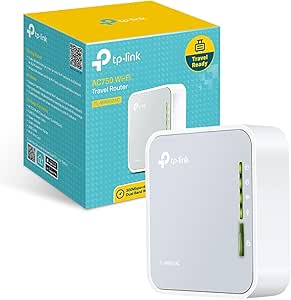 | Best Budget-Friendly Option for Basic Needs | Model: TL-WR1502X | WiFi Standard: WiFi 5 | Dual Band: Yes | VIEW ON AMAZON | See Our Full Breakdown |
| Roam 7 BE3600 Wi-Fi 7 Portable Travel Router Dual-Band, 2.5G Port, USB 3.0 |  | Premium Choice with Cutting-Edge Wi-Fi 7 and VPN | Wi-Fi Standard: Wi-Fi 7 | Bands: Dual-Band | Max Speed: 2882 Mbps | VIEW ON AMAZON | See Our Full Breakdown |
| GL.iNet GL-MT3000 Beryl AX Wi-Fi 6 Travel Router, 2.5G WAN, VPN, OpenWrt |  | Best for Customization and Security | Wireless Speed: 2402 Mbps (5G) | WAN Port: 2.5G | LAN Port: Gigabit | VIEW ON AMAZON | See Our Full Breakdown |
| Roam 6 AX1500 Portable Wi-Fi 6 Travel Router Dual-Band USB-C 3.0 |  | Great for Speed and Simplicity | Wi-Fi Speed: Up to 1201 Mbps (5 GHz) | Ports: 1 Gbps WAN, USB-C | Device Capacity: Up to 60 | VIEW ON AMAZON | See Our Full Breakdown |
| GL.iNet GL-SFT1200 Opal Travel Router, AC1200 Dual-Band Wi-Fi | 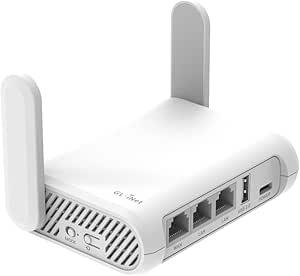 | Best for Basic Secure Travel Connectivity | Wireless Speed: 867 Mbps (5 GHz) | Ports: 2 Gigabit LAN, 1 Gigabit WAN | VPN Support: OpenVPN, WireGuard | VIEW ON AMAZON | See Our Full Breakdown |
| travel routers for developer | Size | Ports | VPN Support |
|---|---|---|---|
| TP-Link WiFi Travel Router | Compact | — | — |
| Roam 7 BE3600 Wi-Fi 7 Portable | — | 2.5 Gbps WAN, USB 3.0 | — |
| GL.iNet GL-MT3000 Beryl AX Wi- | Compact | — | OpenVPN, WireGuard |
| Roam 6 AX1500 Portable Wi-Fi 6 | Compact | 1 Gbps WAN, USB-C | OpenVPN, WireGuard |
| GL.iNet GL-SFT1200 Opal Travel | — | 2 Gigabit LAN, 1 Gigabit WAN | OpenVPN, WireGuard |
More Details on Our Top Picks
TP-Link WiFi Travel Router (WiFi 5)
The TP-Link TL-WR1502X offers dual-band WiFi 5 with speeds up to 1201 Mbps on 5 GHz, making it suitable for lightweight development tasks like browsing, testing, and streaming. Its compact design ensures portability, and it’s simple to set up, which benefits developers who want straightforward connectivity. Compared with more advanced models, it lacks multi-gig ports and VPN support, limiting its use for more security-conscious or high-speed demands. Still, for those prioritizing affordability and simplicity, this router provides reliable performance without the complexity.
Pros:- Affordable price point
- Compact and portable
- Supports dual-band WiFi 5
Cons:- Limited to basic routing features
- No Ethernet or advanced connectivity options
- Lacks support for the latest Wi-Fi standards
Best for: Developers seeking an affordable, reliable travel router for basic internet tasks.
Not ideal for: Those needing advanced security, VPN, or fast Wi-Fi 6/7 speeds for intensive development work.
- Model:TL-WR1502X
- WiFi Standard:WiFi 5
- Dual Band:Yes
- Speed (5 GHz):1201 Mbps
- Speed (2.4 GHz):300 Mbps
- Size:Compact
Our verdict“A solid entry-level choice for developers who need reliable WiFi on the go without advanced features.”
Roam 7 BE3600 Wi-Fi 7 Portable Travel Router Dual-Band, 2.5G Port, USB 3.0
The Roam 7 BE3600 elevates travel networking with support for Wi-Fi 7, delivering speeds up to 2882 Mbps on 5 GHz, and supporting up to 90 devices simultaneously. Its multi-mode capabilities—including router, hotspot, and extender—offer versatility for various travel scenarios. The built-in VPN support enhances security, making it suitable for remote workers handling sensitive data. However, it lacks support for the 6 GHz band, which could limit future-proofing, and its setup and price point are geared toward tech-savvy users comfortable with configuration complexities. This model is a clear choice for developers who need the fastest speeds and maximum flexibility.
Pros:- Supports Wi-Fi 7 for fastest speeds
- Multiple operation modes
- Supports up to 90 devices
Cons:- No support for 6 GHz Wi-Fi band
- Requires VPN setup and technical knowledge
- Higher cost
Best for: Developers requiring top-tier speed, extensive device support, and flexible networking modes.
Not ideal for: Travelers seeking simple, plug-and-play solutions or on a tighter budget.
- Wi-Fi Standard:Wi-Fi 7
- Bands:Dual-Band
- Max Speed:2882 Mbps
- Ports:2.5 Gbps WAN, USB 3.0
- Device Capacity:Up to 90
- Power Source:USB-C
Our verdict“A robust, feature-rich option for developers needing cutting-edge Wi-Fi and extensive device capacity.”
GL.iNet GL-MT3000 Beryl AX Wi-Fi 6 Travel Router, 2.5G WAN, VPN, OpenWrt
The GL.iNet GL-MT3000 Beryl AX supports Wi-Fi 6 with speeds up to 2402 Mbps on 5 GHz, combined with a 2.5G WAN port for fast wired connections. Its OpenWrt firmware allows developers to customize the router’s capabilities fully, including running a VPN server or client. This makes it an excellent choice for those who want control over their network security and configuration. The setup may be complex for non-technical users, but the ability to tailor the device for specific development needs outweighs this for experienced users. It’s a powerful, portable option for security-focused developers.
Pros:- Supports Wi-Fi 6 for faster wireless speeds
- OpenWrt firmware for customization
- Supports VPN with high compatibility
Cons:- Setup can be complex for non-technical users
- Requires active VPN subscription for full security
- Speed may vary based on network environment
Best for: Developers seeking full customization, open-source firmware, and advanced security features.
Not ideal for: Beginners or those who prefer a plug-and-play setup without configuration complexity.
- Wireless Speed:2402 Mbps (5G)
- WAN Port:2.5G
- LAN Port:Gigabit
- VPN Support:OpenVPN, WireGuard
- Firmware:OpenWrt
- Size:Compact
Our verdict“A go-to option for developers who want a customizable, secure, and high-speed travel router.”
Roam 6 AX1500 Portable Wi-Fi 6 Travel Router Dual-Band USB-C 3.0
The Roam 6 AX1500 offers Wi-Fi 6 speeds up to 1201 Mbps on 5 GHz and 300 Mbps on 2.4 GHz, supporting up to 60 devices. Its multiple modes—including router, AP, repeater, and client—provide flexibility for various travel scenarios. The device supports VPN protocols like OpenVPN and WireGuard, and is compatible with power banks and USB-C chargers, making it highly portable. It’s less customizable than the GL.iNet but provides reliable, fast Wi-Fi for those who want straightforward, secure connections without extensive setup. It’s a good middle ground for developers who need speed and ease of use.
Pros:- Supports Wi-Fi 6 for fast speeds
- Multiple modes for flexible use
- Portable with USB-C power
Cons:- No support for OpenWrt firmware
- Limited to Wi-Fi 6 devices
- Setup can be complex for non-technical users
Best for: Developers who want fast Wi-Fi 6, multiple device support, and simple setup for travel.
Not ideal for: Those needing OpenWrt customization or supporting Wi-Fi 7 speeds.
- Wi-Fi Speed:Up to 1201 Mbps (5 GHz)
- Ports:1 Gbps WAN, USB-C
- Device Capacity:Up to 60
- VPN Support:OpenVPN, WireGuard
- Modes:Router, AP, Repeater, Client
- Size:Compact
Our verdict“A versatile, fast, and portable Wi-Fi 6 router suitable for developers who prioritize speed and simplicity.”
GL.iNet GL-SFT1200 Opal Travel Router, AC1200 Dual-Band Wi-Fi
The GL.iNet GL-SFT1200 Opal provides dual-band Wi-Fi with speeds up to 867 Mbps on 5 GHz, suitable for basic development or remote work needs. Its full gigabit ports enable wired connections, and VPN support ensures secure browsing, making it a reliable choice for travel. The retractable antennas improve portability, and its straightforward setup is ideal for less technical users. While it doesn’t support the latest Wi-Fi standards or advanced customization, it balances ease of use with decent performance for everyday development tasks on the road.
Pros:- Lightweight and portable
- Supports dual-band Wi-Fi
- Full gigabit ports and VPN support
Cons:- Limited to AC1200 speeds
- No support for advanced firmware like OpenWrt
- Speed varies depending on network conditions
Best for: Travelers who need secure, reliable Wi-Fi with minimal setup effort.
Not ideal for: Developers seeking Wi-Fi 6 or Wi-Fi 7 performance or extensive customization.
- Wireless Speed:867 Mbps (5 GHz)
- Ports:2 Gigabit LAN, 1 Gigabit WAN
- VPN Support:OpenVPN, WireGuard
- Antennas:Retractable
- Weight:145g
Our verdict“A straightforward, secure, and portable router for developers who prioritize ease of use over speed and advanced features.”

How We Picked
Our selection process focused on travel routers that combine speed, security, and flexibility tailored for developers working remotely or on the move. We prioritized models supporting the latest Wi-Fi standards—Wi-Fi 6 and Wi-Fi 7—for future-proofing. Compatibility with VPNs, advanced security features, and open-source firmware options like OpenWrt were key factors, as they empower developers to customize their network environment. Port options, device capacity, and portability were also considered, ensuring each product is travel-friendly. We balanced technical complexity with ease of use, aiming to recommend options for a broad range of developer needs and expertise levels.
Factors to Consider When Choosing Travel Routers For Developers
Selecting the right travel router as a developer involves weighing speed, security, ease of setup, and device capacity. High-speed standards like Wi-Fi 6 and Wi-Fi 7 provide faster, more reliable connections for demanding tasks, but often come with increased complexity and cost. Security features, especially VPN support and open-source firmware, are critical for protecting sensitive data on public networks. Port options and device support determine how versatile your setup can be, whether you need wired connections or support for many devices. Portability and power options also matter, ensuring your router can keep you connected anywhere.Speed and Wi-Fi Standards
Look for routers supporting Wi-Fi 6 or Wi-Fi 7 if you need fast, future-proof connectivity. Wi-Fi 5 models, like the TP-Link TL-WR1502X, are adequate for basic tasks but may struggle with high-bandwidth development work. Consider your actual speed needs and whether you plan to handle large data transfers or multiple devices simultaneously.
Security and VPN Capabilities
Developers working with sensitive information should prioritize routers with built-in VPN support or compatibility with open-source firmware like OpenWrt. This allows for encrypted connections and secure remote access. Models like the GL.iNet Beryl AX and GL-SFT1200 excel here, but setup complexity varies, so choose based on your technical comfort level.
Device Capacity and Connectivity Modes
Consider how many devices you’ll connect. For remote collaboration or multiple gadgets, models supporting dozens of simultaneous connections, like the Roam 7 BE3600, are ideal. Also, check for flexible modes—router, extender, hotspot—that match your travel scenarios.
Port Options and Power Flexibility
Multi-gig ports and USB-C power support add versatility, especially when working in different locations. If wired connections are necessary or you need to connect multiple wired devices, prioritize routers with gigabit or multi-gig ports. Power options like USB-C compatibility ensure you can charge or power your router from portable sources on the go.
Frequently Asked Questions
What’s the main difference between Wi-Fi 5 and Wi-Fi 6 routers for travel?
Wi-Fi 6 offers faster speeds, lower latency, and better performance in congested environments compared to Wi-Fi 5. For developers handling large files or multiple devices, Wi-Fi 6 significantly improves reliability and speed. However, Wi-Fi 5 routers like the TP-Link TL-WR1502X are more affordable and simpler to set up, making them suitable for basic remote work needs.
Is VPN support essential in a travel router for developers?
Absolutely. VPN support helps protect sensitive data when connecting over public Wi-Fi networks. Many advanced routers include VPN clients or server capabilities, ensuring secure remote access. If security is a priority, models like the GL.iNet Beryl AX or Roam 7 BE3600 are strong choices, but they require some setup and technical knowledge.
Can I use a travel router with multiple devices at once?
Yes, most travel routers support multiple devices, but their capacity varies. High-end models like the Roam 7 BE3600 support up to 90 devices, which is ideal for group work or extensive device setups. Lower-capacity options may support only 30-60 devices, suitable for individual or small team use.
How important are multi-gig ports on a travel router?
Multi-gig ports provide faster wired connections, which can be useful if you need to transfer large files or connect to a wired network for stability. They also add future-proofing, as more networks move towards multi-gigabit speeds. If wired speed isn’t critical, standard gigabit ports are sufficient for most remote development scenarios.
Are open-source firmware routers better for developers?
Routers with open-source firmware like OpenWrt, such as the GL.iNet Beryl AX, offer extensive customization and control over your network. This is highly valuable for developers needing tailored security, specific routing rules, or running custom services. However, they can be more complex to set up and manage compared to plug-and-play options.
Conclusion
For developers prioritizing simple, reliable connectivity, a Wi-Fi 5 router like the TP-Link TL-WR1502X makes sense. Those needing more security and customization should consider Wi-Fi 6 options like the GL.iNet Beryl AX. Remote workers demanding maximum speed, device support, and flexibility will find the Wi-Fi 7 Roam 7 BE3600 worth the investment. Budget-conscious users or those new to networking might prefer the straightforward GL.iNet Opal, while speed-focused developers working with multiple devices will benefit from the Roam 6 AX1500. Your choice hinges on your technical expertise, security needs, and speed requirements.
Fall Picks
fall essentials
As an affiliate, we earn on qualifying purchases.