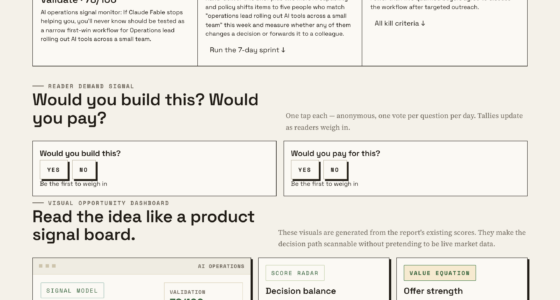

📊 Full opportunity report: The New Personal Agent Layer on ThorstenMeyerAI.com — validation score, market gap, and execution plan.
TL;DR
A new personal agent layer has been announced, allowing AI agents to remember, use tools, and act across digital platforms. The development signals a shift toward persistent, action-capable AI assistants. Details on implementation and scope are still emerging.
A new layer for personal AI agents has been announced, enabling persistent, action-capable assistants that operate across digital environments. This development marks a significant shift from traditional chatbots toward agents that can remember, use tools, and execute workflows, impacting both personal and enterprise AI use cases. The Orchestration Layer Arrives: What Anthropic’s Finance Agents Mean for Bloomberg, FactSet, and Wall Street
The new personal agent layer introduces a framework where AI agents are not just conversational tools but active participants within users’ digital ecosystems. These agents can perform tasks such as managing emails, calendars, or workflows, and can access various tools and APIs. The announcement emphasizes that this layer supports persistent memory, enabling agents to learn from interactions and improve over time.
Several companies and projects are involved in this development, including open-source initiatives like OpenClaw and Hermes, which focus on self-hosted, private, and persistent AI assistants. The Agent Trap: Why 90% of AI “Launches” Are Infrastructure Liars The new layer aims to unify these capabilities into a broader, more integrated platform that can operate across multiple surfaces and applications, from messaging apps to enterprise systems.
The New Personal Agent Layer.
Agents that remember, use tools, control workflows, and increasingly act across the private and professional digital environment.
This is not a comparison of ordinary chatbots. It is a map of systems that can take action, use browsers and files, connect to calendars or inboxes, build deliverables, and operate across personal, enterprise, and public-use workflows. The core question is not which model is smartest. It is who owns the agent, where it runs, what it can access, and who is accountable when it acts.
Not chatbots. Personal action infrastructure.
The OpenClaw/Hermes bucket is best understood as the agent layer between the user and the software stack: systems that can remember, plan, click, write, retrieve, schedule, summarize, and trigger actions.
Self-hosted personal agents
You run the agent. You control the data path. You also carry the operational responsibility.
Managed work agents
Hosted by providers, easier to adopt, more polished, and better aligned with enterprise procurement.
Memory-first assistants
They focus on personal context: meetings, documents, conversations, tasks, and recall across sessions.
Agent infrastructure
Developer-facing platforms for web action, workflow automation, and enterprise app control.
Capability is not enough. Fit depends on context.
Personal, enterprise, and public use are different markets.
The stronger the agent, the stronger the governance.
Agents are risky because they can read, write, click, execute, remember, and connect systems. That changes the threat model from answer quality to operational control.
- Least privilege Agents should only access what the task requires.
- Human approval Required for sending, deleting, paying, publishing, or changing accounts.
- Audit logs Every meaningful action should be traceable.
- Prompt-injection defense Email, web, and documents are untrusted inputs.
Strategic ranking by category
Best personal agents
- OpenClaw
- Hermes
- Khoj
- TwinMind
- Open Interpreter
Best enterprise agents
- ChatGPT Agent
- Claude Cowork
- Lindy
- Genspark Business
- Adept
Best public-facing tools
- Genspark
- Manus
- ChatGPT Agent
- Khoj
- Claude Cowork
Best infrastructure tools
- MultiOn
- Agent Zero
- AutoGPT
- Hermes
- OpenClaw
The next major AI interface may not be a search box or a chat window. It may be an agent that knows your context, waits in the background, and acts when needed.
Implications for Personal and Enterprise AI
This development is significant because it signals a move toward AI agents that are more autonomous, context-aware, and capable of managing complex workflows. For users, this could mean more seamless integration of AI into daily tasks, while for organizations, it raises questions about security, control, and accountability. The shift toward persistent, action-oriented agents could redefine how individuals and businesses interact with digital systems, emphasizing ownership and safety considerations.

Pocket AI Voice Recorder & Smart Assistant – Auto Transcription, Summaries & Action Items – AI Note Taker for Meetings, Calls & Productivity – Space Grey
- AI Personal Assistant: Capture, transcribe, and summarize automatically
- One-Tap Recording: Easily record meetings and calls
- Smart AI Insights: Automatic summaries and action items
As an affiliate, we earn on qualifying purchases.
As an affiliate, we earn on qualifying purchases.
Evolution of Persistent AI Agents
Over the past year, the AI community has seen a surge in the development of persistent personal agents, such as OpenClaw, Hermes, AutoGPT, and others. These tools are characterized by their ability to maintain memory, use tools, and perform actions rather than just answer questions. The recent announcement builds on this trend, aiming to create a unified layer that supports these capabilities at a broader scale. Prior efforts have focused on isolated functionalities, but the new layer seeks to integrate these into a cohesive platform.
“This new personal agent layer could fundamentally change how AI integrates into our digital lives, moving beyond simple chat into active participation.”
— Thorsten Meyer, AI researcher
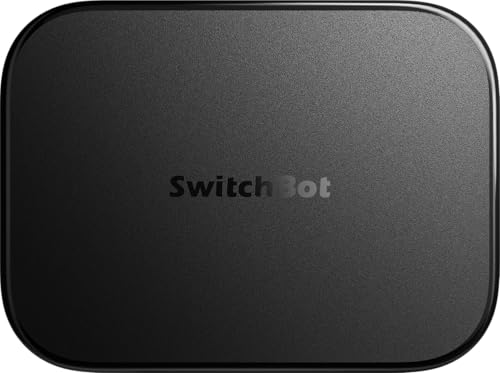
SwitchBot AI Hub, AI Smart Home Hub with OpenClaw Support, Local NVR Camera Storage, Home Assistant Pre-Installed, Matter Bridge, Dual-Band Wi-Fi, 16GB MicroSD Included
- OpenClaw Support: Connects supported cameras and devices
- Context-Aware Camera AI: Describes visitors, pets, and activity
- Local Storage for Recordings: Includes 16GB MicroSD, expandable up to 16TB
As an affiliate, we earn on qualifying purchases.
As an affiliate, we earn on qualifying purchases.
Scope and Security of the New Layer
It is not yet clear how broadly this new layer will be adopted, what specific security and safety measures will be implemented, or how it will handle sensitive data. Details on its architecture, governance, and integration with existing systems remain under development or undisclosed.
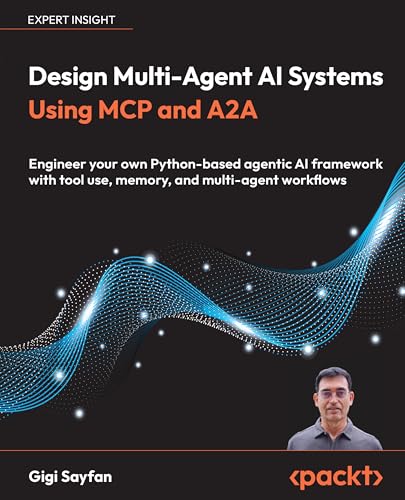
Design Multi-Agent AI Systems Using MCP and A2A: Engineer your own Python-based agentic AI framework with tool use, memory, and multi-agent workflows
As an affiliate, we earn on qualifying purchases.
As an affiliate, we earn on qualifying purchases.
Upcoming Developments and Adoption Roadmap
Further details are expected to emerge in the coming months, including technical specifications, security protocols, and potential pilot programs. Companies and developers will likely begin testing and integrating the layer into existing AI tools, with broader deployment possibly following later this year.

MICROSOFT POWER APPS MASTERY HANDBOOK 2026 EDITION: BUILD BUSINESS APPLICATIONS, AUTOMATE WORKFLOWS, AND INTEGRATE AI WITH COPILOT – STEP-BY-STEP GUIDE FOR BEGINNERS TO EXPERTS
As an affiliate, we earn on qualifying purchases.
As an affiliate, we earn on qualifying purchases.
Key Questions
What is the main purpose of the new personal agent layer?
The layer aims to enable persistent, action-capable AI agents that can remember, use tools, and act across digital environments, enhancing automation and productivity.
Who is developing this new layer?
The development involves multiple projects and companies, including open-source efforts like OpenClaw and Hermes, as well as industry players exploring integrated AI ecosystems.
Will this new layer be secure for private data?
Security and safety are key concerns; details on how data will be protected are still emerging. Adoption will likely depend on robust security protocols and governance models.
When will this technology be available for general use?
Details on deployment timelines are not yet confirmed, but pilot programs and technical disclosures are expected in the coming months, with broader availability possibly later this year.
How does this differ from existing AI assistants?
Unlike traditional chatbots, this layer supports persistent memory, tool use, and active workflows, making AI agents more autonomous and integrated into daily digital tasks.
Source: ThorstenMeyerAI.com