

Get business pricing on monitors, keyboards and dev gear
- Business-only prices and quantity discounts
- Tax-exempt purchasing
- Multiple users, one account, clear invoices
TL;DR
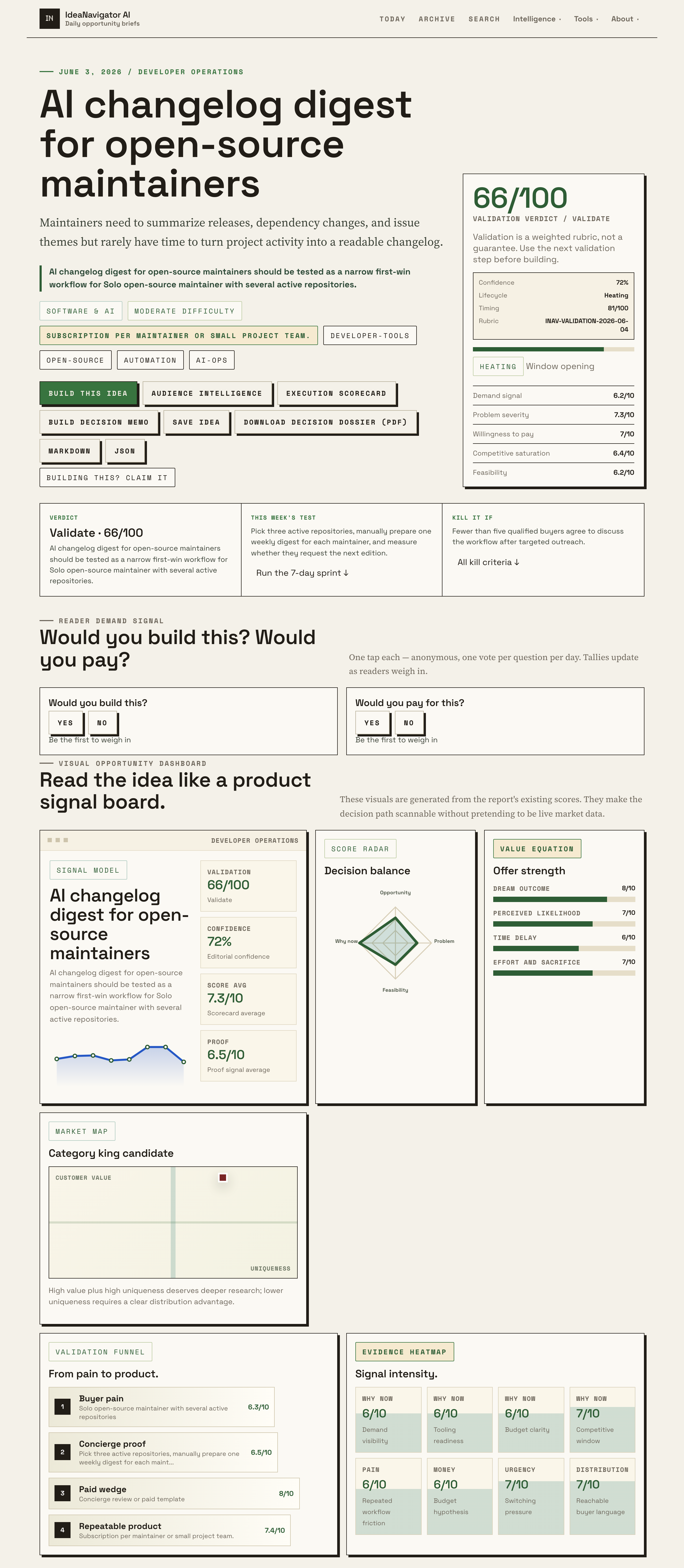
An experimental AI-based digest tool is being tested for solo open-source maintainers managing multiple repositories. It automates release summaries, dependency updates, and issue themes to streamline project communication.
An AI-powered weekly changelog digest tool is currently in testing, designed specifically for solo open-source maintainers managing multiple repositories. This development aims to address the common challenge of summarizing releases, dependency changes, and issue themes efficiently, without requiring a full developer-relations team.
The proposed tool leverages repository metadata, release feeds, and AI summarization techniques to generate concise, maintainable digests. It reads data from a maintainer’s repositories—covering recent releases, merged pull requests, and top issues—and drafts a changelog email for approval. This approach is targeted at solo developers who oversee several projects and lack dedicated resources for detailed documentation.
According to the initiative, the MVP (minimum viable product) will produce weekly summaries that can be reviewed and approved by the maintainer before distribution. The model is designed to support subscription-based revenue, charging individual maintainers or small teams for access. The goal is to validate the concept by selecting three active repositories, manually preparing one weekly digest for each, and measuring whether maintainers request subsequent editions.
Potential Impact on Open-Source Maintenance Workflow
This development could significantly reduce the time and effort required for solo maintainers to communicate project updates effectively. Automating changelog creation can improve transparency, foster community engagement, and reduce manual workload, especially for maintainers managing multiple repositories. If successful, it could set a precedent for integrating AI tools into developer operations, streamlining project management, and lowering the barrier for solo developers to maintain high-quality documentation.
AI-powered changelog generator for developers
As an affiliate, we earn on qualifying purchases.
As an affiliate, we earn on qualifying purchases.
Growing Need for Automated Release Summaries in Open Source
Many solo open-source maintainers struggle to keep up with the demands of summarizing activity across several repositories. Currently, they often spend hours manually compiling release notes, dependency updates, and issue themes. Advances in AI, combined with the availability of repository metadata and release feeds, have made automated summarization more feasible. The idea of an AI-driven digest aligns with broader trends toward automation in developer operations, aiming to improve efficiency without requiring large teams or extensive resources.
This initiative is part of a broader movement to incorporate AI into developer workflows, with similar tools emerging in related fields. The focus here on a narrow, targeted workflow aims to validate the concept before wider adoption.
“Leveraging repository metadata and AI summarization could transform how solo maintainers communicate project activity.”
— an anonymous researcher
open-source project management tools
As an affiliate, we earn on qualifying purchases.
As an affiliate, we earn on qualifying purchases.
Unconfirmed Aspects of the AI Digest Initiative
It is not yet clear how accurately the AI will summarize complex project activity or how well maintainers will adopt the tool. The effectiveness of the summarization in capturing nuanced issues or dependencies remains to be validated through testing. Additionally, the long-term revenue model and broader market acceptance are still uncertain, as the initiative is currently in the initial testing phase.
As an affiliate, we earn on qualifying purchases.
Next Steps for Validation and Broader Adoption
The immediate next step is to conduct pilot tests with three active repositories, collecting feedback from maintainers on the quality and usefulness of the generated digests. Based on these results, developers will refine the AI models and user interface. If the pilot proves successful, a wider rollout could follow, along with potential integrations into existing developer tools and platforms. Further, ongoing evaluation will determine whether the approach scales effectively across diverse projects and team sizes.
As an affiliate, we earn on qualifying purchases.
Key Questions
How does the AI generate the changelog digest?
The AI reads repository metadata, recent releases, merged pull requests, and top issues, then summarizes this information into a concise digest for review.
Who is the target user for this tool?
Solo open-source maintainers managing multiple repositories who lack the time or resources to manually compile detailed changelogs.
Will this replace manual changelog writing?
No, the tool is designed to assist and automate initial drafts, which maintainers can review and approve, not replace human oversight entirely.
Is the tool available to the public now?
It is currently in a testing phase with selected repositories; wider availability will depend on pilot results and further development.
How will revenue be generated from this tool?
Through subscription plans charged per maintainer or small project team, enabling ongoing support and improvements.
Source: IdeaNavigator AI
Halloween Picks
halloween
As an affiliate, we earn on qualifying purchases.