
📊 Full opportunity report: The Real Cost of a Local-Inference Rig in 2026 on ThorstenMeyerAI.com — validation score, market gap, and execution plan.
TL;DR
In 2026, owning a local AI inference rig involves significant costs, primarily driven by VRAM requirements and hardware choices. While high-end GPUs are expensive, used older models like the RTX 3090 offer better VRAM-per-dollar value, making local inference more accessible for certain model sizes.
In 2026, the cost of building a local inference rig for AI models varies widely based on VRAM capacity and hardware choices, with used GPUs offering significant value. Experts say that for high-utilization AI work, owning hardware can be more cost-effective than cloud rentals, but the initial investment remains substantial.
The core factor determining the cost is the VRAM capacity needed to run models efficiently. Models up to 32 billion parameters can be run on a single 24GB GPU, like a used RTX 3090, which costs approximately $600–850. These older cards provide better VRAM-per-dollar value than the latest flagship models such as the RTX 5090, which costs around $2,000 and offers 32GB of VRAM.
Running larger models, such as 70B parameter models, typically requires multiple GPUs or high-memory systems, with multi-3090 setups costing around $3,200 for pooled VRAM of 96GB. The VRAM cliff phenomenon means that if the model exceeds available VRAM, inference speed drops sharply, making hardware choice critical.
Additionally, the architecture of the model and the degree of quantization affect memory requirements, with Q4 quantization enabling models to fit into less memory with minimal quality loss. This influences hardware selection and cost considerations for local inference setups.
The real cost of a local-inference rig
Owning beats renting for steady AI work — so what does a local rig cost in 2026? The unintuitive, good news: the most expensive build is almost never the smartest one. It all comes down to one rule.
The difference is only whether the weights fit. LLM inference is memory-bandwidth-bound — VRAM capacity is the hard limit you build around. Compute specs are mostly noise.
The squeeze reframes the rig like everything else in this series: discipline beats maximalism. VRAM is exactly the memory under most pressure, so over-buying it is the 128GB-“to-be-safe” trap, only worse per gigabyte. Take the cheap, high-value step to 24GB (the gateway to the 30B class), reach for used 3090s and MoE models, and use quantization to climb a tier without buying silicon. Sized right, the rig pays for itself against the cloud’s ever-rising hidden bill. Next: Apple Silicon’s quiet memory advantage.
Impact of Hardware Choices on Local AI Inference Costs
Understanding the true costs and hardware options for local inference in 2026 is vital for organizations and individuals seeking privacy, cost control, and independence from cloud providers. Choosing the right GPU based on VRAM capacity and value metrics can significantly reduce expenses, making high-quality local AI feasible for more users.
While flagship GPUs offer speed, older used models like the RTX 3090 provide better VRAM-per-dollar, especially when multiple cards are combined. This strategic hardware selection can lower barriers to entry for local AI deployment, impacting how organizations approach AI infrastructure.

NVIDIA GeForce RTX 3090 Founders Edition Graphics Card (Renewed)
Item Package Dimension – 15.0L x 12.25W x 4.25H inches
As an affiliate, we earn on qualifying purchases.
As an affiliate, we earn on qualifying purchases.
Hardware Trends and Model Size Thresholds in 2026
Since 2023, the AI hardware market has seen a shift toward maximizing VRAM capacity over raw compute power, driven by the memory-bandwidth limitations of inference workloads. In 2026, models up to 32B parameters are commonly run locally, with larger models necessitating multi-GPU systems or high-memory Macs.
The concept of the VRAM cliff emphasizes that exceeding available VRAM results in drastic performance drops, making hardware choice critical. Quantization techniques like Q4 are now standard to reduce memory footprint without significant quality loss, expanding the range of models that can be run on affordable hardware.
Additionally, the availability of used GPUs like the RTX 3090 has increased, offering a cost-effective alternative to new flagship cards, especially for multi-GPU configurations that pool VRAM for large models.
“Used GPUs like the RTX 3090 now offer the best VRAM-per-dollar value, especially when combined in multi-GPU setups.”
— Tech industry expert
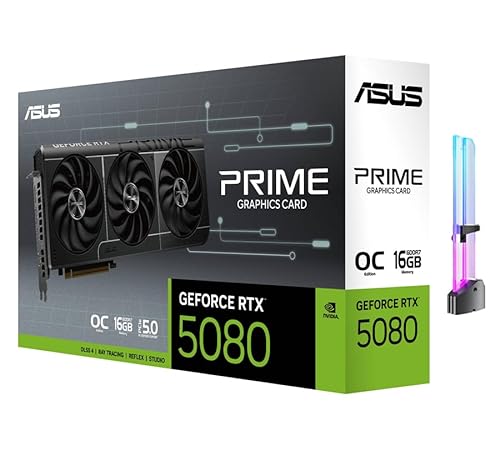
ASUS Prime GeForce RTX 5080 OC Edition Triple Fan Graphics Card, 16GB GDDR7, 1827 AI Tops, 5th Gen Tensor Cores, DLSS 4, PCIe 5.0, DP 2.1b x3, HDMI 2.1b, with GPU Holder
[1827 AI TOPS, 5th Gen Tensor Cores] AI content creation acceleration for photo and video editing tasks like…
As an affiliate, we earn on qualifying purchases.
As an affiliate, we earn on qualifying purchases.
Uncertainties in Hardware Availability and Future Models
It remains unclear how rapidly new GPU models will evolve in VRAM capacity and efficiency, and whether supply constraints or market conditions will affect availability and pricing. The long-term viability of used GPUs like the RTX 3090, especially regarding warranty and reliability, is also uncertain.
Furthermore, advancements in model quantization and architecture could shift the hardware requirements, making current estimates approximate rather than definitive.
multi-GPU inference rig components
As an affiliate, we earn on qualifying purchases.
As an affiliate, we earn on qualifying purchases.
Next Steps for Building a Cost-Effective Local Inference Setup
In the coming months, users should monitor GPU market trends, including secondhand prices and new model releases, to optimize hardware investments. Further developments in AI model compression and multi-GPU pooling will influence hardware configurations and cost-efficiency strategies.
Additionally, software improvements in inference frameworks may reduce VRAM requirements or mitigate the VRAM cliff effect, broadening options for local deployment.

NVIDIA Certified Associate: Generative AI LLMs (NCA-GENL) (NVIDIA Certification Guides)
As an affiliate, we earn on qualifying purchases.
As an affiliate, we earn on qualifying purchases.
Key Questions
What is the most cost-effective GPU for local inference in 2026?
Used RTX 3090 GPUs, especially when combined in multi-GPU setups, offer the best VRAM-per-dollar value for local inference at this time.
How does quantization affect hardware choices?
Quantization reduces memory requirements, allowing larger models to run on less VRAM, which can lower hardware costs and expand feasible model sizes.
Can I run large models on consumer hardware?
Yes, models up to around 70B parameters can be run on multi-GPU setups or high-memory Macs, but larger models require specialized hardware or cloud resources.
Is investing in the latest GPU always better?
Not necessarily. For inference, VRAM capacity and VRAM-per-dollar are more important than raw compute speed, making older used GPUs often the better value.
What hardware options are available for very large models?
Multi-GPU systems pooling VRAM, high-memory Macs, or cloud solutions remain the primary options for models exceeding 100B parameters.
Source: ThorstenMeyerAI.com