
TL;DR

Get business pricing on monitors, keyboards and dev gear
- Business-only prices and quantity discounts
- Tax-exempt purchasing
- Multiple users, one account, clear invoices
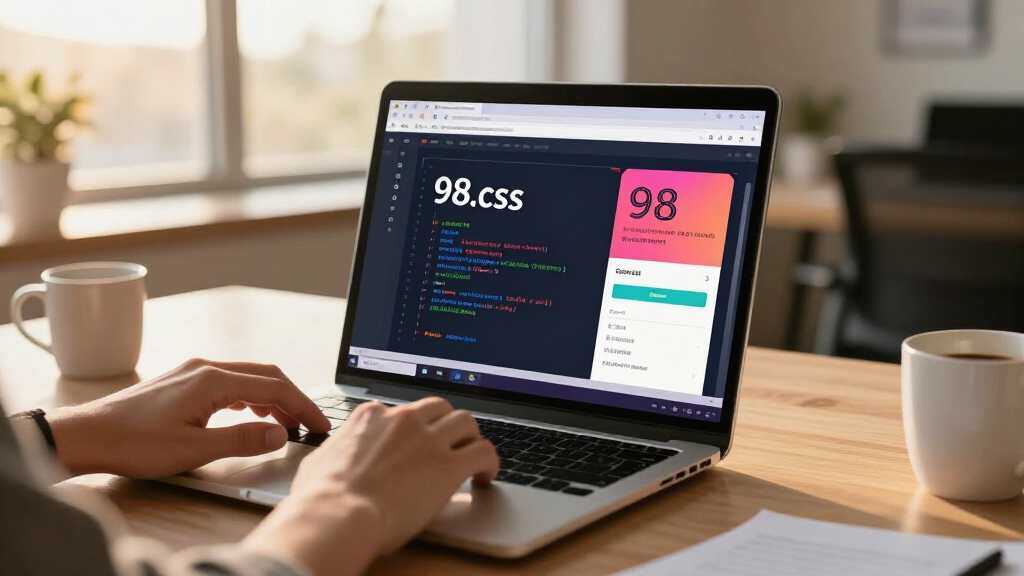
98.css is a CSS library that recreates the Windows 98 user interface. It is increasingly popular among developers seeking nostalgic or retro-style web designs. The framework’s growth highlights a trend toward vintage UI aesthetics in web development.
98.css, a CSS framework designed to emulate the classic Windows 98 interface, is experiencing a notable increase in popularity among web developers. This development reflects a rising interest in retro aesthetics within the tech community, driven by nostalgia and stylistic preferences. The framework’s growth is confirmed by increased downloads, social media mentions, and adoption in various projects, making it a noteworthy trend in UI design.
Created by a developer known as ‘starknet’, 98.css is a lightweight CSS library that provides pre-styled components resembling Windows 98 elements, such as buttons, checkboxes, and window frames. The framework is open-source and available on GitHub, where it has seen a significant rise in stars and forks, indicating growing community engagement.
According to data from GitHub, 98.css has been starred over 10,000 times in recent months, with many developers sharing their projects on social media platforms like Twitter and Reddit. The framework is praised for its simplicity, ease of use, and nostalgic appeal, particularly among developers who grew up during the late 1990s and early 2000s.
While 98.css is primarily used for personal projects, portfolio sites, and experimental interfaces, some companies have also explored its use for internal tools or themed applications. Its compatibility with modern web frameworks and minimal dependencies make it a flexible choice for retro-themed UI design.
Retro UI Trends Reflect Nostalgia and Creativity
The rising popularity of 98.css highlights a broader trend in web development where designers and developers seek to incorporate nostalgic elements into modern interfaces. This movement is driven by nostalgia, aesthetic experimentation, and the desire to stand out with distinctive visual styles. The adoption of vintage UI frameworks like 98.css demonstrates how historical design influences continue to inspire current digital aesthetics, impacting user interface trends and creative expression.
Products Worth Considering

LG UltraGear 34GX90SA-W 34-inch WQHD Curved OLED Gaming Monitor

Logitech MX Brio Ultra HD 4K Webcam, Graphite

Bose QuietComfort True Wireless Earbuds with Active Noise Cancellation, Black
As an affiliate, we earn on qualifying purchases.
Growth of Nostalgic and Retro Web Design Elements
Over the past few years, there has been a noticeable increase in the use of retro and vintage design elements in web development. Frameworks and themes inspired by earlier operating systems, video game consoles, and classic software interfaces have gained popularity. 98.css is part of this movement, offering a simple way to replicate the look and feel of Windows 98, which remains iconic for many users.
Historically, web design has oscillated between minimalism and maximalism, with recent trends favoring clean, modern interfaces. However, the resurgence of nostalgic aesthetics indicates a shift toward more playful, familiar, and emotionally resonant designs. 98.css exemplifies this shift by providing a ready-made solution for developers seeking to evoke the late 20th-century digital environment.
“Our goal was to create a simple, lightweight framework that allows developers to easily add a nostalgic Windows 98 look to their projects.”
— starknet, creator of 98.css
Future Adoption and Community Development of 98.css
It is not yet clear how sustained the growth of 98.css will be or whether it will evolve with additional features. The framework’s long-term impact depends on community engagement, potential updates, and broader industry trends toward retro design.Potential Updates and Community Engagement for 98.css
Developers and users expect continued growth in adoption, with possible updates to improve compatibility and features. The community around 98.css may also produce plugins or extensions, further integrating it into modern web development workflows. Monitoring GitHub activity and social media mentions will indicate ongoing interest and development.
Key Questions
What is 98.css used for?
98.css is a CSS framework used to create web interfaces that resemble the Windows 98 operating system, primarily for aesthetic and nostalgic purposes.
Is 98.css suitable for commercial projects?
Yes, since it is open-source, developers can use 98.css in personal, portfolio, or commercial projects, provided they adhere to its licensing terms.
How easy is it to implement 98.css?
It is designed to be lightweight and simple to integrate, with minimal dependencies. Developers can include its stylesheet and apply classes to achieve the Windows 98 style quickly.
Are there alternatives to 98.css?
Yes, there are other retro UI frameworks and themes, but 98.css is notable for its focus on Windows 98 aesthetics and ease of use.
What does the future hold for 98.css?
Its future depends on community interest, ongoing development, and whether developers continue to adopt it for creative and nostalgic projects.
Source: hn