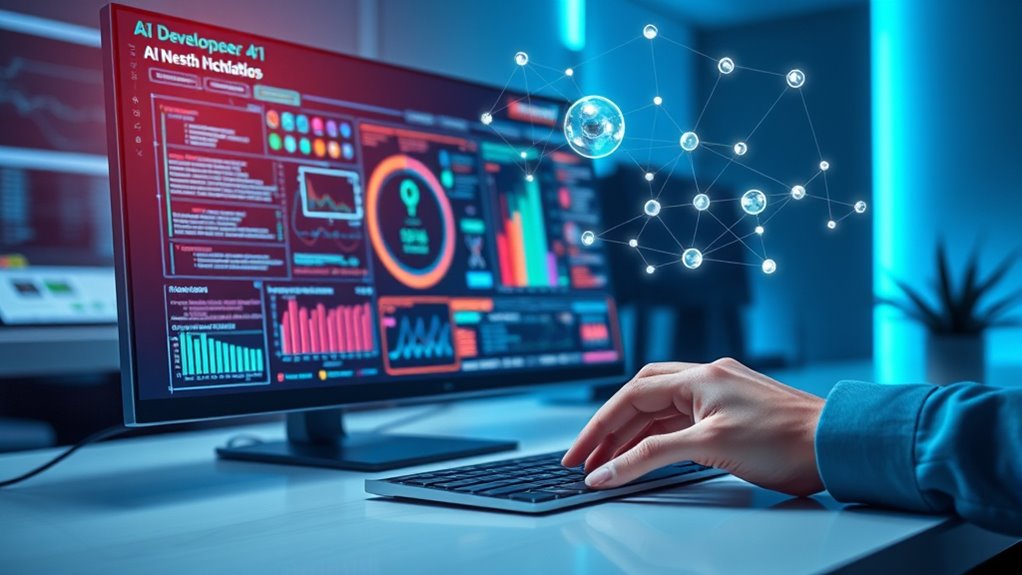

AIOps uses artificial intelligence to improve IT operations, helping you detect, troubleshoot, and prevent issues faster in complex environments. It automates tasks by analyzing logs, metrics, and events to identify anomalies and predict future problems. This means you can respond proactively, optimize resources, and reduce downtime. With AIOps, managing your systems becomes more efficient and reliable. If you keep exploring, you’ll uncover how it transforms your approach to IT management seamlessly.

Get business pricing on monitors, keyboards and dev gear
- Business-only prices and quantity discounts
- Tax-exempt purchasing
- Multiple users, one account, clear invoices
Key Takeaways
- AIOps uses AI, machine learning, and predictive analytics to automate and enhance IT operations.
- It detects issues proactively by analyzing logs, metrics, and events to prevent system failures.
- AIOps generates actionable insights, enabling faster troubleshooting and reducing manual efforts.
- It transforms reactive IT management into proactive strategies, improving system reliability and efficiency.
- Security considerations are vital to protect AI-driven systems and ensure safe, reliable operations.

In today’s fast-paced digital landscape, managing complex IT environments can be overwhelming without the right tools. That’s where AIOps comes into play, leveraging artificial intelligence to streamline operations, detect issues faster, and automate responses. At the core of AIOps are advanced technologies like machine learning and predictive analytics, which empower you to handle vast amounts of data efficiently. Instead of reacting to problems after they occur, you gain the ability to anticipate and prevent them, saving time and reducing downtime.
AIOps uses AI to proactively manage IT, preventing issues before they impact your systems.
Machine learning, a key component of AIOps, allows your systems to learn from historical data. By analyzing patterns and trends, it can identify anomalies that might signal a looming issue. For example, if a server’s CPU usage suddenly spikes in a pattern that previously led to a crash, the system recognizes this early warning. This proactive detection helps you address potential problems before they impact users, improving overall system reliability. Machine learning continuously refines its understanding as it processes more data, making its predictions more accurate over time.
Predictive analytics complements machine learning by analyzing current and historical data to forecast future events. With this capability, you can anticipate performance bottlenecks, security threats, or hardware failures before they happen. Imagine receiving a warning that a particular database is likely to become overloaded within the next few hours. Armed with this insight, you can take preventive measures—like scaling resources or optimizing queries—without waiting for a failure to occur. This foresight allows you to allocate resources more efficiently and maintain a smoother user experience.
Using AIOps, you don’t just get alerts; you get actionable insights. These insights are generated through the intelligent analysis of data streams from various sources—logs, metrics, events, and more. Instead of sifting through endless logs manually, you receive concise, prioritized recommendations that help you focus on what matters most. This automation reduces manual effort, accelerates incident response, and minimizes the risk of human error.
In essence, AIOps transforms your IT operations into a proactive and intelligent system. By harnessing machine learning and predictive analytics, you can stay ahead of issues, optimize performance, and deliver a more reliable service. It’s about moving from reactive troubleshooting to strategic management, giving you more control and confidence in handling your complex IT landscape. As technology continues to evolve, embracing AIOps will become critical to keeping your systems resilient, efficient, and ready for the demands of tomorrow. Recognizing the importance of AI security ensures your organization is prepared against the evolving cyber threat landscape, safeguarding your infrastructure and data assets effectively.
As an affiliate, we earn on qualifying purchases.
Frequently Asked Questions
How Does AIOPS Integrate With Existing IT Management Tools?
You can integrate AIOps with your existing IT management tools by leveraging machine learning algorithms to analyze data from various sources. It seamlessly combines data integration capabilities, allowing you to unify logs, alerts, and performance metrics. This helps automate issue detection, prediction, and resolution, enhancing your overall IT operations. You’ll find that AIOps complements your current tools, providing smarter insights and reducing manual effort effectively.
What Are the Common Challenges in Implementing AIOPS?
You might face challenges like data privacy concerns, which require strict controls to protect sensitive information. Vendor lock-in can limit your flexibility, making it hard to switch tools or providers later. Additionally, integrating AI and legacy systems can be complex, leading to compatibility issues. Overcoming these hurdles involves careful planning, choosing open standards, and ensuring compliance with privacy regulations to smoothly implement AIOps in your environment.
How Does AIOPS Handle False Positives in Alerts?
Did you know that false positives can make up over 80% of alerts? AIOps tackles this with false positive reduction techniques that filter out unnecessary alerts. It uses alert correlation to connect related signals, helping you focus on genuine issues. By analyzing patterns and historical data, AIOps minimizes false alarms, ensuring you spend less time chasing ghosts and more on resolving real problems swiftly.
What Skills Are Required for Teams to Manage AIOPS Platforms?
You need to develop skills in data analysis, machine learning, and automation to effectively manage AIOps platforms. Focus on skill development in areas like scripting, monitoring tools, and incident management. Cross-functional collaboration is vital, so work closely with IT, data scientists, and developers to guarantee seamless integration and understanding. Staying updated on AI trends and best practices helps you optimize AIOps, reduce false positives, and improve overall IT operations.
How Is AIOPS Evolving With Emerging Technologies Like Edge Computing?
Think of AIOps as a living network that’s growing smarter with edge integration and distributed analytics. As emerging tech evolves, you’ll see AIOps extend its reach to edge devices, crunching data locally for faster insights. This decentralization helps you detect issues quicker and optimize performance in real-time. By embracing these innovations, you stay ahead of the curve, turning your IT operations into a finely tuned, adaptive ecosystem.
IT operations automation software
As an affiliate, we earn on qualifying purchases.
As an affiliate, we earn on qualifying purchases.
Conclusion
Think of AIOps as your IT team’s GPS, guiding you through complex networks with precision and speed. Just like a GPS reroutes you around traffic, AIOps detects issues before they become problems, saving you time and stress. Embracing this technology means you’re always on the fastest, most efficient route to seamless IT operations. With AIOps, you’re not just reacting—you’re proactively steering your systems toward success.
As an affiliate, we earn on qualifying purchases.
predictive analytics software for IT
As an affiliate, we earn on qualifying purchases.
As an affiliate, we earn on qualifying purchases.
Fall Picks
fall essentials
As an affiliate, we earn on qualifying purchases.