
📊 Full opportunity report: Acoustic Dampening, Placement, and the “Rig in the Closet” Setup on ThorstenMeyerAI.com — validation score, market gap, and execution plan.

Get business pricing on monitors, keyboards and dev gear
- Business-only prices and quantity discounts
- Tax-exempt purchasing
- Multiple users, one account, clear invoices
TL;DR
Moving your high-power rig into a closet significantly reduces noise and reflections. Proper placement, sealing gaps, and using absorption materials improve sound quality and prevent heat buildup. This guide offers practical strategies for creating a quiet, effective workspace.
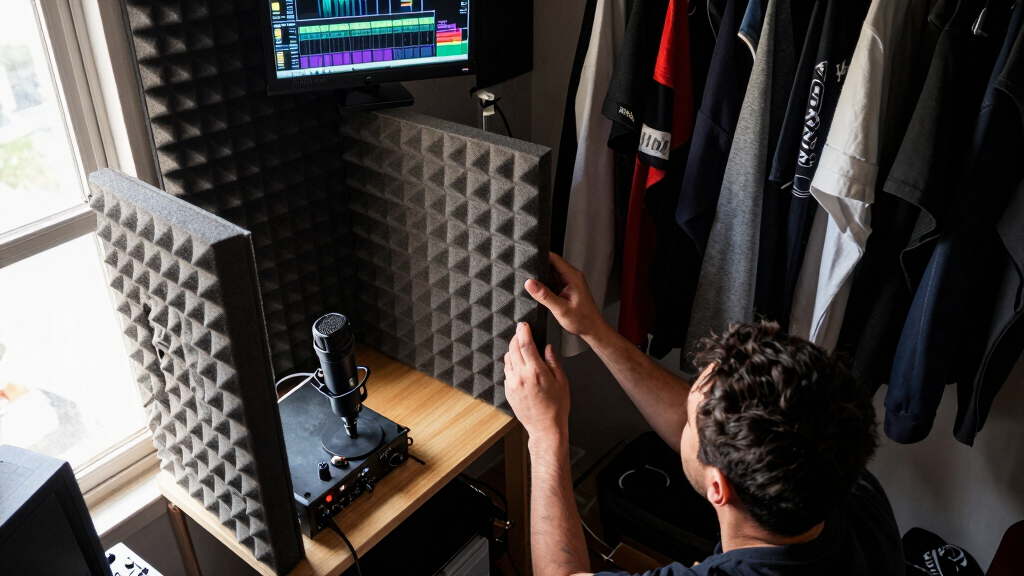
Moving your high-powered computer rig into a closet or another room is the most effective way to significantly reduce noise and reflections, according to acoustic experts. For detailed strategies, see Acoustic Dampening, Placement, and the “Rig in the Closet” Setup. Proper placement, sealing gaps, and using absorption materials can transform a cluttered, noisy space into a quiet, professional-quality workspace. This approach is gaining popularity among content creators, AI developers, and gamers seeking quieter environments without sacrificing performance.
Recent guidance from audio and hardware experts emphasizes that relocating a rig into a closet or separate room drastically cuts down noise and echo, often more effectively than adding foam treatments alone. The key is strategic placement—positioning the equipment away from reflective surfaces and the user’s ears, and treating reflection points such as behind the mic, side walls, and ceiling with absorption materials like foam panels, blankets, or rugs.
Sealing gaps around the door and walls is crucial for preventing sound leaks and echoes, which can undermine the benefits of acoustic dampening. Additionally, managing heat is essential; high-performance rigs generate significant heat, which can be mitigated through ventilation solutions such as exhaust fans, ducted airflow, or soundproof cabinets with cooling systems. Proper airflow not only cools hardware but also maintains a quieter environment.
Using DIY materials like blankets and foam can be effective if placed strategically, especially in small spaces like closets. Installing bass traps in corners helps control low-frequency muddiness, improving overall sound clarity. The combined approach of placement, absorption, sealing, and ventilation creates a controlled, quiet environment suitable for recording, AI training, or gaming.
Acoustic dampening
& the rig in the closet.
The most powerful noise fix isn’t a material — it’s a floor plan. A rig you can’t hear because it’s in another room beats any amount of foam. Tap the approaches in Part 1 to see what actually works.
(another room)
(levers 1–4)
(door / barrier)
(acoustic foam)
Contain the noise, not the heat
Impact of Closet Placement on Noise Reduction and Sound Quality
Relocating a rig into a closet with proper treatment offers a practical, cost-effective way to achieve near-silent operation and high-quality sound. This method benefits content creators, AI developers, and gamers by providing a quieter workspace, reducing the need for expensive soundproofing or external enclosures. Effective placement and sealing also enhance sound clarity, making recordings cleaner and editing easier. The approach underscores that space management and acoustic treatment are critical for optimizing high-performance setups in small environments.
As an affiliate, we earn on qualifying purchases.
Background on Acoustic Treatment and Closet Rigs
Many users have struggled with noisy rigs, especially in small or shared spaces. Traditional solutions involved adding foam panels or soundproof barriers, but these often proved insufficient or impractical in tight quarters. More on this topic can be found in Acoustic Dampening, Placement, and the “Rig in the Closet” Setup. Experts have long recommended that moving equipment into separate rooms or closets offers the most noticeable noise reduction. Recent advice consolidates this understanding, emphasizing that strategic placement, sealing gaps, and proper ventilation are essential to maximize sound isolation and thermal management in a confined space.
Historically, soundproofing involved costly modifications, but current best practices focus on balancing acoustic dampening with heat dissipation. The concept of a 'rig in the closet' has gained traction as a simple yet effective solution, especially when combined with targeted acoustic treatment and airflow management, allowing users to operate high-powered rigs quietly and safely. Learn more about this approach in the original analysis.
"Relocating your rig into a closet and treating reflection points can drastically reduce noise and improve sound clarity, often more than foam treatments alone."
— Thorsten Meyer, acoustic expert
acoustic foam panels for recording studio
As an affiliate, we earn on qualifying purchases.
As an affiliate, we earn on qualifying purchases.
Remaining Questions About Closet Rig Optimization
While expert advice supports closet relocation as an effective solution, specific guidelines on the optimal size, ventilation methods, and treatment density for different setups are still evolving. It is also unclear how different room shapes and materials influence acoustic results, or how to best balance soundproofing with heat dissipation in various environments. Further empirical data and user experiences are needed to refine these recommendations.
quiet exhaust fan for computer cooling
As an affiliate, we earn on qualifying purchases.
As an affiliate, we earn on qualifying purchases.
Next Steps for Users Considering a Closet Rig Setup
Users interested in implementing a closet rig should focus on strategic placement, sealing gaps, and adding absorption materials at reflection points. Experimenting with ventilation solutions and monitoring temperatures will ensure hardware safety. Future developments may include standardized guidelines for closet size, treatment density, and ventilation configurations, supported by user case studies and technical research. Staying informed about new materials and cooling innovations will help optimize these setups.
As an affiliate, we earn on qualifying purchases.
Key Questions
Can I completely soundproof my closet rig?
No, moving your rig into a closet primarily reduces noise and reflections but does not guarantee complete soundproofing. Additional barriers and sealing are needed for full soundproofing.
What materials are best for acoustic dampening in a closet?
Thick foam panels, moving blankets, rugs, and bass traps are effective. Focus on covering reflection points and corners for best results.
How do I prevent heat buildup in a closet rig?
Install exhaust fans, ducted airflow, or soundproof cabinets with cooling systems. Ensure proper ventilation and monitor temperatures regularly.
How much acoustic treatment is needed for a small closet?
About 20-30% wall coverage with absorption materials, plus sealing gaps around doors and windows, is typically effective for small spaces.
Will treating my closet make my recordings sound unnatural?
Over-treating can deaden the sound, so aim for a balance that reduces harsh reflections while maintaining a natural acoustic environment.
Source: ThorstenMeyerAI.com
Halloween Picks
halloween
As an affiliate, we earn on qualifying purchases.