If your Wi-Fi feels slow, you’re probably blaming your devices when the real culprit is often the router or network setup. Interference from electronics, outdated firmware, or poor placement can create a bottleneck that many overlook. Moving closer, updating firmware, or changing channels can boost your speed. Your devices may appear slow, but fixing your network might be all you need. Keep exploring to discover simple steps to improve your Wi-Fi performance.

Get business pricing on monitors, keyboards and dev gear
- Business-only prices and quantity discounts
- Tax-exempt purchasing
- Multiple users, one account, clear invoices
Key Takeaways
- Network congestion often causes slow Wi-Fi, not just device limitations or outdated hardware.
- Interference from nearby electronics and thick walls weaken signal, creating bottlenecks.
- Upgrading your router or changing Wi-Fi channels can resolve congestion issues more effectively than blaming devices.
- Multiple devices sharing bandwidth can slow speeds, regardless of individual device performance.
- Proper placement and signal management are crucial; hardware isn’t the sole factor behind Wi-Fi bottlenecks.
As an affiliate, we earn on qualifying purchases.
Why Is My Wi-Fi So Slow? Common Causes and Symptoms
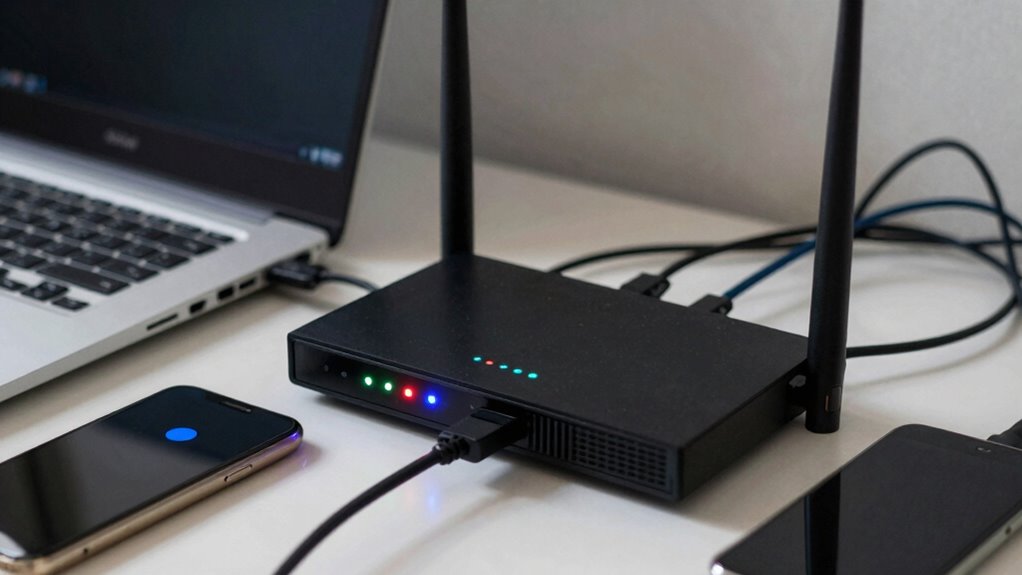
If your Wi-Fi feels sluggish, it’s often due to common issues that can be quickly identified. Signal interference from other devices, like cordless phones or microwave ovens, can disrupt your connection and slow speeds. Additionally, outdated firmware updates on your router may cause performance problems, as manufacturers release updates to fix bugs and improve stability. Check for firmware updates regularly to guarantee your device runs efficiently. Other signs include frequent disconnects, buffering videos, or slow downloads. These symptoms point to issues that are often easy to resolve once identified. By reducing signal interference and keeping your router’s firmware current, you can considerably improve your Wi-Fi speed and stability. Understanding the hardware components of your network can also help pinpoint potential bottlenecks. Regularly assessing your network’s signal strength can help identify weak spots that hinder overall performance. Moreover, knowing how your network architecture is configured can help in optimizing the setup for better speeds. Gaining a better understanding of your network setup can further assist in diagnosing and resolving speed issues more effectively. Recognizing these performance symptoms early can save you time and frustration in troubleshooting.
As an affiliate, we earn on qualifying purchases.
Diagnose Whether Your Router or Devices Are the Culprit
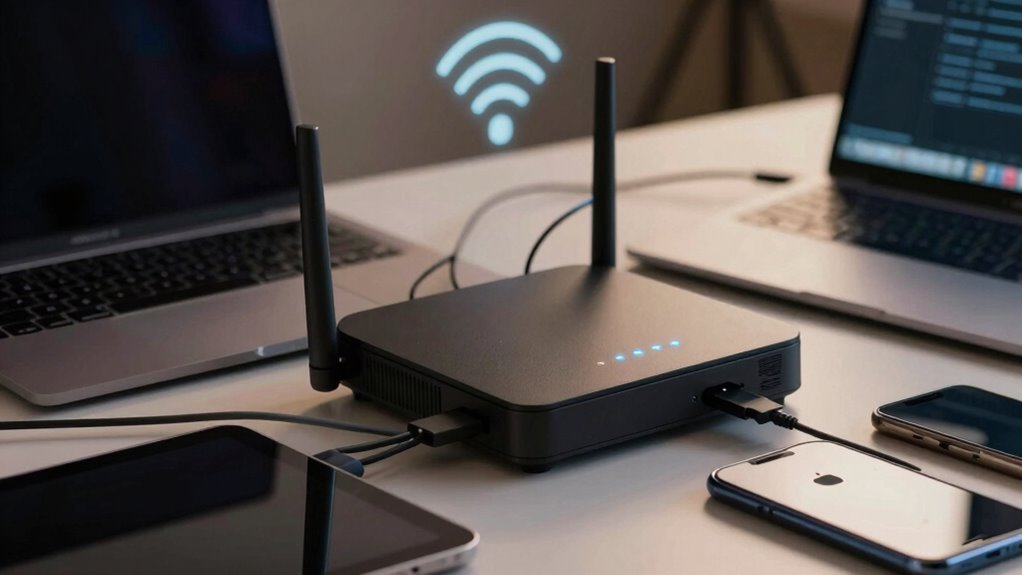
When you notice slow Wi-Fi, the next step is pinpointing whether the issue stems from your router or the devices you’re using. Start by testing different devices on the same network. If all devices experience slow speeds, the problem likely lies with your router. Check for device interference; nearby electronics like cordless phones or microwaves can disrupt signals. Also, consider signal obstructions—thick walls or furniture can weaken Wi-Fi strength. Move closer to the router and see if performance improves. If only certain devices struggle, the issue might be with those devices rather than the network. Updating device software or resetting network settings can help. Diagnosing the root cause involves observing where the slowdown occurs and eliminating potential interference or obstructions.
As an affiliate, we earn on qualifying purchases.
Quick Fixes to Speed Up Your Wi-Fi at Home

Sometimes, the simplest adjustments can notably boost your Wi-Fi speed without needing complex setups. Start by reducing Wi-Fi interference—move your router away from thick walls, large metal objects, or other electronics that can disrupt the signal. Changing your Wi-Fi channel can also help if nearby networks are congested. A signal booster or range extender can enhance coverage in dead zones, improving overall speed. Make sure your router is placed centrally and elevated for better distribution. Regularly restart your router to refresh your connection. These quick fixes are inexpensive and straightforward but can greatly improve your Wi-Fi performance at home. By minimizing interference and enhancing your signal, you’ll notice faster speeds and more reliable connectivity without expensive upgrades. Additionally, understanding Wi-Fi standards can help you choose better equipment for future upgrades.
As an affiliate, we earn on qualifying purchases.
When Should You Upgrade Your Router or Internet Plan?

Determining the right moment to upgrade your router or internet plan depends on your evolving online needs and the performance you’re experiencing. If your smart home devices frequently disconnect or lag, it’s a sign your current setup can’t handle the increased device count. Slow speeds during high-bandwidth activities like streaming or gaming also indicate it’s time to consider an upgrade. Additionally, if you’re concerned about network security, newer routers offer enhanced security features that protect your data better. Upgrading can improve overall network reliability, reduce latency, and support growing demands. Keep an eye on your usage patterns and the performance of your devices. When your current plan or equipment no longer supports your smart home ecosystem or security requirements, it’s time for an upgrade. Staying informed about tax law changes can also help you plan your technology investments for optimal financial benefits. Moreover, ensuring your network hardware is optimized for performance and security can make a significant difference in your online experience.
Deciding Between Upgrading or Replacing Your Network Equipment
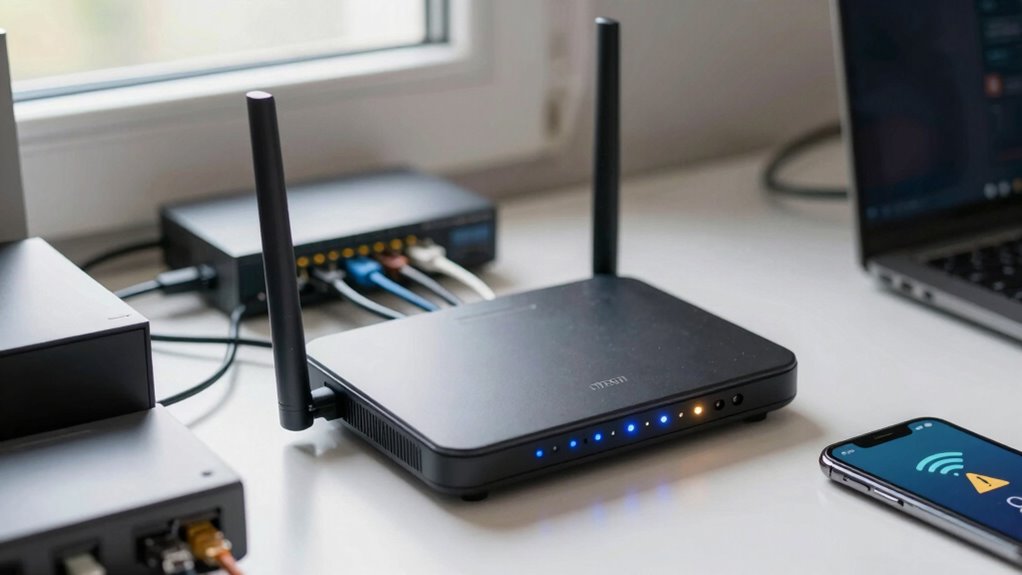
Deciding whether to upgrade or replace your network equipment hinges on evaluating the current condition and performance of your devices. If your smart home devices frequently disconnect or lag, an upgrade might suffice. However, if your equipment is outdated or compromised, replacing it guarantees better network security and compatibility. Consider your needs: a simple upgrade may boost speed, but replacing might improve coverage and future-proof your setup. Use the table below to assess your situation:
| Issue | Solution |
|---|---|
| Frequent disconnections in smart home devices | Upgrade router or access point |
| Slow internet speeds | Upgrade or replace equipment |
| Outdated hardware | Replace for security & performance |
| Security vulnerabilities | Replace to enhance network security |
| Limited coverage | Upgrade or add extenders |
An understanding of network security can help you make informed decisions about replacing outdated hardware.
Being aware of hardware lifespan can also assist in determining the right timing for replacement, ensuring your network remains reliable and secure.
Frequently Asked Questions
How Does Wi-Fi Congestion Affect My Internet Speed?
Wi-Fi congestion slows down your internet speed by overloading your network, causing delays and reduced performance. When many devices connect, it strains your network topology, making it harder for data to travel efficiently. Upgrading to fiber optics can help, but if congestion persists, optimizing your network layout and limiting device connections will improve speeds. This guarantees your Wi-Fi runs smoothly without unnecessary bottlenecks.
Can Signal Interference From Household Electronics Slow Down Wi-Fi?
A stitch in time saves nine, and the same applies to Wi-Fi interference. Household electronics, like microwaves or cordless phones, can cause electromagnetic interference and signal overlap, slowing down your Wi-Fi. This interference disrupts the wireless signals, making your internet sluggish. To improve speed, keep electronics away from your router, switch to less congested channels, and guarantee your devices are updated. This way, you prevent slowdowns caused by household electronics.
What Role Does the Placement of My Router Play in Speed Issues?
Your router positioning directly impacts your Wi-Fi speed. If you place it near walls or metal objects, signal obstruction occurs, weakening the connection. Keep your router elevated and centrally located in your space to maximize coverage. Avoid placing it behind furniture or near electronic devices that cause interference. Proper router placement guarantees a strong, stable signal, helping you avoid unnecessary speed issues and enjoy faster, more reliable Wi-Fi.
Do ISP Throttling Practices Impact My Wi-Fi Performance?
ISP practices, including data throttling, can definitely impact your Wi-Fi performance. When your provider intentionally slows down your connection during peak times or after exceeding data limits, it feels like your Wi-Fi is lagging. These practices can reduce speeds regardless of your router’s placement or device quality. To improve, check your ISP’s policies, consider switching providers if throttling is persistent, or use a VPN to bypass some throttling.
How Can I Test My Internet Speed Accurately at Home?
You wanna see if your internet’s fast enough? Start by disconnecting other devices to focus on your main connection. Use a reliable speed test tool and run multiple tests at different times. Remember, bandwidth allocation and network prioritization can affect results. By testing under consistent conditions, you get a true picture of your speed. It’s like taking a snapshot of your network’s health—clear, simple, and accurate.
Conclusion
Think of your Wi-Fi as a busy highway. When traffic slows, it’s tempting to blame the biggest truck, but often, it’s the tiny potholes or outdated signs causing the jam. By diagnosing the real issue—whether your router, devices, or plan—you can clear the way for smooth sailing. Upgrading the right part is like fixing potholes or updating signs, turning your network into a fast, flowing highway where data travels freely without congestion.
Halloween Picks
halloween
As an affiliate, we earn on qualifying purchases.