
📊 Full opportunity report: Estate And Inheritance Facilitator Marketplace on IdeaNavigator AI — validation score, market gap, and execution plan.

Get business pricing on monitors, keyboards and dev gear
- Business-only prices and quantity discounts
- Tax-exempt purchasing
- Multiple users, one account, clear invoices
TL;DR
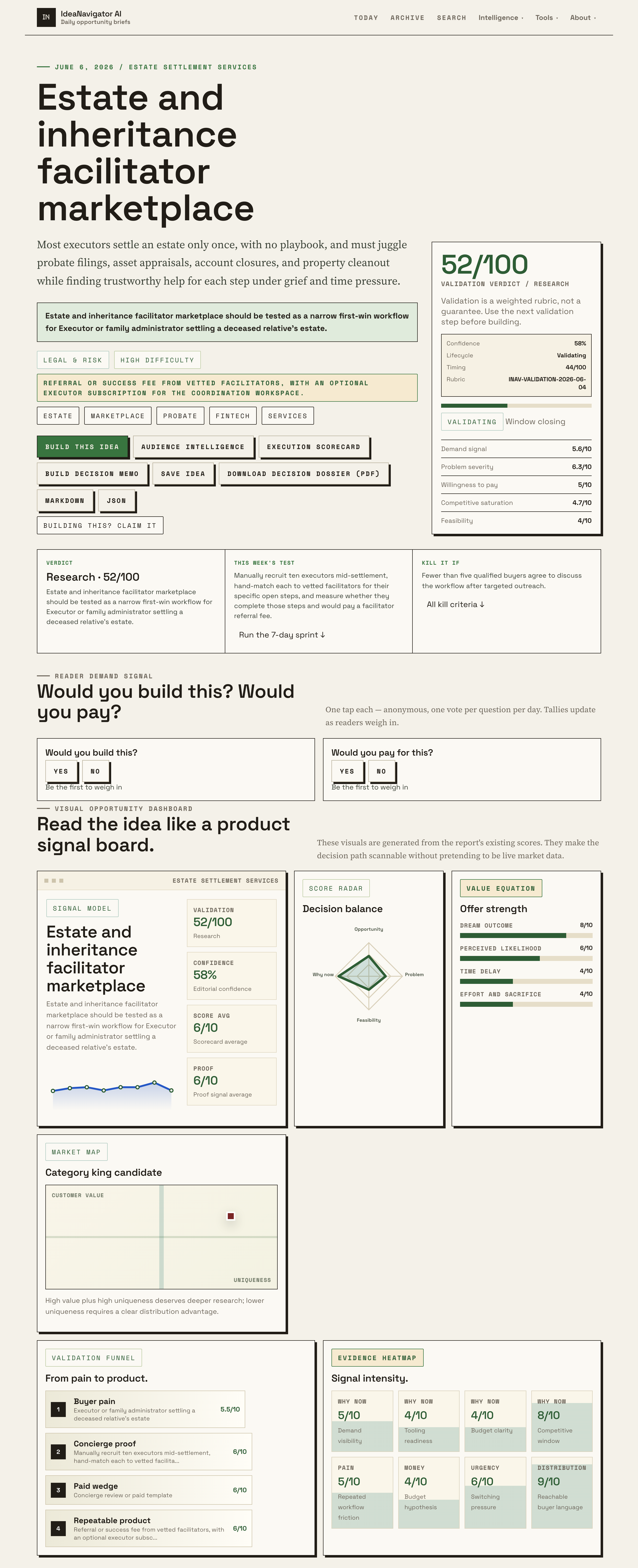
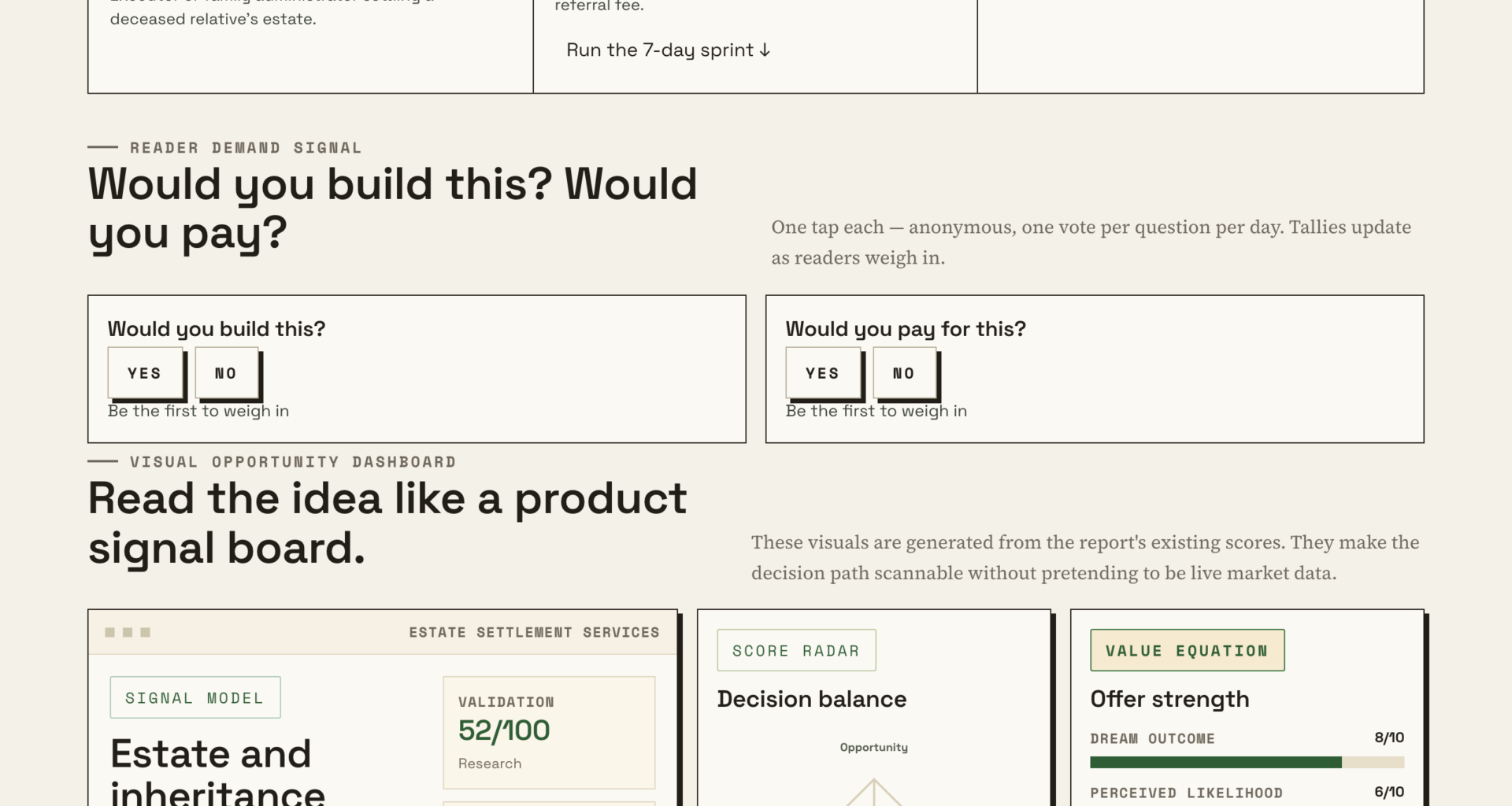
A startup is testing a marketplace that connects estate executors with vetted facilitators for each settlement step. The initial focus is on a guided intake to streamline estate handling amid rising intergenerational wealth transfer.
A new estate and inheritance facilitator marketplace is in the early testing stage, aiming to help executors and family administrators manage the complex process of settling a deceased relative’s estate. This initiative is designed to address longstanding challenges faced by those handling estates, especially as the volume of intergenerational wealth transfer increases and estates become more geographically and digitally complex.
The marketplace is focused initially on a guided executor intake process that diagnoses the specific steps needed to settle an estate. It then hand-matches each step to a vetted facilitator, such as appraisers, probate attorneys, or property cleanout services, and tracks their completion. This concierge-style approach aims to streamline estate settlement before launching a full self-serve platform.
According to sources familiar with the project, the model will generate revenue through referral or success fees from facilitators, with an optional subscription for executors to access a coordination workspace. The initial validation involves manually recruiting ten executors mid-settlement, matching each to facilitators, and measuring whether they complete the steps and are willing to pay for the service.
Potential Impact on Estate Settlement Efficiency
This initiative could significantly reduce the time, stress, and uncertainty faced by executors during estate settlement. By providing a curated, coordinated process, it addresses a major pain point—finding trustworthy help under grief and time pressure. As the largest transfer of wealth in history continues, such services could become essential for managing complex, multi-state estates and digital assets.
Products Worth Considering

Sony WH-1000XM4 Wireless Noise-Canceling Headphones, Silver

Amazon Kindle Paperwhite Signature Edition (12th Generation, 2024), 32 GB, Metallic Raspberry

Apple MacBook Air 13-inch Laptop with M5 Chip, 16GB Memory, 512GB SSD, 12MP Center Stage Camera, and Wi-Fi 7, Sky Blue
As an affiliate, we earn on qualifying purchases.
Growing Need Due to Intergenerational Wealth Transfer
The current estate settlement landscape is fragmented, with scattered directories and no centralized coordination. The ongoing transfer of wealth from Baby Boomers to younger generations is expected to accelerate, with many estates spanning multiple states and including digital accounts. These factors increase the complexity and demand for streamlined facilitation services. Historically, most executors handle estate settlement only once, often without a clear playbook, which can lead to delays and errors.
“The estate settlement process is ripe for innovation, especially as estates become more complex and geographically dispersed.”
— an anonymous researcher
Unclear Scale and Long-Term Adoption
It remains uncertain how many executors will adopt this guided marketplace model, and whether facilitators will see sufficient value to participate at scale. The effectiveness of the initial manual validation phase will influence whether the service expands and how it integrates into broader estate settlement workflows. Additionally, regulatory and legal considerations could impact the model’s deployment.
Next Steps for Validation and Expansion
The project team plans to complete the manual recruitment and matching process with at least ten executors, then analyze completion rates and willingness to pay. If successful, they will refine the platform for broader testing and consider integrating more facilitator types. Further, they aim to explore partnerships with estate planning professionals and digital estate services to expand reach.
Key Questions
How does the marketplace determine which facilitators to match?
The initial process involves a guided intake that assesses the specific estate settlement steps needed, then manually matches each step to vetted facilitators based on expertise, location, and availability.
Will this service be available nationwide?
It is too early to confirm geographic scope. The initial testing will likely focus on regions with high estate activity, with plans to expand as the model proves successful.
How will the service handle digital assets and online accounts?
Digital assets are part of the scope, with facilitators specializing in digital estate management. The guided intake will identify digital account handling as a specific step requiring specialized facilitators.
What are the costs for executors using this service?
Initially, the model proposes a referral or success fee paid by facilitators, with optional subscription fees for executors seeking ongoing coordination tools. Exact pricing will depend on pilot results.
Could this replace traditional estate attorneys and probate services?
It is unlikely to replace legal services but aims to complement them by providing a coordinated facilitation layer, reducing delays and improving trustworthiness of non-legal services.
Source: IdeaNavigator AI