
📊 Full opportunity report: DDR5 Now, DDR6 Soon: A Buyer’s Field Guide on ThorstenMeyerAI.com — validation score, market gap, and execution plan.

Get monitors, keyboards and dev gear delivered free — and shop member deals
- Fast, free delivery on millions of items
- Access to Prime Big Deal Days deals on October 6–7
- Prime Video, Amazon Music and more included
TL;DR
Despite rumors of DDR6 arriving soon, current market conditions favor purchasing DDR5 now, as DDR6 is still in development and expensive. Waiting offers little benefit.
Market conditions in 2026 strongly favor purchasing DDR5 memory now, as forecasts indicate DDR6 will not be widely available or affordable until at least 2027, and waiting could mean missing out on current platform upgrades.
Despite widespread speculation about DDR6 arriving soon, industry experts and JEDEC standards confirm that DDR6 will not be mainstream until 2027 or later, with initial deployments limited to enterprise and AI servers. Meanwhile, DDR5 remains the current standard, with a recommended configuration of DDR5-6000 CL30 for most users, offering optimal performance and value. Prices for DDR4 are also declining, but starting a new build on DDR4 in 2026 is discouraged, as DDR4 is nearing end-of-life and will not support future platforms.
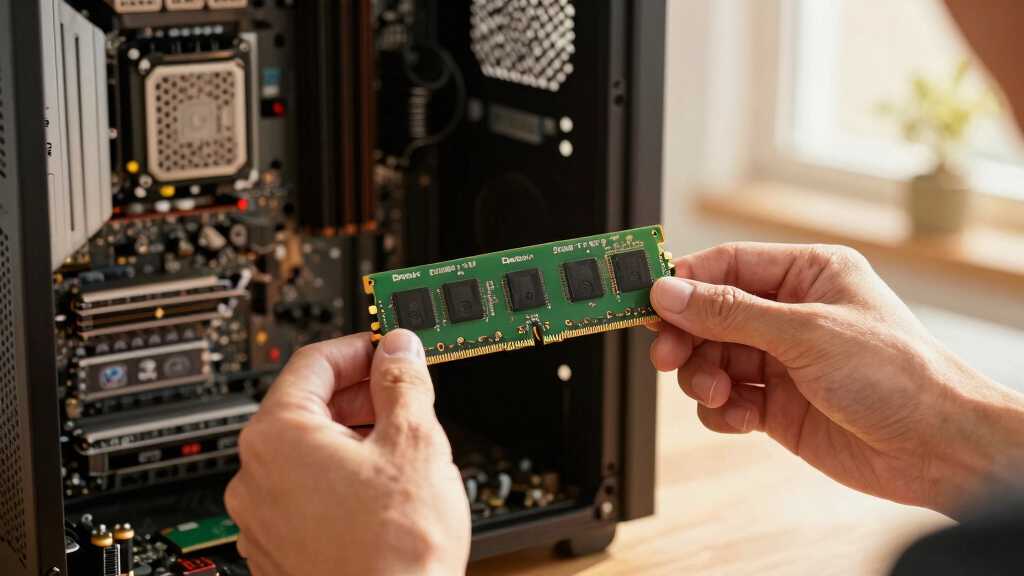
Manufacturers are developing DDR6 with significant technical advancements, including quadruple sub-channels and higher speeds (up to 17,600 MT/s), but these are staged for release over the next few years. DDR6’s physical form factor, CAMM2, and non-backward compatibility mean it will require new motherboards and CPUs, making early adoption costly and limited to specific high-performance workloads. For most consumers, a well-chosen DDR5 system purchased in 2026 will outperform an early DDR6 setup in 2027, at a lower cost.
DDR5 now, DDR6 soon
A buyer’s field guide. The 20-year instinct — wait for prices to drop, or wait for the next generation — is broken this cycle. Buy the DDR5 you actually need now; don’t wait for DDR6. Here’s the reasoning.
Driven to end-of-life, production slashed. Same money, dead-end socket. Leave a working DDR4 box alone — but never start a new build on DDR4 to “save.”
A framework, not a gamble. Buy the DDR5 you need now, at the sweet spot, in the capacity you’ll actually use — don’t buy DDR4, don’t wait for DDR6. The two costliest mistakes in this market are the ones that feel prudent: waiting for a price drop that isn’t coming, and waiting for a next-gen part that launches dearer than what’s on the shelf. Next: The SSD Squeeze.
Why Buying DDR5 Now Is the Smarter Choice
Choosing DDR5 now allows consumers to upgrade their systems with current technology that offers strong performance for gaming, content creation, and multitasking. Waiting for DDR6, which is still in development and will come with a high price tag, risks delaying upgrades and missing out on platform improvements. This decision impacts overall system performance, future upgrade paths, and budget management in the near term.
As an affiliate, we earn on qualifying purchases.
The 2026 Memory Market and Future Outlook
Memory prices surged in recent years due to supply chain disruptions and increased demand, leading to high costs for DDR5 and DDR4. Historically, new memory standards like DDR6 take several years to reach mainstream adoption, with initial releases limited to enterprise and high-end applications. JEDEC, the standards body, has confirmed DDR6 is in development, but mass-market availability is not expected before 2027 or later. Previous transitions, such as from DDR4 to DDR5, took multiple years to become affordable and widespread, and DDR6 is expected to follow a similar, slower adoption curve.
“DDR6 is in development with no confirmed release date for mainstream platforms; early adoption is limited to enterprise segments.”
— JEDEC standards committee
As an affiliate, we earn on qualifying purchases.
Unconfirmed Aspects of DDR6 Adoption and Pricing
While DDR6 specifications are finalized and standards are moving from draft to adoption, the exact timeline for broad availability, pricing, and compatibility with mainstream consumer platforms remains uncertain. Early DDR6 modules are expected to be expensive, and initial support will be limited to high-end motherboards and CPUs, with full mainstream adoption not expected until 2027 or later.
As an affiliate, we earn on qualifying purchases.
Next Steps for Consumers Considering Memory Upgrades
Consumers should focus on upgrading to DDR5-6000 CL30 memory, which offers optimal performance and value. Monitoring JEDEC announcements and motherboard compatibility lists for DDR6 support will be key for early adopters. For most users, completing a DDR5 build in 2026 is advisable, with plans to upgrade to DDR6 deferred until it matures and becomes cost-effective around 2027 or later.
As an affiliate, we earn on qualifying purchases.
Key Questions
Should I wait for DDR6 before upgrading my PC?
No. DDR6 is still in development and will not be affordable or widely available until at least 2027. Upgrading now with DDR5 provides better value and performance for most users.
Will DDR4 be a good option in 2026?
DDR4 is nearing end-of-life, and manufacturers are reducing production. It is not recommended to start new builds on DDR4, as future platforms will only support DDR5 or DDR6.
What DDR5 configuration offers the best value in 2026?
DDR5-6000 with CL30 timings is the recommended configuration, balancing speed, latency, and cost for most applications.
When will DDR6 be mainstream?
DDR6 is expected to become mainstream around 2027–28, initially targeting enterprise and high-performance computing markets.
Is DDR6 worth the premium if I need high bandwidth now?
For specialized workloads like scientific computing or AI/ML, early DDR6 adoption might be justified. For gaming and general use, DDR5 remains the best choice in 2026.
Source: ThorstenMeyerAI.com
Fall Picks
fall essentials
As an affiliate, we earn on qualifying purchases.