📊 Full opportunity report: GLP-1 Pharmacy Tracker: Check Stock, Doses, And Cash Prices on IdeaNavigator AI — validation score, market gap, and execution plan.

Get business pricing on monitors, keyboards and dev gear
- Business-only prices and quantity discounts
- Tax-exempt purchasing
- Multiple users, one account, clear invoices
TL;DR
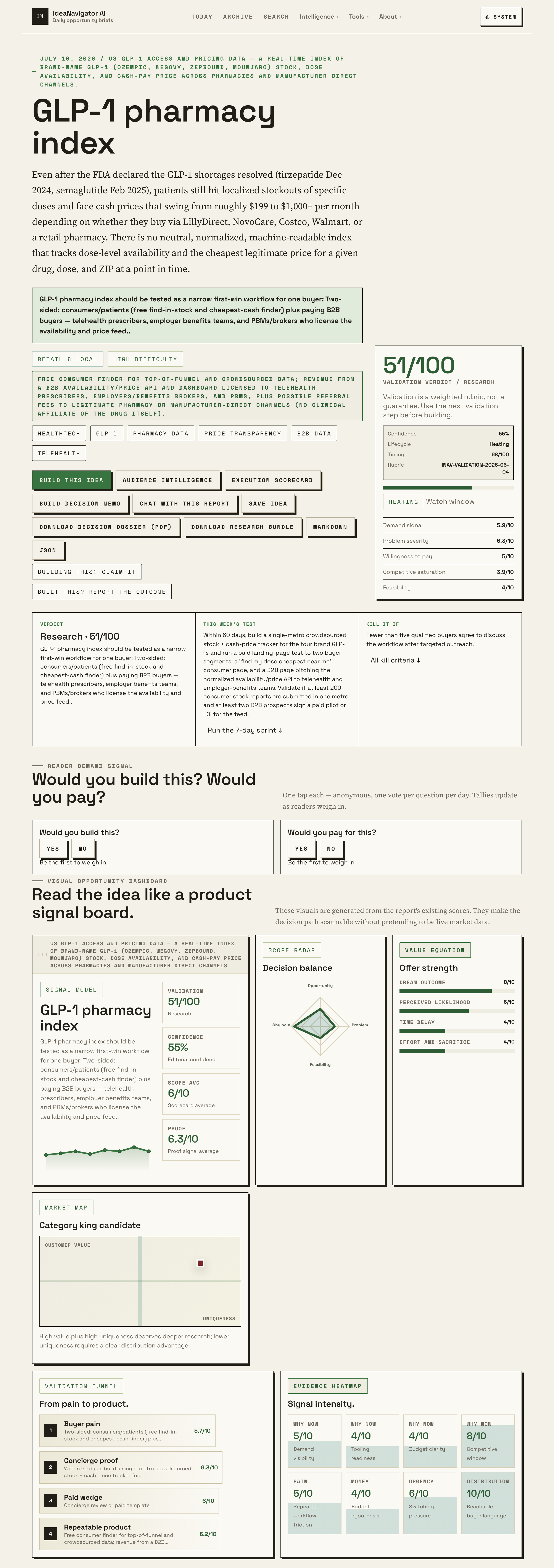
IdeaNavigator AI has outlined a proposed pharmacy index for checking stock and cash prices for four brand-name GLP-1 drugs by dose and ZIP code. The concept is at the validation stage; no launched tracker, participating pharmacies, or signed business pilots are confirmed.
IdeaNavigator AI has proposed a pharmacy index that would let patients check GLP-1 stock by dose and ZIP code and compare cash prices, while selling normalized availability data to business customers. The proposal describes an early-stage product concept, not an operating service: no launch, pharmacy participation, or paid pilot is reported.
The proposed consumer tool would cover four brand-name medicines: Ozempic, Wegovy, Zepbound and Mounjaro. It would show dose-level availability and compare prices from manufacturer direct programs, Costco, Walmart, retail pharmacies and a GoodRx-style pricing layer. Patients could also sign up for alerts when a specific dose becomes available. The outline does not identify which pharmacies have agreed to share live inventory or how often listings would be refreshed.
The plan pairs a free patient-facing finder with a paid availability and price feed for telehealth prescribers, employer benefits teams, pharmacy benefit managers and brokers. It proposes starting in one metro area, combining crowdsourced stock reports with public price information, then pitching the dataset to one or two potential business customers. Possible referral fees from legitimate pharmacy or manufacturer-direct channels are also mentioned.
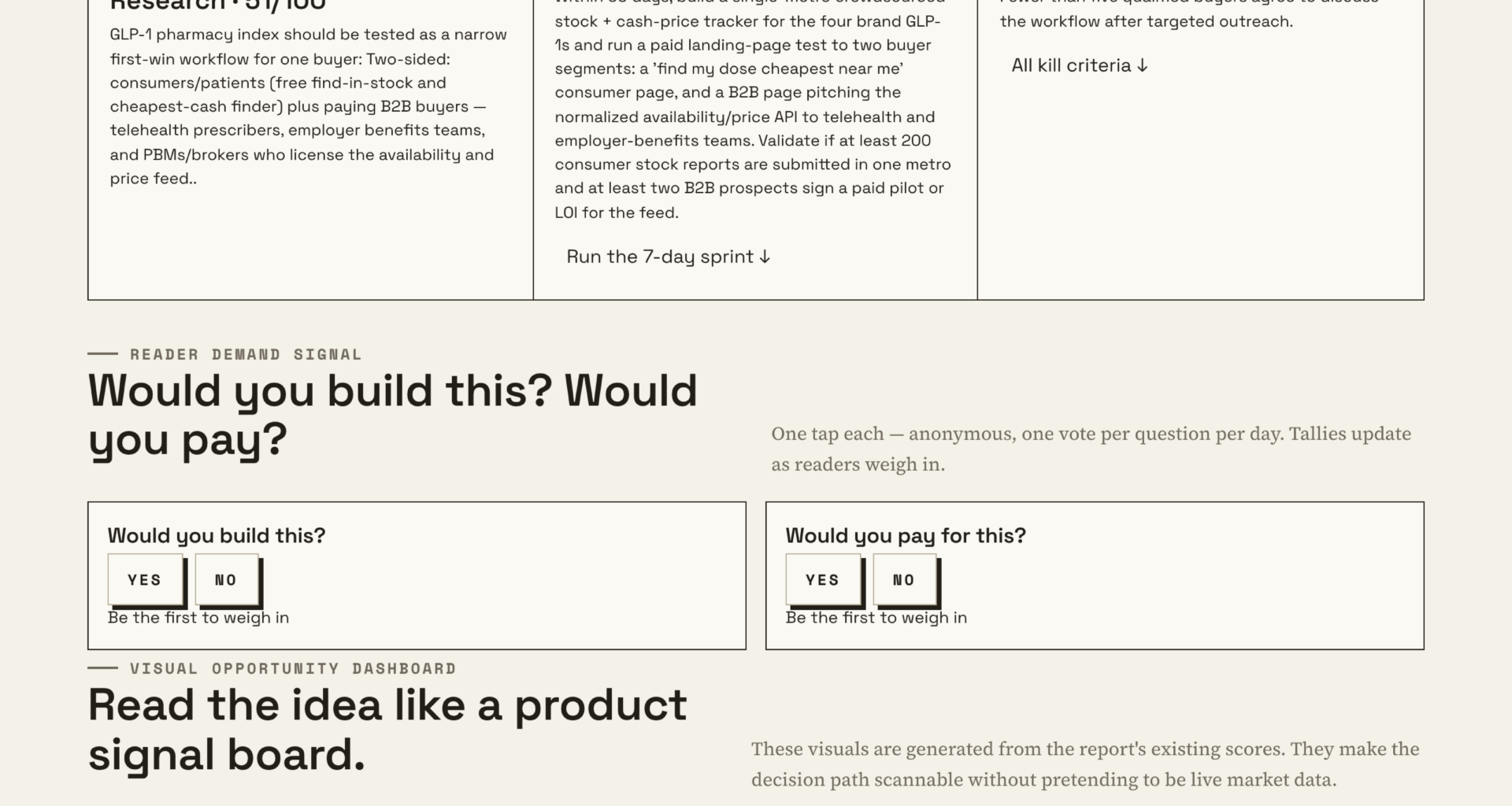
To assess demand, the proposal suggests a 60-day test. Its stated measures are at least 200 consumer stock reports in one metro and paid pilots or letters of intent from at least two business prospects. These are proposed targets, not results; no test outcomes or customer commitments are provided.
Dose-Level Searches Meet Price Gaps
A tracker could address two practical problems at once: patients may struggle to find a particular dose nearby, and the cash price can vary by purchasing channel. The proposal puts monthly prices at roughly $199 to more than $1,000, depending on the drug and channel. That range is an estimate in the concept brief; it is not a current, independently verified comparison for a specific medicine, dose or ZIP code.
For business buyers, normalized data could help prescribers and benefits teams see where availability or prices differ. The proposal says employers report GLP-1s account for roughly 20% of pharmacy spending, but gives no survey, population, or time period for that figure. The share should therefore be treated as an attributed estimate, not a measured industry-wide rate. Whether buyers would pay for the feed, and whether the data would be reliable enough to guide decisions, remain open questions.
From Shortages to Fragmented Listings
The proposal argues that the access problem has shifted from national shortages toward local gaps in particular doses and a scattered mix of prices. It cites FDA shortage-list changes for tirzepatide in December 2024 and semaglutide in February 2025. Those dates mark the proposal’s stated timeline; the index itself would need to distinguish regulatory shortage status from local pharmacy inventory, which can change independently.
It also points to manufacturer-direct cash-pay channels, retail and warehouse pharmacies, and a TrumpRx portal described as launching in February 2026. The expansion of channels creates a comparison challenge: prices may depend on eligibility, dose, product and purchasing terms. The proposal does not provide a current price table or establish that every listed channel offers the same products or conditions.
Inventory and Price Data Still Unverified
The proposal does not name a launch date, test city, participating pharmacies, or data partners. It is also unclear how the tracker would verify patient-submitted stock reports, confirm that a listed price applies to a particular patient, or handle listings that become outdated. Those details matter because a dose shown as available or a price shown as lowest could change before a patient acts.
No independent evidence is provided for the stated price range or employer spending estimate. The proposal also does not report consumer research, business interviews, signed pilots, or letters of intent. Its 200-report and two-prospect thresholds are planned validation criteria, not evidence that demand has already been demonstrated.
A Metro Test Would Measure Demand
The proposed next step is a 60-day, single-metro test of a consumer finder and a separate pitch to telehealth and employer-benefits buyers. The test would need to collect stock reports, normalize publicly available cash prices, and assess whether the information stays accurate enough to be useful. The outline sets goals of 200 reports and two paid pilots or letters of intent, but does not say when work will begin or identify a city.
Until a test is launched and its results are reported, the tracker remains a product proposal. Any later assessment would depend on the coverage and freshness of the listings, the terms behind quoted prices, and whether business customers agree to pay for the data.
Source: IdeaNavigator AI
Key Questions
Has the GLP-1 pharmacy tracker launched?
No launch is reported. IdeaNavigator AI has outlined a proposed product and suggested testing it in one metro area.
Which medicines would the proposed tracker cover?
The proposal names Ozempic, Wegovy, Zepbound and Mounjaro, with availability organized by dose and ZIP code.
Would patients have to pay to use it?
The plan describes a free consumer finder. It proposes charging business customers for access to an availability and price feed or dashboard.
Are the listed cash prices verified?
No current, independently verified price comparison is included. The roughly $199 to more than $1,000 monthly range is an estimate in the proposal and may vary by medicine, dose, channel and eligibility.
How would the proposal be tested?
It suggests a 60-day test in one metro, with targets of at least 200 consumer stock reports and two paid business pilots or letters of intent. No test results are reported.
Source: IdeaNavigator AI
Fall Picks
fall essentials
As an affiliate, we earn on qualifying purchases.