
📊 Full opportunity report: Personal Skincare Tracking For Men: The Glow-Up App Approach on IdeaNavigator AI — validation score, market gap, and execution plan.

Get business pricing on monitors, keyboards and dev gear
- Business-only prices and quantity discounts
- Tax-exempt purchasing
- Multiple users, one account, clear invoices
TL;DR
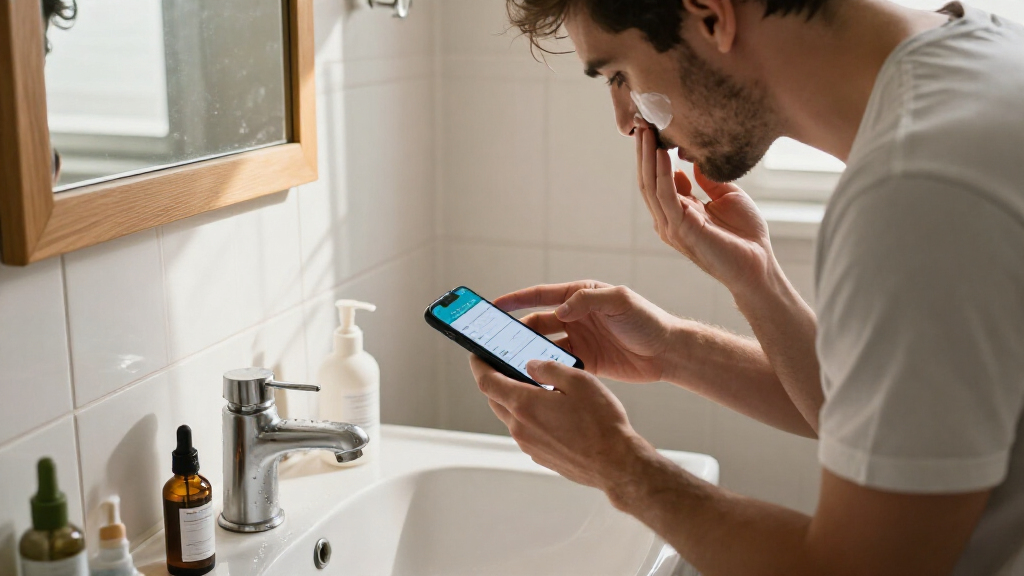
IdeaNavigator AI has proposed testing a skincare progress-tracking app for men, aimed at users who want to see whether a new routine is working. The concept includes weekly selfies, routine logs and progress scores; no product launch, user results or market validation are reported.
IdeaNavigator AI has outlined a proposed skincare-tracking app for men, designed to help people new to skincare monitor changes through weekly selfies, routine logs and progress scores. The concept is framed as an MVP to test, not a launched product: the material provides no evidence of completed testing, customer uptake or measured results.
The proposed first user is a man who has recently started a skincare routine and wants evidence of whether it is helping. The idea responds to a specific problem identified in the proposal: users want a simple way to answer “is this working?”, while existing beauty apps may feel poorly suited to them in their tone, design or marketing. That description is the proposal’s assessment; it does not include user interviews or independent data to establish how widespread the problem is.
The suggested minimum product would prompt users to take weekly guided selfies and track skin clarity, texture and dark circles. It would also log routines, use streaks to encourage regular check-ins and create progress cards presented as training metrics rather than beauty scores. These are proposed features, not confirmed capabilities of an available app.
The business model under consideration combines a subscription with affiliate product recommendations linked to gaps the app identifies. IdeaNavigator AI proposes testing the same selfie-capture technology with men’s-training branding and neutral branding, then comparing conversion and retention across user segments. The proposal does not report that this experiment has been run or specify its sample size, pricing, scoring method or safeguards for handling facial images.
The App’s Core Test Is Trust
The concept points to a product-design question with practical consequences: can a progress tracker make skincare feel measurable without implying that changes in appearance are objective or guaranteed? Weekly images and routine records could help users keep track of consistency, but a score for clarity, texture or dark circles would need a transparent basis. Lighting, camera position and other conditions can affect how a selfie looks, so a changing number should not automatically be read as proof that a product worked.
The proposed branding experiment also matters because it separates product functionality from positioning. If a men’s-training presentation attracts more sign-ups than neutral language, that would be evidence about messaging among the tested audience—not proof that all men prefer that framing or that the app improves skin. Retention would offer a different signal: whether users continue recording progress after initial interest.
Affiliate recommendations create another issue for users. A commercial link attached to a measured “gap” could influence what products the app promotes. The proposal does not explain how recommendations would be selected, whether they would be ranked independently of commission, or how users would be told about affiliate relationships. Those details would affect how much confidence users can place in the app’s advice.
men's skincare progress tracking app
As an affiliate, we earn on qualifying purchases.
As an affiliate, we earn on qualifying purchases.
From Grooming Trend to Product Hypothesis
IdeaNavigator AI presents the opportunity within men’s grooming technology. It describes men’s skincare as a fast-growing grooming segment and points to looksmaxxing culture as a source of interest in metrics and gamification. The supplied material does not provide market figures, a time period, a comparison baseline or supporting research, so those statements should be understood as the proposal’s rationale rather than independently documented market findings.
The recommendation is deliberately narrower than a general skincare platform: begin with one potential customer, one recurring need and a small set of tracking features. That focus makes the idea easier to test than a broad product covering every skincare concern. But the proposal leaves the key commercial assumption open: whether men who want visible evidence of progress will use a dedicated app often enough to support a subscription.
As an affiliate, we earn on qualifying purchases.
Demand and Scoring Remain Untested
No app launch or validation results are described. The material does not identify a development team, release schedule, operating product, user cohort or conversion and retention figures. It also does not establish that existing beauty apps turn men away, or that men entering skincare broadly want a quantified scorecard.
Important product details remain unspecified. There is no explanation of how selfie scores would be calculated or checked, how progress would be distinguished from differences in lighting and camera setup, or whether users could review or correct assessments. The proposal also provides no information about image storage, privacy protections, deletion controls or the handling of sensitive personal data. Pricing, affiliate disclosures and the evidence behind product recommendations are not given.
The claim that men’s skincare is the fastest-growing grooming segment is not accompanied by figures or a defined period. Likewise, the suggested branding test has no reported methodology or outcome. Until those details are available, the idea is best treated as a product hypothesis, not evidence that a market has been established.
As an affiliate, we earn on qualifying purchases.
A Branding Test Would Come First
The next step proposed by IdeaNavigator AI is to test the same capture technology with men’s-training branding versus neutral branding, comparing conversion and retention by audience segment. No timetable or live test is announced. To interpret any eventual result, the team would need to describe who saw each version, how many people took part and what counted as conversion or continued use.
Further development would also require clear explanations of how image-based scores work, what the app can and cannot infer, and how photographs and commercial recommendations are handled. The proposal does not state whether those questions have been addressed. Until testing and product details are published, there is no confirmed next launch milestone.
Source: IdeaNavigator AI proposal
men's skin clarity improvement tools
As an affiliate, we earn on qualifying purchases.
As an affiliate, we earn on qualifying purchases.
Key Questions
Is the men’s skincare tracking app available?
No launch is reported. IdeaNavigator AI describes a proposed MVP and validation approach, not an app that users can currently download.
What would the proposed app track?
The concept calls for weekly guided selfies scored on skin clarity, texture and dark circles, alongside routine logging, streaks and progress cards.
Has the app been shown to improve skincare results?
No. The proposal contains no user trial or outcome data showing that the app improves skin or helps users choose effective products.
How might the app make money?
The suggested model is a subscription plus affiliate product recommendations. Pricing and the method for selecting recommendations are not specified.
What is the proposed first test?
IdeaNavigator AI proposes comparing men’s-training branding with neutral branding and measuring conversion and retention. No test results or schedule are provided.
Source: IdeaNavigator AI
Halloween Picks
halloween
As an affiliate, we earn on qualifying purchases.