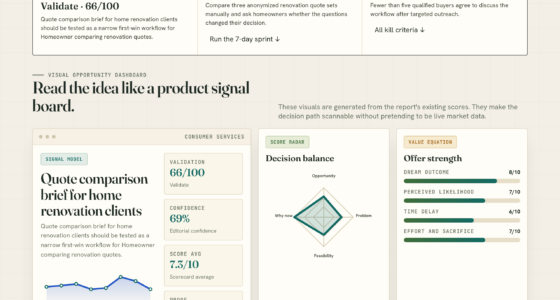

📊 Full opportunity report: Sovereignty Market Now A Reality: How AI Is Changing The Game on ThorstenMeyerAI.com — validation score, market gap, and execution plan.
TL;DR
Germany has launched a significant AI infrastructure in Munich, backed by public and private funding, marking a major step toward European AI sovereignty. However, key questions about model independence and geopolitical implications remain.
Germany has officially operationalized its first large-scale, private-funded AI infrastructure in Munich, marking a major milestone in its pursuit of digital sovereignty. The Industrial AI Cloud, launched on February 4, 2026, is now in active use, representing a significant shift from rhetoric to tangible capabilities, and signaling Europe’s push to reduce dependency on foreign cloud and AI providers.
The Industrial AI Cloud in Munich, developed by Deutsche Telekom and NVIDIA, features nearly 10,000 GPUs providing around 0.5 ExaFLOPS of processing power, representing a 50% increase in German AI computing capacity. It is fully privately financed and has secured key clients including SAP, Siemens, Mercedes-Benz, BMW, and Perplexity. Concurrently, the Schwarz Group is expanding its stack ambitions with an estimated 11 billion euros investment aiming for a future capacity of 100,000 GPUs.
Public funding supports this momentum: the German government allocated 805 million euros for a European AI gigafactory, with a consortium including SAP, Telekom, Siemens, IONOS, and Schwarz Group preparing a joint EU bid. Additionally, the German Federal Agency for Innovation (SPRIND) launched the Next Frontier AI initiative with 125 million euros for AI labs. The EU’s Cloud and AI Development Act emphasizes reducing dependency on non-European cloud providers, promoting free software, though critics warn of potential isolationism.
Der Souveränitäts-Markt ist real geworden —
und hat im selben Quartal seinen Champion verkauft
Tagesaktuell verifizierter Marktpuls · Geld, GPUs und eine Ironie
Das Geld ist da — drei Belege
Telekom + NVIDIA in München: ~0,5 ExaFLOPS, +50 % deutsche KI-Rechenleistung, privat finanziert. Schwarz-Gruppe: 11 Mrd. €, perspektivisch 100.000 GPUs.
805 Mio. € Gigafactory-Förderung; Konsortium SAP, Telekom, Siemens, IONOS, Schwarz. SPRIND: 125 Mio. € für eigene KI-Labore.
BfV wählt ChapsVision statt Palantir; Bundeswehr schließt Palantir aus der Cloud aus. Gartner: EU-Sovereign-Cloud +83 % auf 12,6 Mrd. $.
DIE IRONIE · 24. APRIL 2026
Mitten im Souveränitäts-Frühling schließt sich Aleph Alpha mit Kanadas Cohere zusammen — die Schwarz-Gruppe finanziert als Lead-Investor mit 600 Mio. $.
Freundliche Lesart: Konsolidierung unter Gleichgesinnten; 20 Mrd. $ Verbund schlägt unterfinanziertes Startup. Unbequeme Lesart: Deutschlands Modellschicht wird künftig in Toronto mitentschieden — und deutsches Kapital finanziert lieber fremde Champions als eigene.
Souveränität ist eine Schichtenfrage
Das Signal: Die souveräne Betriebsschicht ist jetzt kaufbar und bezahlbar — die Modellschicht bleibt Import. Wer Souveränitätsstrategien baut, sollte sie auf die Schichten bauen, die Europa tatsächlich kontrolliert.
European AI Sovereignty Achieved in Infrastructure
This development signifies a major step toward European AI sovereignty, with Germany establishing robust infrastructure and securing funding to build an independent AI ecosystem. While hardware and infrastructure are now domestically controlled, the model layer remains largely imported, raising questions about true independence and control over AI capabilities.
For industry and policymakers, this signals a shift where operational control and data sovereignty are now feasible within Europe, but the ongoing reliance on US and Canadian models indicates a layered sovereignty challenge. The move also reflects Europe’s strategic effort to foster a self-reliant AI industry amid geopolitical tensions and digital dependency concerns.

Kinupute Mini PC AI Server, AI Computing Workstation, AI MAX+ 395(126TOPS,16C/32T), Win-11 Pro, Radeon 8060S GPU, 128G LPDDR5X-8400, 8T M.2 SSD, 10G+2.5G LAN, Quad Screen, 4xM.2 PCIe 4.0 Slots, WiFi 7
- AI Max+ 395 Processor: 16 cores, 32 threads, up to 5.1 GHz
- Integrated Radeon 8060S GPU: 40 CUs, RDNA 3.5 architecture
- High-Performance AI Capabilities: 126 TOPS total, 50+ TOPS NPU
As an affiliate, we earn on qualifying purchases.
As an affiliate, we earn on qualifying purchases.
Progress and Challenges in Europe’s AI Sovereignty Drive
For years, Germany and Europe have spoken about digital sovereignty, but tangible progress was limited until 2026. The launch of the Munich-based AI cloud infrastructure marks a turning point, supported by significant public and private investments. The EU’s regulatory framework, including the AI Act and the Cloud and AI Development Act, aims to foster a controlled AI environment, though delays in high-risk regulation implementation persist.
Meanwhile, recent acquisitions, such as Aleph Alpha’s merger with Canadian startup Cohere, highlight ongoing international collaborations that complicate sovereignty narratives. Critics argue that despite infrastructure advances, the reliance on foreign silicon and models continues, emphasizing that sovereignty is layered and multi-faceted, not solely hardware-based.
“The infrastructure in Munich is a decisive step, but true sovereignty depends on control over models and data.”
— an anonymous researcher

Principles of Quantum Computing: A Practical Guide for Engineers and Technical Leaders to Qubits, Noise, Error Correction, Algorithms, Enterprise Adoption, … Quantum Computing for Everyone Book 2)
As an affiliate, we earn on qualifying purchases.
As an affiliate, we earn on qualifying purchases.
Unresolved Questions About Model Independence
It remains unclear how much control Europe will eventually have over AI models and data sovereignty. The recent Aleph Alpha and Cohere merger, with significant Canadian investment, raises concerns about the future of European AI independence. Additionally, the reliance on NVIDIA GPUs in Germany’s infrastructure highlights that hardware sovereignty does not equate to model or software independence, making the full picture still uncertain.

AI Systems Performance Engineering: Optimizing Model Training and Inference Workloads with GPUs, CUDA, and PyTorch
As an affiliate, we earn on qualifying purchases.
As an affiliate, we earn on qualifying purchases.
Next Steps for Europe’s AI Sovereignty Strategy
Key developments to watch include the EU’s regulatory implementation of the Cloud and AI Development Act, the progress of the European gigafactory, and the model sovereignty initiatives. Further investments in European AI models and hardware independence are expected, along with ongoing discussions about balancing regulation and innovation to ensure Europe’s competitive edge while maintaining sovereignty.

AI Hardware Engineering: Designing GPUs, TPUs, and Neural Processing Units for High-Throughput Machine Learning Workloads (AI Infrastructure, Hardware & Compiler Engineering Series)
As an affiliate, we earn on qualifying purchases.
As an affiliate, we earn on qualifying purchases.
Key Questions
What does the Munich AI infrastructure mean for European AI independence?
It marks a significant step in building domestic AI hardware and processing capacity, but full sovereignty also depends on control over AI models and software, which remains partly imported.
Will Europe be able to develop its own AI models soon?
While efforts are underway, most models are still imported, and achieving full model independence will require further investment and innovation in European AI research.
How does this infrastructure impact Europe’s global AI position?
It enhances Europe’s technical foundation, but dependency on foreign models and chips means it remains a layered process towards full sovereignty.
What are the main challenges facing Europe’s AI sovereignty?
Key challenges include developing independent AI models, controlling software layers, and reducing reliance on US and Canadian hardware and data infrastructure.
Source: ThorstenMeyerAI.com