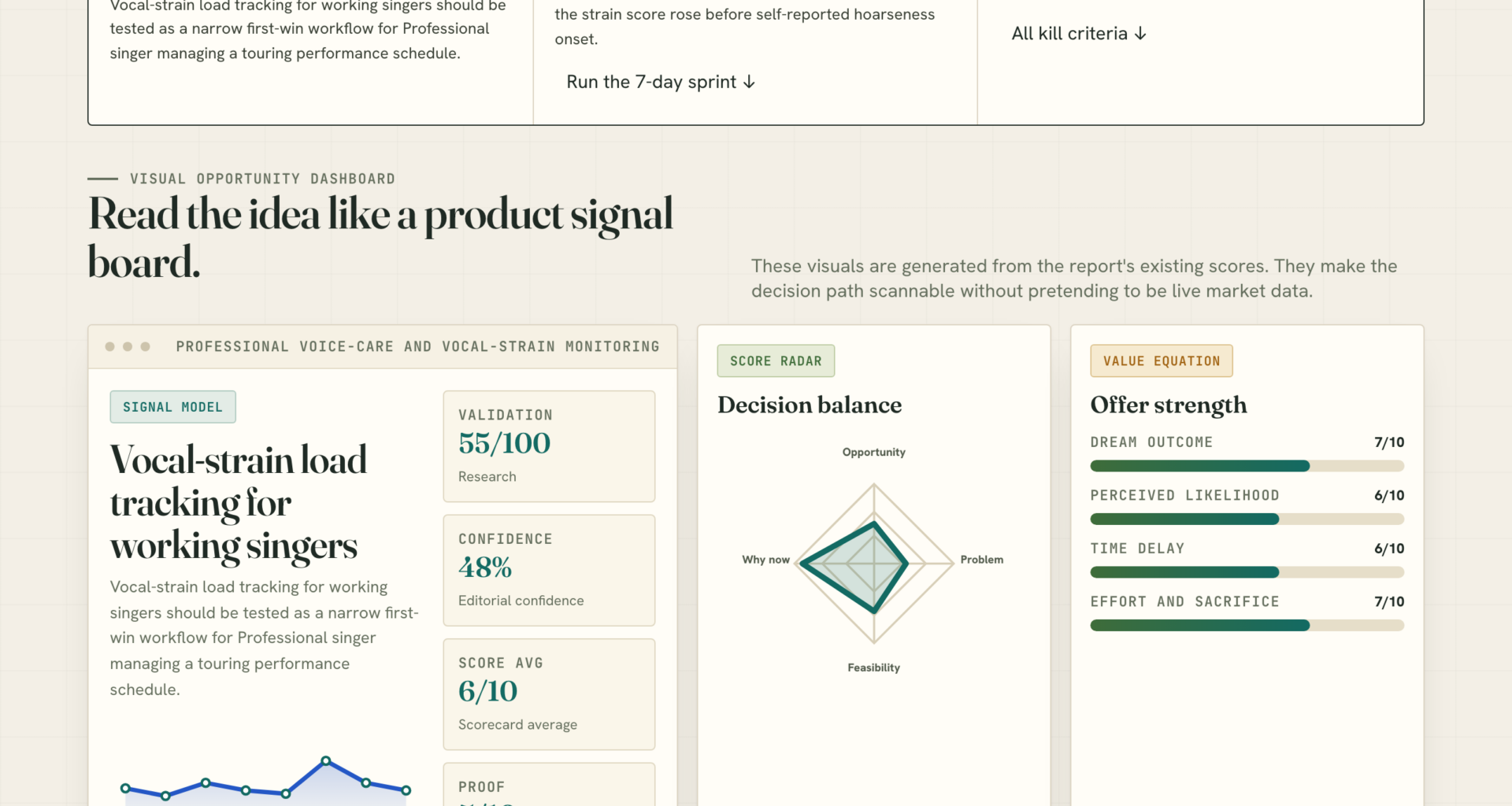

📊 Full opportunity report: Vocal-strain load tracking for working singers on IdeaNavigator AI — validation score, market gap, and execution plan.

Get monitors, keyboards and dev gear delivered free — and shop member deals
- Fast, free delivery on millions of items
- Access to Prime Big Deal Days deals on October 6–7
- Prime Video, Amazon Music and more included
TL;DR
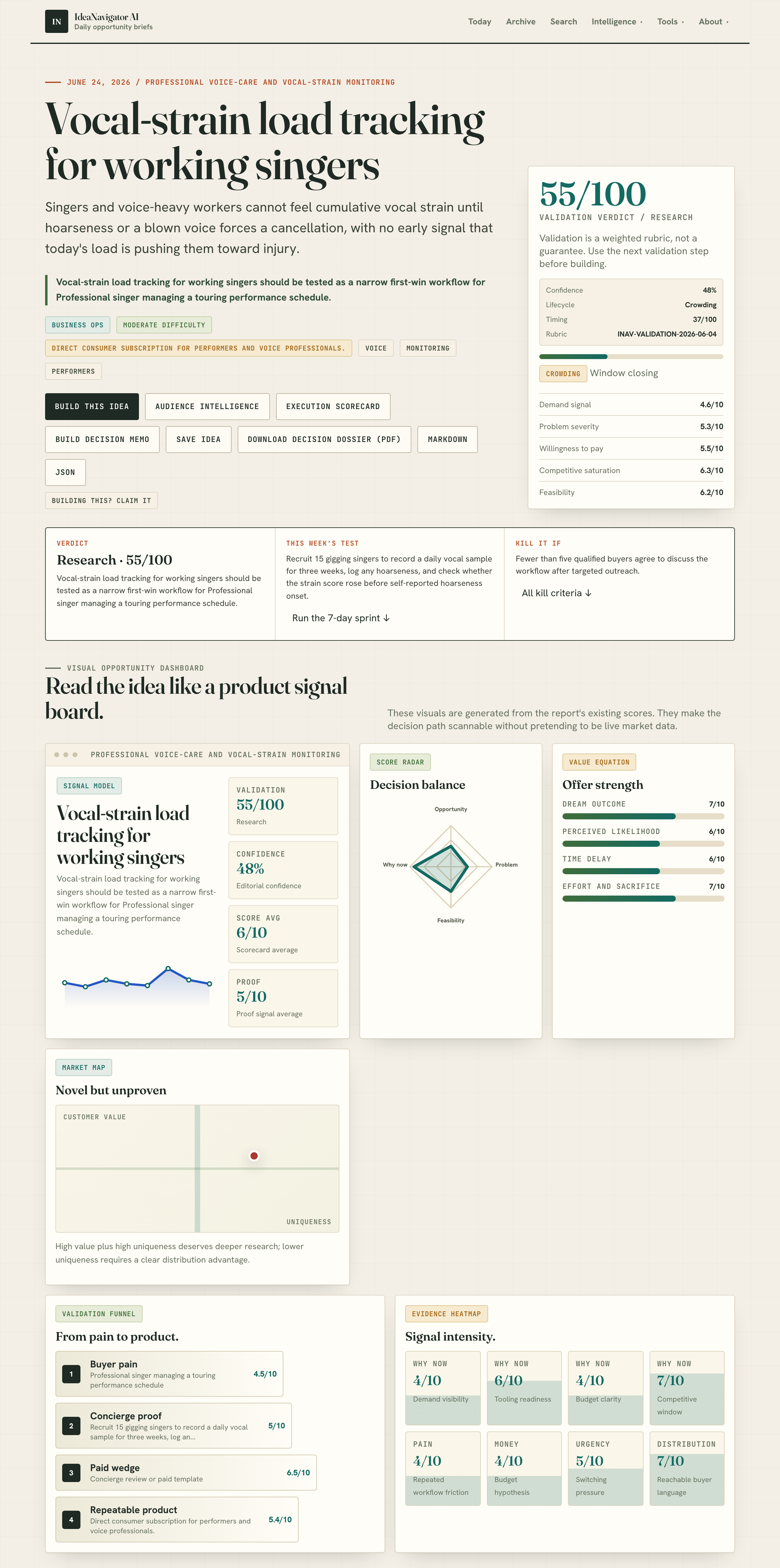
Researchers are developing a mobile app that records vocal samples after performances to track cumulative vocal strain in singers. The goal is to prevent injuries by providing early alerts based on voice analysis. Validation is ongoing with a small group of gigging performers.
A new vocal strain monitoring system for professional singers is currently in development, aiming to provide early warnings of vocal fatigue to prevent injuries during touring schedules. The system uses on-device audio analysis to score vocal load after each performance, offering a potential tool for voice professionals managing demanding schedules.
The proposed system involves singers recording a short vocal sample after each performance, which an app analyzes to assess their cumulative vocal strain. This score is compared against their personal baseline and flags tone shifts that have historically preceded hoarseness or vocal injury, allowing singers to adjust their routines proactively.
The initiative is targeted at gig-economy performers and professional voice users who often self-manage their schedules without immediate access to vocal coaches. The app would also suggest warm-up routines based on the analysis, aiming to reduce injury risk.
Validation involves recruiting 15 singers who perform regularly, with the plan to monitor their vocal scores over three weeks and compare them with self-reported hoarseness episodes to determine if the system can reliably predict vocal fatigue.
Potential Impact on Vocal Health Management
This development could significantly improve how professional singers manage their vocal health, especially during busy touring periods. By providing objective, real-time feedback on vocal load, the system may help prevent voice injuries that currently often go unnoticed until they become severe, such as hoarseness or voice loss.
If successful, this technology could reduce cancellations, extend singers’ careers, and decrease reliance on reactive treatments. It also offers a new tool for voice professionals and could be integrated into broader voice care practices.
As an affiliate, we earn on qualifying purchases.
Growing Need for Self-Managed Vocal Monitoring
Voice strain is a common issue among professional singers, especially those on tour who perform multiple shows in quick succession. Traditionally, vocal health management relies on subjective feedback and the expertise of vocal coaches, which may not be feasible during extensive touring.
Recent advances in mobile audio analysis and machine learning have opened possibilities for self-monitoring tools. The concept of tracking vocal strain through smartphone apps has gained interest as a practical solution for gig workers who lack continuous access to specialized voice care.
This initiative aligns with broader trends in health tech, where personal monitoring devices are increasingly used for injury prevention and health optimization.
“Using short vocal samples to assess cumulative strain could provide a valuable early warning system for singers.”
— an anonymous researcher
professional singer voice health device
As an affiliate, we earn on qualifying purchases.
As an affiliate, we earn on qualifying purchases.
Unproven Effectiveness of the Strain Score
It is not yet confirmed whether the vocal strain scores derived from the app will reliably predict hoarseness or injury onset. The validation study is ongoing, and results are pending. Additionally, the accuracy of tone shift detection and user compliance with recording protocols remain uncertain.
As an affiliate, we earn on qualifying purchases.
Next Steps in Validation and Development
The next phase involves recruiting the 15 performers for the three-week trial, collecting data, and analyzing whether the vocal scores correlate with self-reported hoarseness. If initial results are promising, further refinement and larger-scale testing will follow before potential commercial release.
As an affiliate, we earn on qualifying purchases.
Key Questions
How does the app analyze vocal strain?
The app records a short vocal sample after each performance and uses audio analysis algorithms to score characteristics such as tone stability and vocal fatigue indicators, comparing them to the singer’s baseline.
Can this system replace a vocal coach?
No, it is designed as a supplementary tool for self-monitoring. Singers should still consult with vocal professionals for comprehensive care.
Is this technology available to the public now?
Currently, it is in the development and testing phase, with no commercial version available. Further validation is needed before potential launch.
What are the main benefits of vocal load tracking?
It can provide early warnings of vocal fatigue, helping singers adjust their routines proactively and reduce the risk of injury or voice loss.
Who is the target user for this technology?
Professional singers, voice teachers, and gig-economy performers managing demanding schedules without immediate access to vocal coaching.
Source: IdeaNavigator AI
Evergreen bestsellers Picks
bestsellers
As an affiliate, we earn on qualifying purchases.